10 Mind-Blowing Facts You Didn't Know About Star Wars: The Clone Wars
The Force is strong with this show. Which facts did you know?

Star Wars: The Clone Wars began with a 2008 feature film and subsequently spawned a show that ran for seven fantastic seasons, ending in 2020.
The series gave us the chance to finally understand what happened between Attack of the Clones and Revenge of the Sith, introducing us to new and exciting characters whilst also breathing new life in other characters we had already come to know and love.
Characters such as Ahsoka Tano and Asajj Ventress are fresh and unique visions, and Anakin Skywalker's decent to the Dark Side finally gets some much needed context. All of this, paired with some revolutionary animation and a great voice cast, makes The Clone Wars exactly what the canon needed to usher in new and old fans.
But there is much more to this show than what lies on the surface. The series was a maze of planning, well-placed Easter eggs and cathartic resolutions to many a character's journeys. We finally get to see General Grievous' rise to power, Obi-Wan Kenobi's past, some fun political adventures and the workings of the Jedi Council.
Hold tight as we take at look at some of the facts you may have missed about The Clone Wars.
Warning: SPOILERS.
10. The Name Game

Ahsoka Tano is arguably the breakout star of The Clone Wars. First appearing in the feature film and being expertly fleshed-out over the seven season show, Ahsoka joined the canon as Anakin Skywalker's new and unwanted Padawan.
Ahsoka was created by George Lucas as a way of adding a new layer to Anakin's story. She represents the true good of the galaxy and is a great character to juxtapose her master's darkening personality.
Originally, however, Lucas wanted to call her "Ashla", which he says means "Light Side". Also, it's also been revealed that Ashla is actually a canon character; a Jedi youngling who briefly appears in Attack of the Clones. The two were originally going to be the one and the same.
However, Lucas changed his mind about this and instead named her after an ancient Indian emperor. This appears to have been a good edit, given as Ahsoka's role in the franchise is exactly that of symbolising the light side and the good of the world, calling her by a name that literally reflected this would have cheapened the symbolism.
9. Crossing Paths

This is a terrifically fun piece of trivia. You might remember Revenge of the Sith, when Anakin and Obi-Wan come face to face with General Grievous as they attempt to save Chancellor Palpatine from the evil Separatists. Grievous famously calls Anakin out and says: "I thought you'd be taller."
It's a throwaway line in a long and epic film, but one that proved to be quite the hurdle for showrunner Dave Filoni when he came to make The Clone Wars. On the show, Anakin is the primary protagonist and Grievous is a major antagonist, but because it would ruin the continuity of the films if the two were to meet on the show, Filoni had do a series of narrative back flips to keep the two apart.
It's fun to know when watching the show. Every time there's a chance the two will see other, something steps in to push them away. A key example of this comes in Season Two, Episode Nine, where Anakin is unable to take the General on because he has to lead injured Jedi Master Eeth Koth to safety.
It's a shame in many respects that the two never cross paths and get a chance to fight on the show, but is of course necessary for the continuity.
Plus, we get Grievous and Obi-Wan's rivalry, which is one of the best in the entire canon.
8. Cast Connections

Everyone knows who Mark Hamill is, regardless of whether they've seen the films before. But did you know he was also in The Clone Wars, playing someone radically different to ultimate good guy Luke Skywalker? Hamill has a voice cameo in Season Six, Episode 13's "Sacrifice", where he voices ancient Sith Darth Bane, who appears as a ghostly vision to Yoda as he visits the Sith planet of Moraband.
Any trace of Luke's voice is lost in Bane, and it gives Hamill the chance to play someone who diverges from his more popular role.
Hamill is not the only star who revisits the canon in The Clone Wars, however, as in the 2008 film Samuel L Jackson gets the chance to reprise his role as Mace Windu. He is replaced for the majority of the show by Terrence Carson, who captures Jackson's voice beautifully, but he makes an appearance in Season Seven thanks to archive footage from Revenge of the Sith.
Liam Neeson, meanwhile, gets to reprise his role as Gui-Gon Jinn for several episodes of The Clone Wars, where he appears as a Force ghost. His role is much more significant than both Jackson's and Hamill's, but equally as cool for long-time fans. Come to think of it, who could possibly take Neeson's place?
7. Animating Duelling

Up until Season Seven, The Clones Wars was completely animated, even the lightsaber duels. This isn't a bad thing by a long shot, as many of the fights in the series rival and even surpass those in the films. That being said, the best duel the show comes in Season Seven, Episode Ten, between Ahsoka Tano and an amazing, re-vitalised Darth Maul.
This fight is special for a number of reasons. First of all, the Siege of Mandalore is in full swing this episode, an event which takes place during the events of Revenge of the Sith and therefore fills in some blanks about where Ahsoka and Captain Rex were during Anakin's fall. Secondly, this fight was created mostly through the use of motion capture technology.
If you watch it again, you realise just how seamless and complex the characters' movements are. The footwork and the swordplay is incredibly intricate, with much of it being too much for animators to easily achieve.
In the scene, professional stunt artists Lauren Mary Kim and Ray Park (who played Maul in both The Phantom Menace and Solo: A Star Wars Story) provide motion capture performances for Ahsoka and Darth Maul respectively. Add their talents to the vocal chops of Ashley Eckstein and Sam Witwer, as well as the stylish animation the series is now known for, and what you're left with is one of the most visually stunning and satisfying moments of the canon.
6. The 501st Legion

This is a fact which shows the power and passion of Star Wars' legion (sorry) of fans.
In 1997, in South Carolina, Albin Johnson and Tom Crews founded the 501st Legion, a charitable organisation that makes realistic costumes from the original trilogy. Johnson and Crews started by making Stormtrooper costumes, and styled themselves the 501st Legion, or "Vader's Fist." The name was coined to honour both the films and the real life heroes of World War II.
Their popularity grew at such a rate that even George Lucas joined them at a charity event and soon sub-divisions of the organisation were set up all over America. Eventually, they became canon in Timothy Zahn's novel "Survivor's Quest", and the clone unit subsequently appeared in Revenge of the Sith with Darth Vader as he sacks the Jedi Temple. Although not named in the film itself, the battalion of clones was revealed to be the 501st thanks to Lucasfilm's merchandising.
Of course, all this eventually led to the 501st Legion becoming a part of The Clone Wars, serving under Anakin and his Padawan, Ahsoka. All of this makes for a very sweet and respectable way of honouring the many fans of Star Wars, but perhaps the best of the 501st is that it gave us its superior, Captain Rex, who remains one of the show's most important and popular figures.
5. Humanising The Clones

Since we're on the subject of Captain Rex and the clones who give the series its name, we're taking a look here at the veteran clone's conception and the work that goes into personalising men who sound and look the same.
Rex was originally going to be called Alpha, after a clone called Alpha-17 who appeared in the comic Star Wars: Republic, but the name was scrapped because Lucas felt the main cast featured too much alliteration and not enough diversity - Anakin, Ahsoka and R2-D2 (Artoo). Lucas then decided to call him Rex instead, and gave him the job of being the central clone character of the show.
Enter Dee Bradley Baker, who had the deceptively easy job of voicing the clones. Despite all the troopers effectively being the same person, Baker knew as well as Lucas and showrunner Dave Filoni that the essence of the show was to humanise the clones. Baker thus went to great lengths to differentiate the troopers, recording all their lines separately and adding inflections on key adjectives for each one.
Rex was given the most thought due to his large role on the show, and Baker and Filoni even made a "clone triangle" to help rank the troopers by the importance of their role on the show, which Rex topped.
It's a nice look into what went into making the show, and how much effort was put into the little things by the voice artists involved.
4. Lost Episodes And Arcs

Despite its popularity on Cartoon Network, The Clone Wars was cancelled mid-way through Season Six after being purchased by Disney. Although Disney brought the show back for a seventh and final season on its new streaming service, the season was shortened and many key arcs and storylines were left unresolved.
Two key arcs have been made into successful and well-reviewed novels and comics, but would definitely have been better suited to the show. For example, the comic "Son of Dathomir" detailed a four-episode arc which would have seen Darth Maul kidnapped and tortured by Darth Sidious following the death of Savage Opress. The whole story would have been epic and a great piece of fan service, pitting Maul against both Dooku and Grievous.
That's not the arc we long for the most, however, as on the show Asajj Ventress is robbed of the chance to have her story end on a satisfactory high. In an epic eight-episode arc the former assassin would have sought forgiveness from the Jedi Council and joined forces with eccentric Jedi Quinlan Vos in a bid to kill Count Dooku.
These stories and more - including Ahsoka investigating a Sith shrine below the Jedi Temple - would have been an excellent edition to the series, and would've added further gravitas to characters we had grown to root for. The fact that Ventress didn't get her on-screen finale is unfortunate, and is one tale we certainly wish we had got to see.
At least we got to meet the Bad Batch...
3. The Radically Different Pitch

It may come as a surprise to some of you, but there was once a time when Anakin Skywalker and Obi-Wan Kenoni were set to be side characters on the show.
Instead, Dave Filoni wanted the series to revolve around the crew of a ship reminiscent of the iconic Millennium Falcon. On the ship, audiences would have met a smuggler, his girlfriend, a Gungan called Lunker, a Jedi Padawan called Ashla, who would go on to become Ahsoka Tano, and her master. A lot of this went on to become the basis of Star Wars: Rebels.
Filoni's vision was put in place to steer clear of the continuity of the films, as he didn't want to interfere with what had already put into canon.
However, George Lucas eventually joined the project and decided the series would be better if it focussed on the characters audiences already knew. On top of that, Filoni later wanted Ahsoka (as she was named once Lucas came onboard) to be Obi-Wan's Padawan, but once more Lucas saved the day and steered him in a more compelling direction.
Although Filoni's work on The Clone Wars has been nothing short of extraordinary, we take solace in the fact that Lucas was there to put him on the right path and make it the show we now love.
2. Honouring The Past
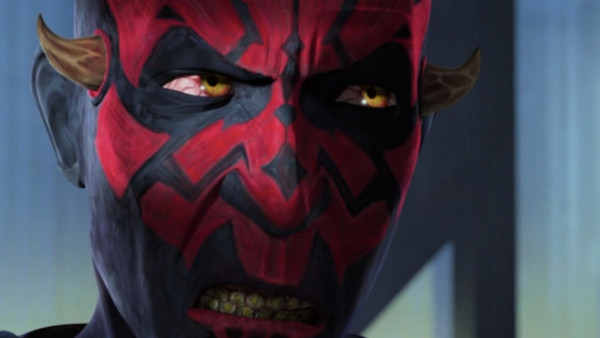
In the early development of The Clone Wars, Lucas said he didn't want certain characters appearing in the film or the series. These primarily included Chewbacca, Jabba the Hutt, Boba Fett and Han Solo. Although the former three were all eventually added to the show, everyone's favourite rebel smuggler never made an appearance.
However, that doesn't mean his legacy strayed too far. Captain Rex, for example, bears a small scar on his chin as reference to a similar cut on Solo actor Harrison Ford. Also, in a less direct reference to the famed pilot, a Season Three arc sees some of our favourites freezing themselves in carbonite.
The fact that the carbonite freezing was a success during this dangerous mission gives us insight into how Darth Vader knew it would work on Solo years later.
Whether this was direct foreshadowing or not, it nonetheless remains a nice little nod to one of the original trilogies' most iconic moments, and one the canon's very best figures.
1. Familiar Soundtracks

Music has always been a trademark of the Star Wars films and The Clone Wars. John Williams' masterful and suspenseful music is a pop culture touchstone, and The Clone Wars does well by honouring the maestro's gloomy tones.
Although Williams himself has not written any music specifically for the show, his most famous numbers still make it into the series. The most prominent examples can be found in Season Seven, as the threat of Order 66 begins to loom over the galaxy and the fate of our heroes. For example, as the Siege of Mandalore unfolds, we get the chance to hear the same music used in the opening of Revenge of the Sith, when Anakin and Obi-Wan are seen racing to save the Chancellor, showing that they are taking place at the same time.
But the most compelling use of Williams' work comes when Captain Rex gets the infamous order from Darth Sidious. It's a heartbreaking and unfortunately inevitable moment, as Rex turns on his friend and joins his brothers in trying to kill her. As Ahsoka holds them off, you can hear Williams' "Anakin's Dark Deeds" play, the same song used in Revenge when Darth Vader eliminates the Separatist Council.
It's a sneaky bit of TV, and easy to miss given the tension of the events unfolding, but once you notice it it's the kind of thing that makes you both smile and feel a sudden pang of nostalgia.
Watch Next
Star Wars Quiz: How Well Do You Really Know The Clone Wars?
