10 Mind-Blowing Facts You Didn't Know About The Teen Titans Cartoon
Why did the fan-favourite series have to end, and why did it change so much when it returned?
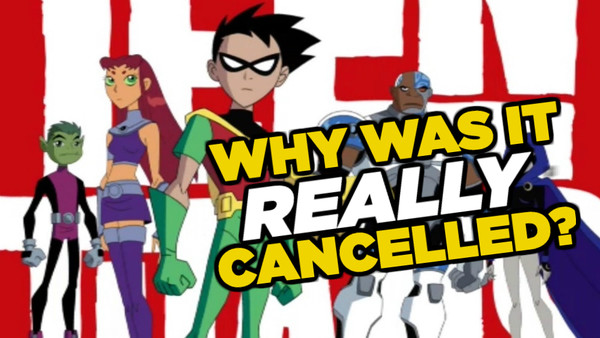
If you were growing up during the early noughties and liked superheroes, you basically had it made. VHS copies of Batman: The Animated Series were readily available, Fox Kids provided hourly re-runs of the nineties Spider-Man and X-Men cartoons, and then Cartoon Network and Toonami had such beauties as Batman Beyond, Justice League, and X-Men: Evolution running near enough every day.
Another superhero show to emerge during the beginning of the 2000s was Teen Titans, an anime-inspired animated series based on the DC comic of the same name. It was an instant success, and while unconnected to the revered DC Animated Universe, Teen Titans still manages to illicit fond memories from those who grew up watching it to this day.
The series, developed by Glen Murakami and Sam Register, may have differed in a great many ways to the other superhero shows of the time, but it was no less popular or mature. The show managed to juggle adult themes with genuine comedy to great effect, and with the advent of Teen Titans Go! in 2013, it's still going strong well over a decade later.
That said, there's still a TON of stuff Teen Titans fans may not know about the show, ranging from behind-the-scenes changes, to the elusive question of why exactly it was cancelled in the first place...
10. Tara Strong Originally Auditioned For The Role Of Starfire

Tara Strong is one of the most prolific voice actors of our time, and has given life to some of the most iconic cartoon characters of the last two decades, including Bubbles of the Powerpuff Girls, and Timmy of Rugrats fame.
Strong has also developed a degree of synonymy with DC Comics. Starting with her performance as Barbara Gordon/Batgirl in 1997's The New Batman Adventures, Strong has lent her talents to numerous roles set within the DC universe, even taking over from Arleen Sorkin when she retired from the role of Harley Quinn in 2011.
Of the numerous DC roles Strong has taken on though, perhaps her most fondly remembered is Raven, which saw the actress cast against type. Strong was known for playing mostly bubbly characters, and Raven - a loner sorceress with a demon for a father - didn't really seem like a fitting match.
In fact, when Strong originally auditioned for Teen Titans, she actually read for the role of Starfire, a part which eventually went to Hynden Walch. Once the producers heard Walch's audition, they immediately asked Strong to read for a different role, one which would later prove to be one of her most surprising and beloved.
9. The Show Had Two Intros (For A Specific Reason)
Puffy AmiYumi are a Japanese pop group that actually had a sizeable presence on Cartoon Network back in the day. Not only did they sing the theme for Teen Titans, they also actually had their own animated series too, called Hi Hi Puffy AmiYumi. So yeah - pretty big!
As a Japanese group, Puffy decided to record two different versions of the theme for Teen Titans, one in English, and the other in Japanese. Cartoon Network would broadcast both versions of the theme what seemed like random, but there was actually a method to it that fans only discovered years after Teen Titans ended.
You see, there was more to the two versions than just a change in language. The English version, developed by Andy Sturmer, boasted the more serious lyrics, while the Japanese version opted for a sillier tone. This meant that, in Japan and in other regions, the more serious episodes would air with the English theme, while the more light hearted versions would utilise the Japanese one.
Teen Titans was a show of many tones and moods, and it's kind of amazing that this was reflected in the theme.
8. There Was An Unproduced DCAU Teen Titans Show
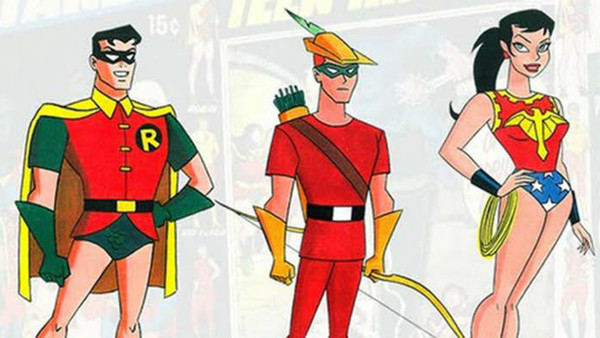
Given the Marv Wolfman and George Pérez's New Teen Titans series was one of the most popular comics of all time, it's no surprise that it was optioned for at least a couple of shows before 2003. Bizarrely though, despite the comics' popularity, it wouldn't be until 2003 where the team would get their first dedicated animated offering.
It wasn't for lack of trying of course. Of the numerous attempts to bring the Titans to the small screen, two stand out - a 1983 attempt from Hanna-Barbera, and one from 1996 conceptualised by Bruce Timm, designed to tie into the then burgeoning DC Animated Universe continuity.
The DCAU Titans concept was shelved fairly early on, but that hasn't stopped fans from contemplating what might've been had it gone ahead. In this version, the team's line-up would've consisted of Robin, Speedy, Wonder Girl, Kid Flash and Aqualad, divesting from the 'New' comics roster which would later be utilised in the 2003 cartoon.
One other interesting thing to note is that everyone on this team BUT Wonder Girl would eventually appear in the 2003 cartoon, owing to the fact that WB had enacted an embargo on DC's main characters (Batman, Superman and Wonder Woman) from appearing across multiple media.
7. Speedy Actually Shows Up With His Titans Design In Justice League
Even though the DCAU Teen Titans show never came to fruition, that hasn't stopped fans from theorising that the 2003 series is still a part of its continuity. There are a few problems that essentially disprove this theory - like y'know, the whole timelines not matching up and the creators of both series' stating that they're in their own, different continuities thing - but there are legitimately a few genuine connections between Titans and the various DCAU shows.
In an episode of Static Shock - which takes place in the DCAU - the titular Virgil Hawkins asks Batman where Robin is, only for the Dark Knight to respond by saying "he's with the Titans." Other episodes in that show confirm that the Teen Titans do exist in that continuity, and there are even a couple of nods to the 2003 series in Justice League.
Justice League's version of the Flash is Wally West, the former Kid Flash in the comics. He's voiced by Smallville's Michael Rosenbaum, and what makes this even cooler is the fact Rosenbaum appeared on Teen Titans AS Kid Flash.
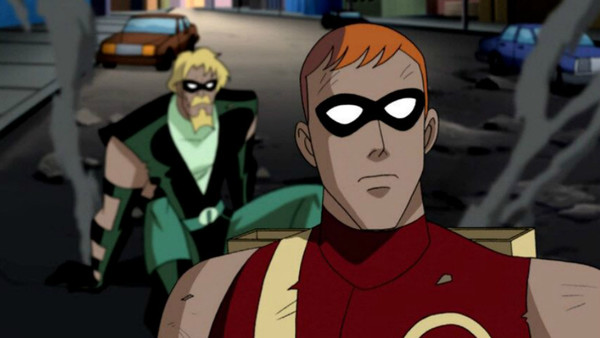
Apart from that, the next biggest connection between the two continuities comes in Justice League Unlimited, where Speedy, Green Arrow's sidekick, shows up with his Titans costume on AND with actor Mike Erwin reprising his role from the same series. Coincidence? I think not.
6. Raven Was So Popular In The Series, DC Resurrected Her In The Comics

Each member of the Teen Titans developed their own cult following by the time the series ended, but arguably the most popular was Raven. What fans may not realise, though, is that Raven was actually dead in the comics by the time the cartoon started airing; it was the series that brought her back into mainstream DC (comics) continuity.
Encouraged by the popularity of the Teen Titans cartoon, DC relaunched the book in 2003 with writer Geoff Johns handling scripting duties.
The most sizeable influence the show exerted on the comics was the reintroduction of Raven, but it also changed the character of Garfield Logan too. He was originally called Beast Boy in the comics, but had adopted the name of 'Changeling' until the 2003 series surfaced and he switched back.
5. Why They Couldn't Call Deathstroke 'Deathstroke'
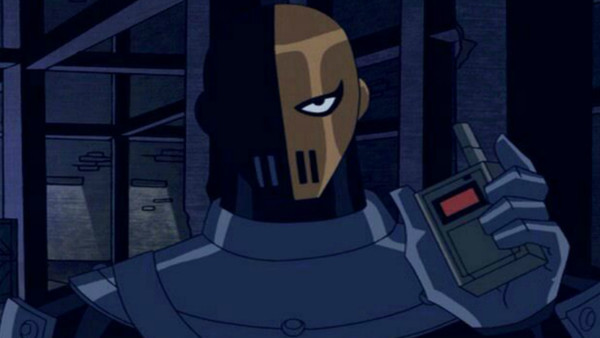
Teen Titans gave us one of the true great supervillain performances in Ron Perlman's Slade, who was better known as Deathstroke in the comics. He was all kinds of menacing, which was made all the better by the fact Perlman was turning in the exact opposite kind of performance on the big screen as Hellboy in Guillermo del Toro's films.
Still, for all that Perlman's Slade was legitimately unnerving (at least to seven-year-olds tuning in on a Saturday morn), there were some restrictions that prevented him from matching the villainous persona found in the comics. For starters, they couldn't call him Deathstroke, as any explicit reference to killing or death wasn't allowed. Instead, like most cartoons of the time, the writers had to use phrases like "destroy" or "eliminate", thus sacrificing the Titans' most famous adversary's name.
There were always going to be limits to what could and couldn't be shown on Teen Titans - with the show's adaptation of the Judas Contract having to leave out the comic's darker moments, like the relationship between Terra and Deathstroke, which takes on a whole other sinister edge in the original story - but Titans still managed to get dark when it wanted to, with Slade bringing plenty of menace to the table.
4. There's Actually A 'Lost' Episode
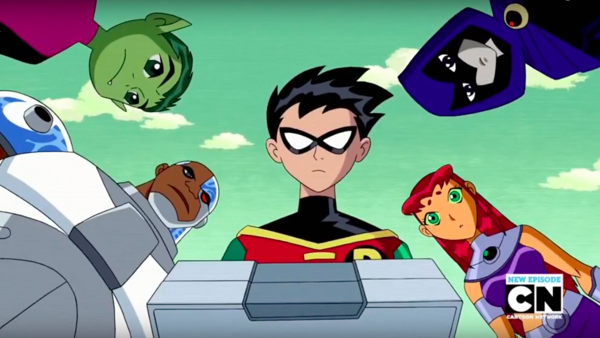
One thing that's become increasingly apparent over the course of writing these articles on the superhero cartoons of the nineties and early noughties is that there are a lot (like, A LOT) of 'lost' episodes; episodes that weren't broadcast as a part of a typical season, and were instead told in different forms, like video games, for instance.
Teen Titans has a similar example, but its 'lost' episode isn't from a video game, or even a basic plot outline that never materialised into a full-length episode. No, Teen Titans' lost episode was actually delivered via an online promotion on the site 'Postopia', and wasn't broadcast as a part of the show's usual schedule.
The basic premise of the episode involves a rowdy, punk-like supervillain - fittingly called Punk Rocket - who uses his musical skills (read: weaponised electric guitar) to disrupt serene concerts. The Titans are called in to deal with him, which leads to the usual back-and-forth battle where the team have to regroup and figure out how to take him down.
It was later included as a DVD extra in the Trouble in Tokyo film, but that was two years after the episode first surfaced.
3. They've Had A TON Of Crossovers
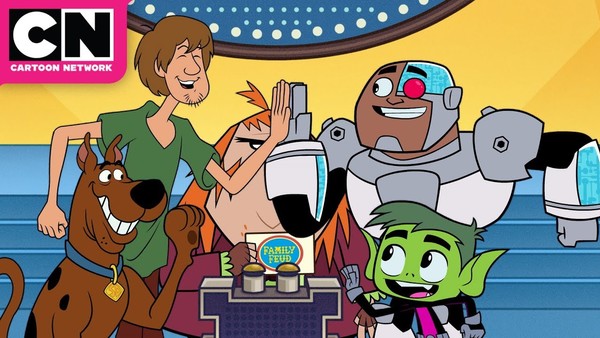
The Teen Titans have crossed over with A LOT of different properties since the series first started - perhaps more so than any other DC show of the last couple of decades. They've joined up with Young Justice on one occasion, and Stan Lee even managed to nab a cameo in Teen Titans Go to the Movies - but the crossovers don't stop there.
Over the years, the Titans from the show have linked up with the gang from Scooby Doo, their 2003 predecessors, the Powerpuff Girls, and even most of Cartoon Network's main roster in Crossover Nexus, including Jake from Adventure Time and Ben Tennyson from Ben 10.
Perhaps less surprisingly, mainly down to the fact they seem to link up with EVERY property at some point or another, the Titans have also crossed over with the Teenage Mutant Ninja Turtles in the episode, Truth, Justice and What? - joining Batman: The Animated Series as the second DC cartoon to link up with the Heroes in a Half-Shell.
2. The Reason(s) For The Series' Cancellation
When you're younger, it's kind of confusing to understand what happens when your favourite show just... stops airing. Nothing ever really gets communicated in regards to why a series disappears, with re-runs providing the illusion that the series is still ongoing even when it might not be.
The same was no different for Teen Titans, which came to an abrupt halt in 2006 after 66 episodes had aired. But whereas with other shows, where the reasons for their cancellations were obvious or even revealed by those involved in their development, Teen Titans never got that coveted explanation.
Of course, that hasn't stopped theories from abounding in the years since. Even Wil Wheaton, who voiced Aquaman on the series, claimed that it was cancelled because the executives at Warner Bros. Animation weren't convinced by the showrunners' pitch for a sixth season. This view was later contested by others who worked on the show, namely Rob Hoegee, who claimed the decision arrived midway through production on Season 5, meaning everyone onboard already knew it would be the final season.
But the theories don't stop there. Producer David Slack cited two primary reasons for the show's cancellation: Mattel's anger that Bandai were manufacturing Teen Titans toys after being given the license for everything else airing on Cartoon Network; and two, that the show had suffered a decline in ratings after airing its darkest season yet in Season 4.
Either way, the lack of closure is certainly weird. Especially when you consider the way in which it returned...
1. Why The Show Returned As Teen Titans Go!

So, why - seven years after the cancellation of the original series - did Teen Titans return as Teen Titans Go? Surely the best option would've been just to bring the original series back anyway? Well, not quite.
Back during the beginning of the previous decade (YIKES - that still doesn't feel right to say), Warner Bros. were trying something new in DC Nation Shorts. These bitesized animated offerings spotlighted a number of characters, but one of the most popular featured the 2003 Titans cast in cutesified versions of their original selves, which provided fresh impetus for Cartoon Network and Warner Bros. to pursue a new take on the team.
Although not a stated reason for Teen Titans returning in such a drastically different way, it is also important to note how, in 2013, another mature take on a DC sidekick team had just fallen to cancellation. Young Justice might be back now, but it was notoriously cancelled three years into its run due to low toy sales. Yes, it was more mature than the 2003 Teen Titans cartoon, but it's not disingenuous to assume Cartoon Network were reluctant to sanction a follow-up to the OG series based on Young Justice's ostensible inability to shift merchandise, particularly when you consider how ratings may have fallen during its darker moments.
Love it or hate it though, Teen Titans Go! continues to keep the spirit of the original '03 series alive. If nothing else, fans should at least be able to appreciate it for that.
Watch Next
Teen Titans Quiz: How Well Do You Know Raven?