10 Mind-Blowing Facts You Never Knew About House Of Cards

Wait, it's not about the world of competitive card house construction?
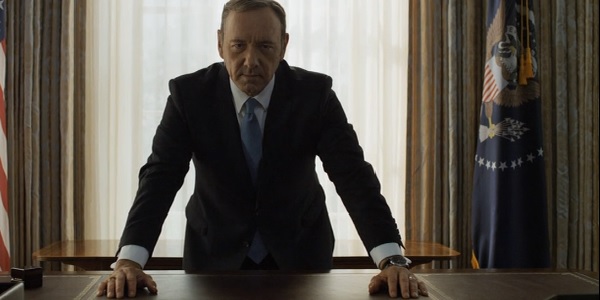
Just in case you didn't manage to get through all thirteen hours of it when Netflix accidentally uploaded it early by accident a couple of weeks ago, season three of House Of Cards is here for real! What's that kook Frank Underwood going to get up to this time? Who else is his wife going to sleep with? And will Stamper ever get the hair piece he so clearly desires? Apologies for not taking the show entirely seriously, but the majority of it is so po-faced that you just need a bit of light relief every now and again. Unless that hacker's guinea pig comes back, which would be nice. Still, there's a reason House Of Cards doesn't want you to be relieved: it's gotta keep ratcheting up the tension, the stakes, and the body count. How else are you going to take Frank Underwood seriously? You already knew he was pretty cold when he strangled that pooch, and it's only been downhill from there. In fact, Kevin Spacey's starring role is so enigmatic €“ plus he talks directly to you €“ it's difficult to think of anything else. Which means that you might have missed any number of Easter eggs, weird cameos and other coincidences that have popped up in the show's first two seasons. Whether you're having a break from your binge, are prepping to take on this third helping or are just a trivia junkie, here are ten mind-blowing facts you never knew about House Of Cards.

10. Spacey's Done The Same Before

Frank Underwood is a classic anti-hero €“ or possibly even just a straight-up villain €“ and one of the best roles Kevin Spacey has ever played, which is saying something. The character has a lot in common with other parts he's done before, from the conniving of The Usual Suspects' Keyser Söze to the Machiavellian Richard III. What you might not have noticed is that the character Frank Underwood has the most in common is...well, a little less high-minded than that. Somehow Spacey got convinced to appear in the mostly terrible 2011 comedy Horrible Bosses, as one of the titular nightmare employers along with Jennifer Aniston and Colin Farrell. So what exactly did ruthless Democrat Frank Underwood and slightly douchey financier David Harken have in common? In both Horrible Bosses and House Of Cards Spacey's character offers a character a drink, before declining to get one for himself €“ it's so early in the morning, after all. A real d*ck move of a power play, that.

9. There's A Lot Of Wire Connections

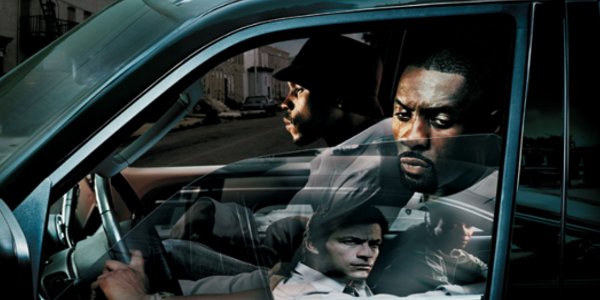
Many commentators have noted that House Of Cards, along with many of Netflix's other most celebrated original series (more the Orange Is The New Black Side than the Richie Rich) have less in common with traditional network TV shows, and are more in line with the sort of mature, adult fair that crops up on cable networks like AMC and especially HBO. That similarity becomes even more apparent when you see the amount of connections House Of Cards has to arguably HBO's biggest pre-Game Of Thrones success €“ at least critically and influentially €“ David Simon's gritty Baltimore crime drama The Wire. And seriously, there's a lot of them. Cards creator Beau Willimon does count it as his all time favourite show... Despite being set in Washington (obviously) House Of Cards is also filmed in Baltimore, meaning it takes advantage of some of the same locations as The Wire €“ including the diner where Doug Stamper does all his dirty dealings. The BBQ place Frank frequents, meanwhile? Run by Reg E Cathey, a series regular in The Wire's fourth and fifth seasons.

8. It's Big In China

Who knew that a series about the ruthless back-room dealings and occasional extreme, secretive violence that underpin contemporary politics would be such a hit in the US, let alone around the world. For a country that tends to be more comfortable with the idealised like of The West Wing, House Of Cards cuts close to the bone sometimes. What's even more surprising is that the show is a big hit in China. Like, a phenomenally huge hit. And considering that's a country where not a whole lot of Western media €“ or a lot of media full stop €“ gets an official release, that's really saying something. And yet the show, which is streamed through the country's Netflix equivalent Sohu, was watched by 24.5 million people as of last year. According to those same statistics, the majority of those people were government employees, with Communist Party leader Wang Qishan being a particularly big fan. Hope he's not taking notes...

7. Kate Mara's Contract Had A Football Clause
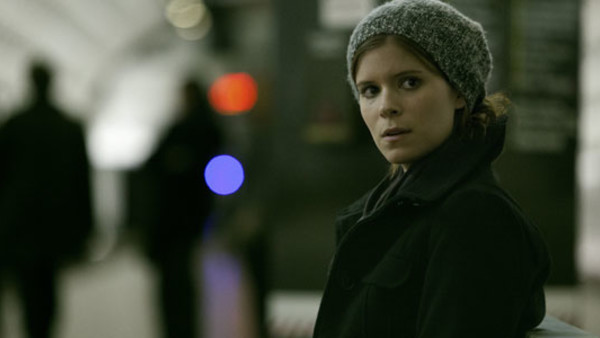
Ditching plucky investigate reporter Zoe Barnes early into the show's second season may have been a mistake €“ a mistake that the actress had to keep a secret for the entirety of the filming of that series to avoid spoiler, no less €“ in the long run it might have worked out better for Kate Mara. At least now she doesn't miss the football. Apparently Mara is a huge fan of American-style football (the wussy rugby one). It's in her blood, after all, what with her family tree including New York Giants owner John Mara and Dan Rooney, the chairman of the Pittsburgh Steelers. She missed the Steelers win during Super Bowl XL because of filming House Of Cards. So after that point, she's had it put not only in her House Of Cards contract but in all future contracts that if either the Giants or the Steelers play the Super Bowl again, she's got permission to leave the set and go see it. She's since seen the Giants win Super Bowls XLII and XLVI, and the Steelers in Super Bowl XLIII.

6. The Camera Rarely Moves

House Of Cards' unique visual style can mainly be attributed to executive producer David Fincher, who also directed the first two episodes and has generally been very forthcoming in what he wanted the rest of the series to look like. And Fincher is not a man who question. Especially when it comes to where you put the camera. He is, after all, the guy who greeted the main cast to the production by telling them €œEvery single person in this room represents our first choice, so don't f*ck this up. Cos if you do, I will never forgive you.€ After putting the fear of god into the actors, he went on to do the same with the crew. One of his hard rules for the cinematographers and directors? Don't move the camera. You may not have noticed unless you were looking for it, but it's very rare that you see any moving shots in the show, and steadicam is effectively banned from the set. What you get is a very ordered, precise, and static look. Perfect for politics!

5. President Walker And The Secretary Of State Are Married

As if there aren't enough sex scandals in House Of Cards between Zoe Barnes and Frank Underwood's little blackmail dalliance and Peter Russo€™s penchant for call girls, there's one going on right within the Oval Office. It'd have been much easier for Kevin Spacey's ruthless career politician to position himself in the White House if he'd known this juicy titbit. In fact David Fincher was also oblivious to the fact that Michael Gill and Jayne Atkinson, who play President Garrett Walker and Secretary Of State Catherine Durant on the show, are married. And have been for nearly twenty years. It somehow never came up in the audition process, either. €œWe both got it within four or five days of each other,€ said Gill of the couple's parts, €œAnd then towards the end , they realized we were married. When we got to set none of the cast knew we were married.€ So that's how you keep those thins under wraps? Frank should be taking pointers.

4. Rachel Posner Was Supposed To Be A One-Off Character
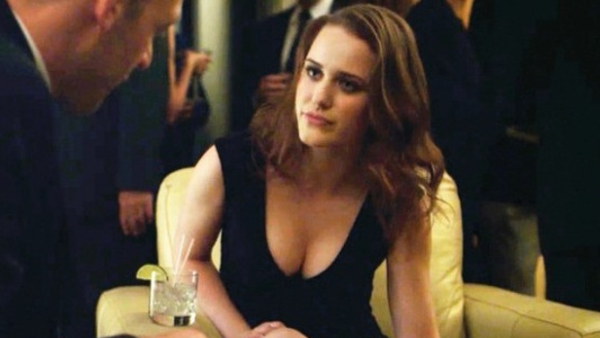
When Rachel Brosnahan first appeared in House Of Cards as escort Rachel Posner, who Corey Stoll's Peter Russo had a particular weakness for, it was only supposed to be for a couple of episodes. Not only that, but in the original scripts she had a total of five lines €“ five lines that would, nonetheless, mostly be the cause of Russo's downfall. Along with, y'know, what Frank did. And that was going to be the end of it. A small but crucial role, mostly drawn from the original BBC series the show is based on. "She had done such a fine job those first two episodes that I started exploring what it would mean to bring her character back and fully three dimensionalise her," said writer Beau Willimon. In the second season she started to become a major player, what with her being the only person that could connect Peter Russo and Frank Underwood and this whole unfortunate business. Then the major conflict with Doug Stamper was with her. A character who was originally meant to be a bit part.

3. Frank Underwood Is Based On A Real Person
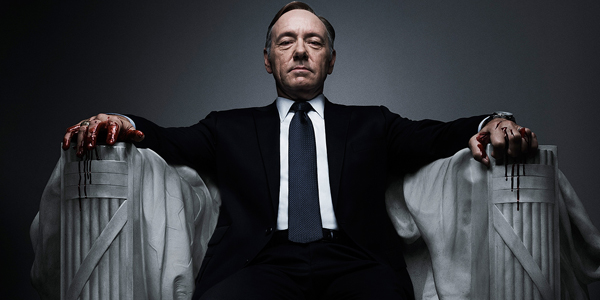
Well, sort of. If you want to be pernickety then Frank Underwood is technically based off of Francis Urquhart, the anti-hero with a similar enjoyment of breaking the fourth wall, played by Ian Richardson in the original British House Of Cards series. Except he was more well-to-do, a Tory, and older to the point that when he starts sleeping with the Zoe equivalent it's a thousand times more creepy. Plus he gets her to call him daddy. Gross. Apart from the obvious DNA of Urquhart, however, Frank Underwood genuinely is based on a real person. Several real people. Apparently the main inspiration for the character was former president Lyndon B Johnson, who had a similar accent and ruthless efficiency. No word on whether LBJ ever killed a dog, but he had certain...affectations. Spacey also sought inspiration from a real life source, hanging out with Republican House Majority Whip Kevin McCarthy before the first season began to get an idea of what day-to-day life in the senate was like.

2. There's A Lot Of Real Politics In It

In fact you'd be surprised quite how accurate a lot of the politics in House Of Cards is. Again, hopefully not so much the dog strangling business €“ or the murders staged to look like suicides €“ or pushing people in front of subway trains €“ but a lot of the other stuff is apparently rooted in reality. Including the call girl stuff. That's real ripped-from-the-headlines sort of stuff. The original House Of Cards books, which the British series faithfully adapted, were written by former Conservative MP speechwriter Michael Dobbs. Just as those books claimed to have some insight into the workings of the Houses Of Parliament, so too can the American House Of Cards claim to have the inside track of the White House. Why? Because creator, writer and showrunner Beau Willimon has worked in politics too, in a very similar capacity to Dobbs: between 1998 and 2004 he worked on various Democratic campaigns, which later inspired his first big hit, the movie The Ides Of March which was adapted from a play of his. Which also didn't cast the world of American politics in a particularly good light, which suggests that Willimon was party to some of the darker sides of the whole shebang.

1. And Sometimes It's Almost Too Close
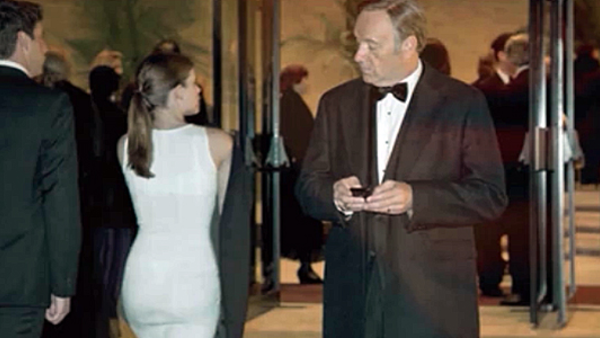
It could be that Willimon has some sort of insight into the way that the US government works, or just that he and his cadre of writers pay attention and are very smart. Which is also very likely. Not only does House Of Cards serve as a wry commentary and theatrical satire of the machinations of American politicians, but it frequently copies incidents and infamous images from modern US administrations. The amount of plot points that appear in House Of Cards that they carbon-copied from real life would surprise you. There have been those quick to point out the many ways the series doesn't resemble how actual politics works, but there are almost as many examples of times where the art begins to imitate life a little too closely. There are scenes based on famous photos, with President Garrett Walker signing an education bill in a shot designed to mimic an image of John F Kennedy the signing the Equal Pay Act in 1963. The photo of Frank checking out Zoe's rear in the first season is a shout-out to an image of Obama doing the same with Nicolas Sarkozy approving. Then there's the multiple eerie parallels between the rise and fall of Peter Russo and seemingly countless apparently squeaky clean politicians who have a few risqué skeletons in their closets...

Contributor
Contributor

Tom Baker is the Comics Editor at WhatCulture! He's heard all the Doctor Who jokes, but not many about Randall and Hopkirk. He also blogs at http://communibearsilostate.wordpress.com/