10 Times Doctor Who Wanted You To Hate It
Remember that time a certain American president went up against the Daleks… and won?
Over the years, many a Doctor Who fan has rolled their eyes at a dodgy special effect or undercooked plot line. But the show doesn’t usually set out to wind up its audience.
Except when it does.
Sometimes it’s necessary to stir up negative emotions to make a story work – for instance, those shocking moments where characters do a 360 and prove to be less angelic than they first appear (including, in one case, the Doctor himself).
Likewise, killer twists rely on the viewer hating the writer for doing something so shocking… or hating themselves for not seeing the twist coming sooner.
There are also times when writers put something deliberately provocative into a script, just to get a reaction. Or when their hate of something from the real world ends up seeping its way in, to make it clear that the Doctor opposes it too.
The Twelfth Doctor once said that “hate is always foolish and love is always wise”. But some stuff in Doctor Who exists solely to make you shout at the TV...
10. Rickston Survives (Voyage Of The Damned)
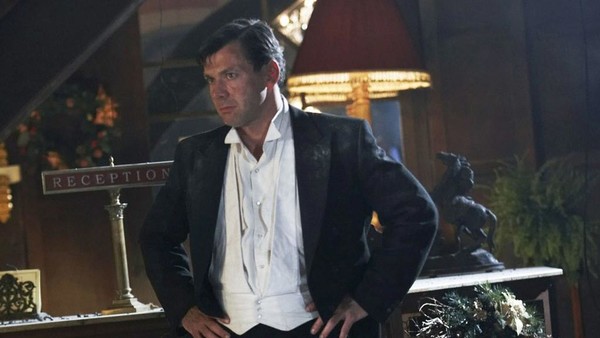
As Doctor Who's take on a classic disaster movie there are a lot of characters who bite the dust in Voyage of the Damned, and most of them are quite likeable.
But true to form it’s not just the good guys that make it out the other side, with loyal crew member "Allons-y" Alonso Frame and lovable tour guide Mr Copper joined by arrogant businessman Rickston Slade.
Slade is exactly the type of guy you wouldn't want to find yourself stuck on a crashed spaceship with. Or stuck anywhere with, really. He spends all his time on the Titanic looking out for himself, refusing to give a helping hand when needed, making lots of rude comments and just generally being a dick.
To twist the knife even further he actually profits from the ordeal too, having sold his shares in Max Capricorn Cruiseliners shortly before the Titanic crashed.
He’s one of those characters that exists to remind us that life isn’t fair, and was designed with the sole purpose of being hateable. As Mr Copper puts it, "if you could decide who lives and who dies, that would make you a monster."
Quite right, but we all still wanted to see Rickston sliced up by one of those golden frisbees, didn't we?
9. Robert Holmes Vs The Taxman (The Sun Makers)

Legendary Doctor Who writer Robert Holmes had a specific axe to grind when writing his 1977 serial The Sun Makers.
Around this time he was becoming increasingly frustrated with the British tax system, and how unforgiving it was to freelancers. This ended up directly influencing the script, as he recalled in one interview:
“Being fairly helpless in everyday terms, I realised I could get my own back by writing something – and what better than the anarchic boundaries of Doctor Who to convey my message!”
Consequently, The Sun Makers evolved into a political satire about a profit-hungry corporation who keep the working class at bay through excessive taxation.
The story begins with the Fourth Doctor and Leela saving a man whose tax bill has brought him to the point of suicide, and ends with them bringing about a rebellion.
Along the way there are plenty of allusions to the British tax system – from a route called P45 (after P45 forms) to an anxiety-inducing drug called PCM (a nod to Per Calendar Month).
Additionally, the villain of the piece is a (tax) Collector, who is literally liquidated at the climax. There are also the Collector's guards called Inner Retinue, a not-so subtle jab at Inland Revenue, the British organisation responsible for taxation.
In other words Robert Holmes hates taxes and he knows you do too, and that's exactly what he was trying to stoke up while writing the story.
8. Literally Everything About Adam Mitchell (The Long Game)

Companions are usually Doctor Who’s audience identification figures, so typically they are likeable and relatable.
Adam Mitchell was neither of these things. In fact, he was the exact opposite of what a companion should be, breaking all the rules during his single trip in the TARDIS by attempting to steal future technology for himself.
His actions also put the Doctor and Rose in danger, very nearly granting the Editor access to the TARDIS. If side character Cathica hadn’t stepped in to save the day, they’d have been toast.
The whole thing was essentially a great big experiment from RTD to see what would happen if a companion completely misunderstood the assignment. He even conceived The Long Game under the title The Companion Who Couldn’t, which is certainly an apt description.
And there was method to the madness too – the contrast between Adam and Rose ultimately served to highlight what a good companion she was. As the Doctor says, he only takes the best!
Still, making us sit through 45 minutes of the worst companion ever just to make a point was certainly a choice. The goal was to make us detest Adam and RTD certainly succeeded on that front.
7. Dicks Destroys The Cybermen (The Five Doctors)

The Cybermen may be among the greatest villains in Doctor Who history, but they haven't always been used in the best of ways.
The Five Doctors sees them included seemingly for no other reason than they're the Cybermen, and this was a big anniversary special.
At one point in the story, an entire squad of Cybers is effortlessly defeated by a Raston Warrior Robot, described by the Third Doctor as "the most perfect killing machine ever devised" – despite its comical depiction as a guy in a skintight silver suit.
It's a bizarre moment and that's partly because it all stemmed from some friction behind the scenes.
Script editor Eric Saward was a huge fan of the Cybermen and wanted them to feature in the story, while writer Terrance Dicks wasn't so keen and felt that they were overused. Forced to comply, he decided to absolutely humiliate the Cybermen and was more than happy to create the Raston Warrior Robot and have it destroy them.
Unlike others on this list this is probably a case of the audience not feeling the same hatred as the writer, because who doesn't love the Cybermen?! However Dicks clearly wanted us to share in his disdain for the tin soldiers, even though we're all too busy laughing at the scene to care much either way.
6. Whizz Kid (The Greatest Show In The Galaxy)

By the time the 1980s rolled around, Doctor Who fans were starting to get work on the show – two notable examples being Full Circle writer Andrew Smith and Adric actor Matthew Waterhouse.
But classic Who’s penultimate season went a step further, with a Doctor Who fan making it into an actual storyline (sort of) in the form of Whizz Kid – one of the visitors to the Psychic Circus in The Greatest Show in the Galaxy.
Whizz Kid is the Psychic Circus’ self-proclaimed biggest fan. He knows all about its history, collects all its memorabilia, and even had a correspondence with one of its founding members.
He rides a bike, has spiky hair, wears round spectacles, a bow tie and a knitted sweater, and has a truly grating voice.
He was the most stereotypical of stereotypical depictions of an '80s Doctor Who fan, right down to the fact that he doesn’t think the Psychic Circus is “as good as it used to be” – a criticism that many Doctor Who fans were levelling at the show at the time. The parody wasn't exactly subtle, but it was very annoying. So, uh, mission accomplished then.
Whizz Kid ultimately meets a grisly end at the hands of the Gods of Ragnarok, being killed by the very thing he’s a fan of (there’s probably a metaphor in there somewhere).
Thankfully, while we’ve had other fan analogues since, none of them have been quite as unflattering as this!
5. Jack Robertson (Various Episodes)

Has there ever been a more obvious bit of bait in Doctor Who than Jack Robertson? It's unclear if Chris Chibnall was trying to be subtle or not, but we all knew instantly what he was trying to do. And to be fair, in trying to write a character that absolutely nobody likes, he did succeed.
With his gung-ho approach, business background and presidential ambitions, it’s crystal clear who Jack Robertson was inspired by.
Like his real-life counterpart Robertson is portrayed as frustratingly untouchable, avoiding the consequences of his actions time and time again.
He has a hotel built on top of a great big pile of nuclear waste in Sheffield, resulting in the creation of mutant spiders. He kills one of these spiders unchallenged, then escapes the resulting scandal by partnering with the British government to fund the development of the Dalek-esque Defence Drones.
When they go haywire, he attempts to strike an alliance with the actual Daleks. And when this goes pear-shaped, he claims he was acting as a decoy all along, even teasing a political comeback. Despite his constant misdeeds he always gets away with it.
It’s not clear whether Robertson would've returned again in the original version of Series 13, before it was derailed by the COVID-19 pandemic. As things stand, he never got his comeuppance.
Although let's be honest if he did return he'd probably be President of the World or something like that.
4. Amy And Rory’s Departure (The Angels Take Manhattan)

During his time on Doctor Who, Steven Moffat earned a reputation for never really keeping his characters dead.
But when it came to Amy and Rory’s exit, Moffat was in agreement with Karen Gillan and Arthur Darvill that their ending should be final, with no possibility of a return.
He also sought to make it as devastating as possible, tweeting the following during the writing process:
“See what I'm writing now? People are going to cry. CRY!!”
He's also said that one of his main aims with their departure was essentially to make viewers feel as sad and depressed as possible, which is a really lovely sentiment so thanks for that Steven!
The Angels Take Manhattan certainly lived up to this promise, with an ending that hurts on multiple levels. Because if there’s one thing that’s crueller than taking the Ponds away from us, it’s constantly keeping us guessing as to whether they’re going to live or die.
First there’s the scene on the rooftop, which pretends to be Amy and Rory’s final scene, despite the fact that there’s still another seven minutes before the credits roll.
Their joint ‘death’ proves to be a fakeout, with the pair reappearing alive and well in a New York graveyard. But then Moff pulls the rug from under our feet again by having the pair picked off by a rogue Weeping Angel.
It's an ending that made the entire fanbase cry in unison that they hated Steven Moffat, all the while he was probably sat there in his office cackling at the response.
3. Lindy And The Finetimers (Dot And Bubble)

Dot and Bubble is an episode that was designed, in almost every aspect, to be hated by its viewers.
In a way it was a strange decision for the big Disney debut season to have an episode that nobody would want to watch again, but there's no denying that Dot and Bubble is extremely effective in its mission.
Lindy Pepper-Bean quickly earned the mantle of one of the most hated Doctor Who characters ever upon the episode's broadcast in 2024, and she'd probably rank quite highly even without the climactic revelation that her and her friends are massive racists. She's vain, annoying, and selfish – which, again, is the point – and the ending tips her over into truly detestable territory.
Everything from Lindy's betrayal of Ricky September through to the Doctor's anguished screams is shocking stuff, and particularly painful because it prevents the Doctor from doing the one thing he loves to do: saving people. Even when those people probably don't deserve it.
RTD didn’t just want people to be disgusted by the residents of Finetime either.
As he told Doctor Who: Unleashed, he wanted us to kick ourselves for not realising their true nature sooner (a fact signposted by stuff like the subtle microaggressions in Lindy’s dialogue). He said:
“Will you be ten minutes into it, will you be fifteen, will you be twenty, before you start to think, ‘Everyone in this community is white’? And if you didn’t think that, why didn’t you? That’s going to be interesting. I hope it’s one of those pieces of television you’ll see and always remember.”
It’s the exact opposite of a story with a nice, neat ending. It's uncomfortable viewing that fills you with disgust – not exactly one you'll be keen to rewatch in a hurry.
2. The Early Days Of The Sixth Doctor (The Twin Dilemma)

While regeneration has kept Doctor Who going for over 60 years, it can be jarring for viewers when the Doctor they love is replaced by a total stranger.
As such, most of the time a new Doctor’s first story plays it safe.
But when it came to the transition from Peter Davison to Colin Baker, the production team decided to lean into that sense of unease and make the new Doctor deliberately unlikable.
This was part of a broader plan to make the new Doctor slightly spiky and inaccessible like his first incarnation – the idea being that he would mellow over time, like Mr Darcy in Pride and Prejudice.
Even so, having him spend part of his debut story attempting to strangle his companion in a post-regenerative fit was a wild choice. Maybe he could've just moaned about the weather or something? That’s before we even get on to his brash costume, which producer John Nathan-Turner wanted to be “totally tasteless”.
All combined it got the Sixth Doctor off to a shaky start, which regrettably, he never quite recovered from.
The fact that his adventures didn’t resume until nine months after his debut story didn’t help either. But overall, his characterisation was to blame. A new Doctor should be someone you want to spend time with – not someone who makes you afraid they might chokeslam you at any second.
1. Dugga Doo (The Interstellar Song Contest)
Doctor Who’s Eurovision episode featured a few original songs, including Liz Lizardine’s dramatic I Love You But My Heart Says No! and Cora Saint Bavier’s powerful Hellion anthem.
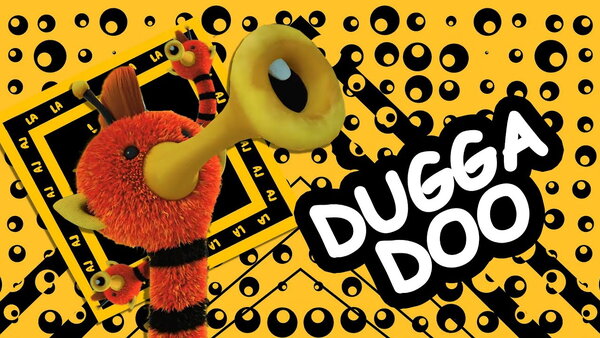
In true Eurovision style we also got something completely daft, in the form of Dugga Doo – a comically repetitive tune sung by a furry orange creature of the same name.
Everything about Dugga Doo was designed to drive you mad, from the lyrics to the abstract, almost psychedelic graphics that accompany it.
To add to the absurdity, it plays at arguably the most serious moment in The Interstellar Song Contest, when Belinda is coming to terms with the fact that she’s potentially now stranded. And in the episode’s aftermath Dugga Doo was all over the internet, even being live-streamed, on a loop, on the official Doctor Who YouTube channel.
Murray Gold knew it was silly and stupid when cooking up the track and its reception wasn't what he intended, with it actually going viral and fans embracing it instead. He actually thought that Cora's Hellion anthem would be the big hit of the episode, but he clearly underestimated what he Dugga-did when he wrote such an awe-inspiring and genre-defining piece of music.
Gold has also let slip that he was asked to do a Christmas remix of Dugga Doo, but he declined. And for the sake of eardrums all across the world, thank god for that.