10 MORE Character Reveals That Didn’t Have To Go THAT Hard
Just when you thought it was safe to read those biographies again, WHAM - PAIN!
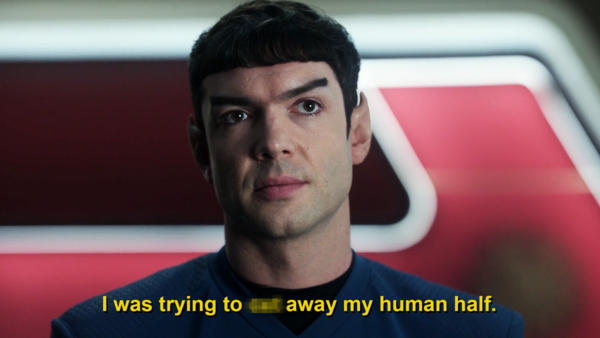
In our previous list of character reveals taking things a little far, we discovered that across the wide expanse of Star Trek, the writers did enjoy making our favourites suffer. Genocide, assault, murder, genetic manipulation - it's all fair game in the final frontier.
That being the case, narrowing the shocking reveals behind characters' motivations and drives to ten was a challenge. When writing anyone's story, the temptation to include a little trauma for growth is always strong. When adding to that backstory, especially around a long-established character and their arc, one needs to be careful. The butterfly effect is in full force, and a stubbed toe at twelve could mean generational trauma for decades to follow.
Not all additions are bad, nor is every twist included for the sake of the twist. Writing is an art and, like those who consider lying the highest skill, it should be practised regularly. There are some reveals throughout Star Trek that, while stark or enormous, have helped to shed a new context on how people act and why they do the things that they do.
As always, please be aware that we will be discussing specific character reveals that were sometimes intended as a cliffhanger ending or mid-season twist, so a spoiler alert is in full effect here. Do you agree that these reveals were a shocking addition, or were they exactly what was needed?
10. Will And Deanna's Tragedy
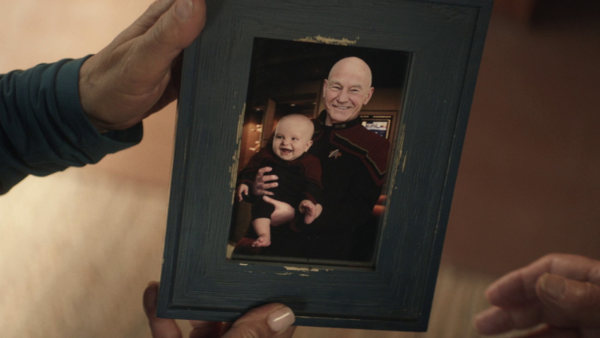
The death of a child is a tragedy that is often impossible to overcome, so adding it to the backstories of beloved characters must be handled with care. While Riker and Troi were a strong couple, having already withstood much adversity in their time, the death of Thaddeus Riker felt like a cruel blow.
In Nepenthe, Jean-Luc and Soji arrive on the planet and are accosted by Kestra Riker, clad in her finest hunting gear. They quickly arrive at the Rikers' cabin and a warm reunion of old friends follows, bunnycorn-pizza and all.
The reason for the family's relocation to Nepenthe is quickly revealed. Thaddeus Riker, born in 2381, contracted a terminal illness, and there was hope that the planet's regenerative properties would cure him. It didn't work, leaving the family devastated, and the audience shocked at this terrible blow.
Though this was a truly heartbreaking addition to the Rikers' story, it helped to set up one of the most heart-wrenching moments in The Last Generation. Will Riker, believing his luck had run out, said to the air and to anyone who was listening that he, and their son, would be waiting for Deanna. It was all she needed, empathic abilities in full force, and she was able to find and save him.
There is a risk with including a reveal like this, much of which revolves around how it is handled. For Star Trek, and for the Rikers, it was handled well.
9. Worf Killed A Kid
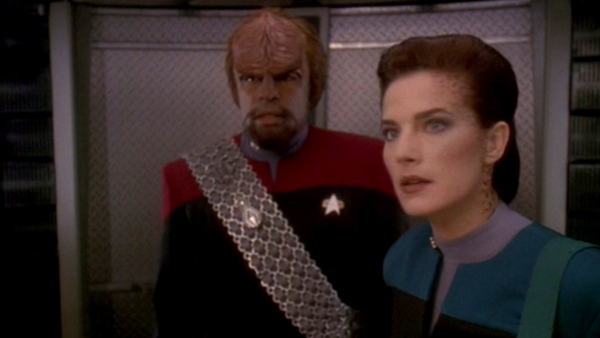
Let He Who Is Without Sin is an odd episode of Deep Space Nine. It was clearly intended to be a light story, arriving after a string of heavy hitters like The Ship and ...Nor The Battle To The Strong. It was directed by René Auberjonois, who recounted a difficult shoot, juggling sand mites gnashing their way through the cast and crew, and Terry Farrell's photosensitivity while having to stand under the sun for long periods of time.
One might be forgiven for glossing over the events of the episode. At the same time, they focus on Bashir and Leeta breaking up (rather cordially) and Quark attempting to cram as much Jamaharon into one week as possible. Still, there is Worf to contend with, in and around his little spot of domestic terrorism.
Dax, demanding to know 'what the hell, Worf?!' discovers his sad backstory. As a child, he had accidentally killed another boy, Mikel. In a game of soccer, they had collided and the boy's neck had been broken. Worf, from that point on, knew that he needed exercise restraint around humans, for fear that he could hurt them.
This was an enormous piece of Worf's story that came from nowhere. While Worf wasn't the typical Klingon during his run on The Next Generation, one didn't assume it was because he was afraid of breaking people around him. It was quite the bombshell to drop in this episode, one that was never discussed again.
8. Neelix's Survivor Guilt
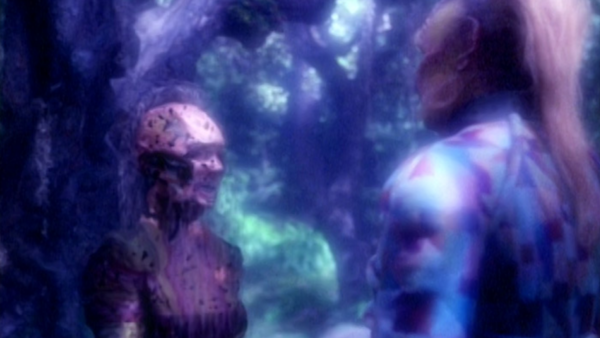
Star Trek has used historical parallels frequently, as was the intention of Gene Roddenberry from the beginning. Exploring real-world issues via the lens of science fiction is nothing new for the franchise, so when Voyager turned its attention to Neelix's backstory, it opted to liken his family's destruction to that experienced in Hiroshima and Nagasaki in 1945.
Before Neelix encountered the USS Voyager, he was a survivor of the Talax-Haakonian Order war. Talax had surrendered unconditionally to the Order, owing in large part to the deployment of the Metreon Cascade.
Dr Ma'Bor Jetrel, Star Trek's answer to Robert Oppenheimer, developed a deadly weapon for the Order. He later attempted to play down his responsibility once he became aware of the full impact of the Cascade. Like the atomic bombs that were deployed over Japan, this Cascade had an initial explosion, followed by radiation fallout. This fallout, according to Jetrel at least, was unforeseen.
The weapon was detonated on the moon Rinax, the homeplace of Neelix and his family. While Neelix himself was offworld at the time of the attack, the rest of his family weren't so lucky. They, along with 300,000 other Talaxians, were killed.
Despite making peace with Jetrel himself, Neelix carried this trauma for years to come. His own brush with death and subsequent vision quest brought him face to face with a version of his favourite sister, Alixia - who promptly dissolved in front of him, re-scarring him for life.
Neelix may not have been everyone's favourite character, but nobody deserves that.
7. Mirror Lorca's History Of Grooming And Sexual Assault
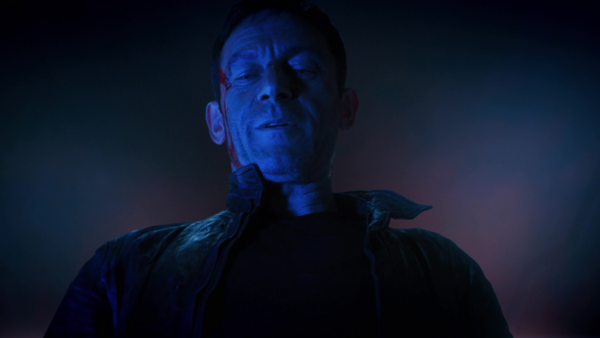
Members of the Terran Empire always run the risk of being one-note. When it was Kirk in Mirror, Mirror, he was a simple bad guy, end of story. However, Mirror Spock had the capacity to be more than his goatee might suggest, which always makes a more interesting character on the screen.
Gabriel Lorca appeared in almost every episode of Star Trek: Discovery's first season, though his true nature was hidden for most of that time. As each episode progressed, audiences were shown a cold, cynical person, though one who wasn't above a bit of flattery to achieve his ends. The big reveal in Vaulting Ambition that he was, and always had been, from the mirror universe, managed to shock and surprise.
However, part of the reveal included the fact that he was a child abuser and guilty of sexual assault. This gave room for pause. Georgiou informed Michael Burnham that her counterpart had been groomed by Lorca, while the audience simultaneously discovered he had abused, and then discarded, a lover named Ava, sister to that universe's Maddox.
While no one was under any illusions that Lorca was a nice person, this stripped any ambiguity to his ambitions away, effectively making him a moustache-twirling, cardboard cut-out type of villain. The fact that Jason Issaacs played him with depth and range served to make this more frustrating.
Frankly, he was bad enough - this felt a step too far.
6. McCoy Killed His Dad
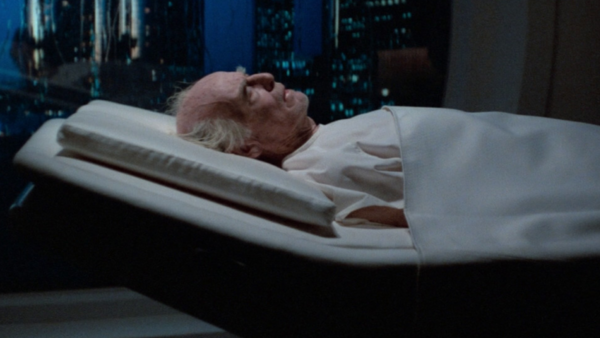
In the fifth Star Trek film, Sybok, Spock's half-brother, boards the Enterprise-A and quickly assumes control. With Kirk, Spock, and McCoy being among the last holdouts to his space-age mind-control, he corners them in the observation room. There, the audience is granted some of the most heart-wrenching reveals about both Spock and McCoy.
For Spock, he relives the day of his birth, remembering Sarek's disappointment at his apparent humanity. Though the logic of remembering his own birth is questionable, the scene is stark and directly feeds another entry on this list.
However, it is the depiction of McCoy's pain that is truly devastating. We learn that his father was suffering from a terminal illness, was constantly in pain, and McCoy was powerless to help him. The scene is quiet and the acting is perfect. Deforest Kelley played the grumbling yet good mannered doctor since Star Trek's earliest days, but to see him broken by this memory is painful to see.
To ease his father's suffering, McCoy deactivates the life support keeping him alive, which allows the man to die within seconds. If that weren't bad enough, McCoy then reveals that a cure for the illness was found a short time later, burying this son with guilt for years to come.
5. Explosive Decompression
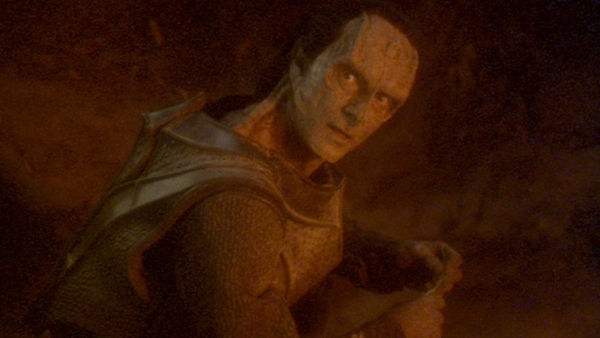
Sometimes, a reveal is thrown in that clearly intended to shock and unsettle the audience. In Waltz, the writers managed to do exactly that with this little reveal of Gul, or Glinn, Dukat's early days.
This episode was designed to do one thing and one thing alone: restore Dukat to his rightful place as the main antagonist of Deep Space Nine. While stranded on a barren world with an injured Sisko, he has all of the cards; he has the phaser, and he has stories. Lots, and lots, of stories.
In one such story, he recounts a horror story from his past. As a lowly Glinn, he was once tasked with cleaning up a compartment in which three unlucky men had experienced an explosive decompression. In his own words, he didn't sleep for a week.
That he can remember it as clearly as he does, while simultaneously going on to claim he was 'too lenient' on the Bajorans during the Occupation, gives us a little more insight into Dukat's mind. To him, the Cardassians were people, while the Bajorans weren't. Having said that, what was it about this event that left him unable to sleep? Was it the mess that he found, or was it something that awoke in him - something that would fuel his actions as the Prefect of Bajor?
Sometimes, revelations can help understand the man - even if they're a little horrific to think about.
4. A Planet That Survives By Using Children As Fuel
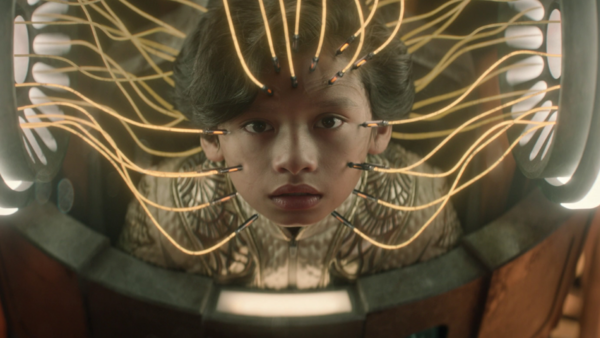
Alora, from the planet Majalis, was a one-episode (to date) character who was involved in one of the biggest gut-punch moments of Strange New Worlds' first season. The audience spends much of Lift Us Where Suffering Cannot Reach believing that she holds the individual best interests of the so-called First Servant at heart.
The Enterprise is drawn into a struggle for the soul of Majalis. Alora is direct, but warm, while discussing her people with Pike. They had known each other for ten years prior, so there is a familiarity there. They rekindle their romance and Pike grows to trust her, even as events begin to get complicated around them.
She is single-minded, focused on making sure the First Servant, who is a young child, is safe and that he is returned to Majalis. There are several attempts to kidnap him, and there is seemingly an assassination attempt that Pike helps to foil.
Pike's aid earns him an invitation to the 'ascension' ceremony. Here, he discovers that Alora has been working to ensure the First Servant takes his place as the power generator for Majalis. He is literally plugged in to their systems, something that will cause him great suffering, and something that he will do alone. To remove him now would be to kill him, something that horrifies Pike.
Alora is resolute, speaking honestly about the pain the boy will face, and assuring Pike that none of it is in vain. He will be honoured by the people of Majalis for the rest of his life, however long that may be. Though she admits she would love there to be another way, she has also accepted that there isn't. Pike, unable to face this, leaves.
3. I Know How You Die
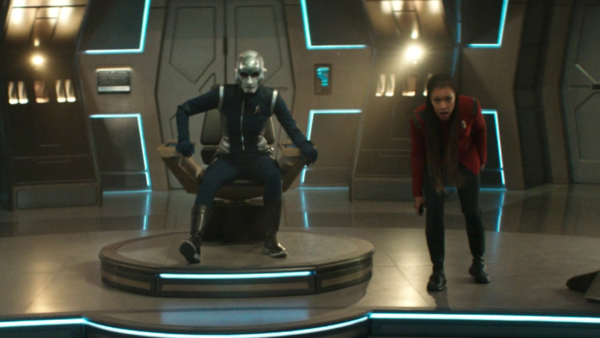
For this character reveal, it was something that the audience was already aware of. In the second season of Star Trek: Discovery, Lt. Commander Ariam was infected by Control. This led to her death by airlocking, saving her comrades in the process. She was given a funeral with full honours and her crew grieved.
Several years (or centuries, depending on who's counting) later, Ariam not only rose again, but was given full knowledge of her impending death. Captain Burnham and Commander Rayner were stuck in a time loop, thanks to a Krenim Chronophage and were joined by an out-of-time Stamets. While this might have been a standard Tuesday on the USS Discovery, it ended up being anything but for poor Ariam.
Burnham, left without time and options, reveals to Ariam that she knows the exact date and manner of her death. One does have to wonder though - was there a better way of convincing her to help? How exactly does Burnham claiming to know Ariam's expiration date help, exactly?
From Ariam's point of view, she was enjoying a nice day in the big chair and then suddenly things took a turn for the fatal. She helps Burnham, but at what cost?
At what cost?
2. Scotty Bears A Total Resentment Towards Women
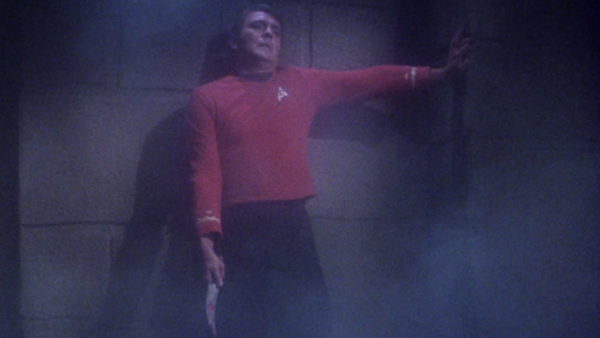
While Wolf In The Fold is a divisive episode for several reasons, the biggest challenge comes right at the beginning of the story. While Scotty, Kirk, and McCoy are enjoying exotic dancing and light-based applause, the music rains down around them, and the audience is told that Scotty is healing from something. Kirk tips the dancer to join them, and she leaves with Scotty.
Everyone seems to be in good spirits. Kirk and McCoy then discuss Scotty's recent accident in engineering, namely an explosion that resulted in Scotty being thrown against a bulkhead. The audience is never told how bad this accident was, but they are told that it was caused by a woman.
This resulted in Scotty's total resentment towards all women.
Though McCoy quickly describes this as severe psychological trauma, it's quite the nugget to drop in conversation. As interesting an approach as it was in 1967, when one considers James Doohan, Simon Pegg, and now Martin Quinn's takes on the character, it makes it even more unbelievable.
There is a distinct possibility that McCoy was joking when he claimed that Scotty bore such resentment toward all women as he and Kirk were grinning heartily through the entire conversation. One hopes that this was a joke and that Starfleet doesn't habitually treat their officers' traumas with trips to hedonistic pleasure worlds.
1. Spock Attempted To Cut The Human Half Out Of Himself
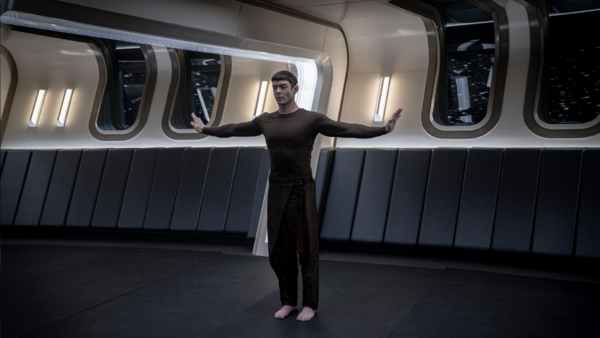
Star Trek: Strange New Worlds' third season episode What Is Starfleet? introduced a dark chapter of Spock's backstory, one built on the abuse and rejection he had faced as a child. The audience had seen versions of Spock facing strife in his past. Star Trek included a scene where a young Spock was habitually bullied by his Vulcan classmates, with that abuse focused on his human mother.
Yesteryear also depicted the struggles that young Spock faced from his fellow Vulcans, which, when combined with Sarek's apparent disappointment in him, clearly left a lasting impact on the young man.
While Star Trek: Discovery depicted a young Spock jealous of the attention his adopted sister Michael received, it stopped short of truly exploring the pain he felt. Vulcans feel pain more powerfully than humans, as we are frequently reminded, so what does one do with that pain?
Spock began to self-harm.
In an interview segment with Beto Ortegas, Spock reveals that he was once found by his father, carving into his flesh with a knife. This, according to Spock, was an attempt to cut the human half of himself out.
This devastating reveal highlights the pain that he felt, as well as the loneliness he must have experienced. It was also an enormous character moment to drop into a short scene like that, certainly evoking more sympathy for Spock, but shocking audiences at the same time.