10 Most Groundbreaking TV Episodes Ever
The revolution was, in fact, televised.

A good TV show entertains you. It can take the edge off after a hectic day at the office, like a glowing security blanket that comforts you with its pleasant characters, reliable rhythms, and simple storylines that can be wrapped up in the time it takes to cook a frozen pizza.
But a great TV show does much more than just lull you into a good night's sleep. The best television challenges you, rattles you, shakes up your worldview, and most importantly, it stays with you.
Some episodes of television are so important that they actually changed the course of history -- or at least the course of entertainment. They put something truly new -- and maybe even a little taboo -- out into the world that wrinkles the status quo and breathes fresh air into the medium.
Whether those involved with these revolutionary shows knew it or not, they were changing the way we'd watch television for years to come. They were the first to talk openly about homosexuality, the first to suggest it was okay to kill off a main character, and the first to cram a bunch of strangers into the same room and let the cameras just...roll.
The following episodes gave television a much-needed kick in the pants, and made history in the process.
10. Happy Days - "Hollywood, Part 3"

Historic Impact: Origins of "Jumping The Shark"
Not all examples on this list are positive. Because sometimes you make history in a bad way. It happens. And it happened in the most unfortunate of ways during the 5th season of Happy Days.
In its first few seasons, Happy Days was gleefully beholden to the nostalgia of the 50s, complete with simple, relatable stories about friendships and families. But as the show went on, the storylines became bigger, the comedic performances became broader, and The Fonz transformed from a bit character into the larger-than-life center of it all.
Fonzie had become almost superhuman in his coolness, which led to the writers piling on one outlandish idea after another. Enter, this pile of ridiculousness, wherein Arthur Fonzarelli -- wearing swim trunks and his signature leather jacket -- ski jumps over an actual shark.
Not only was the stunt pointless from a story standpoint, it actually went against many of the characterizations that had been built up by that point.
The show remained on the air for another six years, but it was never quite the same. Fonzie jumping the shark signified a major cultural shift in the television industry, and gave us a brilliant shorthand for the moment a show becomes too gimmicky for its own good.
9. The Flintstones - "Little Bamm-Bamm"

Historic Impact: Serio-Comedy Invades Cartoons
William Hanna and Joseph Barbera (most famously remembered under the portmanteau of Hanna-Barbera) were almost singularly responsible for the Golden Age of cartoons in the 60s. Children and adults alike knew and loved The Jetsons, Yogi Bear, Johnny Quest, Scooby Doo, and The Flintstones. Those cartoons are all iconic in their wholesome, familial appeal.
What folks may not recall about The Flintstones, however, is just how dark things could get in Bedrock. "Little Bamm-Bamm" is perhaps the oddest example of the cartoon diverting from its real life inspirations (The Honeymooners) to yabba-dabba-dabble in some truly black comedy.
It's not subtle, either. The central premise of the episode is that Barney and Betty Rubble are unable to have children. This was the first time infertility was discussed openly on a sitcom, and it happened in Bedrock of all places.
The sadness this poor couple experiences in first not being able to conceive a child and then, later on, not being able to adopt a child is heart-wrenching. The Rubbles break down into tears on more than one occasion, and Barney even attempts suicide after Child Services intervenes to take Bamm-Bamm away.
It's all played for laughs, of course, but the way these uneasy, real life issues intermingle into the animated world opened up some room for future cartoons to act a bit more seriously.
8. The Hank McCune Show - Episode 1.1

Historic Impact: First Use of a Laugh Track
Psychologist have discovered that people laugh much more when in the presence of others -- 30 times more, in fact. It's why stand-up comedians prefer a packed house over a speckling of strangers. Those same psychologists suggest laughter is actually more about communicating than reacting to something. It's more of an "I appreciate that" than an "I can't stop my body from making this sound" kind of thing.
That psychology, consciously or not, led to the use of so-called "canned laughter" in sitcoms. And Hank McCune exploited the hell out of it.
The Hank McCune Show was filmed without a studio audience present, but the show's creators didn't want the viewers at home to feel that. So they inserted pre-recorded chuckles and guffaws into the background of McCune's shenanigans. While he was having wacky adventures at a candy company convention, ghost chortles were pumped into the soundtrack, and no one was any the wiser.
Thanks to its effectiveness on the show, the laugh track became an integral part of television for many decades. It's really only stopped in recent years with the advent of more single camera comedies like The Office.
7. Ellen - "The Puppy Episode"

Historic Impact: First Openly Gay Lead Character
“I mean, I knew that it would be big, but I had no idea that it would be this big." - Ellen Degeneres
Twenty years ago, the notion of an openly gay lead character in a sitcom was almost unfathomable. Sure, audiences had warmed to the idea of the saucy lesbian neighbor and the sassy gay guy as the peripheral sidekick, but having a homosexual front and center on weekly television was still a barrier to be broken down.
In the weeks leading up to "The Puppy Episode" -- so called because one studio exec scoffed at Ellen's character starting a lesbian relationship and suggested she simply "get a puppy" instead -- the hype around the show had reached a fever pitch. Ellen Degeneres had actually come out, in real life, a couple of weeks earlier in an interview with Time Magazine.
So her character's famous pronouncement -- spoken into a PA system no less -- wasn't really a shock to anyone watching. In fact, the episode drew 42 million viewers mostly because of all the build-up.
But that moment flicked a switch in the brains of many, especially in Middle America, who would later welcome Will & Grace and Modern Family into their living rooms with open hearts. There's no chance that happens without Ellen outing herself with a little help from Oprah Winfrey first.
6. Mary Kay And Johnny - Premiere

Historic Impact: First On-Screen Couple Shares A Bed
The very first American situational comedy was groundbreaking not just in its structure, but because it was also the first time a couple were shown sleeping in the (GULP) same bed. That may not sound very titillating now, but in 1947...well, actually, it wasn't all that provocative in 1947, either.
Mary Kay and Johnny -- who were married in real life, as well -- were the first betrothed couple to share a single bed. This was largely due to the limitations of the show's live television format, which required most of the episodes to be filmed in closer quarters than other sitcoms.
But no fuss was made over it. At all. Which is fascinating in retrospect, due to the prudish nature of the other on-screen couples of the era.
Every sitcom that followed in Mary Kay and Johnny's wake -- from I Love Lucy to Leave It To Beaver -- refused to acknowledge the fact that married couples slept together at night. Lucy and Ricky slept in the same room, but in separate twin beds. Why? We may never know. But we wouldn't see it happen again until The Nelsons bunked up in The Adventures of Ozzie and Harriet.
Unfortunately, no footage of the historic show exists, as the footage was all dumped into the East River sometime in the 70s.
5. Bonanza - "Forever"

Historic Impact: Main Characters Can Be Killed Off
The death principal characters on a TV show has become something of a cultural fascination now that shows like The Walking Dead and Game of Thrones killing folks off with reckless abandon. But it wasn't always like this. Audiences weren't always waiting for the axe to drop on their favorite character.
In 1972, Bonanza was nearing the end of its run as America's most beloved, serialized Western. Unfortunately, before the show could wrap up, Dan Blocker, who played gentle giant "Hoss" Cartwright, would die of a pulmonary embolism. The show's creators had a decision to make: Cancel the show, or continue on without one of the audience's favorite characters.
Ultimately, all involved decided it was best to continue. But rather than recasting Hoss with another actor -- or sending him off to the same mysterious island as Cousin Oliver and Chuck Cunningham and every other TV character who's disappeared with no explanation -- they decided to write his death into the Season 14 premiere.
It's subtle, but multiple characters talk about Hoss in the past tense. For instance, his on-air father says things like "I know what it's like to lose a son" while staring sorrowfully at a photo of Hoss. Even if they didn't know the back story, viewers knew that Hoss was no longer with us.
4. The Real World: New York - "This Is The True Story..."

Historic Impact: Reality TV Breaks Through To The Mainstream
You know the words. "This is the true story of seven strangers picked to live in a house and have their lives taped. Find out what happens when people stop being polite and start getting real." Those extremely 90s words kicked off a groundswell of reality television, and the eventual overtaking of MTV's music-first mentality.
As I said before, not every groundbreaking bit of television is necessarily "good", but The Real World's low-concept human experiment did at least appear to be grounded in a simple, agreeable idea: We're all different, but we're all the same.
The relatively small confines and smattering of different personalities, upbringings, races, and sexualities melded together for a wholly entertaining and educational -- at least by today's reality TV standards -- viewing experience.
It wasn't the first reality show -- the format can be traced all the way back to 1945's Queen For A Day -- but it's the first reality show that made the world fall in love with watching a bunch of attractive twentysomethings interact with each other for 30 minutes at a time. The Real World: New York set in place the basic formula that all reality television has been following ever since.
3. Star Trek: The Original Series - "Plato's Stepchildren"

Historic Impact: TV's First Interracial Kiss
"Where I come from, size, shape, or color makes no difference." This line, spoken by Captain Kirk in Season 3's "Plato's Stepchildren" -- easily one of the most progressive pieces of television from the '60s -- also stands as a personal testament for Star Trek creator Gene Roddenberry.
Star Trek was famously all about exploring uncharted territory, going where no man had ever gone before. So it's fitting that the series broadcast the very first interracial kiss, between Kirk and Lieutenant Uhura, in a moment that was almost, ahem, whitewashed from the show.
Story goes that some of the more "conservative" viewers were never meant to witness the kiss, as the executives had made the decision to shoot a separate, less passionate exchange between the two to broadcast in places that may have been outraged by the mere sight of a white man locking lips with a black woman.
Luckily, William Shatner was not about to have the moment censored, and foiled these additional, kiss-less takes by crossing his eyes during the scene, rendering it unusable. They had no choice but to show the kiss to all viewers, leaving behind a subtle but important moment for intergalactic and real life race relations.
2. M*A*S*H - "Goodbye, Farewell And Amen"

Historic Impact: Most-Watched Episode of American Television Ever
M*A*S*H was an important television show for many reasons, not the least of which was its unflinching (though exceptionally sarcastic) depiction of the realities of the Vietnam War. The show began airing in 1972, three years before the war ended, presenting a rare opportunity for a TV series to comment directly on a major historical event as it was happening.
The popular dramedy lasted 11 seasons and endured thanks to a wildly consistent viewership. When it was time for the show to call it quits, it had to go out with a bang.
"Goodbye, Farewell and Amen" was a two and a half hour swan song for one of the most controversial TV series to ever gain mainstream popularity. And how fitting that it tackled one more majorly controversial topic -- PTSD -- before going off the air for the last time.
The series finale raked in more than 105 million viewers, making it the most-watched program in television history to that point. It wouldn't be topped for 27 years, when the 2010 Super Bowl finally toppled its reign. Even now, it's the only non-Super Bowl in the Top 20 most-watched TV programs.
1. Roots - "Part I"
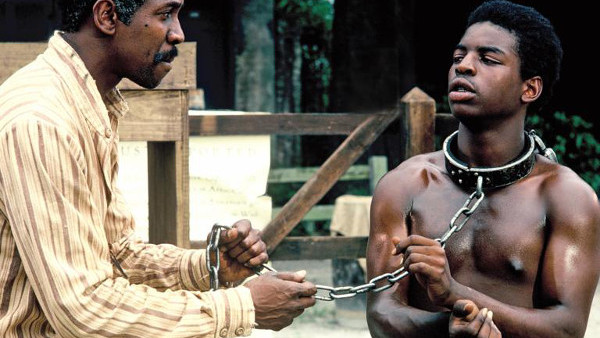
Historic Impact: Primetime Dramas Take Black People Seriously
Culturally important television of this magnitude doesn't come around very often. In fact, in the 40 years since Roots premiered, there hasn't been an event quite like it. And the impact LeVar Burton, John Amos, Louis Gossett Jr. and company had on the world in 1977 simply cannot be overstated.
A miniseries based on the book by Alex Haley, Roots told the tense story of an American slave family and their difficult, violent journey to freedom. It was, to put it modestly, a tough sell.
The common perception in the television industry already was that dramatic shows featuring primarily black casts wouldn't go over well with "mainstream" (read: white suburban) audiences. Even sitcoms like The Jeffersons and Good Times, though they performed well enough, still didn't have enough crossover appeal to ease TV executives' worries.
Roots proved everyone wrong. Not only did it go over exceedingly well with mainstream audiences, but it blew every other show out of the water, raking in almost 100 million viewers by the time the finale rolled around. After that, there were no more excuses for not casting black actors and actors in serious TV roles, and focusing on their stories.