10 Most Hated TV Finales Of All Time
The television equivalent of the Darwin Awards.
It never used to be like this. In the days before the internet, when dinosaurs walked the earth, event television was referred to as ‘watercooler moments’ - those episodes that people talked about on their break at work the next day.
When a well-loved - or, at least, well-known - TV series finally came to an exciting conclusion, that would become a definitive watercooler moment for a generation. The tearful finale of M*A*S*H, the Last Newhart, the baffling final episode of St. Elsewhere… but no one really talked about the endings they hated.
That’s something that’s arisen with the ubiquity of the internet and, to a certain extent, smartphones and social media. These days, if you want to complain about something you hate, truly rip it a new one, there’s a dozen conversations to be had on Twitter, a ranting status on Facebook, a sub on Reddit, or any one of a hundred other outlets for your rage… and those rants, those rages form consensus, create a nearly unanimous agreement about that thing you all hated so very, very much.
From the television shows that died an anticlimactic death, to the programmes that violently zigged when they should have zagged, these are the series finales everyone loves to hate.
10. The X-Files - ‘The Truth’

The initial premise of ‘The Truth’ - Mulder placed on trial for supposedly murdering someone that he knows can’t be killed - had promise for about five minutes. However, that trial took the form of a military tribunal; something not remotely legal or even practical in real life, and yet another example of how the writing of the show had slipped over the final few years.
With guest star witnesses that just recapped the show’s mythology at length and plenty of shouting about The Truth but no actual answers, the trial was a farce in more ways than one, culminating in a sentence of death. The rest of the feature-length episode saw Mulder break out and go on the run with Scully… and that was it. After nine years, that was the payoff to this groundbreaking show.
The fans who’d kept the faith for nine years were horrified; those whose expectations had already been lowered by years of falling quality were just disappointed.
While Gillian Anderson gave the lazy script her best shot, David Duchovny looked as though he would have preferred to be anywhere or anyone else. Sadly, last year’s X-Files reunion season didn’t redress the balance, leading many to openly wonder what on earth the point had been.
9. Smallville - ‘Finale’

A reimagining of Clark Kent’s teenage years before he became Superman was always going to be an odd sell. What exactly was he going to be doing before he, you know, got interesting? It turned out that he’d be doing exactly what Superman had always done - fighting the same villains alongside the same supporting cast - only without the elements that made him iconic.
Vacillating wildly between comic book action and sub-soap-opera schmaltz, the two part finale - each part written and directed by different people - was a mixed bag until the climax.
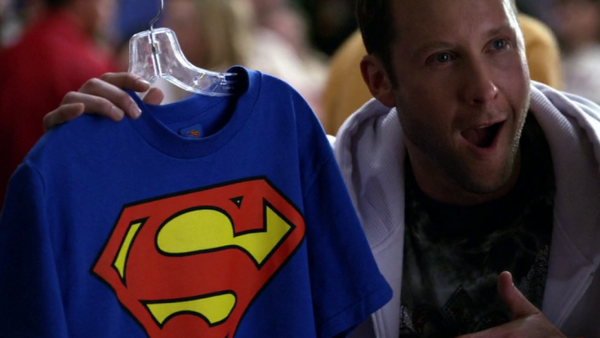
Original showrunners Miles Millar and Alfred Gough had always intended the final scene of the show to be Clark donning the costume and assuming the Superman identity. Season ten’s producers Brian Peterson and Kelly Souders chose to honour that by ignoring that historic moment, and having the final reveal take place seven years in the future - long after he took on the name and the costume.
The audience, having waited for this moment for a decade, didn’t even get to see the full suit; just the ‘S’ under Clark’s shirt. Understandably, critics and fans alike weren’t best pleased, and the finale was named one of TV Line’s biggest disappointments of the year.
8. Roseanne - ‘Into That Good Night’

It’s easy to forget what a phenomenon Roseanne was three decades ago. The Friends or Big Bang Theory of its day, it was one of the most popular, enduring TV shows in America.
However, with ratings falling, it was decided to shake up the format for season nine, turning a grounded sitcom about blue collar life into a weird-ass fantasy. The Connors won $108million in the lottery. There were themed episodes taking in Evita, Steven Seagal movies, Jerry Springer and Xena. Roseanne entered a beauty contest, Jackie dated a prince - it was as if Roseanne the writer/producer had shoehorned as much wackiness as possible into Roseanne the show before it was cancelled.
In the final ten minutes, it was revealed that that all of that malarkey had been a fiction… as was the entire nine-season run of the show. The whole thing had been Roseanne’s attempt to construct a better, clearer life for herself: swapping around her daughters’ chosen partners, making her mother gay instead of her sister, and writing her deceased husband back into her life.
It was a slap in the face for the audience, conned into investing their time and emotion into these characters, none of whom were who they were supposed to be. Twenty years later, many are still bitterly disappointed.
7. Battlestar: Galactica - ‘Daybreak’

Hailed in 2004 as a revolutionary reimagining of the original 1978 television space opera, Ronald D. Moore’s updated version substituted themes and production designs ripped off from Star Wars for a grittier, more nuanced take on a similar plot structure. Practically wiped out by the cybernetic Cylons, the remnants of the human race survived as a wagon train of spacecraft escaping the holocaust and searching for a new home.
The excellent reviews continued through Battlestar: Galactica’s second season, but began to tail off in the third. The tightly plotted structure deteriorated and the alluring mystique of the high concept degenerated into oblique mysticism which seemed to posit an Orphic view of spirituality. Humanity, overseen by some inexplicable god-figure, was doomed to repeat a ‘grievous circle’ of events over millennia until it broke the pattern.
That downward spiral wasn’t course-corrected by the final season. ‘Daybreak’, a three-part culmination of that narrative, actually doubled down on those obscure cod-religious aspects, proving that it was Moore’s endgame all along.
For the most part, the audience was furious, feeling cheated by lack of closure and the vagueness of the climax. No less a fan than George R.R. Martin dismissed the denouement, writing that, “a deus ex machina is a crappy way to end a story”.
6. True Blood - ‘Thank You’

There have been worse series finales than True Blood’s anodyne, anti-climactic and lazy send-off, but few so damned disappointing.
Chock full of gratuitous sex, gore, and deliciously arch dialogue, True Blood brought us steaming hot Deep South melodrama with a bloody twist back in 2008. Six years later, the show was a shadow of its former self, the sharp writing and biting characterisation long gone, its fans mostly watching out of inertia rather than the obsessive devotion the show had originally inspired.
The final seventh season was no improvement. And then came the finale.
Wrapping up loose threads in as predictable and inoffensive manner as possible would be fine if this was some primetime medical drama or daytime soap. But this was True Blood, the show that defined itself by being unpredictable and gleefully offensive. Did we really want to see everyone married off and having babies? Were we really expected to believe that all the madness and mayhem had just stopped, like unplugging a dodgy blender?
Worst of all was that final four-year time jump, the second hop into the future in only ten episodes. This has to be be the laziest plot device of all time - skipping telling a story to show everyone what happens in the end.
5. Enterprise - ‘These Are The Voyages’

By 2005, the Star Trek franchise was showing signs of terminal fatigue, and the decision was made to axe the only Trek iteration still being produced, prequel show Enterprise. It was a shame - the show had been revitalised after a slow start, seasons three and four being massive improvements on what had come before.
That changed with the finale, which took the format of a simulation of the original Enterprise’s final mission from the holodeck of the Enterprise-D some two hundred years later.
That’s right - not only did the final episode perform the dreaded Lazy Time Jump, moving six years into the future from the previous episode, but it was structured around old Star Trek: The Next Generation storylines and characters.
Worse still, the (simulated) death of one of the main cast was given two minutes of acknowledgement in the (simulated) past narrative, and not at all in the (real) present narrative, stripping it of all drama and relevance.
The audience was even robbed of Captain Archer’s historic address to the assembled delegates at the signing of the Federation Charter - a moment that Archer’s crew had been instrumental in bringing about - as Riker and Troi chose that moment to end the simulation.
It was a massive disservice to the Enterprise audience - and for that, matter, the cast, with some voicing their anger to the press before the episode had even aired.
4. Two And A Half Men - ‘Of Course He’s Dead’

The finale to Chuck Lorre’s Two And A Half Men has to be the meanest, laziest attempt at a send-off there’s ever been for a once popular sitcom.
Back in 2011, in a dramatic bust-up between Lorre and the show’s star, the drug-addicted Charlie Sheen, Sheen was fired and the remainder of season eight was cancelled. Sheen then had a very public, unusually weird meltdown and the show resumed production with Ashton Kutcher replacing Sheen’s Charlie Harper as a brand new character.
Expensive but with tumbling ratings, the show was cancelled with season twelve’s double-sized series finale, which heavily teased Sheen’s return to the series. The storyline featured Harper’s apparent return from the grave and his Sideshow Bob style gruesome threats toward his surviving family.
Interposing the usual cringeworthy jokes about humiliating sex with fourth-wall-smashing gags about how hackneyed and strained Two And A Half Men had become, the episode was seasoned with constant barbed digs at Charlie the actor, transparently disguised as snark directed at Charlie the character.
Sheen, of course, was nowhere to be seen… and by the time a piano was literally dropped on the head of his faceless stand-in, Lorre’s self-indulgent gameplan was obvious. He’d decided to use the series finale of his hit sitcom to sh*t on his former star and the show itself, to the audience that had made him rich. Losing.
3. Lost - ‘The End’

Towards the end of Lost’s final sixth season (ironically, in an episode designed to reveal a good chunk of backstory), someone says, “Every question I answer will simply lead to another question.” The audience at home should probably have been paying attention.
Already slated for years for failing to deliver answers to all of the fans’ burning questions, for the finale showrunners Carlton Cuse and Damon Lindelof chose to leave even more threads hanging, instead spinning a spiritual coda to the story.
The present-day storyline saw our hero’s sacrifice allow the defeat of the darkness lurking on the island and the escape of his friends. However, the B-story - the ‘flash sideways’ universe - came to the fore right at the end. It turned out that every protagonist in Lost’s six year history had been brought together after death to reconnect with one another in this ‘sideways’ waiting room, before moving on to whatever part of the afterlife was next.
Lost was never really about uncovering the mysteries of the island, any more than Mad Men was a show about advertising. ‘The End’ suited the elliptical, mystical narrative and show-not-tell style of the show down to the ground - and those that understood that, found it incredibly moving.
However, it was most emphatically not what the majority of the audience was after. Frustratingly, it appeared that Lost would take its secrets to the grave.
2. Dexter - ‘Remember The Monsters?’

Fans of Showtime’s serial-killer-as-protagonist drama have been fairly clear about two things in the years since the show limped to a halt. One, that the show never came close to the heights of season four’s gripping cat-and-mouse game with the Trinity Killer, and two, that the series finale was the worst possible way to end the show.
Slow and meandering, season eight represented an even steeper nosedive in quality. Valuable time had been wasted on redundant subplots for supporting characters old and new. Meanwhile logic and consistency had sunk to new lows, the unstoppable stupidity of Miami Metro’s homicide department now having spread to Dexter himself. Worse, it was all so boring.
One critic even penned an open letter to the network asking them to skip the last four episodes and go straight to the finale. If he’d known what was coming he wouldn’t have bothered.
Dropping the ball once again, showrunner Scott Buck doubled down on the dumb, delivering a finale so tedious and mind-numbingly stupid that pretty much everyone sat through it shouting OH COME ON every two minutes.
By the end, with Dexter having inexplicably survived a shipwreck in a hurricane and begun a new life as a lumberjack (OH COME ON), they’d moved on to throwing food at the TV. Buck has since graduated to screwing up sure things for Marvel with wilfully mediocre first seasons of Iron Fist and The Inhumans.
1. How I Met Your Mother - ‘Last Forever’

In a way, hindsight being what it is, it was fairly foreseeable that How I Met Your Mother would come to an anticlimactic end.
After all, other gimmicks aside, the central conceit of the show was that it was a shaggy dog story: a comedic form with a deliberately longwinded, convoluted set-up that builds to a calculated anticlimax designed to make you groan.
Of course, a shaggy dog story isn’t supposed to make the audience angry… and the audience was livid with How I Met Your Mother when ‘Last Forever’ aired in 2014.
Showrunners Carter Bays and Craig Thomas had stretched out season nine to cover a single weekend over eight hours of television and brought us the perfect Mother in Cristin Milioti’s luminous, witty Tracy; ‘Last Forever’ offed her by voiceover in seconds. Worse, minutes later future Ted - he of the narrative framing device - was paired with Robin, who the show had spent years telling us was no good for him, as if she was the woman he was predestined for.
Nothing makes fans hate a TV show more than when it insults their intelligence - well, How I Met Your Mother’s series finale managed to insult the intelligence of its creators, too. They’d have to be halfwits, not to mention tone deaf storytellers, to believe that this was the right way to bring nine years of eager expectation to a close.