10 Most Overrated HBO Series Ever

Everything's ending. Time to wake up.

HBO has consistently put out most of the greatest television of the last 20 years. There's no denying the quality of shows such as The Wire, The Sopranos, Six Feet Under, Veep, Carnivàle, Deadwood, The Jinx and Boardwalk Empire. Whether it's drama, documentaries or comedies, they've been blowing minds on a very consistent basis. Of course the network has green-lit some absolute duds in its time too - Lucky Louie, Little Britain USA and Arli$$, just to name a few - but its hit-rate is genuinely impressive. But what about those shows that proved ridiculously popular, that were (or are) either commercially successful or critically adored, despite their lack of substance and their generic style? There are so many series that were celebrated more because of their creators, or simply because of their presence on such a revered network, rather than the content produced. A few of these shows had exceptional early seasons, and courted huge excitement and admiration in their weaker later episodes simply by coasting on past successes. These are HBO's 10 most overrated shows to date. Some of these shows should have been the great groundbreaking series that many people have deluded themselves into thinking they are. It's time they were taken down a peg or two.

10. True Blood

Over the last 10-15 years, it's been difficult to move without bumping into a vampire. With the global success of the Twilight films and The Vampire Diaries, among so many others, you'd think that the graves of the world must be fully emptied of reanimated corpses by now. Inanimate corpse might be a more suitable description of the empty, emotionless and ridiculously popular True Blood. This is a show marred by its pandering attempts to please a mainstream audience that is fascinated with romantic gothic soap operas about the undead. The style is a bizarre attempt to marry teenage drama with gothic horror, which would be fine as a one-off... But when so many shows and films are doing it, the hype carries them along rather than actual quality. True Blood is the ultimate example of this. It just isn't very good. It comprises campy acting, dull plots and a group of characters that are incredibly difficult to care about into a deeply generic show. Yet it's unbelievably popular, owing to the ongoing obsession with the genre. If you want a truly remarkable version of romanic vampiric media, go watch Let The Right One In or A Girl Walks Home Alone At Night. It doesn't matter if the books are your favourite thing ever, and you think they make up for the series' faults. True Blood should be able to stand on its own merits as a television series, but really it sucks.

9. Da Ali G Show

Sacha Baron Cohen somehow succeeded in becoming the most ubiquitous comedian of the 2000s, despite the fact that his single talent seems to be the ability to put out material that consistently fails to be funny. It's quite an impressive feat. Da Ali G Show, which started on the UK's Channel 4 but eventually moved over to HBO, introduced the world to his most famous character (alongside Borat, star of the smash film of the same name). Ali G, a hideously stereotypical (and deeply offensive) parody of British black youths and British-Asian youths, was somehow lauded as the most ingenious comic creation of the decade. Perhaps that says more about audiences than the creator. Cohen has made a living from portraying exaggerated parodies of ethnic and sexual minorities in Britain, and it's a shame that a network as (usually) progressive as HBO was willing to air his offensive nonsense. Why is Ali G regarded as funny? Is it 'coz Cohen actually isn't black? It's funny to laugh at racial difference, said no-one ever.

8. John From Cincinnati

"This might be the most wonderfully weird drama since Twin Peaks" said The Guardian. Significant praise indeed. While Twin Peaks undoubtedly lost its way in its second season, the first half of the show is quite possibly the most innovative and boundary-pushing television show of all time. If John From Cincinnati was even half as good as that, it'd be well worth watching. Unfortunately, The Guardian isn't just slightly wide of the mark. It couldn't be more wrong if it declared Arli$$ the best show ever to air on HBO. Somehow, despite being a convoluted and heartless load of rubbish that probably doesn't even make sense to its creator, John From Cincinnati remains a fondly-remembered show to this day. The big difference between JFC and, say, Twin Peaks, is that Twin Peaks was both warming and mysterious. Audiences cared about the characters, and the weirdness just drew them in further. There is literally no character in JFC worth caring about - so why should the viewer care enough to try and make sense of its complexities? Maybe the film has attained cult status because it was created by David Milch, who was in charge of the impeccable Deadwood. Either way, it deserves to be forgotten.

7. Luck

Luck is kind of an anomaly on this list, as it's actually a pretty enjoyable show. It deserves a lot of the critical appraisal it received during its short air time. The premise is interesting (a study of gambling in horse racing), the cast is strong (Dustin Hoffman fronts it, for a start) and David Milch's writing easily outdoes that of John From Cincinnati. But it also represents a major error of judgement from HBO, and deserving to be taken down a peg from its position of critical admiration due to its despicable breaches of animal safety rules and regulations. Instead of taking the time to use found footage for the action sequences involving horse races, or even just avoid using them entirely, HBO and Milch elected to film their own. Clearly, the correct safety procedures weren't taken. 3 horses died due to to mistreatment, and PETA accused the show of further crimes against animal rights. The show was ultimately cancelled. Luck may have been a pretty great show, but it was morally flawed.

6. Hello Ladies

Another instance of a brilliant writer getting a free pass despite putting together one of the weakest shows in HBO's history is comic writer and Ricky Gervais associate Stephen Merchant. Merchant is responsible for much of the best comedy of the last 15 years (The Office, Extras) and is absolutely deserving of the praise heaped on him. His HBO show Hello Ladies, which he wrote and starred in, is somewhat less deserving of admiration. It feels a bit like Merchant "selling out", actually. Where his previous work has relied on subtle awkwardness, making the audience cringe along with the characters onscreen, Hello Ladies' awkward humour is about as subtle as swinging a screaming chainsaw at the audience and demanding they feel uncomfortable. It revolves around Merchant, a stereotypically nerdy Brit, trying to get a girlfriend in the USA. Of course, he's a bit gawky and bit weird, so he fails repeatedly. Hilarity ensues. As far as clichéd comedy goes, it doesn't get much more generic than this. It's like Adam Sandler doing observational comedy. It didn't fare particularly well commercially, but for some reason it seems to have gained a strong reputation since its cancelation. This is in spite of the fact that the only awkward moment generated by Hello Ladies was the one when Merchant asked HBO if they'd be green-lighting more episodes.

5. Girls

Has a show ever been more problematic in terms of the amount of praise its received than Lena Dunham's Girls? Admittedly, the sentiments and goals of the show are genuinely brilliant. It's a show written by a woman, about women (still a rarity, unbelievably, in today's world). It deals with some seriously lofty and under-explored issues such as abortion, body image issues, the social media-saturated lives of young people and harassment of women. These are all issues that a progressive show should be dealing with. But the problem is... Girls doesn't really seem to take them seriously enough. OK, these are pretty dark topics for a show that is, at its core, a comedy, but if Dunham wants these issues to be illuminated adequately (and not just dismissed) then she should surely be taking the time to cover them more sensitively? Not to mention, of course, that the show has exhibited classism, racism and transphobia throughout its seasons. Not particularly brilliant for a series that claims to be presenting a non-patriarchal narrative. No doubt Dunham means well, and - as indicated - the themes she puts out there aren't being highlighted by anyone else. She certainly merits admiration - and indeed praise - for bringing these issues into the mainstream. It's a shame that the show itself doesn't always succeed in matching its lofty aims, and that it is occasionally just as problematic as the doctrines that it claims to undermine.

4. Entourage

For some reason, Entourage holds a reputation for being up there with the most hilarious series in the history of television. It isn't. What it is, in actuality, is an embarrassing celebration of the excesses of fame, wealth, misogyny and being a complete pr*ck. No-one has ever put better the problems of Entourage than critic Mark Kermode in his review of the filmic spin-off (the fact that this despicable show was popular enough to merit a Hollywood film is enough of an indication that it is unbelievably overrated):
In this post-humour universe, these d*ckheads are heroes, universally loved, lavishly indulged. While films such as The Player satirised the vacuity of Hollywood, Entourage merely revels in it, napalming the screen with waves of pornographic consumerist vulgarity €“ cars, asses, cars, tits, boats, asses, cars €“ dredged directly from Tinseltown€™s festering scrotum... A swath of self-congratulatory celebs flash their smug mugs in a world so grotesquely chauvinistic you want Imperator Furiosa to arrive in a War Machine and nuke the place. Believe me, The Human Centipede was more sensitively attuned to issues of gender politics. And it had better jokes.
"Oh, but the film wasn't as good as the show!" detractors will cry. They'd be wrong. Both the series and the film deal with exactly the same problematic themes, whether you think one is funnier than the other or not. Entourage is lazy comedy for the reality TV/everyone's a celeb era.

3. Sex And The City

Much like Entourage, Sex And The City is lauded for its comedic value. Much like Girls, SATC is critically adored for its attempts to foreground the lives of women in a largely patriarchal world. Much like both, it is nowhere near as successful in either category as it is made out to be. Firstly, while SATC was undeniably influential and had some genuinely funny moments, it was in no way consistently funny enough to merit its popularity. It was HBO's answer to the hugely-popular Friends and, whatever your opinion of that show, its humour rate was infinitely superior to that of SATC. Gags in Friends came thick and fast (even if they weren't always funny). Gags in SATC show up occasionally, but feel like jokes between the characters rather than moments that an audience can truly relate to. It all feels a bit forced. The major problem with SATC is that it is effectively a consumerist nightmare playing out onscreen. Its classist (it may highlight the experiences of women, but they're unbelievably wealthy women who clearly aren't as marginalised as those from poorer backgrounds) and often feels like watching a televisual adaptation of Hello magazine. Of course it would be stupid to suggest that SATC can be everything. It can't - it is what it is, a study of a group of well-off women and their social interactions. But it's nothing more than that, despite the protestations of the film's many admirers.

2. True Detective (Season Two)

Let's get one thing straight immediately. True Detective's first season is, without a doubt, up there with the greatest series in the history of HBO. It is completely brilliant. From the deeper-than-deep performances of McConaughey and Harrelson, to the gritty writing of Pizzolatto, to the swampy cinematographic portrayal of Louisiana, to the incredible noir soundtrack and weirdly surreal Lovecraft references, it is captivating from start to finish. It deserves every morsel of praise that has been thrown its way. Unfortunately, the success of the anthology show's first season seems to have provided its weaker-than-ropey sequel series with a free pass. Oh, no doubt it's been criticised and generally accepted to be weaker than season one, but it has had nowhere near an adequate amount of vitriol thrown its way - both in relation to its weakness in comparison to the first season, and its poor writing, acting and plotting in general. Fans of season two make the argument that it's a different series and story, therefore it shouldn't be compared with the original. Yet you would compare season two of ANY OTHER show to its first, right? Just because its different characters doesn't mean that you can name a show after a successful series and still avoid comparisons. Besides, the first season was compared frequently to various other shows (Twin Peaks and The Wire, for starters), let alone the SAME SHOW. Anyway, the second series is a huge disappointment, as has been covered expertly elsewhere on WhatCulture. It doesn't deserve the defences and excuses its been treated to by obsessed fans. If it went by any name other than True Detective, it would be an average show. The fact that it carries such a hefty tag just makes it seem even worse.

1. Game Of Thrones

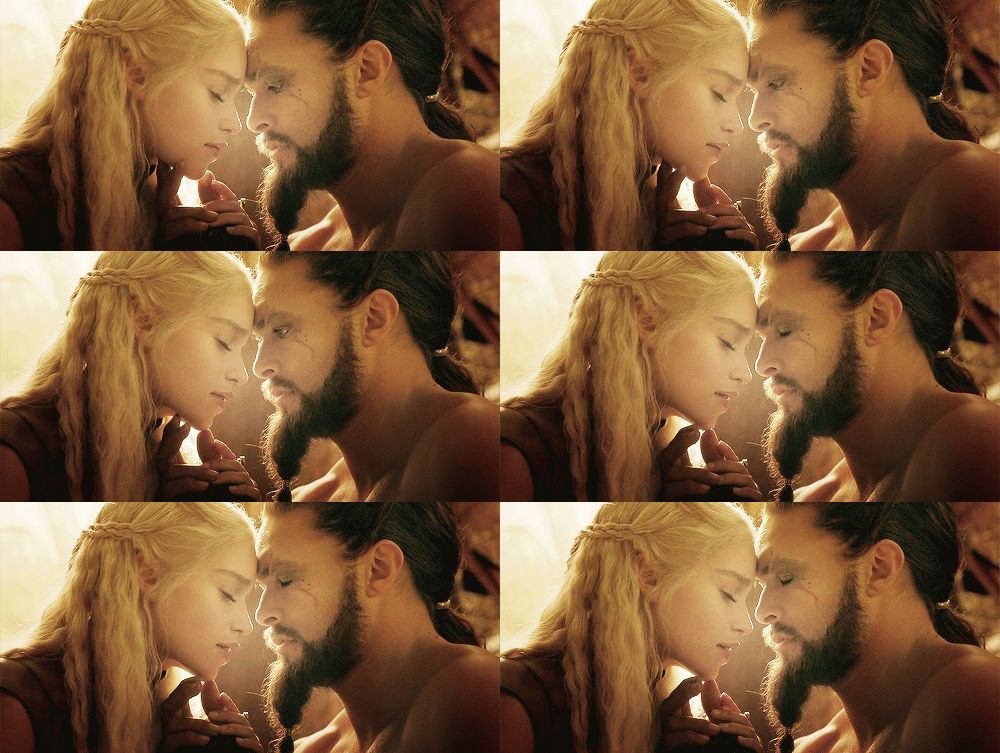
Yes, the most overrated show in the history of HBO is also one of its most successful ever. Game Of Thrones has expertly latched onto the fact that, in the wake of LOTR, fantasy shows and films have moved out of the geeky subcultures that they once inhabited and have become "cool" and popular. This is great news, of course - much of the best fiction in history comes from the genre. Sadly, it means that Game Of Thrones has become lauded as one of the most intricate and intelligent dramas of all time. It just isn't. Visually, it looks great. A lot of the performances are pretty good. And, as suggested, it's great to see such a popular fantasy show. But the problem is, other than throwing in the odd dragon and having vaguely LOTR-esque costumes, GoT isn't actually all that much of a fantasy show. It's basically a sequence of relationship dramas - a soap opera set in a fantasy realm. GoT doesn't do nearly enough to big up its fantasy elements. It's focused primarily on interactions. Now having a fantasy show based wholly on character interactions would still be pretty great, if not for the fact that the series (and the novels, for that matter) is marred by some of the least impressive character development around. No doubt some of the characters are enjoyable, but they're stereotypes, clichés, cardboard cut-out heroes and villains. It's not even the fact that most of them are killed off, which is a criticism often aimed at the show (that also happened in The Wire, but isn't necessarily a bad thing)... It's that they just aren't all that interesting, so it's difficult to care when they do die. The show claims to be making grandiose statements about social reality, transplanting them into a fantasy narrative, but it doesn't really offer anything "newsworthy" other than the shocks of characters that were central to the narrative suddenly being killed. In fact, key characters die so frequently that it isn't a surprise after the fourth or fifth death, let alone the 67th. Whereas other HBO shows have impeccable character development (Boardwalk Empire), mysterious storylines (True Detective S1) or a genuine social conscience (The Wire), GoT feels like one long run of "dramatic shock, interaction, dramatic shock, interaction, repeat". It's a shame, really. This show could be something special. It's not bad - it's certainly watchable, and has some spectacular moments - but it seems that some have decided that it's something it's not. Some of HBO's greatest shows are hidden away, known only to connoisseurs of its programming, while GoT becomes front page news on pretty much every single website. It may pain you to hear this, but Game Of Thrones just isn't THAT good. It's the most overrated and overhyped show in the history of HBO.

Contributor
Contributor

Articles published under the WhatCulture name denote collective efforts of a number of our writers, both past and present.