10 Reasons Why The Last Dance On Netflix Is Unmissable
The greatest of all time? To be honest, Michael Jordan wasn't too bad either.

The Last Dance on Netflix has only recently concluded and is already touted as one of the most comprehensive documentaries of all time. At first glance, the glossy docu-series is about the the final championship season of the Chicago Bulls in 1997/1998, but crucially - like all good documentaries - it transcends the subject matter.
This ten-part series goes far deeper than the sport of basketball, celebrating the career of one of sports most iconic figures in Michael Jordan, his teammates Scottie Pippen and Dennis Rodman, as well as head coach Phil Jackson. The ten episodes unveil humble upbringings, personal tragedies and fierce conflicts that will resonate with many viewers, basketball fan or not.
Told by the people who were there, The Last Dance showcases one of the most iconic and dominating dynasties of all time and with never before seen, candid footage, this is a peak behind the curtain like never before.
A mesmerising story that supports the sport of basketball with heritage, destiny and cultural phenomena, it's an absolute must-watch. And here's why...
10. The Spectre It Leaves: Would Chicago Have Carried On Winning?

Part of the show's appeal is not just what it shows, but the compelling questions that hand over everything.
It’s called The Last Dance for a reason. No spoilers really as it happened 22 years ago, but the foundations of the Chicago Bulls were falling apart, and this is a consistent theme throughout the series.
Internal wars between players and the front office alongside an aging team led to general manager Jerry Krause stating that Bulls coach Phil Jackson would not coach past the 1998 season even if they ‘went 82-0’ and that a rebuild was crucial.
The question lingers, however, with Michael Jordan still the best player in the game and the same people around him, could they have won another championship? The following season was reduced to 50 games following a lockout to reach a new Collective Bargaining Agreement. This lessening of the workload would have hugely benefitted the Chicago Bulls and it is a hypothetical question many have asked.
In reality, key players like Scottie Pippen and Steve Kerr were traded, and Dennis Rodman was released. Michael Jordan retired for a second time and coach Phil Jackson eventually headed to the Los Angeles Lakers and would win a further five championships there.
And the Chicago Bulls team that did play that shortened 1999 season? They became only the second defending championship team in history to miss the playoffs the following year. They haven’t won a Championship since.
9. It Poses An Intriguing Idea: Was Michael The Bad Guy?

A major talking point from the series has been the character assessment of Michael Jordan and the multiple anecdotes that depict him as a bully. But crucially, the show is not here to condemn, entirely. That's for you to decide.
It’s clear to see Jordan was a serial winner and admits that he has a competition problem. This is documented early in the series by a 1992 book written by Chicago Tribune sports journalist Sam Smith called ‘The Jordan Rules’. The book is focussed on Michael’s ruthless edge to win, which illustrates a culture of bullying, ostracising and psychical altercations.
Michael doesn’t hide from this side of him and at one point becomes visibly upset when addressing it. There is a fine line between winning and winning no matter what, which seemed to push Jordan from dominate teammate into borderline dictator.
Many have criticised Jordan then and now for his aggressive tendencies during the Bulls championships runs. But there is a significant Rorschach moment for the viewer to determine what they think of Michael Jordan the person rather than the player.
8. An Insight Into The Astonishing List Of Great Players Who Never Won A Championship

Basketball was huge during the 1990s. And even though Michael Jordan takes a lot of credit for that, the NBA was awash with serious talent.
Charles Barkley, Patrick Ewing, John Stockton, Karl Malone, Reggie Miller and Shaun Kemp are just some of the players who must shed literal tears when they look at all the NBA rings they didn’t win.
And through intriguing cameos - often tainted or touched by their interactions with MJ - we get to see a lot of those names.
It was only when Michael Jordan briefly retired was anybody else allowed to enjoy a little success. That success was grabbed by the Hakeem Olajuwon led Houston Rockets who won both available championships in Michael’s absence.
Funnily enough, Hakeem Olajuwon was picked number 1 overall in the 1984 NBA draft ahead of Michael. Other than that, the majority of the 90s had a simple storyline, in order to win you had to go through Chicago and nobody did.
7. How Space Jam Made Michael A Better Player

Following his return to basketball prior to the 1995 playoffs, Michael prepared for the 1995/1996 season by starring in the masterpiece that is Space Jam. The shooting of the film occurred during the pre-season of the 1995/1996 NBA season, this caused genuine concern to the Bulls organisation that Michael may not be fully committed and focussed for the season ahead.
But the series ingeniusly adds to the mythology of Space Jam by revealing that it wasn't just some corporate jolly for Jordan. it actually helped him be better.
Of course, the worry was futile as under instruction from Jordan himself, Warner Bros. constructed a fully fitted gym and basketball court just so he could practise between shooting. Jordan would shoot all day and then played basketball into the late night. He strategically took this opportunity to invite NBA players to train with him, this allowed Michael to get fully up to speed and to learn all the traits of his rivals prior to beginning the season.
The 1995/1996 season resulted in another championship for The Chicago Bulls and a then regular season record of 72-9. Arguably one of the greatest seasons in the history of the sport.
6. Dennis Rodman Ensure It Is Not All Work, Work, Work

For UK viewers, Dennis Rodman may just be the most recognisable player after Michael Jordan in The Last Dance. This is mainly due to his colourful personality and his appearance in UK Celebrity Big Brother.
Somewhat unsurprisingly, Rodman is a dominant character and is central to most of the humour in the series. And watching his antics is one of the most rewarding - and astonishing - parts of the show.
Midway through their last dance season, Dennis announces he needs a break to re-charge. And by re-charge he means Vegas. Showcasing his famed man management skills, coach Phil Jackson permits the trip on the condition he returns to training within 48 hours.
When Dennis predictably misses this curfew, it is Michael Jordan himself who goes to get him. The rescue trip contains a cameo of a frightened Carmen Electra who instinctively hides behind the couch as Michael bargains with Dennis to return to training.
Rodman also dabbles in a spot of pro wrestling during the season, however this is during the NBA finals and without seeking prior approval. Still doesn't derail his focus though, somehow.
5. A Look At The Death Of Jordan’s Father And How It Transitioned His Career
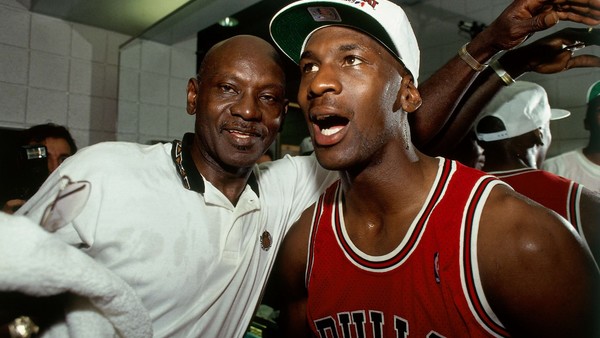
The docuseries is not just about basketball. It's more important than that.
Following the third straight championship for the Bulls, Michael’s father, James is mugged and murdered in his home state of North Carolina. Devastated from losing his best friend and already mentally bruised from successive championship seasons. Michael is also blamed by the media for his father’s death. With some wrongly claiming that a debt racked up by Michael may have played some part in his father’s death.
Michael would send shockwaves through basketball with his retirement from the sport prior to the 1993/1994 season. He takes up baseball due to the shared love of the sport he had with his dad. Although some considered the career change to be a joke, Michael did show potential in baseball with Chicago Bulls and Chicago White Sox Owner Jerry Reinsdorf suggesting Michael could have made it to the Major Leagues.
Following 18 months out, Michael returned to basketball and to winning ways almost immediately. However, the shadow of his father casts over the remaining episodes, never more so than after Michael’s first championship win without his dad watching. Captured in a heart-breaking moment, Michael retreats to the locker room and collapses to the floor without his best friend to celebrate with.
Watching it all play out is one of the most stunning parts of the entire series.
4. Giving Scottie Pippen His Dues

After Jordan, the player people credit with the success of The Bulls is Scottie Pippen. Drafted to the Bulls in 1987 following a trade with the Seattle Supersonics, Pippen became the defensive muscle and dedicated facilitator Jordan had long craved to push the team to the next level. And the series makes no mistake to leave him out.
In fact, the portrayal of his story is almost as important as MJ's.
Pippen did a lot of the carrying to ensure Michael could shine and the Bulls could win, often without getting credit. This lack of credit is highlighted throughout the series. Despite being one of the best players in the league and central to the success of the team, Scottie Pippen’s pay was amongst the lowest in the NBA. The antagonist of the series, Bulls general manager Jerry Krause shows no intention of renegotiating Pippen’s contract. This leads to Pippen purposefully delaying surgery to miss the start of the 97-98 season and even considering a trade away from the Bulls.
Apart from his underappreciation, Pippen’s own flaws are on show in The Last Dance. Most notably a 1994 Play-Off game against The New York Knicks. With 1.8 seconds to go in the game and tied at 102, coach Phil Jackson trusts the ball and final shot not to Pippen but to Toni Kukoč.
In the middle of a potential MVP season and being the star of the team following Michael’s retirement, Pippen is deeply frustrated by the lack of trust and refuses to take to the court for the remainder of the game. Kukoč makes the shot and the Bulls win, but Pippen’s actions leads to confrontation in the locker room.
3. That Detroit Pistons Rivalry

The Bulls didn't have it all their own way, no matter how tempting it is to remember it all romantically. Before becoming *THE* team in the 1990s, they had to overcome the 1980s Detroit Pistons. And the series does a great job of selling the pain and the fury of that rivalry.
The Pistons rough, physical and sometimes violent style led to them being branded The Bad Boys, a name they cherished. The Pistons included all-star point guard Isiah Thomas, the unashamed bully Bill Laimbeer and future Chicago Bull Dennis Rodman.
The fourth episode showcases the Bulls struggles against the Pistons who refused to be beaten by Michael Jordan, essentially double teaming him every single time he touched the ball. This led to a re-adjusting of the Bulls strategy and a hefty gym routine for Michael.
Jordan and the Bulls eventually get the better of the Pistons sweeping them in the 1991 Eastern Conference Finals. This victory leads to the now infamous Pistons exit from the court. The saw the reigning NBA Champions sneak off before the clock was up and refusing to shake the hands of the Chicago.
Thus, handing over the torch to a new dynasty and immortalising The Bad Boys nickname in the process. Michael Jordan still considers this team one of the most fierce he ever competed against and he still hates them.
.2. How Jordan Made Nike What It Is Today
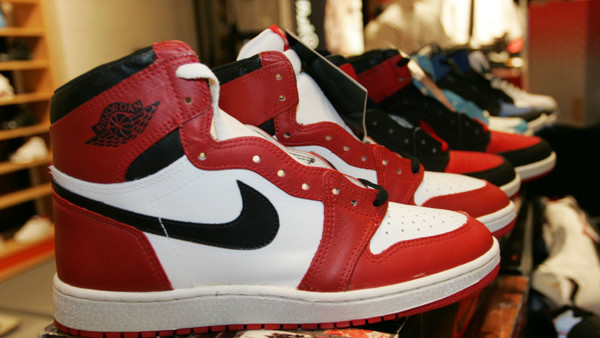
The series also looks at the Cult of Jordan away from the court and how important he was to other brands.
Named after the Greek Goddess of Victory, the name Nike seems fitting by today’s standards with an impressive roster of star endorsements. 1984 was a different story for Nike. Still a relatively minor player in sporting apparel and more associated with tennis than it was with basketball, Nike had a long way to go to be considered a genuine player in the sport.
Most NBA players at the time preferred the Converse All Star and Jordan himself was most likely to wear Adidas for his playing career. That all changed with a dedicated pitch aimed at dedicating a shoe and a brand around Michael, called the Air Jordan. Although lucrative, the deal seemed risky for both Jordan and Nike. He of course took the deal and Nike has since become the sporting brand of victory
Nike now endorse the sport’s biggest stars with complete dominance in the league with lucrative brand deals created for highly rated players. And they still do well in tennis too.
It's all fascinating insight.
1. How Michael Jordan Instantly Becomes The Best Player In The NBA
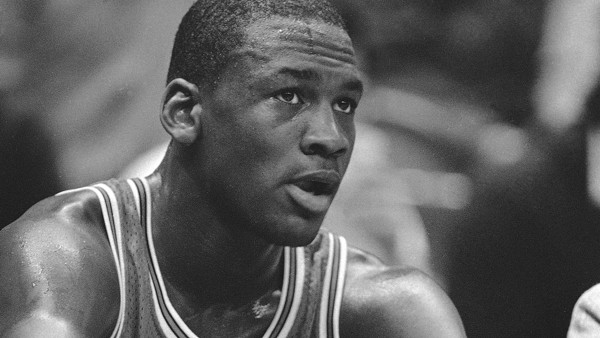
Fundamentally, the series is at its most compelling and its most magical when it's telling the almost superhuman story of Jordan's rise to success. And it was a hell of a rise.
Michael Jordan entered the NBA in 1984 already a NCAA champion with North Carolina and also an Olympic Gold Medallist following that summer’s Olympics in Los. Angeles. Some considered Jordan too small to be a true sucess in the league and that nobody could turn around a failing team like The Chicago Bulls. Within weeks of starting his NBA career, Michael was the best player on the Chicago Bulls team, turning them from a lacklustre 35% winning record into playoff contenders.
Jordan finished his rookie season with The Rookie of the Year Award, a dedicated Sport Illustrated Cover titled 'A Star Is Born' as well as averaging 28 points a game. To put that average into context. Kobe Bryant didn’t average 28 points until his fifth season with The Lakers and LeBron James averaged 27 points in his second season with the Cavaliers.
This is his story and seeing how he drags a team from irrelevance to supremacy in a stunning career is just phenomenal and hugely addictive. So you really need to watch it for yourself.