10 Reasons You're Wrong About Gotham
Seriously, what's Arrow got that this hasn't?

Season 4 of Gotham kicked off last week with an episode that promised a great deal for the forthcoming year, with the series looking to ramp up the transformation of Bruce Wayne into Batman, among other, less controversial things.
While it might not be the show everyone had initially hoped it was, Gotham has managed to carve its own identity since its introduction in 2014, despite protestations that've called it something of a weird distortion of the Bat-license. That's definitely not the case, however, and the show must be praised for moving away from more traditional interpretations of the character's mythology. What's the point in adapting material if it always has to adhere to the source itself?
Gotham isn't a perfect show, with the potential it exhibited in its first season still yet to be fully tapped, but it's far from the aberrant creation DC fans have deemed it to be these last three years. There's actually a whole lot to enjoy with it, if you can get past or even get behind its sillier elements, and that's without mentioning the sheer talent that's involved with the project both on and off the screen.
10. The Cast Is Incredibly Talented

Even if you can't get behind the idea of a young Bruce Wayne encountering the likes of Mister Freeze, Riddler and Penguin in his teen years, that doesn't detract from the fact that the show's cast is very, very talented.
Benjamin McKenzie has faced criticism for his growl-heavy rendition of everyone's favourite James Gordon, but he embodies the character's determination to do right by the city extremely well - particularly so, in that first season.
Then there's Donal Logue's Harvey Bullock, who's always a joy to watch, and Robin Lord Taylor's Penguin too. Corey Michael Smith's Riddler has been great as well, as has Mazouz, who's undoubtedly had the hardest task of all. No other actor has portrayed Bruce Wayne's formative years to the extent that he has, and that's really important to remember, regardless of the direction the series is now headed.
Sean Pertwee's Alfred deserves particular credit for his convincing portrayal of Bruce's loyal guardian too, especially since it's the first time we've really seen a younger Alfred in live action. More importantly, however, is how well he's able to carry the character's history on set, providing audiences with their first look into the character's oft-spoken about military past with a brilliant onscreen presence that sets him apart from previous interpretations.
A few members may lag behind their onscreen counterparts in some respects (we're not sure if Barbara Kean will ever endear herself to the masses), but the vast majority onboard have done a great job so far.
9. Harvey Bullock. Just, Harvey Bullock.

Harvey Bullock is such a fun character, and Donal Logue is the perfect actor to play him.
Since the series' very first episode, Logue has maintained a consistent presence on the show as its very best actor, imbuing the role with the kind of humour and fidelity that befits it. To maintain that for so long is a major win on the actor's behalf, especially since the show has frequently underused or flat out ignored the character on countless occasions.
Despite his random absences in the show, Bullock is very much an integral part of the cast, and a joy to watch when he gets on the screen. He certainly manages to channel the very best of Robert Costanzo in the role, mixing it with the more nuanced Bullock of the comics, and that's plenty of reason to rally behind the character when the going gets tough.
Along with Jim, Harv' has come a long way since that initial introduction in the first season, with the character undergoing a very similar transformation to the one he's experienced in the comics as of late. It's been a great one to see, and we can only hope he has more opportunities to shine this season.
8. It's Allowed To Be Its Own Thing, Even If You Think Otherwise

This seems to be the sticking point with Gotham, in that so many fans are unwilling to accept its version of the Bat-mythos. The hilarious thing about this is, of course, that the comics themselves have been playing around with alternate worlds, realities and timelines for decades now; why is it so difficult to accept Gotham as being just that?
It might not adapt the comics beat for beat, but seriously, if you wanted to see that story, you could just pick up the books themselves. Half the people that chastise the show for not following the source material in precisely the way they want it to almost seem to be ignoring the library of literature that's literally a click away, not to mention the litany of other Bat-media that has produced more traditional versions of the mythos.
Sure, the show might not appeal to everyone in the way it must surely hope to, but there's no rule that says it can't introduce a certain storyline, villain and/or character as and when it wants to.
Gotham is certainly flawed - it's impossible to argue otherwise - but this predilection to oppose anything that even vaguely diverges from the source is just ridiculous. Yes, there are certain tenets that adaptations should adhere to (for instance, Batman's no-killing rule), but not everything is as sacrosanct as it's claimed to be.
7. Jerome Is Better Than He's Given Credit For

Cameron Monaghan's Jerome Valeska caused something of a stir when he was first introduced in Gotham's first season, with the show promising a distinctly Joker-esque character to test Gordon and Bullock once it returned from its mid-season break.
While we now know that Jerome is not, in fact, the Joker he was once hyped to be, he's still an immensely entertaining character with an even more entertaining aesthetic. The show famously borrowed the notorious 'sewed on face' gimmick from Scott Snyder and Greg Capullo's Death of the Family storyline, and the moment it got punched off was grimly brilliant.
Despite this, Jerome is still critiqued for being a Joker in all but name. And while that might be true to a degree, that doesn't in any way detract from Monaghan's performance, which is both hilarious and threatening.
Of all the characters that have been introduced after that initial pilot, Jerome is undoubtedly the strongest. That opening episode - where we see Monaghan transform from a timid boy into a terrifying killer - was perfectly handled, and while the series has stumbled since (remember the Maniax?), Valeska remains one of its best and brightest elements.
6. Ben McKenzie's Gordon
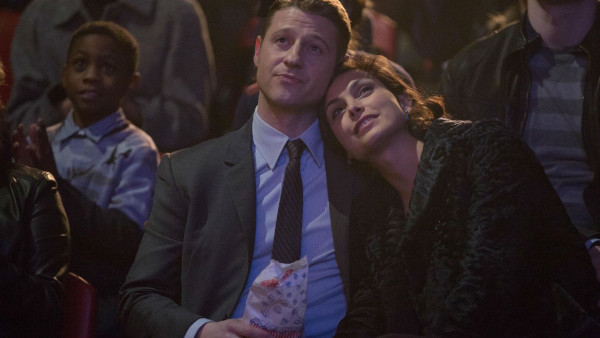
Sure, he might lack the iconic 'tache from the comics, but Gotham's Gordon is as convincing as any other.
The actor had a tough act to follow, with Gary Oldman's pitch-perfect portrayal of Gotham's venerable police commissioner still fresh in the minds of audiences everywhere, but he's still serviceable in the role.
Unlike the Gordon of Nolan's films - whose main strength drew from the nuances of Oldman's performance - Gotham's version succeeds because the city truly changes him. The serialised format afforded to the series has allowed the showrunners to depict a stark transition for the lieutenant, with the boy-scout of the first season having been replaced by a tired, altogether more cynical antihero by the time the third season started airing.
McKenzie's done really well to convey that transformation convincingly, and has in part been aided by his equally talented co-stars. Morena Baccarin shines as Leslie Thompkins, and the two together possess an infallible onscreen chemistry. Just a shame Barbara keeps on getting in the way...
5. Everything With Butch

Butch Gilzean is Gotham's unsung hero (or villain, depending on how you look at it).
Played by the ever brilliant Drew Powell, Butch has been a consistent presence on the show since his appearance in the pilot, and it's fair to say that he's seen a lot of development since. While that might've come at the expense of some other, perhaps more important characters, Butch's fan favourite status has truly vindicated Gotham's showrunners, with the revelation of the hitman's true identity - Cyrus Gold - having taken things to a whole other level last season.
While Butch's return as the villainous Solomon Grundy marks a departure from the characterisation we've grown to love over the last three seasons, Powell is very much excited to take on the part. Grundy is a great villain in his own right, and with the added development of seasons prior, he could just be the fourth season's biggest highlight.
4. The First Season Showed Massive Potential
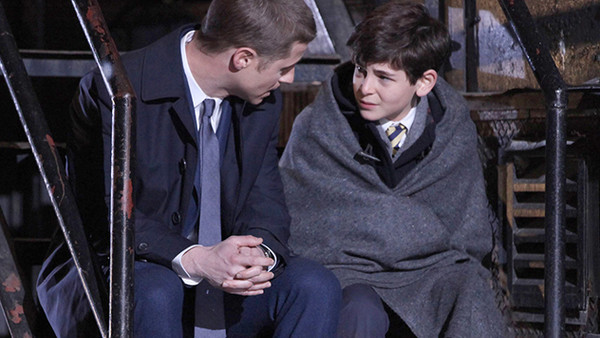
Admittedly, Gotham hasn't managed to exhibit the same form it showed in its first season, but that's no excuse to write it off.
While that very season sported the ever-annoying '24' syndrome (in which a series stalls after a stunning mid-season finale), it's important to remember just how compelling those first ten episodes were. It had everything a cracking Miller-esque TV show should have: action, tension, James Gordon fighting the system, and it built towards a natural conclusion.
That's without even mentioning the strength of that season's villains, with David Zayas' garnering plaudits for his convincing portrayal of Sal Maroni all the way up to his death in the finale. John Doman's Carmine Falcone also offered a convincing threat as Gotham's preeminent mob boss, on top of the strong introductions of Penguin, Riddler et al.
It showed flashes of brilliance right from the very get go, yet fans were all too willing to write it off before the first episode had even aired. And yes, while it's true that the series has somewhat failed to live up to the expectations it built in that season, it's still very enjoyable to watch, and worth watching, with the promise that it could yet tap the very obvious potential it possesses.
3. Penguin And Riddler Are Great

Much has been made of Robin Lord Taylor's Penguin, and for good reason. His Cobblepot is multilayered, tragic and convincing, and it's for that reason he remains the series' strongest element.
Sure, the stuff with his mother was odd - as was his relationship with his other relatives - but Taylor has more than made the role his own, providing an onscreen persona few of his co-workers are able to match. Indeed, there's an argument to be made that he's the best live action Penguin we've seen yet, with Danny DeVito himself having praised the actor for his work on the show. That's a pretty impressive feat too, considering the great Burgess Meredith took to the part in the sixties.
Then there's Corey Michael Smith's Edward Nygma, who really managed to provide his own take on the Riddler right from the show's first episode. While the character has been prone to the odd cliché here and there, he really came into his own in season 3, despite the chilly reception he received in the season finale, courtesy of Mister Freeze.
2. It's Flawed, But Not Because Of Its Villains

Much to the chagrin of Bat-purists everywhere, Gotham is fairly shameless when it comes to using Batman's villains. Fans were quick to pontificate regarding that approach, proclaiming that the sole reason for most Bat-villains' existences was the Dark Knight himself; no Batman, no villains - it's that simple.
Apparently.
While Gotham's decision to focus on Batman's rogues this early on could be considered lazy in some respects, fans have to be realistic. While there are no shortage of comic book enthusiasts out there who'd flock to a show revolving around, say, Gotham Central, most mainstream Bat-fans wouldn't see the appeal. Undoubtedly the most compelling aspect of the Caped Crusader's world is his villains - to ignore them in a TV series would be to shoot the show in its foot.
And besides, they're not even Gotham's most problematic aspect. What is frustrating, however, is how quickly the series fast-tracked Bruce Wayne's path to vigilantism. While there's nothing in the Bat-manual that says Batman must be present for his villains to be, there is something uniquely jarring about a young Bruce taking to the streets before he's seen sixteen, especially since it serves as a massive distraction to the series' stronger moments.
1. You've Not Given It A Chance

Right from its very first announcement, Gotham was met with criticism left right and centre. The aforementioned puritan chorus drowned out what little optimism there was regarding the series in online spaces, and it set the stage for what would follow.
The fact of the matter is that no one gave the series the time of day when it was released, dropping off after the second or third episode in protest of its ostensibly aberrant portrayal of the Kane-Finger comic. Considering how people have been incredibly patient to invest in Arrow - despite the fact that it's in no way faithful to that character's comics - the opposition feels somewhat baseless. Are people just happy to chop and change a character to get their Bat-analogue? Even at the expense of an accurate portrayal?
It makes little sense, and fans of Gotham will no doubt attest to the series' unashamed embrace of the Bat-mythos in its attempt to create a compelling show. This may lend the series a somewhat dissonant feel, in that it can often blend both the lighter and darker aspects of the comics together, but it works... somehow, as the scene above demonstrates.
Gotham is, at its core, a fun TV series about a young Batman. It might not be faithful, and it might not cater to the hardcore among the DC faithful, but its commitment to do its own thing must surely be admired or - if anything else - tolerated, as is the case with the CW's line of DC-themed programming.
So go on, give it a chance. There might just be something in there worth investing in.
-
What are your thoughts on Gotham? Is it too big a departure from the source material? Let us know in the comments below!