10 Silliest Things On 24 (And The Lessons To Be Learned From Them)

After eight seasons, 24 limped to an unremarkable end on May 24, 2010. During its run, the series managed to hit some remarkable highs, which culminated in a Best Drama Emmy Award in 2006. However, after taking home the Emmy, the series often struggled to find its center or avoid repeating itself, and in the face of rising costs and declining ratings, it was finally cancelled. The series ended with Jack Bauer once again on the run, advised by President Taylor that it would be wise for him to leave the country. And that, it seemed, was the last we'd hear of 24. However, after four years off the air, 24 is coming back to television this May, in the form of a 12-episode limited run which has been subtitled "Live Another Day." Fans are understandably excited, but they would be wise to remember that in the midst of some incredible drama (who can forget George Mason sacrificing himself to take the nuclear bomb safely into the desert in season two?) 24 could often be one of the silliest shows on TV. In this post, I'm going to look back at ten of the silliest things on 24, and discuss what the writers of 24: Live Another Day should have learned from these past mistakes. Without further ado...

10. Marwan's Plan Within A Plan Within A Plan (Day 4)

I dare you to sit through the fourth season of 24 and then try to describe Habib Marwan's master plan. You'll probably have a hard time doing this, because Marwan's plan doesn't make a lick of sense. For those readers who have forgotten the salient details, let me try to briefly recount Marwan's plot. First, Marwan blows up a commuter train. Is this his endgame? No, it's a means of stealing the Dobson Override (a device which can remotely melt down all of the nuclear power plants in the United States, which happened to in the possession of a passenger). Next, Marwan captures the Secretary of Defense, James Heller, and his daughter. He begins streaming video of their "trial" on the internet and plans to do the same when it comes time for their execution. Is this his endgame? No, it's a means of distracting from a massive cyber-attack to break the firewalls of as many nuclear power plants as possible, so that Marwan can melt them down with the Dobson Override. Thanks to CTU, Marwan is only able to initiate the meltdown of six reactors, rather than his initial target of 106. Still, this leads to the deaths of tens of thousands. Is this Marwan's endgame? Of course not! It's all been a distraction to allow one of his men to steal a stealth fighter and shoot down Air Force One with the President onboard (which happens to be in Los Angeles airspace). Is this his endgame? Nope. It turns out Air Force One was a target because it contains the nuclear football, a device with the codes that can activate any nuclear weapon in the United States. At the same time, some of Marwan's men in Iowa attack a military convoy and steal a cruise missile with a nuclear warhead. With the codes from the nuclear football, they manage to launch the missile. Its destination? Not New York, Washington, D.C., or any other nearby target. Instead, the missile is fired at Los Angeles, which gives Jack, CTU, and the rest time to locate the missile and shoot it down. And that's the short version. The Lesson: Plan ahead. Marwan's scheme became more and more complicated, reliant on coincidences, and ultimately nonsensical (why not launch the missile at a closer target?) as the season progressed because the writers never took the time to plan ahead. They didn't even decide that Marwan would be day four's main villain until half-way through the season. It all adds up to a season that is less than the sum of its parts.

9. Jack Cures His Heroin Addiction By Taking Some Pills (Day 3)
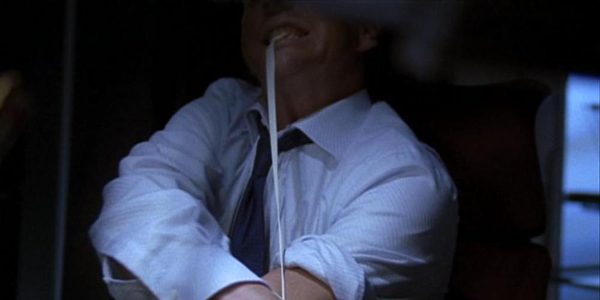
At the end of the first episode of day three, we see Jack retire to his office, close the shades, and prepare to shoot up heroin. It's only when his daughter, Kim Bauer, asks to speak to him on the intercom that he stops what he's doing. Finally, he empties the syringe and throws it against the wall in anger. Cue the ticking clock. It turns out that while Jack was undercover in a Mexican drug cartel prior to the season, he began using heroin to blend in, and became so addicted that he was unable to stop once the assignment was finished. However, Jack's struggle with drug addiction is never more than a minor plot point during the third season. Eventually, after a medical examination, Division Director Ryan Chappelle gives Jack a bottle of pills and tells him they will help him get over the addiction. Jack's heroin problem is then dismissed. The Lesson: Don't start out by writing a character into a corner. Jack almost shooting up heroin was a shocking way to end the season three premiere, but it was a terrible place to leave the character for the next 23 episodes. The writers soon realized this, mostly ignoring the addiction, and ultimately dismissing it with a magic bottle of pills a little over half-way through the season. But they should have realized the limitations the show's real-time format would have on this plot line, and dropped the idea before filming.

8. CTU Agent Kim Bauer (Day 3)

In the first season of 24, Kim Bauer was sixteen years old, still in high school, and had just gotten her driver's license. The character was immature, naïve, and impulsive, which quickly got her into trouble and later, put her in grave danger. Despite being kidnapped more than once, she ultimately survived the season. At the beginning of day two, set eighteen months later, she has moved into her own place, has a steady boyfriend, and is working as a nanny. Day three, however, looks to skip over a good decade of reasonable character development and introduces us to Kim Bauer, CTU Analyst. The writers try to hang a lantern on this implausible development by having Kim pull of a challenging technical feat and sarcastically quip that she only got the job because of her dad, but it's a hard pill to swallow. Kim wasn't a technical genius in days one or two, and is barely twenty-one in day three. The writers must have realized her character transformation was a bit hard to swallow. Rather than trying to force Kim Bauer into subsequent seasons, she only returned for a handful of guest appearances, and only when she actually had a believable role to play in the story. The Lesson: It's better to let characters go than it is to defy logic in order to hold onto them. Hopefully, the writers of 24 have learned their lesson, and won't be introducing Jack Bauer's six year old granddaughter, newly appointed as the head of CTU field operations, in 24: Live Another Day.

7. Dana Walsh's Characterization (Day 8)

For the first dozen episodes of day 8, Dana Walsh was depicted as a weak-willed and easily manipulated woman whose darkest secret was lying about her past in order to get a job at CTU in New York. Although the series was beginning to show its age, nothing made it grind faster to a halt than when Walsh was on screen, fretting over issues that would have been solved if she just fessed up to her mistake. Fans and critics complained, and the writers must have been paying attention, because about half-way through the season they decided to abruptly reverse course on Walsh's characterization and backstory. In an instant, she went from being a weak-willed fool to a coldly calculating murderess who was in league with the terrorists of the moment €“ and had been since the beginning. Although her later characterization was certainly more entertaining, fans scratched their heads in vain trying to reconcile it with the character of Dana Walsh from the first half of day eight. The Lesson: Don't go for the shock value of a plot twist if it doesn't make any sense. Katee Sackhoff was fun to watch as a villain in the second half of day eight, but the transformation her character underwent only made sense if you ignored an entire half-season of character development.

6. The Alan Milliken Affair (Day 3)

When 24 decided to drop the assassination cliffhanger that ended day two, it had to find a new storyline for President David Palmer in day three. The first thing they tried was to give Palmer a romantic relationship with his Doctor, Anne Packard. It turns out that Anne's ex-husband was involved in a pharmaceutical scandal, and in his anger at his ex-wife, he tries to implicate Palmer. The writers quickly realized this storyline €“ which they had intended to last the entire season €“ wasn't working, and wrapped it up after just eight episodes (Anne's ex-husband commits suicide, she finds evidence clearing Palmer's name, and decides to end their relationship). This meant they needed something else for David Palmer to do, which quickly arrives through a convenient phone call from Alan Milliken, one of Palmer's key financial backers and an important political ally. The Milliken storyline is too complicated to describe here. Suffice it to say it ends up involving both David's brother and his ex-wife, whose mild redemption from day two is quickly reversed when the writers need her to be a villain. It also never once connects to the main storyline of day three, a viral attack on the United States, and therefore comes off as a pointless distraction the entire time it's on screen. At the end of the sixteen episode arc, there have been three murders, a suicide, and David Palmer decides to drop out of the presidential race €“ but it is by far the least engaging time for the character of David Palmer on the series. The Lesson: Don't waste one of your best characters on a pointless side-story (or worse, two pointless side-stories) that has no connection to the main plot. Dennis Haysbert was the show's secondary lead in the role of David Palmer, a Senator (in Day One) who was catapulted to the Presidency (in Days Two and Three), but the writers lost track of the character as soon as they disconnected him from the primary storyline. Palmer's ultimate decision to drop out of the race for re-election was less a dramatic character beat than it was the writers throwing their hands in the air and giving up.

5. Chase's Baby (Day 3)

In season three, a babysitter barges into CTU and unloads a baby onto Chloe O'Brien. Chloe spends the next several episodes trying to hide the baby from her superiors, and when Ryan Chappelle finds out that she disobeyed his order to remove the baby from the office, he almost sends Chloe home (Michelle Dessler talks him out of it). In order to keep Chappelle from handing the baby over the social services, Chloe is forced to admit that she isn't the mother, and that the baby is in fact Chase Edmonds. Kim Bauer, Chase's girlfriend, is shocked at the news. The baby is quietly handed over to a CTU staffer and vanishes from the season. The Lesson: As W.C. Fields once said, never work with children or animals. 24's attempt to derive drama from child custody and questions of paternity was an early indicator that day three wasn't as well-thought out as days one or two. The writers should have taken one look at the idea, reminded themselves that 24 was an action thriller, and never brought it up again. Hopefully, after wasting five episodes of day three on this storyline, the writers have learned their lesson.

4. The Mysterious Villain Is... Jack's Brother? (Day 6)

Throughout the final stretch in day five, Charles Logan received orders from a mysterious group of men which fans dubbed the "Bluetooth guys." They were led by a figure known only as Graem, and their ultimate identity and agenda were not revealed at the end of the season. In season six, however, the writers felt they had figured out the ultimate reveal. It turns out that Graem was...Jack Bauer's brother! This overlooked the fact that Jack's brother was never mentioned prior to day six, as well as the reality that Paul McCrane and Kiefer Sutherland look nothing alike, for the sake of a lame twist that would barely befit a soap opera. Worse, Graem Bauer was killed (by...his and Jack's father) after only three appearances early in day six. The family connections only continued to pile up from there, and by the end of day six, the plot had pulled in Jack's brother, father, sister-in-law, and his nephew (who the writers suggested may have actually been Jack's son €“ or, in a Chinatown-twist, Jack's half-brother, although neither scenario was confirmed). The Lesson: Piling on too many coincidental character connections strains your credibility. 24 ran into this problem before (Mandy showing up to cause some critical damage for three different terrorist organizations; Mike Novick showing up as the chief of staff to Democrat David Palmer and later Republican Charles Logan), but never to the degree it did in day six.

3. Lynn McGill's Crack Whore Sister (Day 5)

In day five, we're introduced to Lynn McGill, a CTU District Director who arrives to oversee operations early on during day five. Although he ruffles a few feathers upon his arrival (he insists that Bill Buchanan give him his office), McGill establishes himself as a professional when he's the only one to correctly identify that Jack's phone call indicating a "flank two position" uses an old CTU code, which stops a CTU team from walking into an ambush just in time. Later in the day, however, McGill's credibility as a character is demolished when his sister and her boyfriend (both heavy crack users) lure McGill outside and ask him for money. When McGill refuses, instead suggesting the name of a doctor to help with their addiction, McGill's sister and her boyfriend beat him up and steal his wallet (including his CTU key card). Rather than report the incident, McGill fixes his color, wipes the blood from his mouth, and walks back into the office. Later, it turns out that McGill's sister didn't want his money €“ she wanted his keycard, which she tries to sell to a terrorist (she's killed instead). The terrorist ends up using the keycard to launch a deadly nerve gas on CTU, which ultimately kills McGill (but not before he offers a weak explanation for not reporting the theft €“ he says he was "embarrassed" €“ and manages to heroically sacrifice himself). The Lesson: If your series is about a group of highly-trained anti-terrorism professionals, have them act like professionals. Lynn McGill's behavior in regards to his sister is hardly the only time 24 forced a character to act unprofessionally for the sake of the plot, but it's one of the worse instances of it, leading "Lynn McGill's Crack Whore Sister" to be used by some fans to describe one of the series' worst impulses.

2. Tony Almeida Comes Back From The Dead; Is Evil (Day 7)

Tony Almeida was a beloved character on 24 who met a tragic end during day five. Through a series of complicated circumstances, Tony was locked in a room with Christopher Henderson (the man responsible for killing his wife, Michelle) and an unsuspecting CTU guard. Quickly dispatching the guard by knocking him unconscious, Tony moves towards the hospitalized Henderson and prepares to pump him full of a lethal dose of 24's magical interrogation drugs. At the last minute, however, Tony can't do it €“ he's not a murderer, despite what happened to his wife €“ and when he hesitates, Henderson takes the opportunity to turn the syringe and plunge it into Tony's heart. Henderson escapes, and a few minutes later, Tony dies in Jack's arms. That is, until the producers realized that killing of Tony Almeida was a huge mistake. Not only was he beloved by the fans, but he was one of the few characters who could carry the show when Jack Bauer was off-screen. So, they went about contriving a way of reversing Tony's death. Moments after his "body" was carted off screen, they decided, a group of mercenaries resuscitated him and convinced him that the government should pay for what it did to Michelle (never mind Tony's realization moments before this that he couldn't seek revenge). Tony makes his reappearance at the beginning of day seven, decidedly evil (he causes two passenger planes to collide over the skies of Washington, D.C. early on). For a while, it seems like this was all a ruse, but eventually, when he kills Larry Moss, an FBI agent, Tony's intentions are made clear. You see, he's found the man ultimately responsible for Michelle's death (who, it is now revealed, was pregnant at the time) and wants revenge at any cost. In the end, Tony's vengeance is foiled, and he is carted off in police custody. The Lesson: Don't kill of a character if you don't mean it. Tony's death in season five was tragic, but viewed with the knowledge that it's all a ruse, it only feels cheap and empty. Bonus Lesson: Don't bring a beloved character back to life if your only plan is to make them evil, ruining what people liked about the character in the first place. Tony died because he was, in the end, a good man who couldn't commit cold-blooded revenge. When he was brought back, the writers decided that he was a bad man who wanted nothing but cold-blooded revenge. What a waste. Rumor has it that Tony might return in 24: Live Another Day. If he does, let's hope the writers remember what was best about the character.

1. Kim Bauer Meets Up With A Crazy Survivalist; Tangles With A Cougar (Day 2)

The second season of 24 might be the program's best, but it also contains what most fans consider to be the silliest of storylines €“ amidst the chaos caused by a nuclear detonation, Kim ends up in the woods with a crazy survivalist, and tangles with a cougar. Even the producers of the show couldn't help but joke about "the cougar" in later seasons, and for fans it has become short-hand for anytime the series committed a serious blunder. For a series that also gave one of its main characters amnesia for several episodes because it didn't know what to do with her, that's saying something. The Lesson: No more cougars, please. Were there other silly things on 24 that should have been included on this list? Let us know in the comments section below.

In this post: 
24
 
Posted On: 
Contributor
Contributor

Michael is one of the founders of FACT TREK (www.facttrek.com), a project dedicated to untangling 50+ years of mythology about the original Star Trek and its place in TV history. He currently is the Director of Sales and Digital Commerce at Shout! Factory, where he has worked since 2014. From 2013-2018, he ran the popular Star Trek Fact Check blog (www.startrekfactcheck.blogspot.com).