10 Things About Game Of Thrones That Make No Sense
Remember when we thought the white walkers' creepy symbols would actually lead to something?

For a long time, Game of Thrones was considered one of the greatest TV shows of all time. The adaptation of George R R Martin’s Song of Ice and Fire series introduced the mainstream to the incredible world of Westeros, the twisting intertwining narratives, and the deep, complex characters.
However, after season seven, with just six episodes of the show left, Benioff and Weiss left themselves with a lot of loose ends to tie up. Unfortunately, not only was season eight one of the worst possible endings to such an incredible show, it left far too many threads from throughout the series unanswered, or gave them the most unsatisfying, sometimes nonsensical conclusions.
Not everything that doesn’t make sense about the show comes from season eight, however the earlier years, seasons one to six in particular, were the height of TV storytelling, and any faults were few and far between. The same cannot be said about the final six episodes.
While there are of course the famous incidents involving the coffee cup and the modern day bottle of water, this list is comprised of aspects of the story that make no sense rather than production errors. Looking back with the entire story now finished, with regards to the show at least, there are more than a few things that leave us scratching our heads.
10. Arya Survives Being Stabbed

From her beginning as Sansa’s younger sister in Winterfell, Arya’s journey took her all over Westeros, from King’s Landing to the Wall, and across the Narrow Sea. In Braavos, the girl formerly known as ‘Arry found Jaqen H’ghar in the House of Black and White, and began training to become a Faceless Man.
Arya ultimately couldn’t let go of her true self, and betrayed the order, leaving Jaqen behind. Before she could leave the city Westeros bound, she was tracked down and stabbed twice in the stomach by the waif.
The World of Ice and Fire obviously didn’t have any kind of advanced medicine, and any real wound if not properly tended to could result in death. Even if treated as best as it could be, which would have been little more than boiling wine to kill any infection, chances of survival would have been slim.
The mighty Khal Drogo saw his demise thanks to a tiny cut on his chest, yet Arya managed to miraculously survive an attack that should have killed anyone in Westeros or Braavos. Even without jumping into the river which surely wouldn’t have helped with the threat of infection, Arya should have died there and then.
9. The White Walkers’ Symbols

For all but the final three episodes of the entire series, the white walkers were painted as the main antagonists, and biggest threat to everyone in Westeros. The entire point of the story seemed to echo in Jon’s words that it didn’t matter who sat the Iron Throne if the white walkers breached the Wall and killed everyone in Westeros.
However, during the Battle of Winterfell in season eight, the hoard of walking ice zombies were relegated to the longest sub plot in history, as they were defeated with almost no major fatalities, never to be mentioned again for the rest of the season.
This was simply infuriating, as it wasted the previous seven years of build up, lore, and potential foreshadowing for something deeper. Possibly the biggest of which was the helix symbols the walkers left behind them. For years we were wondering what it meant. Could there be something more to the white walkers than just mindless death and destruction? What did this symbol mean?
Well, season eight came and went without so much as an explanation. We even saw the Night King and his disciples leave the mark in flames at the Last Hearth, but were given not one word as to what it meant, or why it was left behind.
8. Gendry’s Record Breaking Speed

One of the biggest criticisms of not only season eight of Game of Thrones, but season seven and to some extent season six, is that everything seemed far too rushed. Journeys that would have taken characters several episodes or even the majority of an entire season took far less. Varys even managed to travel from Dragonstone to Westeros and back within a single episode.
One of the greatest aspects of Game of Thrones was its careful and precise build up that made the huge moments like the Red Wedding and the Battle for Castle Black feel earned. This was robbed of the show in later years, and one of the worst instances of rushing through a story happened when Jon and company went north of the Wall.
When the group found themselves in trouble, facing an attack from the surrounding white walkers, Gendry was sent back to the Wall to dispatch a raven to Daenerys on Dragonstone.
Despite the tough terrain and the freezing weather, Gendry managed to reach Davos at the Wall, and send a raven on the incredibly long journey from the north to the Queen on Dragonstone. Daenerys was then able to argue with Tyrion, mount her dragon, fly north of the Wall, and locate Jon, Tormand and co. all before the battle with the walkers was over. This felt like lazy writing and was surely impossible with the great distances involved
7. The Night King’s Convenient Chains

Daenerys’ journey north of the Wall was one of the biggest moments of season seven, but it was not without its troubles. Aside from Gendry channeling his inner Usain Bolt, there was also another head scratcher revolving around the Queen and her dragons. In particular, Viserion.
In flying from Dragonstone to north of the Wall, Daenerys knew the risks, but still she flew head first into danger and came back one dragon lighter. The Night King took the monster down thanks to an incredibly accurate shot with an ice spear, leaving Viserion to crash through the ice and sink to the bottom of the river.
The final shot of the episode saw the walkers haul the dragon back to the surface for the Night King to work his magic, resurrecting Viserion as something of a white flyer. This was a shocking moment, and should have had more of an ultimate impact on the rest of the story as it did, but it was difficult to comprehend how exactly it happened.
Firstly, where did the frozen army get the giant chains from? The zombies surely wouldn’t have been able to forge them themselves, so did they just conveniently find them lying in the woods somewhere? Secondly, it’s established much earlier that the walkers cannot swim, so how were they able to reach the dragon at the bottom of the lake to attach the magically appearing chains themselves?
6. Who Was Quaithe?

From being sold into slavery by her brother, to ultimately achieving her goal of taking the Iron Thrones of Westeros, Daenerys had quite a journey throughout Game of Thrones. After departing Pentos, her path drifted further east rather than west, to the mysterious land of Qarth.
Here, one of the most mysterious characters in the show appeared. Quaithe, a woman who covered her face with a unique gold mask, appeared in just two episodes, leaving a lasting impression after correctly predicting Dany losing her dragons, and Jorah’s trouble passing the ashes of Valyria.
It seemed at the time that Quaithe had a big part to play in Daenerys’ future, particularly as the character has a much bigger role in the books, with fan theories going even so far as suggesting she was Dany herself from the future. We would never actually get our answer though.
After season two, the character is never seen or even heard about again, begging the questions who was she, where did she come from, and how could she possibly predict the future? This was something that the showrunners never saw fit to explain, so why include her in the show at all?
5. Euron's Invisible Ships

Once the pesky white walker sub plot was swept under the rug in the quickest, most efficient way possible, Daenerys and her forces made their way south to attack the capital. Again, this was problematic as the showrunners seemed more interested in getting to the final battle as quickly as possible rather than with strong, logical storytelling.
While Daenerys was flying Drogon and Rhaegal towards King’s Landing, she was attacked by Euron Greyjoy and the Iron Fleet, taking the smaller dragon out of the sky by hitting it three times with three shots.
Despite Euron having a clear path to Daenerys, meaning the Queen herself would have had an unobstructed view of Euron and his ships, she still managed to miss the danger. Unless she was flying with her eyes shut, there is no way Euron could have possibly got into position for such an accurate shot without Dany noticing.
As if this wasn’t bad enough, between this moment and Daenerys’ full attack on King’s Landing, Qyburn’s scorpions seemed to lose all sense of accuracy. In three shots Euron was able to take down Rhaegal without missing once, yet the literally dozens of weapons atop the walls of the capital couldn’t get near the bigger target of Drogon.
These scorpions were bulit up as the city’s main defence and the reason Daenerys shouldn’t have been able to attack the city from above. Instead they suddenly became as useless as the Golden Company.
4. Arya's Last Minute Change Of Heart

Arya was one of the most popular characters in the entire story, and grew in eight seasons more so than just about anyone else. She also went through some of the toughest tragedies and saw far too many of her companions and family members die.
The young Stark’s entire arc soon came to revolve around taking revenge against those who earned a place on her list. She recited the names every night before sleep, and swore to cross off every name by killing them. Some she had success with, taking the lives of the likes of Polliver, Walder Frey, and Ser Meryn Trant. While others died without her input, or even made their way off the list, her last target was Cersei Lannister.
After the Battle of Winterfell, Arya made the long, long, long journey on horseback to King’s Landing to kill the Queen and complete her entire story arc. There were so many ways Cersei could have met her inevitable end, and this was one of the better options (though anything would have been better than the rubble that ultimately killed her).
After years of wanting to kill Cersei and after travelling what must have been weeks to get to King’s Landing, surviving the battle and being just minutes away from finding Cersei, Arya turned away from her task just because the Hound told her to. This made no sense, as it was the only thing driving Arya’s behaviour, and surely if Clegane was going to advise against murdering the Queen, he would have done it sooner?
3. Melisandre’s True Form
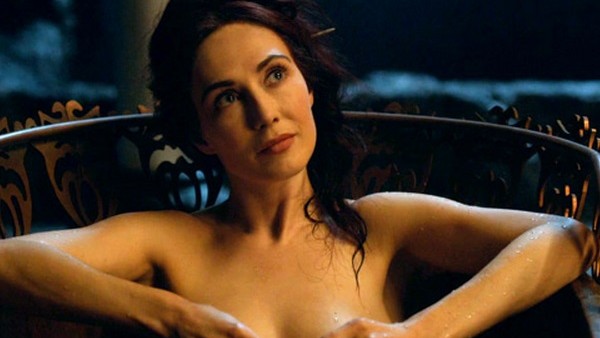
First appearing as the whisperer in the ear of Stannis Baratheon in season two, Melisandre instantly became one of the most unique, intriguing, and mysterious characters in the show. The priestess from Asshai survived being poisoned, birthed a creepy shadow monster, and brought Jon Snow back to life, among many other acts of sorcery.
Preaching of the return of the Prince that was Promised, Melisandre seemed to switch between who actually embodied Azor Ahai himself, yet seemed just as sure of herself at evey turn, despite her mistakes.
During season six, Melisandre enjoyed more focus than usual in an episode that hinted at not only her backstory, but the source of her power. The young, beautiful sorceress took off the ruby necklace from around her neck to reveal her true form, an old, feeble woman seemingly in the December of her days.
This raised many, many questions surrounding the mysterious character, and what this would mean for her moving forward. However, this was never explained or referred to ever again. The lack of any closure surrounding the point of this scene simply confused matters, made even worse by the fact the Red Woman can be seen in season four’s Mockingbird without the necklace, yet still in her Carice van Houton form.
2. Jaime’s Entire Arc

Of all the things that George R R Martin has shown himself to be a master of in his Song of Ice and Fire saga, from world building to the most intricate details in stories and lore, his talent for character development may be the most impressive.
The author took a character and instantly made us hate him. Even before he pushed Bran out of the window, Jaime Lannister had made it clear he was bad news. This was mimicked perfectly by the show, yet in season three, the most hated man in Westeros all of a sudden became more human, more empathetic, and slowly began his reform.
The male Lannister twin began to question his alliegance to Cersei. Finally, he made the full transition away from his sister at the end of season seven, riding out from King's Landing to Winterfell in order to honour the agreement they had made with Daenerys to help fight the Night King.
He and Brienne also stopped kidding themselves and at last embraced each other like they should have years ago. This was character development at its absolute finest, until it was all thrown out the window for Jaime to return to Cersei's side like a lost puppy. Everything that came from the character before became meaningless, as he proved to still be in love with his vile sister after all. What an absolute waste, and we can only hope that this was the work of Benioff and Weiss, rather than Martin himself.
1. Bran Takes The Crown
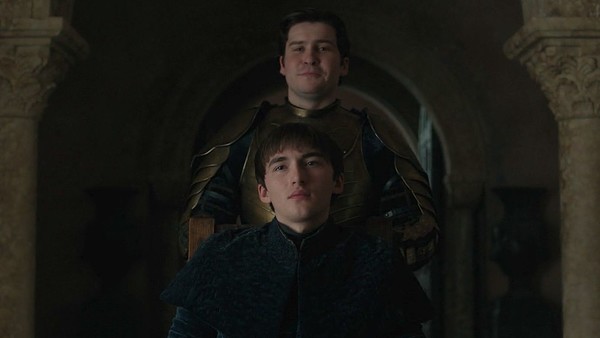
Imagine creating a character so powerful that he could literally see into the past, present, and future all at the same time. Imagine crippling him in the first episode and sending him north of the Wall in order to gain these powers, losing friends along the way, and then doing basically nothing with it.
During the Battle of Winterfell, Bran was identified as the Night King's target, and so was put under the protection of Theon and a handful of men. While many thought Bran would do something incredible, like warg into a dragon or even the Night King himself, his contribution to the fight was reduced to scouting as a flock of ravens.
That wasn't even the worst of Bran the Broken's story. The whole reason he traveled to find the Three Eyed Raven in the first place was because he couldn't be a knight, and as he said himself later, he couldn't be Lord of anything.
But he can be a King, though? The ridiculous double standard makes absolutely no sense, made even worse by Tyrion's reasoning for crowning him - because he can tell a good story. Never mind having any leadership skills, or experience governing subjects, as long as he knows his history he can sit the Throne. Surely this would have suited him better to the position of Archmaester at the Citadel, where they record all these stories?