10 TV Episodes That Wanted To Piss You Off
The Mountain and the Viper pissed everybody off, just as intended.

It's fair to say that the primary function of art is to entertain and basically give audiences what they want, but let's be honest - a satisfying payoff hits that much harder if the journey there is coloured by frustration and turmoil.
Sometimes we need to get the exact opposite of what we want in order to feel all the more euphoric when the desired payoff finally arrives, and so TV writers may conceive episodes or scenes that intentionally stoke the viewer's rage.
To be clear, this list doesn't include moments that inadvertently aggravated the audience - like the finales of How I Met Your Mother and Dexter, for example - but rather willfully enraging moments that were entirely by design.
These 10 TV episodes all keenly pushed your buttons, from killing off beloved characters to denying your most basic desires in favour of something better, even if the kneejerk reaction from most was one of pure, indignant anger.
In some cases the real payoff came in a later episode, while in others we had to reflect on the episode and its meaning to truly make peace with it...
10. Made In America - The Sopranos

The Sopranos' series finale "Made in America" is one of the most talked-about closers in TV history, and caused the show's fanbase to have a collective meltdown upon its original 2007 airing.
The episode and the series ends with Tony Soprano (James Gandolfini) gathering with his family in a diner while the threat of an impending indictment hangs over his head.
Throughout the scene, as Journey's "Don't Stop Believin'" plays, we get the vibe that maybe, just maybe, we're building to something here, especially with David Chase constantly cross-cutting to Tony's daughter Meadow (Jamie-Lynn Sigler) struggling to park her car nearby.
Eventually the diner door opens and Tony looks up, only for the scene to cut sharply to black with the music abruptly cutting off. After a brief pause, the end credits roll, and that's all she wrote.
The ending was so sudden that many initially believed their cable signal had dropped out, but this was indeed Chase's complete vision for the show's ending.
While Chase stated that he didn't simply cut to black to piss off the audience for no reason, he did add that he intentionally ended the show where he did to stick it to those viewers who expected to see Tony get his violent comeuppance in the finale. Chase said:
"There was so much more to say than could have been conveyed by an image of Tony facedown in a bowl of onion rings with a bullet in his head... The way I see it is that Tony Soprano had been people's alter ego. They had gleefully watched him rob, kill, pillage, lie, and cheat. They had cheered him on. And then, all of a sudden, they wanted to see him punished for all that. They wanted 'justice.' They wanted to see his brains splattered on the wall. I thought that was disgusting, frankly... The pathetic thing - to me - was how much they wanted his blood, after cheering him on for eight years."
In much the same way that the Coen Brothers shied away from indulging our most primal desires in No Country for Old Men by denying us the grisly climax we expected, Chase wanted bloodthirsty Sopranos fans to reflect on why they wanted to see that.
9. The Big Payback - Atlanta

The recent third season of Atlanta was nothing short of a masterpiece, consisting of both stories connected to the central narrative and almost entirely standalone, Twilight Zone-esque tales tethered to the show's central tenets of race and modern America.
The season's biggest swing comes in the fantastic episode "The Big Payback," which depicts an alternate reality where a landmark court case rules that the descendants of Black slaves can sue the descendants of slave owners for reparations.
And so, abject chaos ensues for white America as everybody, including protagonist Marshall (a brilliant Justin Bartha), starts researching their family trees to figure out whether or not their ancestral past puts them in the firing line for a lawsuit.
With that, America begins changing drastically overnight: white people have their wages garnished on a monthly basis to benefit Black descendants of slaves, and Marshall is sued by a Black woman whose ancestors were owned by his.
The episode ends with a scene in a restaurant where most of the wait staff, including Marshall, are white, while the diners are largely Black and non-white, confirming that a major paradigm shift has taken place.
The episode set social media on fire almost immediately, with many praising its provocative and thoughtful examination of a challenging subject.
Predictably many white viewers expressed their outrage at such a hypothetical scenario, feeling that they shouldn't suffer for the sins of their ancestors, no matter how much they might've directly or indirectly benefitted from white supremacy.
But this was exactly the intended reaction - Atlanta has always prodded and probed the scabs of the modern world, and there are few things likely to make white people more uncomfortable than the notion of the societal scales being reset.
8. Life Of Brian - Family Guy

Almost a decade after it aired, Family Guy's "Life of Brian" remains one of the most controversial episodes of any animated TV show ever.
The episode features the death of the Griffins' beloved dog Brian, who passes away after being hit by a car. Fans weren't only outraged at one of the show's most beloved characters being killed off - in such a brutal way, no less - but that he was replaced in the very same episode.
The Griffins speedily acquire a new dog, the smooth-talking Vinny (voiced by the late, great Tony Sirico), who quickly ingratiates himself into the family, all while fans categorically flipped their s**t over Brian dying and getting replaced so abruptly.
A petition was even launched insisting that Brian's demise be reversed, but this just played perfectly into Seth MacFarlane's well-laid plan.
The Family Guy creator ultimately resurrected Brian just two episodes later via time travel shenanigans, with the intent all along being to briefly shake up the established formula. MacFarlane even said he'd "have to be f**king high" to kill Brian permanently.
All the same, fans totally believed that Brian was permanent worm food, and so got more mad about a dead cartoon dog than most people ever have about anything.
7. Shut Up & Dance - Black Mirror

Black Mirror has prided itself on pushing the audience's buttons over the years, but the satirical sci-fi series has never delivered a more violently bewildering twist ending than in the season three episode "Shut Up and Dance."
The episode follows teenager Kenny (Alex Lawther), who is blackmailed into committing a series of actions by a hacker who has captured video of him masturbating through his laptop.
Teamed with another blackmailed man, Hector (Jerome Flynn), Kenny carries out a bank robbery, at which point audiences might begin to consider whether robbing a bank is really worth preventing the spread of such a video.
It's revealed at the end of the episode that Kenny was actually pleasuring himself to child pornography, and though Kenny ultimately does everything the hacker asks, the video is released anyway and the episode ends with the police approaching him.
Though some praised the episode's boldness in tearing down the stereotype that all paedophiles are gross old men, others expressed volcanic rage at the plot twist, feeling that it was deployed for mere shock value and undermined the episode's focus on the dangers of technology.
Simply, this was a bold swing of a twist, and writer-creator Charlie Brooker acutely knew it would piss a large portion of the audience off. That it started a conversation and generated discourse, though, is the most important thing.
6. Scott's Tots - The Office

"Scott's Tots" is a legendary episode of the U.S. version of The Office, at once held up as one of the show's best episodes and also its most painful to watch.
Here's the rub: it's revealed that Michael Scott (Steve Carell) made a promise to a class of underprivileged kids 10 years earlier that he'd pay for all of their college tuition, believing that he'd be in a financial position to do so a decade later.
However, in the present day Michael of course hasn't become an ultra-successful entrepreneur, and so he's forced to visit the kids and explain that he won't be funding their tuition.
What follows is an excruciating masterpiece of cringe "comedy" as Michael procrastinates breaking the news, sitting through a presentation from the grateful students who believe their future is paid for.
They show Michael the reading room named after him, tell him about their dreams for the future, and even perform a song to commemorate him ("Hey, Mr. Scott, watcha gonna do? Watcha gonna do? Make our dreams come true!").
Michael, and we the audience, are desperate to disappear into a hole and never emerge, but it somehow gets worse when Michael finally comes clean.
After telling the students the truth, he tries to assuage his guilt by offering each of them laptop batteries, as unsurprisingly goes down like a lead balloon.
Scott's Tots is such a viscerally uncomfortable episode of TV that there's even a subreddit devoted to it, and fans often report skipping it on repeat viewings because the psychic pain from watching is just too damn much.
That is, of course, entirely the point: you're supposed to feel like absolute trash while lamenting both the kids' lost tuition and Michael's short-sighted stupidity all those years ago.
5. Clarifications - The Wire

While it wasn't exactly a surprise that Omar Little (Michael K. Williams) didn't make it to the end of The Wire's five-season run in one piece, it sure did piss fans off seeing how he got taken off the chess board.
Given Omar's stature as a Robin Hood-like stickup man who impressively avoided death time and time again, he seemed destined to go down swinging, perishing in an epic gunfight with fellow criminals or the police perhaps.
But just three episodes from the end of the series, Omar is shot dead while buying cigarettes at a corner store by a most unsuspecting of assailants: a young drug dealer named Kenard (Thuliso Dingwall).
It was about as shocking as The Wire ever got, and though it left the fanbase practically apoplectic, giving Omar such a mundane, even humiliating death was precisely the point.
To hammer the point home, Omar's death is mythologised by other criminals, who gossip about him dying in a huge shootout, all while the world at large pays his demise little mind. His death isn't even published in The Baltimore Sun due to a lack of printing space.
Omar may not have gotten the exhilarating, heroic ending that so many wanted to see, but that's not real life.
4. Postpartum - The Shield
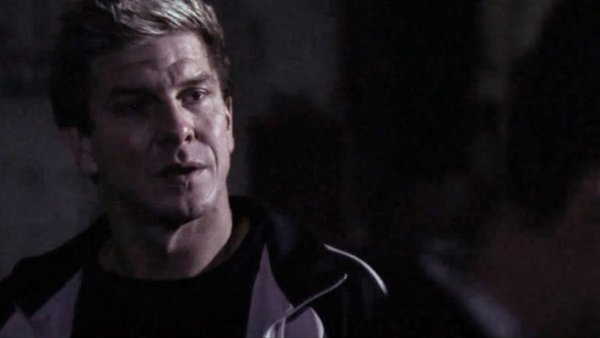
The Shield's phenomenal fifth season saw the Strike Team's chickens come home to roost when their myriad corrupt actions were investigated by doggedly determined Internal Affairs officer Jon Kavanaugh (Forest Whitaker).
Kavanaugh manages to make charges stick on one member of the team, Lem (Kenny Johnson), who he attempts to "flip" and make rat out the rest of the Strike Team.
Ultimately team leader Vic Mackey (Michael Chiklis) arranges for Lem to instead flee to Mexico, but fellow member Shane Vendrell (Walton Goggins) is tricked into believing that Lem will turn on the team, and so takes drastic steps to prevent it.
In a devastating, infuriating scene as Lem sits in his car and prepares to run to Mexico, Shane suddenly drops a live grenade in Lem's lap, the resulting explosion mortally wounding him.
Seeing Lem, the moral compass of the Strike Team, suffer such a brutal death - from someone he loved like a brother, even - was absolutely infuriating, especially as it was completely avoidable.
But this was also a necessary, narrative-energising event that set in motion the show's incredible final two seasons, leading to Vic and Shane both reckoning for their respective actions in the jaw-dropping series finale.
3. That's My Dog - Six Feet Under
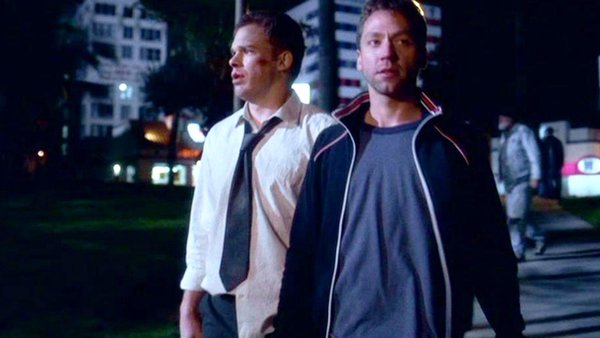
Six Feet Under is one of the most acclaimed TV dramas in history, and a rare one that well and truly stuck the landing. By far its most divisive episode, however, is season four's "That's My Dog."
The episode largely revolves around David (Michael C. Hall) picking up a handsome hitchhiker, Jake (Michael Weston), who turns out to be a drug-addled maniac.
Throughout the ordeal, David is beaten, tied up, and forced to smoke crack, and then in the episode's final moments has a gun put to his head, before Jake escapes into the night.
Given the show's focal theme of death, there's a very real tension cutting through this episode that David might not survive the night, as is exemplified by superb performances from Hall and a terrifying Weston.
It is nevertheless a massively polarising hour of television, many feeling that it veered into trauma porn territory or deviated too far from the series' dramatic formula.
If it made you angry, as it did many, that's clearly exactly what director Alan Poul and writer Scott Buck intended. This was a violent break from the norm, completely exploding the series' template of interconnected dramatic stories for an episode almost entirely focused on David being taken hostage.
But rather than being a mere disposable one-off, David's PTSD following the incident became his defining character arc for the show's remainder, until he finally came to peaceful terms with it in one of Six Feet Under's final episodes.
2. The Mountain & The Viper - Game Of Thrones
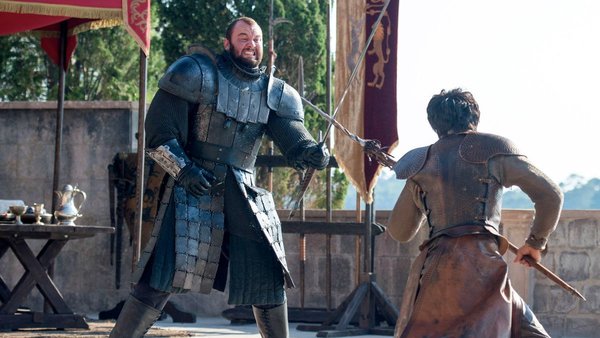
Game of Thrones' season four episode "The Mountain and the Viper" left literally millions of people screaming at their TVs in a blind rage, beside themselves that the worst possible outcome had indeed happened.
The episode centered around Tyrion Lannister's (Peter Dinklage) trial by combat after being accused of Joffrey's (Jack Gleeson) murder. The dashing, badass Oberyn Martell (Pedro Pascal) agreed to fight in Tyrion's place and take on Gregor "The Mountain" Clegane (Hafþór Júlíus Björnsson).
At first the battle appears to go well for Oberyn, who manages to stab Clegane with a poison-tipped spear which eventually kills him, but not yet.
Rather than finish the job, Oberyn first wants Clegane to confess to killing his sister Elia.
And Oberyn ultimately wastes enough time parading around that Clegane's able to trip him and get the upper hand. He then mockingly confesses to Elia's murder before gouging Oberyn's eyes out and nauseatingly crushing his skull, killing him.
It was a deeply maddening outcome for two reasons: Oberyn had a wide-open window to confirm the kill but had to make a spectacle out of it first, and Oberyn's defeat of course meant that Tyrion was sentenced to death.
In just about any other show it'd be tough to believe that Tyrion would indeed be executed, but given Thrones' anything-goes approach to its entire cast, it was easy for non-readers to believe that Tyrion's days were indeed numbered.
Thankfully that wasn't the case, but David Benioff and D. B. Weiss clearly relished leaving every single person watching foaming with impotent rage.
And finally, MAJOR SPOILERS will follow if you haven't yet seen Stranger Things' fourth season in its entirety...
1. The Piggyback - Stranger Things

Look, Stranger Things fans really only have themselves to blame at this point if they get hopelessly attached to the cool new character who - shocker - ends up dying a deeply tragic death.
We went through this all with Bob Newby (Sean Astin) back in season two, and so when D&D-loving metalhead Eddie Munson (Joseph Quinn) was introduced at the start of season four, it was a fair guess that his days were already numbered.
And in the fourth season's epic final episode "The Piggyback," the expected happens.
After belting out a riveting rendition of Metallica's "Master of Puppets" to lure the demobats away from his friends, Eddie realises they need more time to attack Vecna (Jamie Campbell Bower), and so continues to draw the creatures' attention away. However, he ends up swarmed by demobats and mortally wounded.
In a gut-wrenching scene, Eddie dies in his pal Dustin's (Gaten Matarazzo) arms, and to make matters worse Vecna survives, the Upside Down has begun to bleed into Hawkins, and the world at large still considers Eddie a murder suspect. Yikes.
Needless to say, when the Hawkins Gang finally defeats Vecna in season five, it's going to feel all the more gratifying as revenge for Eddie's death. All that rage will be worth it - probably.