10 TV Shows Dominated By The Last Character You'd Expect

Nobody really intended for these guys to become main characters. Look at 'em now!

Television is a strange beast. You might spend months - maybe even years - working on an idea, thinking you have a pretty clear understanding of your show, who the characters are, and what the plotlines are supposed to be. And then the fans, out of nowhere, seem to take a liking to a character that was never meant to be a major part in any way - they were there just for jokes or exposition. This happens a lot more than you'd think. For whatever reason, audiences often take a shine to certain characters or actors, and they end up becoming main characters or major supporting players. Spike, from Buffy the Vampire Slayer, is one of the best examples of this: James Marsters was only ever meant to appear in a limited run of six episodes. Yes, Spike - the best villain of the entire show - was only meant to be a villain of the week. This list is made up of the actors and actresses who entirely dominated a show, even when their character wasn't meant to. Sitcoms are pretty prevalent here, presumably due to the fact they're usually shot week by week, and producers can go by the audience reaction to a certain character in person, and very quickly factor in said character for the following episodes...

10. Henry Winkler As Fonzie In Happy Days
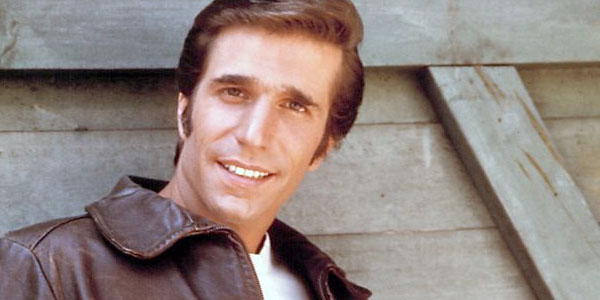
The Fonz is just the coolest character to ever grace the telly box; I'm pretty sure it's scientific fact. He could punch a jukebox and get it to play the song he wanted, he had a bad-ass motorcycle and he could rough up some jocks from two towns over without a hair in his perfect quiff ever going out of place. But did you know he was meant to be a recurring character only? Yep, it's true. The creators of the show only ever intended for Fonzie to be a recurring character who would occasionally offer the gang advice and would appear whenever one of the characters had a reason to go to the garage. He didn't even get his trademark leather jacket until the second season, because the network feared he would come off looking like a gangster. Henry Winkler's brilliant and charismatic performance really won over the crew, producers and audience after the first episode, and so they started to write him into more and more episodes. Of course, Fonzie would eventually become the main character after Ron Howard left, and as a result became probably the most famous icon of the 1970s.

9. Rainn Wilson As Dwight Schrute In The Office

Arguably Dunder Mifflin's best employee, Dwight Schrute was only meant to be a supporting character. If you watch the original UK version, you'll notice the character he was based on - Gareth - had nowhere near as big a part as Dwight in the larger scheme of things. Sure, the rivalry between Gareth and Tim (Dwight and Jim) was there, but it became its own thing in the American version. Dwight wasn't meant to really feature in many plots, but as the first season went on, the writers noticed there was a lot of untapped material they could exploit by featuring Dwight a lot more. Wilson took this and basically ran with it, dominating every scene he appeared in and nearly gaining a spin-off as a result. All this from a weird-looking, petty beet farmer with a tendency to over-exaggerate his power. We would've loved to see more of Wilson doing Dwight, he was the perfect actor for the role. Wilson, apparently, expected his character would get written off pretty quickly once the rivalry between Jim and Dwight fizzled out. In the end, Wilson ended up staying for 9 seasons and 201 episodes. Not bad at all.

8. Michael Richards As Cosmo Kramer In Seinfeld

Watch Season 1 of Seinfeld and tell us you're not a little creeped out by Kramer. Go on, we dare you. That's what the character was meant to be - Jerry's somewhat crazy and creepy neighbour who'd turn up with get-rich quick schemes now and again. What he became was the funniest and maybe even the nicest member of the four main characters. It's all down to Michael Richards, really. His immense physical prowess and great talent for slapstick meant that Kramer was very hard to miss in any scene he appeared in, which meant the audience started to enjoy his appearances. Richards lobbied for more plots featuring Kramer but was actually nearly written out because it was meant to focus on Jerry's character. However, as more writers were brought in they all realised that Kramer was a potential comedy goldmine - they were right. Kramer is the only character who we'd consider to be likeable. He's clearly trusted by people, like the neighbour who asks him to babysit, and he seems to be able to hold down friendships outside of the main cast, such as his relationship with Newman. Kramer just dominates the show, stealing every scene he's in and forging some of the most memorable moments of the series.

7. Aaron Paul As Jesse Pinkman In Breaking Bad

You were never meant to get attached to Jesse or even get to see much of him. Everyone's favourite character from the series and the character who represented the audience most of the time was meant to die at the end of Season 1, sending Walt into a spiral and even deeper into his Heisenberg persona. Luckily, Gilligan suspected that the audience would grow attached to Jesse because he basically acted like they would in most of the situations, and he decided to keep Jesse alive, realising that one of the other huge elements of his evolving show was the relationship and chemistry between the two leads. Let's not discount Aaron Paul, though - his performance is a huge part of what allowed Jesse dominate the show. He isn't a perfect character and Paul doesn't portray him as such... he is simply human. Who'd have thought the funny and kooky ex-student in season 1 would become such a great dramatic character? Certainly not me. In later seasons, Jesse develops and takes the focus even more, gaining huge storylines and plots as the events unfold. He becomes less moral as time goes on, but not to the extent of Walt. And don't lie: you were so happy for him after the finale, weren't you?

6. Misha Collins As Castiel In Supernatural

Supernatural was pretty good for its first three seasons, kind of a mix between The X-Files and The Exorcist with bits of Frasier and other sitcoms chucked in, if that makes sense. We really loved The Winchesters, but it was pretty clear someone else needed to be introduced into the fold to mix things up a little bit. Enter Castiel, played by Misha Collins. After Dean ends up in Hell, he escapes with the help of the angel Castiel. All the writers and producers considered Castiel to be a one-shot guest star, but had him take a human host so that he could reappear if he needed to. Which is exactly what happened when the fandom took a shine to him. Despite appearing in just 40 minutes of footage in his first few episodes, he was upgraded to cast regular for Seasons 5 and 6 where he appeared in many more episodes. Collins really dominates because he is so different to Sam and Dean, yet there is an obvious chemistry between the three characters. Bringing much more humour and drama into the series, Castiel is a great character who makes a welcome addition to the main threesome (no pun intended, internet fan-fiction writers), and it's all down to the chemistry that flows through every episode. Not bad for a guest star.

5. Estelle Getty As Sophia Petrillo In The Golden Girls

The Golden Girls is a lot better than it has any right to be. A sitcom about four women above the age of 50 living in Florida sounds awful on paper, and yet it's a brilliant portrayal of later life and shows that this demographic are real people and face the same problems we all do. Without a doubt, the most memorable character is Dorothy Zbornak's mother, played by Estelle Getty. Sophia is a hilariously brash and un-PC relic from a bygone era and was a big reason for the show's success, due to people tuning in to see what outrageous things she'd say that week. But she was originally intended only to appear in the pilot, helping Dorothy to move into her house. After the pilot audience loved Getty's performance and the creators knew they had a hit character on their hands, they decided to have her move into the house full time, her infamous nursing home ("Shady Pines, ma!") having burnt down. Nobody expected an 87 year-old woman to dominate a show about three free-wheeling divorcees and yet she's easily the best, most-rounded and loved character of the entire series, even transitioning into the rubbish spin-off The Golden Palace and upping the quality as much as possible.

4. David Hyde Pierce As Niles Crane In Frasier

Fussy, pompous, elitist and a bit of a snob. These are things we are meant to hate in a person, but thanks to David Hyde Pierce's brilliant portrayal of Niles Crane in Frasier, we come to accept them as quirks that round off a loveable character. Niles is without a doubt the dark horse of the cast, always there with a snarky comment or elitist remark that can make you roll on the floor with laughter (On wearing a t-shirt: "I've never worn an undergarment in public before!"). Niles was originally only there to provide a polar opposite to his brother Frasier. For all intents and purposes, Niles was a version of Frasier that never went to Boston and frequented Cheers, showing just how much Frasier had changed and creating some hilarious moments such as Frasier's dismay at Niles' exotic coffee order. Again, like other entries in this list, the studio audiences loved Niles and by the 4th episode, the writers noticed this and had him start visiting Frasier's apartment more frequently. His will they/won't they romance with Daphne was the highlight of the series and we're not ashamed to admit we shed a single, manly tear when they finally professed their love for each other. Nobody thought during Season 1 that by the time Season 8 rolled around, Niles would be the best-loved character of the show - especially compared to how he started out.

3. Ed Westwick As Chuck Bass In Gossip Girl

We confess, Gossip Girl is a guilty pleasure. Watching Chuck's original appearances on the show, it's very very obvious he was meant to be a douchebag and slightly rapey who's friends with Nate, but is also determined to make everyone else really depressed. We're not sure what his original purpose was, but once they toned down his rape-loving nature and his blackmailing talents, he really starts to become kind-of likeable. Making him date Blair is an inspired choice and turns the Upper East Side's main villain into a slightly softer and much more sympathetic, if not likeable, character. Ed Westwick is brilliant with both sides of the character, effortlessly switching between the two personas when he needs to. Chuck's popularity is mainly down to the smoldering good looks of Westwick, which meant that fans of the show took a shine to him, meaning the character obviously needed to be more sympathetic. Considering it was meant to be about Serena, it pretty much became the Chuck and Blair show by the end, and we're glad.

2. John De Lancie As Q In Star Trek: The Next Generation

Ah, Q. Probably the most memorable antagonist of Star Trek: The Next Generation (outside of the Borg) was a member of the Q continuum, an omnipotent presence who it seemed solely existed to make the crew of the Enterprise miserable. He's pretty much an antagonist at the start, acting like a judge and punishing the crew for their perceived crimes, but can also be an ally if he decides he wants to be. Q was meant to be a villain of the week and as such, John de Lancie was only contracted for one episode, but the producers were left stranded when one of the later episodes had script problems and had to be quickly rewritten to feature a humanoid villain after their budget left them no money for major effects. Q thus became a recurring villain once the producers noticed the ratings for episodes featuring him were the highest. Only in Star Trek could a minor villain end up turning up in all but one season of TNG as well as all the other modern day Trek series. Q has been expanded on in the novel and audiobook universe and as such has become a huge major character in the history of Star Trek.

1. Danny Pudi As Abed Nadir In Community

In the first few episodes of Community, Abed is a borderline autistic savant who takes a liking to Jeff Winger and starts following him around which, in his mind, constitutes a friendship. Of course, Jeff finds this weird but uses Abed to get closer to Britta, only becoming his friend once the study group's formed. Dan Harmon, creator of Community, has said he intended Abed to be a minor character in the study group who wouldn't be really seen much outside of the library. However, when Danny Pudi turned out to be a brilliant improviser and comedic talent who turned Abed from someone pretty hard to get close to to someone who was just misunderstood, Abed started getting many more stories and eventually entire episodes revolving around him. His love of films also allowed the show to create entire episode parodies of films, some of which are the best episodes the show has ever done. As the group adopt Abed as their pseudo-Son, so do we and we really start to warm to him. It's all down to Pudi, who can convey emotions and brilliant subtext, even when his character is meant to be an emotionless static robot of sorts. Like this article? Let us know in the comments section below.

Contributor
Contributor

3rd Year Film and Television Production student at Edge Hill University. Writer of "Stockton's Last Stand" and screenwriter/director of "Hunted" and "Spyfail 2: The Search for Spyfail 1". I also do stand-up comedy sometimes... I'm told I'm marginally funny.