10 TV Shows That Made Death Meaningless

Shuffling off the mortal coil is just a mere inconvenience to some.
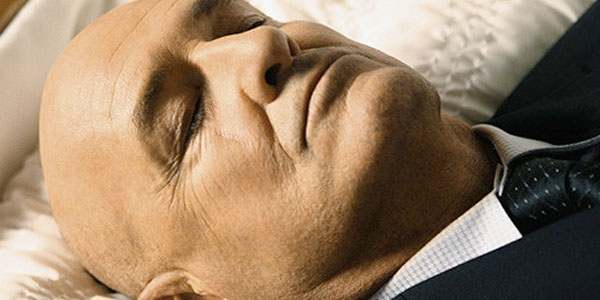
For the most part, we're willing to give television shows a certain amount of latitude when it comes to bringing characters back from the dead. Like, once or twice. That's fine. It's done so rarely that it's actually a legitimate plot twist when it happens. But there are a number of shows that have made a hobby out of killing off characters, just to have them unceremoniously yanked back from beyond the grave. It's actually reached epidemic level proportions. These shows have gotten to a point where they overuse this plot device so frequently that they've actually destroyed any dramatic tension that might have existed. The audiences know that whatever happens, these characters are probably going to be brought back, so what's the point in worrying about their safety? Steven Moffat, we're looking at you. While it's nice to know that your favourite characters are probably safe, it's such a better feeling to be an audience member who is legitimately scared that they'll all die and actually stay dead.

10. Buffy The Vampire Slayer

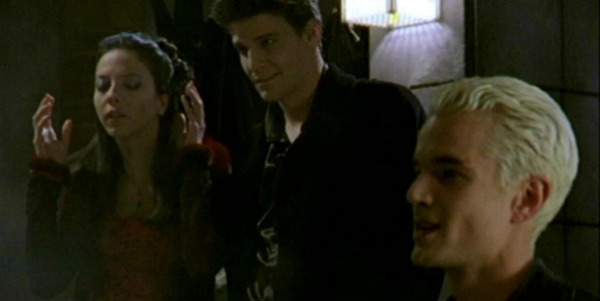
Joss Whedon created a world here where there were no hard and fast rules of death. Some deaths were painfully sudden and permanent, while others occupied a more flexible space. Buffy herself is the most obvious example - by the time the sixth season rolled around, she had already died twice. Once by drowning in the first season, quickly resuscitated by Xander, and the other as an act of sacrifice to save her sister Dawn in the fifth season finale, where she was resurrected months later by Willow. Sure, it was a bold move to kill off the main character, but at the same time, we knew that she was going to come back somehow. They weren't just going to have Buffy the Vampire Slayer without Buffy. And then there's Angel. The entire second season builds up to Buffy having to send Angel to hell, after he lost his soul upon experiencing a moment of, ahem, pure happiness. We spent episodes agonizing over this predicament, what this loss would do to Buffy and if there was any possible way he could be saved. Alas, there was not. Buffy plunged the sword into his chest, damning him to an eternity in hell...which he promptly returned from a few moments later. Sure, it was a couple hundred years for him, but the audience barely had time to grieve his loss before he popped back up again.

9. Torchwood

When you have a show revolving around Jack Harkness, a character who has been granted the gift of functional immortality, you're bound to have at least a few back from the dead moments. Jack can't die. Well, he can die, but it doesn't last for very long. So it's difficult to build up much dramatic tension where the audience genuinely fears for his life. He's killed on a fairly regular basis but always manages to get better. As opposed to poor Owen, who comes back from the dead, but in a decidedly more "Walking Dead" manner. In addition, at the end of Miracle Day, fellow Torchwood member Rex Matheson also seems to have been granted the power of resurrection. So if they ever make any more series of Torchwood (which at this point looks unlikely, with Russell T Davies currently working on a new show for Channel 4 called Cucumber), we'll have more crazy shenanigans to look forward to.

8. Supernatural

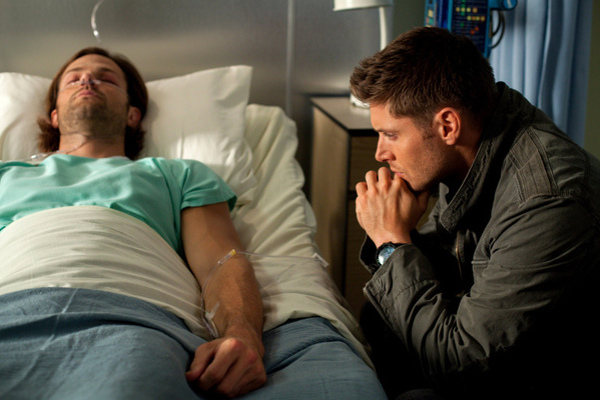
If we had a nickel for every time Sam and Dean came back from the dead, we could probably single-handedly fix the world's financial crisis. These guys just do not know how to die properly. After a while, however, it becomes the show's greatest tragedy - sometimes these characters genuinely want to stay dead, but they keep getting pulled back into the world of the living against their will. Let's run the numbers on this one. Over the course of nine years, Sam was stabbed, struck by lightening, killed by an angel, shot by hunters, and sucked into Lucifer's Cage. Dean fares even worse. He was hit by a truck, ripped apart by hellhounds, shot by hunters, and was trapped in purgatory...and that's not even counting the episode where Sam was trapped in a time loop, forced to watch Dean die over and over again in unique and inventive waves. Hunters have a rough life under the best of circumstances, but the Winchesters are practically a pair of cats with the amount of lives they've had. We know when we watch the show that when they die, they won't be dead for long. Because a world with the Winchester brothers separated is scarcely worth thinking about.

7. South Park

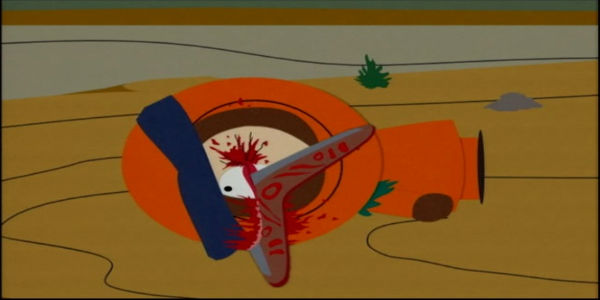
This is an interesting one. South Park made the words, "They killed Kenny!" "You bastards!" famous, when they killed off little parka-clad Kenny in increasingly inventive ways pretty much every episode. Pretty soon you went into the episodes expecting to see him blown up or stabbed or shot full of lead, and people started to eagerly look forward to his death scenes. But while they made death meaningless by killing him off hundreds of times over the years, they restored its meaning a couple years ago, when they revealed the truth about Kenny: he's immortal. Well, sort of. He dies every day, in any number of gruesome and painful ways, and then wakes up the next morning. Every. single. day. Kenny then uses this power to become a guardian of the town of South Park, watching over its citizens as the masked hero Mysterion. The genius of it is that it gives a tremendous poignancy to something that was originally just a sight gag and running joke.

6. Angel

To be fair, the most egregious example of this on Angel is really split between this show and Buffy the Vampire Slayer. In the series finale of Buffy, the entire crew is fighting off a crew of ubervamps in the Hellmouth. Spike sacrifices himself, using a medallion that will harness the power of the sun to kill all the vampires in the area, but will also burn him to a crisp along with it. It's a noble move for the occasionally amoral vampire, and a touching display of exactly how much Buffy means to him. Which is then quickly invalidated, as he shows up very quickly on the fifth season of Angel. While more Spike is never a bad thing, and he really does have some great moments on Angel, it feels like it would have meant a lot more if he had just gone out a champion at the end of Buffy. It takes what should have been a heroic finish to a character who had evolved tremendously over the course of five seasons, and just brushes it off. We know that when Joss has a great working relationship with an actor, he tends to bring them back, but it probably would have been better if it didn't happen so quickly in this case.

5. The X-Files

All the sneaky little alien viruses wandering around are a very good excuse for the perpetual reanimation of dead characters on The X-Files. More than half the main cast has been pronounced dead at one point or another. Mulder is abducted in season seven, only to be returned dead in the following season, freaking everyone out as he wakes up whilst in his coffin. Scully was pronounced brain dead presumably by a trained medical professional, but makes a full recovery. A number of characters are shot pretty much point blank in the face, die from their wounds, and then are miraculously brought back later on in the show's run. At least when it happened to Jeffrey Spender, they at least had the decency to bring him back in the final season horribly disfigured and acknowledged that his brush with death had happened at all. The point is, death on The X-Files lacks a certain sense of permanency. Hell, even The Cigarette Smoking Man died and came back. The aliens must have some weird kind of Lazarus effect going on.

4. Lost

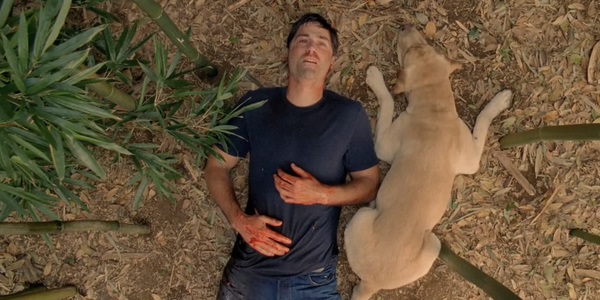
Lost wasn't exactly a television that followed conventional rules. Or made a whole lot of, for lack of a better word, sense. When you spend a few seasons following a bunch of people around a creepy, mysterious island, inevitably some weird stuff is going to go down. Like when characters who are firmly established as being dead all of a sudden start wandering around. Or when Mikhail, the tough-as-nails ex-Soviet soldier, died a handful of times. This sort of thing happened so often that when the Man in Black stole Locke's body and started impersonating him, everyone just assumed that he had come back from the dead, like everyone else. But then again, when you're on an island that also happens to be purgatory (spoiler alert), you probably just have to go with the flow. A certain amount of it can be explained by the immense healing powers of the island, but you also just have to accept the fact that the Lost creators enjoy messing with audience's heads.

3. Looney Tunes

The granddaddy of them all. Looney Tunes characters are physically incapable of getting seriously injured or killed. Wile E. Coyote will swing into a canyon wall, wobble around like an accordion for a few seconds, and then the next time you see him he's back to his old tricks, totally fine. There was actually a lot of parental outrage at one point over the state of cartoons -- because programs failed to show the real-life consequences of these actions, they were worried that kids would start emulating them without realizing how dangerous they are. You see that kind of thing parodied on The Simpsons with The Itchy and Scratchy Show, a program about a cat and mouse who are gruesomely violent to one another under the guise of children's entertainment. And maybe that's an actual issue. But for every kid who jumps off a roof thinking it won't hurt him because he saw it on television, there are at least a hundred other kids who are sitting around on a Saturday morning just waiting for Wile E. Coyote to finally catch the Roadrunner.

2. Stargate SG-1

You know a show uses the "back from the dead" trope a little too frequently when even the characters within the program are beginning to comment on it. Although there are a few different characters who just don't seem to know how to stay dead, Dr Daniel Jackson is the most egregious example. To the point where whenever he dies, his colleagues remark cavalierly, "Again?". There was this one time he was on a ship that exploded in the middle of open space, and he showed up pretty much unharmed by the end of the episode. In The Nox, Jackson and two other characters (Jack and Sam) are all killed by Apophis. Actual death scenes, not just the kind of implied demise that you see on a lot of other shows that are trying to misdirect the audience. It just doesn't take, because they're fine afterwards. And Apophis, the perpetrator of said crimes? Died twice, came back from the dead twice (well, came back once in the real universe and once in an alternate universe, but who's counting?). Does anyone die for real on this show? Dr. Fraiser aside, obviously.

1. Doctor Who

Well, to be fair, the central premise of Doctor Who is a man who is for all intents and purposes immortal, and will simply regenerate into a new body rather than dying. So a certain amount of cheating death is only to be expected. But the stakes seemed to have changed in recent years. Back in the first series of New Who, when Christopher Eccleston triumphantly exclaimed, "Just this once, everybody lives!" that actually was a nice change of pace. But over the past few years, the show has morphed into this really safe environment where the audience doesn't have to worry about the characters dying. Take Rory, for example. How many times did that guy die over the course of two and a half seasons? After a while, there was no point in even getting worked up over it. He dies, he comes back, no big deal. And take Jenny in The Name of the Doctor €“ she had what would have been a really fantastic death scene, only to be brought back moments later, good as new. When death becomes a temporary condition, there are no stakes.

Contributor
Contributor

Audrey Fox is an ex-film student, which means that she prefers to spend her days in the dark, watching movies and pondering the director's use of diegetic sound. She currently works as an entertainment writer, joyfully rambling about all things film and television related. Add her on Twitter at @audonamission and check out her film blog at 1001moviesandbeyond.com.