10 TV Shows That Just Made Huge Mistakes
Killing Star Trek: Picard's fan favourite character was hella dumb.

Even the most modest TV show is comprised of a frankly insane number of moving parts, where hundreds of artists and craftsfolk collaborate to try and produce, say, a dozen hours of quality entertainment per year.
The rewards of producing a popular show speak for themselves, but the risks are massive also, and sometimes a TV series ends up making a creative or business misstep that might cost it dearly in the long run.
That certainly seems to be the case with these 10 TV shows, which just dropped huge clangers which have left the fanbase anxious and uneasy to say the least.
From majorly alarming behind-the-scenes issues to ignoring fan feedback, or simply failing to deliver on promises, these shows are all absolutely in the danger zone at the moment.
In the best cases it requires something to be creatively re-jigged in the future, but at worst these mistakes could result in these shows being cancelled outright.
Whatever the reason, it's baffling that these decisions passed through so many hands before being given the green-light, because they could ultimately signal the death knell for these much-hyped shows...
10. Spending $300 Million On The First Season - Citadel

Amazon's new spy-thriller series Citadel is so slickly generic you couldn't be blamed for assuming the scripts were written by an AI, because even the sex appeal of Richard Madden and Priyanka Chopra Jonas can scarcely keep this thing afloat.
But Citadel being another of the many identikit espionage streaming shows would be absolutely fine, if not for the fact that Amazon spent an eye-watering $300 million on the six-episode season, making it the second-most expensive season of TV ever, behind another Amazon show, The Lord of the Rings: The Rings of Power.
The primary reason for the ballooning budget - ultimately costing more than your average Marvel Cinematic Universe movie - is due to the show undergoing extensive reshoots last year after a major change in creative direction, with the series' original showrunners being replaced.
The reshoots alone reportedly added $65 million to the overall production budget, but with Amazon believing that Citadel is their Next Big Thing, and even commissioning a second season and numerous international spin-offs already, they're clearly going all-in on it.
While the show's premiere enjoyed strong ratings despite poor reviews, and it's fair to say that season two should be considerably cheaper to produce, it's simply tough to believe that audiences will remain invested in such a formulaic spy serial long enough to ever justify the bewildering cost.
Even with the economics of streaming TV being so incredibly vague, this doesn't seem like smart spending - not even for a company as loaded as Amazon.
9. Making The Episodes Too Long - Ted Lasso

Ted Lasso's third and final season has certainly endured a bumpy reception so far, with fans and critics alike feeling that the show's wholesome charm has worn off, its attempts to tackle serious issues - like sex tape leaks - are clumsily heavy-handed, and worst of all, the episodes are too damn long.
One of the primary appeals of the show's first season was that it offered up breezy, undemanding sports comedy packed into easily digestible half-hour installments, and though season two saw numerous episodes in the 40-50 minute region, it felt like an earned scaling-up of the central drama.
But season three has so far been marked by brutal storytelling over-indulgence, with three episodes hovering around the hour-long mark, with the season's shortest episode still being 44 minutes long.
Obviously no great episode of TV is too long nor any bad episode short enough, but given that the third season has been dinged for the saggy subplots involving Keeley (Juno Temple) and Nate (Nick Mohammed) in particular, it's clear that the conciseness of the first two seasons is long gone.
With recent reports about the third season's production suffering from scheduling, budget, and creative issues, it's little surprise that the Emmy-winning series seems primed to end on something of a down-note.
8. Cramming Multiple Books Into A Season - Shadow & Bone
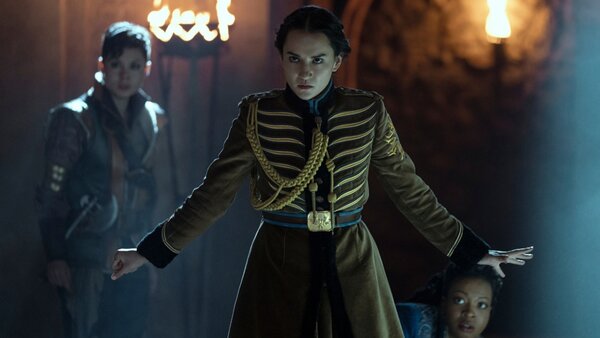
The first season of Netflix's fantasy series Shadow and Bone was largely well-received by critics, fans of the Grishaverse novels on which it's based, and also those totally new to the IP.
Sensibly, the first season adapted the novel series' first book only, Shadow and Bone, while adding an original storyline of its own, but for season two the showrunners ultimately got a little too ambitious for their own good.
Shadow and Bone's eight-episode second season attempted to adapt both the second and third books, Siege and Storm and Ruin and Rising, as well as elements of a later novel, Crooked Kingdom.
Unsurprisingly, the primary complaint about season two was that the pace was too rushed, with far too many storylines being raced through, which left fans of the novels feeling short-changed and pure TV viewers more than a little confused.
The sheer number of plot threads, characters, and slivers of information that needed to be remembered made season two exhausting, even with some pretty ruthless cuts being made from the source material.
It's easy to suspect that the creatives chose to sprint through so much material in season two in case it wasn't renewed for a third, but the irony is that this crammed approach may ultimately have caused more casual viewers to drop the show.
Given that season two had relatively sluggish viewing figures out of the gate, it won't be remotely shocking if Netflix cancels it any day now.
7. Focusing Too Much On The Present Day Plot (Again) - Yellowjackets
Of all the shows that have been breathlessly compared to Lost over the years, Yellowjackets actually seems to be one of the few worthy successors - a delicious slow-burn mystery thriller series centered around a group of teenagers involved in a plane crash in 1996.
Yellowjackets' first season received rave reviews, albeit with the caveat that constantly pinballing between 1996 and the present day sometimes caused a whiplash, especially as the contemporary storyline simply lacked the same narrative drive.
The unfurling mystery of what happened to the survivors immediately following the crash was so much more interesting than the sometimes laboured drama taking place with their adult versions in the present.
But anyone expecting the show to change tack for season two was sure to be disappointed, as the modern storylines still get more than their fair share of air time, while keeping the principal characters apart from one another for far too long.
Given that Yellowjackets has always had a five-season plan, it's clear that said plan involves extensive storylines set in the 2020s, yet the showrunners risk fans losing interest long before then if they insist on bloating it out with so much listless modern day nonsense.
6. Making Fans Do Homework - The Mandalorian

Ted Lasso isn't the only hit TV show suffering through some season three woes - The Mandalorian's recently concluded third season was largely accepted to be the weakest of the three, and it all goes back to a creative call made before the season even premiered.
The second season concluded with the Mandalorian (Pedro Pascal) leaving Grogu with Luke Skywalker (Mark Hamill), but between seasons this compelling cliffhanger was resolved in spin-off series The Book of Boba Fett, reuniting Mando and Grogu.
And so, for anyone not tirelessly committed to watching every live-action Star Wars series commissioned by Disney, it surely caused a bit of confusion when the third season began with the duo back together.
The message to viewers here basically was "Do your homework or suffer for it," that anyone purely interested in the adventures of Mando and Grogu had to tune into another, altogether less-interesting show to fill the narrative gaps.
It was certainly a mistake for Disney to assume that Star Wars fans are simply gobbling up everything they release, because with so much Star Wars content now releasing around the year, you can't really blame more casual fans for picking and choosing what they invest their time in.
And let's be honest, The Book of Boba Fett just wasn't it.
Given the vocal backlash against this overly interconnected storytelling approach, though, hopefully Disney might ease off with it and leave Mando and Grogu's story to be picked up in the show's fourth season.
5. Half-Assing The Random Episode Gimmick - Kaleidoscope

Netflix's heist drama series Kaleidoscope launched at the start of the year and was largely marketed on its intriguing presentational gimmick, that each of the show's eight colour-coded episodes would be presented to subscribers in random order.
The idea was basically that no two viewers would get the exact same viewing experience - an exciting idea albeit one which would require extremely finessed writing to ensure that every possible combination of episodes still made storytelling sense.
And so, it perhaps wasn't terribly surprising - though still disappointing - that Kaleidoscope's apparently "random" episode order was in fact much less random than advertised.
While it's fair enough that the final episode is fixed in place as it ties everything together, Netflix's claim that the series offered more than 5,000 possible combinations just isn't founded in reality.
Viewers and journalists alike reported a disappointing consistency in which episodes aired first, with the eight episodes seemingly being chunked into three distinct batches, ensuring it's very far from being truly random.
Evidently Netflix decided to influence the episode order because it would've been far more challenging from a creative standpoint to write seven episodes leading up to the finale which made sense when watched in any order.
All the same, that was the gimmick that made the show appeal to so many, and so for it to basically be a sham is undeniably disappointing. That it still hasn't been renewed for a second season might indicate that sentiment on a wider level.
4. Finishing Season 2 Without Writers Or Showrunners - The Lord Of The Rings: The Rings Of Power

The Lord of the Rings: The Rings of Power's first season had its fair share of issues, but nevertheless laid a solid enough foundation for a second season to make some major improvements.
Yet The Rings of Power has run ashore with one major creative hurdle in recent days, with the current Writers Guild of America strike meaning that shooting on season two is being wrapped up without its writers or showrunners on set.
Though the season reportedly only had 19 days left to shoot when the strike began, and it's possible much of this material is inconsequential, it can't be discounted that there could be some majorly important scenes within that schedule which will now be completed without the input of major creatives.
It will instead fall to directors and executive producers to make decisions without the show's figureheads, which could result in some important moments falling flat when the season airs next year.
It's reminiscent of the 2007-2008 WGA strike, where TV shows and movies alike plowed ahead without writers on set, resulting in some less-than-stellar outcomes - perhaps most infamously, Bond film Quantum of Solace getting some awkward rewrites from Daniel Craig himself.
While the costs of shutting down production on The Rings of Power until the strike is over would surely be catastrophic, given that season two needs to win dubious fans back and paper over the first season's narrative cracks, this seems like a similarly risky approach.
Considering that Amazon has committed $1 billion to the show over the course of five planned seasons, continuing production without the captains of the ship could be a very expensive mistake.
3. Making Season 1 Insanely Frontloaded - The Sandman

Netflix's hugely anticipated adaptation of Neil Gaiman's The Sandman opened to largely positive reviews, and for the show's first six episodes, it was incredibly easy to appreciate why.
Yet there was a popular sentiment among audiences - especially those unfamiliar with Gaiman's source material - that the series fell off a cliff in its second half, when the focus shifted away from Dream (Tom Sturridge) towards Rose Walker (Kyo Ra).
The Sandman's first season adapted the first two volumes of Gaiman's comic series, and while there would've been sure fan outrage had Rose been omitted from the season, the writing, direction, and acting simply didn't do her story justice.
The Dream-centric storytelling from the season's first half was so much more compelling that, by the time it all wrapped up, audiences might've even lost interest in the show outright.
For a series that's already an incredibly niche entity and desperately needed to end in a way that stoked audience enthusiasm for season two, the botched Rose arc could ultimately have caused some irreparable damage.
If audiences en masse don't return to The Sandman after the lackluster second half of its first season, the creatives will only have themselves to blame.
2. Killing Captain Shaw - Star Trek: Picard

The third and final season of Star Trek: Picard largely felt like an apology for the aggressively mediocre two prior seasons, finally delivering the nostalgia-fuelled fan-serving epilogue to Star Trek: The Next Generation that fans wanted all along.
Perhaps the biggest surprise of Picard season three, however, was the introduction of a new fan favourite character in Captain Liam Shaw (Todd Stashwick).
Rather than become yet another bureaucratic obstacle for Picard (Patrick Stewart) and Riker (Jonathan Frakes), Shaw was an amusing foil for the duo, his dryly sarcastic demeanour belying the fact he was indeed a thoroughly decent man.
Shaw was quickly established as the season's breakout character, with many fans begging Paramount to commission a spin-off series centered around him, yet that all came crashing down in the show's penultimate episode.
Shaw ends up sacrificing himself, being gunned down to help Picard and company escape the USS Titan.
It was an affecting hero's death for sure, but one which left many genuinely infuriated, demonstrating that showrunner Terry Matalas had vastly underestimated how popular Shaw would become.
With a proposed sequel series, Star Trek: Legacy, possibly in the works, fans have begged Matalas to find a way to bring Shaw back, which either means undoing his death or, far more likely, the series partially taking place in the past.
Either way, Shaw was a terrific character who many fans would've loved to follow into his own spin-off, and by failing to appreciate what they had, Paramount left money on the table when they killed him off.
1. Releasing Less Than A Year After Candy - Love & Death

HBO's new miniseries Love & Death stars Elizabeth Olsen as Candy Montgomery, a housewife who was accused of murdering her friend, Betty Gore (Lily Rabe), with an axe in 1980.
Though Olsen has received strong reviews for her performance as Montgomery, the show's reception has been relatively muted otherwise, surely unaided by its biggest mistake of all - releasing less than a year after another dramatisation of the story.
Last May, Hulu released their own miniseries, Candy, which starred Jessica Biel in the role and received generally more favourable reviews. For anyone who watched the previous series, why would they bother with another one - especially one largely deemed to be less-good?
Clearly, there needed to be a little more breathing room between the two shows - say, two or three years.
Even with HBO being the kings of prestige TV production, if the writing isn't there it doesn't really matter. Plus, the bizarre decision to have Olsen look absolutely nothing like the real Candy - compared to Biel's rock solid likeness - did it no added favours at all.
At least, unlike every other show on this list, Love & Death is a miniseries with no plans at all for future installments.