10 TV Shows That Redeemed Hated Characters In A Single Episode
From trash to treasure.
First impressions count for a lot, and that's especially true in the world of TV, whereby an irritating or badly written character can quickly become a series' punching bag, an object of derision for fans to take out all of their creative frustrations.
It's tough to come across a hit TV show that doesn't saddle audiences with at least one or two genuinely hateful characters, regardless of intent, but there are also those rare times where a widely-loathed character is actually redeemed.
These 10 TV series all took groan-worthy or straight-up unlikable characters and transformed the fan perception of them entirely within a single episode.
In some cases the change had been coming for a while, for sure, but these unforgettable episodes are where the flip was switched and all those prior fan frustrations went immediately out the window.
These surprising turnarounds for seemingly doomed characters are terrific proof that, no matter how much someone makes you roll their eyes, nobody - well, almost nobody - is entirely beyond redemption...
10. Hank Schrader - Breaking Bad

The Episode: Season 3, Episode 7 ("One Minute")
In Breaking Bad's first season, Hank Schrader (Dean Norris) doesn't seem to be much more than a typical jock meathead DEA agent, placing him at natural odds with Walter White (Bryan Cranston).
If the continuing impression was that Hank was a blunt instrument with little going on beneath the surface, this was fantastically subverted later in the show's life, beginning with the casual season two revelation that Hank suffers from panic attacks.
But Hank really came into his own in the season three episode "One Minute," where after being tricked into believing that his wife Marie (Betsy Brandt) was in the hospital and beating Jesse (Aaron Paul) to a pulp in the aftermath, he sobs into Marie's arms on the elevator ride out of the hospital.
This crucially humanised Hank as a loving and vulnerable man, ahead of the episode concluding with him successfully fending off an assassination attempt by the Cousins, albeit with critical injuries.
From this point on, Hank was transformed from a one-dimensional bruiser into a more thoughtful and interesting character, leading all the way to his brutal demise in the all-timer season five classic "Ozymandias."
9. Brad Bellick - Prison Break

The Episode: Season 4, Episode 9 ("Greatness Achieved")
For Prison Break's first two seasons, the character of Brad Bellick (Wade Williams) was a quasi-cartoonish prison guard stereotype: vulgar and hateful in every fiber of his being.
The third season saw the corrections officer become a prisoner himself when he was thrown into a Panamanian jail, and though a more sympathetic side of the man slowly emerged, it still mostly felt like justified comeuppance for his prior savagery.
But season four finally managed to turn a corner on the character, as Bellick joined Michael Scofield (Wentworth Miller) and the other heroes in their quest to take down The Company.
This culminated in Bellick sacrificing himself mid-way through season four, drowning in a water pipe to ensure safe passage for the rest of the team.
For a character who had exhibited intense self-interest across all four seasons, seeing him make the ultimate sacrifice and finally gain the purpose he claimed to lack in life was a note-perfect completion of his arc.
8. George Mason - 24
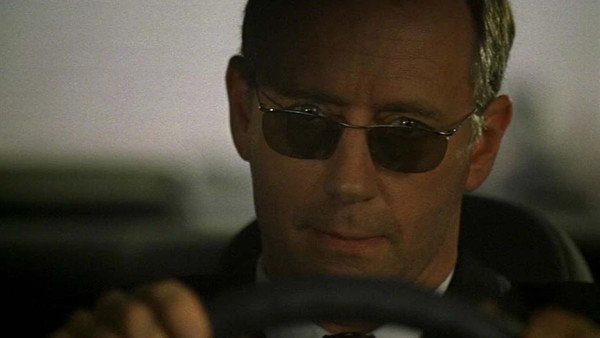
The Episode: Season 2, Episode 15 ("Day 2: 10:00 p.m. – 11:00 p.m.")
The first season of 24 cemented that Jack Bauer's (Kiefer Sutherland) CTU boss George Mason (Xander Berkeley) largely existed to get in Bauer's way and stop him from getting things done.
And though Mason seemed destined to be Bauer's continual bureaucratic roadblock for as long as the series would run, the second season took the character on a totally unexpected spirit quest of sorts.
Early in season two, Mason is exposed to lethal amounts of plutonium while trying to track down a nuclear bomb, and is quickly informed that he's got no more than a week to live.
Mason spends the rest of the season deteriorating while trying to tie up his own personal loose ends, and in turn completely redeems himself in the season's 15th episode.
After Jack discovers the nuclear bomb and learns that it can't be disarmed, he agrees to sacrifice himself by flying a plane carrying the bomb out into the Mojave Desert and crashing it at a safe distance from civilisation.
Except, in the closing moments of the episode, it's revealed that Mason stowed himself on-board the plane and volunteers to take over the controls, while even giving Jack a parachute to bail out with.
It's one of the best scenes in the entire show, and was fantastically effective in immediately transforming Mason from stuffed shirt a**hole into undeniable hero.
7. Andy Bernard - The Office (U.S.)

The Episode: Season 3, Episode 20 ("Safety Training")
Andy Bernard (Ed Helms) was introduced in The Office's third season as one of Jim's (John Krasinski) co-workers at the Stamford branch, and when Stamford was merged with Scranton later in the season, he joined the main Office cast.
It's no secret among Office fans that, despite Ed Helms' comedic brilliance, the character was annoying as hell for a major chunk of season three, with Helms' own mother reportedly even finding him too grating to watch.
But everything changed for Andy after he punches a wall and gets sent to anger management in the mid-season episode "The Return."
When he returns six episodes later in "Safety Training," Andy's obnoxiousness and general loudness levels have been scaled way back, and a clear attempt is made to ease him into the ensemble cast rather than make him stand out with wacky shenanigans.
And it totally works - Andy quickly becomes one of the series' fan favourite characters, even if there's a fair argument to be made that The Office's final season walked back a lot of that good work.
6. Betty Draper - Mad Men
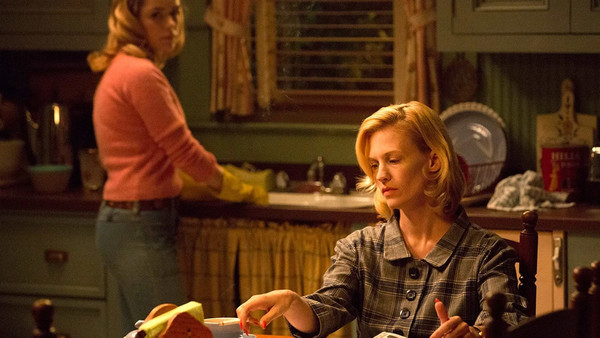
The Episode: Season 7, Episode 14 ("Person to Person")
If you ask most Mad Men fans who their least-favourite main character is, many would say Betty Draper (January Jones), the self-obsessed, hopelessly robotic ex-wife of Don Draper (Jon Hamm).
For as cool and sexy as Don was, his former spouse was alternately dull and annoying, despite her undeniable beauty. Many also felt that actress January Jones played the part too stiffly to be anything more than a Stepford Wife stereotype.
But Mad Men's seventh and final season saw Betty become an increasingly more self-actualised and sympathetic character, standing up to her conservative husband and pursuing a master's degree in Psychology, while also being diagnosed with advanced lung cancer.
Though in a lesser show this grim diagnosis might've felt like a cynical ploy to make Betty more likeable in the series' final stretch, it actually resulted in some of Betty's most potent dramatic scenes across the entire series.
In the show's penultimate ever episode, she decides to forego chemotherapy and accept her fate on her own terms, while writing a heartbreaking letter with wishes and advice for her daughter Sally (Kiernan Shipka).
But the real turning point for Betty comes in the series finale, where in a brutally affecting final phone call with Don, she insists that their children should live with her brother and his wife after she dies, citing the need for both a female influence and a more stable home life, neither of which Don can provide.
After spending so much of the show's run devoid of agency and personality, Betty finally grabbed hold of her destiny following her terminal diagnosis, and ensured the best possible future for her kids in the process.
5. Merle Dixon - The Walking Dead

The Episode: Season 3, Episode 15 ("This Sorrowful Life")
The older brother of fan favourite The Walking Dead character Daryl (Norman Reedus), Merle (Michael Rooker) was incredibly easy to hate right from the jump, quickly outing himself as a vile misogynist and racist.
Early response to the character, who along with his brother didn't appear in the comics, was mixed, noting him to be an overly broad, stereotyped antagonist, despite Rooker's game performance.
Merle was eventually left for dead in season one, only to return in the show's third season, now acting as a lackey to the vicious Governor (David Morrissey) and wearing a knife attachment over his hand stump.
Basically, Merle instantly became more interesting in season three, aided by more nuanced and less trope-filled writing, culminating in his redemptive demise in the season's penultimate episode.
Merle ends up standing up to the Governor, and though for his trouble he gets two fingers bitten off, is shot dead, and ultimately re-animated as a Walker, no longer was Merle the irritating one-note hick of two seasons prior. When Daryl consequently killed him for good, we actually felt something.
4. Michael Dawson - Lost

The Episode: Season 4, Episode 14 ("There's No Place Like Home Part 3")
As brilliant an actor as Harold Perrineau is, there's no denying the divisiveness of Lost's Michael Dawson.
Though initially intriguing, his tireless - if understandable - desire to get his son Walt (Malcolm David Kelley) back quickly wore thin, and Michael soon enough became a one-note caricature of himself.
He finally got something memorable to do late in the second season by murdering Ana Lucia (Michelle Rodriguez) and Libby (Cynthia Watros), the former death being cheered on by fans but the latter not so much.
Michael then disappears until season four, where he's finally afforded his true character-making moment in the epic season finale, sticking behind to try and disarm the freighter bomb, and eventually sacrificing himself to allow his pal Jin (Daniel Dae Kim) to escape.
While it only scarcely forgives those earlier seasons where Michael was given little to do but search for his absent son, it was nevertheless a fitting sacrificial death.
3. Roland Pryzbylewski - The Wire

The Episode: Season 4, Episode 1 ("Boys of Summer")
For the majority of The Wire's first three seasons, Roland "Prez" Pryzbylewski was a total wet blanket, with numerous characters noting his incompetence as well as him being protected from dismissal due to his marriage to the daughter of a senior officer.
In the show's first season, Prez drunkenly pistol-whipped a teenager and blinded him in one eye, though was largely protected from any major repercussions.
Prez then ended up back in hot water in season three, accidentally shooting a plain clothes police officer dead, and amid accusations of racism, he decided to quit the force. Good riddance.
Except, Prez appeared to finally discover his true calling in the fourth season premiere, where he was revealed to be working as a school teacher, and over the course of the season, it became increasingly clear that Prez was both committed and successful.
For a character who spent so much of his tenure on The Wire being an irritating goof, it was quite the late-stage turnaround.
2. The Hound - Game Of Thrones
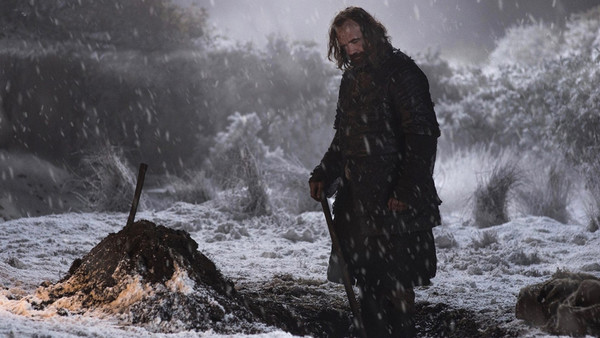
The Episode: Season 7, Episode 1 ("Dragonstone")
Sandor Clegane aka The Hound (Rory McCann) started out his tenure on Game of Thrones as Joffrey's (Jack Gleeson) murderous lackey, and frankly, that's plenty reason to hate anyone.
However, there were flecks of redemptive behaviour shown in earlier scenes, particularly during The Hound's interactions with Sansa (Sophie Turner) and Arya (Maisie Williams), even despite insisting that he still loves to murder people.
Yet when Arya leaves The Hound to die later on, there's not much sympathy to go around, and it's only in season seven that Clegane truly finds some semblance of redemption with both fans and himself.
In the season premiere "Dragonstone," Clegane and the Brotherhood without Banners come across the farm he robbed three seasons prior, only to discover the farmer and his daughter dead inside.
As if we're witnessing the precise moment where The Hound grows a soul, he feels remorse for his actions and ends up digging two graves to bury the farmer and his kin, making a tangible, physical amends for his misdeeds in the process.
Needless to say, it was a lot easier to like The Hound after that.
1. David Brent - The Office (U.K.)

The Episode: The Office Christmas Special
Perhaps the biggest storytelling difference between the American and Brit versions of The Office is that Ricky Gervais' nightmare boss David Brent is far less of an aloof idiot than his stateside counterpart Michael Scott (Steve Carell), and far more of an intentional, mean-spirited a**hole.
And that was the entire point of the character, of course, to be a realistically loathable boss you wouldn't wish upon your worst enemy. And so, Gervais faced quite the challenge when he inevitably attempted to semi-redeem Brent in the show's series finale, The Office Christmas Special.
But Gervais pulled it off in one spectacularly unforgettable sequence where Brent tells his obnoxious co-worker Chris Finch (a brilliant Ralph Ineson) to "f**k off" after he disparages his date.
The brown-nosing Brent of the past was replaced with an assertive, reinvented one, who went on to wring some actual laughs out of his employees in the final moments of the series. What a result.
You can argue that the follow-up film, David Brent: Life on the Road, somewhat undid this "happy ending" of sorts for Brent by reverting him into a cringe-factory. But let's be honest, nobody as grating as Brent was ever going to change their entire personality.
He's certainly a good deal more tolerable by the end of the Christmas Special, anyway, and seems to have learned something about being less of an insufferable moron.