10 TV Shows That Should Have Quit While They Were Ahead
TV that stuck it out well beyond their shelf life. Always check the ‘best before’ date, kids.

A little while back I wrote an article detailing television shows that lost it by the end: the ones that fell at the final hurdle. As a companion piece, I've chosen to examine television shows that fell long before that: long running television series that had a shelf life, which expired some time before they actually ended.
These are television shows where the high concept didn't warrant the lifespan that they ended up with: shows that outlived their premise and didn't have any different stories to tell, or shows that played their hand too early and had no cards left up their sleeves.
Whether flawed from conception, poorly plotted and paced, badly executed, or just a great show with a definitive shelf life, these are the television shows that definitely outstayed their welcome.
10. Burn Notice
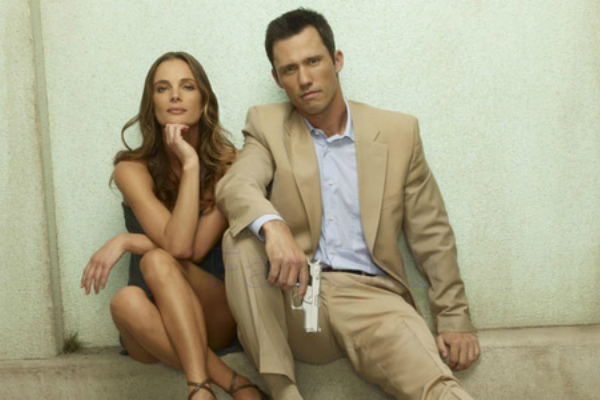
On the one hand, I enjoyed Burn Notice: I'm a sucker for a spy-gone-rogue story, and I've been a fan of Jeffrey Donovan's for years, since his standout turn as the psychotic chameleon Kyle in The Pretender back in the late nineties. Always witty and deftly constructed, the show co-stars the amazing Sharon Gless and Bruce !*$% Campbell. It was the gift that kept on giving.
Except it wasn't, not really: it was the gift that kept on going. The overarching story - who blacklisted superspy Michael Westen, and why - just kept going on, and on, and on. Every time Michael thinks he's found the person who 'burned' him, it transpires that they were a smokescreen for a bigger fish, who's really a red herring distracting him from a front to a facade to a fake to a phony...
Burn Notice was a basic-cable television action drama with a set formula every week. Clearly they were fully intending on rinse-and-repeating the formula until the show didn't pull in ratings any longer... and that's what happened, the axe falling on Westen and company in a series finale after seven seasons.
The finale was fine: it had callbacks aplenty, and at least two memorable moments that stuck with you long after the credits rolled. It's just that it could really have arrived a little sooner: three seasons sooner, in fact. As it stood, by the end I had no idea who burned Michael or why, and I watched every single episode, every single week. Id just forgotten. There was just too much going on, over seven years - seven years! - of twists, turns, betrayals, backstabbings, explosions and improvised booby traps.
9. M*A*S*H

One of the most celebrated television shows - of any kind - of all time, M*A*S*H (it stood for Mobile Army Surgical Hospital) ran for eleven years from 1972 to 1983. Famously, that's nearly four times longer than the Korean War, the setting for the show.
After the gamechanging, heartbreaking end of season three, M*A*S*H took on a more serious tone, becoming a 'dramedy'. That made the show a bigger hit with critics... but by the eighth season, only two of the main cast who'd helped to make M*A*S*H such a commercial success were still working on the show.
What's more, they were running out of ideas, and recycling them at a rate of knots. Initially, interviews with medical personnel who'd lived through the Korean War made up the source material for each season, as the plotlines from the book and film from which the show was adapted didn't last long.
Even those interview transcripts gave up the ghost after a while, and in the last few years the army surgical consultants who worked on the show would regularly call the producers with ideas, to be informed that they'd already been done. There was precious little conflict left between the characters, either: for the most part, they had all become good friends through sheer inertia.
An American television institution by the time it wound up in 1983, it's safe to say that M*A*S*H had been coasting for a good three years prior to that. It was a testament to the charm of actors like Alan Alda, Mike Farrell and David Ogden Stiers that M*A*S*H maintained audience goodwill to the very end.
8. The Vampire Diaries

An odd case, this: a show which ran out of steam due to too much story, not too little.
The incredible, breakneck pacing of The CW's hardy perennial vampire potboiler is legendary amongst the millions of people who've watched the programme over the years. Characters leap from scene to scene, relationships spring to life, age and die in the space of a single season. New faces pop up every few episodes, with sinister secrets and hidden agendas.
People die, often horribly, and some of them come back, only to die horribly yet again. There are vampires, werewolves and witches: but there are also vampire/werewolf and vampire/witch hybrids, which pretty much telegraphs the next Big Bad being a werewolf crossed with a witch, or possibly a ninja superspy from the future.
Let's not forget the presence of reincarnated doppelgängers, meaning two actors have played more than one different character at once on various occasions, and the kind of bitchy vendettas that can only come from characters having had a strop on for a century at a time. Half the characters hate each other because they used to be friends/lovers; the traditional way for one vampire frienemy to one-up another is to stab him/her or break his/her neck, rather than spitting on their food or telling people they've died, like a normal person.
So many characters, so much plot, such phenomenal pacing and now they've done it all. Theres only so many times each and every character in a show can be killed and return before the stakes for conflict and drama simply disappear. The Vampire Diaries reached that point at least two years ago when it lost around 40% of its audience (a million viewers) over season five... and true to glorious form, accelerated past it in a blur of the usual broken necks, stabbings and soap opera intrigue.
7. House

House follows the rules of the formulaic network television procedural, telling twenty-something stories a season about a team of dedicated, brilliant diagnosticians faced with an impossible medical condition every week, finding the clues to solve the puzzle before it's too late.
Now, with your typical procedural (NCIS, CSI - any of the acronyms, really), any character-based plotwork is normally relegated to the background. If there's a narrative arc, it's a sketchy one: perhaps a recurring character or plot device, but nothing the show hangs its hat on. The characters enter the show fully formed, in the shape that they'll retain throughout their run: because the characters are hooks to hang the plot on, not the other way around.
The problem with House is that it wants to have its cake and eat it. It wants to be a simple procedural, but it also wants to be a character study about Dr. Gregory House, the damaged, obnoxious medical genius - and this is a character that wouldn't last a week at any professionally run hospital, never mind eight years.
To cover this angle, creator David Shore and his writing staff continually came up with obstacles for House to circumvent: authority figures who would mess with House the same way he messed with everyone else (rather than simply firing, suing or imprisoning him immediately, as would happen in real life). We get multiple episodes based around dreams or hallucinations, and a constantly rotating cast of doctors to surround himself with, who will put up with his bullsh*t.
But at its core, House is a procedural, which relies on the character beats remaining largely the same in order to pursue the formula. That means that the purported character study was a fake. House wasn't ever going to change. There was no character arc here, just the illusion of one, the show messing with the audience just as House messed with his co-workers.
Static and - ironically - dishonest, House should have died a death around the fourth season. After all, the show literally jumped the shark in season five, House being shown playing with a toy shark to episode eighteen.
6. Supernatural

Supernatural is the last surviving show left over from the WB Network, along with One Tree Hill, Smallville and Gilmore Girls. All of those shows are dead and buried, but Supernatural is currently knee deep in its eleventh season.
The shows creator, Eric Kripke, had made it clear that the show was only intended to run for five years. Five years would cover the original storyline set up by the pilot episode, the arc plot involving angels, demons and the return to the world of the Morning Star, Lucifer. At the climax of the fifth season, Sam and Dean Winchester defeated Lucifer, beat the devil himself, and resolved those story threads. Thats it. Job done.
Only it wasn't, because season five was six years ago and Supernatural is still going. In that time, Sam and Dean have died again, been possessed, died again did I mention theyd been killed? Repeatedly. Sam has died and been saved or brought back six times during the shows lifetime. Dean, the poor bastard, has been killed and brought back 111 times however, 103 of those times were by the same villain in the same episode, so we'll call it nine, which is still plenty.
These are supposed to be mortal men with a calling - hunting monsters to protect the innocent. But theres no drama, no tension, if the lead characters arent really in any danger: and this is a show thats made it clear that it will kill and resurrect its leads any time it likes.
Thematically, the show could keep going over and over, following the formula set down from the beginning: monster of the week, pithy macho dialogue from Dean, awkward brotherly bonding, kill the monster, rinse and repeat. And thats exactly whats happened. Thats not to suggest that there havent been odd flashes of the old brilliance since the fifth season, but this is a show that went past its natural lifespan some years ago.
5. The Following
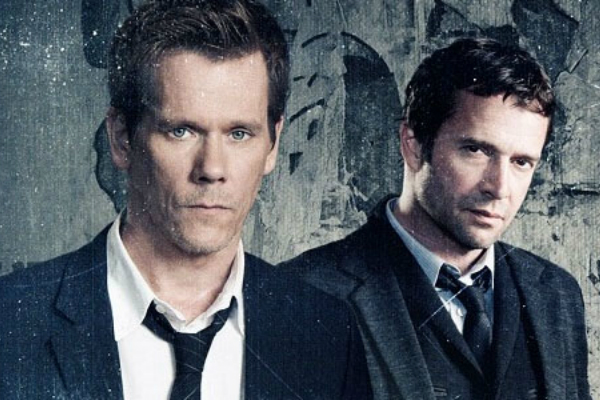
It seems such a simple, fascinating high concept. The FBI estimates that there are as many as three hundred serial killers haunting the highways, cities and backwoods of America at any one time. Well, what if someone were to provide them with connections, a family... leadership?
It's only when you actually start watching The Following that you see what's wrong with it. Making every killer in the show a devotee of the same death cult (devoted to the works of Edgar Allen Poe, believe it or not - yes, it's that cliched) nullifies the whole concept of profiling, and getting to grips with the fascinating, idiosyncratic and individual psychology of the serial killer is pretty much the unique selling point of this kind of narrative.
Without that, The Following is just a succession of gruesome murders carried out by totally inconsequential henchmen, most if not all of whom are casually disposed of as they come between Kevin Bacon's protagonist Hardy and his nemesis Joe Carroll, played by James Purefoy.
You can see the writers and directors of the show struggling to create a propulsive, thrilling narrative... not realising that their own premise has stymied them from the beginning. A serial killer narrative following a succession of bland, blindly fanatical killers with nothing distinguishing one from the next is a poor entry in the genre. At least Criminal Minds, for all its procedural structure, gives us a different 'unsub' every week, with a different persona, unique motivations, etc.
It didn't help that each of The Following's three seasons were set one year apart from the other, either: parking the car and turning off the engine every year isn't the best way to keep the wheels turning.
4. Homeland

Homeland was a show hampered by its own premise. The two leads were screwed from the very first episode: Nicholas Brody was a POW released on purpose, turned into a sleeper agent by his own captors, while Carrie Mathison was a highly strung, mentally ill operations officer for the CIA. Both characters were on borrowed time from the word go: when they became romantically involved with each other, the lifespan of the show shrank still further.
The first season of Homeland was a show based completely around Carrie and Brodys relationship, good and bad, and the fallout from his mission and her obsessive need to stop him. In the finale, Brody is sent to assassinate the Vice President of the United States with a suicide bomb: the bomb malfunctions, and the assassination is never carried out, but we all know that he was going to do it.
And then the show carries on. Season two saw Brody be found out by the US Government and used as a double agent, extending the lifespan of the shows driving concept, but closing down the possible options for that character as it did so. The climax of that season saw Brody on the run after a monumental terrorist act on US soil. By this point, the show was a parody of itself, nothing but hokum, the show having long passed the point where it could recover as it carried on wildly painting itself into a corner.
Homeland was recently renewed for not only a sixth season, but a seventh and an eighth, although why on earth thats happened is a mystery for the ages. Brodys storyline dragged itself out for the first three years, and its still going: no ones entirely sure what this show is supposed to be about anymore.
When should it have finished? With season one: the vest should never have misfired, and Brody should have died committing the worst terrorist outrage in US history, changing Carries life forever. Now that's a show that people would never have forgotten.
3. Smallville

It's difficult to determine exactly when Smallville became utterly irrelevant. I've argued in the past that it was flawed from inception: the high concept was broken, and the show never had the narrative legs to sustain itself past the pilot, let alone the first season.
Beginning with Clark Kents life as a teenager in high school in Smallville, Kansas, the idea was that the show would move gradually on to climax with Clark becoming Superman, living in Metropolis and working for the Daily Planet. Well, that all happened, and Clark still couldn't fly and still wasn't Superman.
Hed continue to meet - and often befriend - early versions of major allies and enemies from Supermans rogues gallery, long past the point where it made sense for a pre-Superman Clark Kent to know all these people, because the show ran out of any other reasons to exist except to tell comics-based storylines, something it wasn't supposed to be doing at all.
Smallville's original showrunners departed after seven seasons, cryptically remarking that theyd struggled to stick with their initial vision for the show. It would limp on a further three years before a mercy killing finally arrived in the tenth season. Some (like me) reckon the show should have died a death long before the seventh year, while still more point to the protagonists graduation from high school as the point at which the show should have hung it up.
Almost no one really believes that Smallville had the narrative legs to go as far as it did. By the end, it had been a ridiculous, no-budget, poorly executed Superman TV show in all but name.
2. Castle
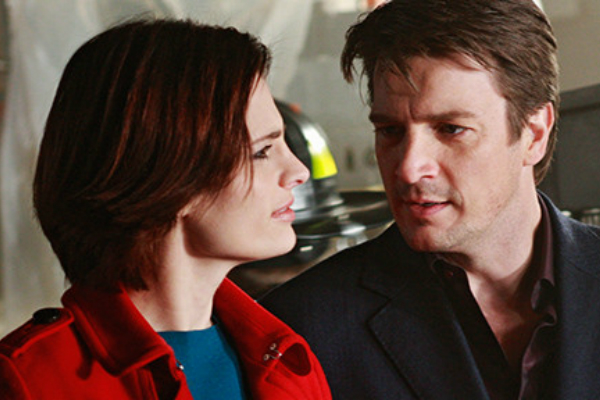
A police procedural with a whodunnit format, Castle centres around a successful crime novelist, Richard Castle, who uses his connections with the New York mayors office to have himself attached to the NYPD homicide unit - and specifically Detective Kate Beckett, in order to research his next series of novels.
The other central premise of the show was the classic will-they-wont-they dynamic, as Beckett and Castle go from antagonistic sniping to a grudging mutual respect to friendship to more. Of course - as shows like Moonlighting and Lois & Clark had found in the past - once the relationship is out in the open the whole thing is on borrowed time.
In Castle's case, that happened much earlier than it probably should, with the pair beginning a relationship between the fourth and fifth seasons. From that point, the narrative was mostly concerned with keeping them together in order to fulfill the procedural remit, while keeping them at a sufficient distance to tease out the romance as long as possible. By Season 8, the lead characters had been married for a year and the show was continuing to alienate many of the people that made it a success by artificially manoeuvring Beckett and Castle away from one another as much as possible still trying to tease out the romance.
This show should have died a death three years ago. Instead, it was finally cancelled in May.
1. Prison Break

The most obvious example of a show that didn't have the legs to go any kind of distance, Prison Break was actually originally rejected by Fox for precisely that reason. The high concept of the series was that Lincoln Burrows, a troubled ex-con, was framed for the murder of the brother of the Vice President of the United States and sentenced to death; his brilliant brother Michael Scofield comes up with a convoluted plan to break him out, and has himself incarcerated in the same prison with the full, detailed escape plans tattooed on his body.
Why a genius like Michael couldn't just memorise all the plans isnt ever really touched upon by the show: the tattoos are a cool visual (although realised with terrible CGI), and that's that. By the end of the first season, the plan is in action and the prison break has begun but Michael still has plans left to pursue, and so some of the tattoos are still in play.
By season three, half the cast are imprisoned again, locked up by the political cabal that framed Lincoln: but this time in a savage South American prison. Michaels tattoos had stopped being relevant midway through the second season, and the show had now devolved into a bog standard conspiracy thriller with a prison shoehorned into the plot to justify the title of the series.
By the fourth season, which saw the protagonists on the run yet again, still trying to clear Lincolns name, there had been no point to this show for a good two years. Prison Break would probably have succeeded on a cable network, with a greater prospect of adult levels of violence and threat and the promise of being wrapped up in two or three short seasons rather than four very, very long ones (and a 5th somehow on its way).
Agree with these picks or have some of your own to share? Let us know down in the comments.