10 TV Shows That Went Too Far (In Completely Unexpected Ways)
Even the likes of South Park, Game of Thrones, and, er, Family Matters can take it too far...

Look, it happens to the best of us—no matter how great a show is, if it’s one known for pushing the envelope, prodding the boundaries of good taste, and needling at the censor’s nerves, there will always be some moment which goes too far.
Maybe this will be enough to turn off audiences wholesale, with viewers deciding they’ve had more than their fair share of misery and downbeat twists. This was the case for both Game of Thrones and The Walking Dead, which saw viewers leave by the droves after particularly brutal episodes.
Maybe it’s just par for the course, and viewers will simply write it off as a bad week for the writer’s room, or a lesser effort in a long running show’s oeuvre. In any case, there are always going to be moments which are just a touch too much for audiences, but most of the time we can at least see them coming.
After all, Game of Thrones and The Walking Dead weren’t exactly the cheeriest shows on the box before their respective most shocking moments.
However, sometimes shows take it too far in new and utterly unexpected ways, completely blindsiding even the most seasoned viewers and critics and leaving everyone reeling in their wake. Those are the instances we’re spotlighting today—the times that shows not only pushed things too far, but did it in a way no one saw coming (for better or worse).
10. That Inexplicable Incest Subplot - Dexter

Dexter was never a show worried by the boundaries of good taste—being based on the (admittedly clever and original) premise of a “serial killer who targets other, worse serial killers” means that idea of staying sanitized is thrown out the window fairly early in development, after all.
But after years of the show developing the tender, tragic connection between Dexter and his adopted sister, no nonsense cop Deb (who is none the wiser to his murderous past times), the series picked the weirdest way to throw away seasons of character development and screw up the dramatic tension of Dexter attempting to hide his secret form the only person who’s judgement truly mattered to him.
Yep, you guessed it—like Game of Thrones before it, Dexter had Deb reveal she harboured secret sexual feelings for her brother, and thus an uncomfortable and wholly unexpected incest subplot reared its head and made a mess of the potentially promising season wherein Deb discovered Dexter’s secret double life.
Their dynamic never really recovered in the eyes of fans and critics alike, and the show’s decline continued until its roundly reviled series finale two seasons after Deb’s dramatic revelation.
9. Zombie-Masked Sex Scenes - The Walking Dead

Like Dexter, The Walking Dead was never—from its violent pilot episode onwards—a show which shied away from the grittier and bleaker side of things. The post-apocalyptic drama saw its heroes face down not only hordes of the undead but the absolute worst of humanity as well, offering a vision of the world’s end which was about as optimistic as Cormac McCarthy’s The Road—which come to think of it is actually a pretty obvious influence on Rick and Carl’s relationship.
However, whilst the arrival of long-lasting villain and eventual deeply, deeply flawed antihero Negan did herald some serious ultraviolence that would leave Alex DeLarge himself chucking his Beethoven records out the window, his gruesome antics were at least initially well-grounded in the show’s plot and provided drama, tension, and character development along with smashed skulls.
What was not so well-grounded was the same character’s grotesque hook up with season ten’s primary antagonist, the zombie-faced Alpha, which took place whilst the pair were still wearing the skinned faces of the undead as masks—you know what, we’re aware this one did serve as foreshadowing for later events, but you try sitting through that uncomfortable scene again and tell us it was necessary.
8. No Heroes In Westeros - Game Of Thrones

More than any other show on this list (sorry, Negan and Lucille), Game of Thrones pushed the envelope so far and so often that the show could have been called “1001 Ways to Guarantee the Complaints Department Will Be Busy Until Christmas”.
There was the boundary-pushing violence, with heads being crushed and throats being slit in unsparing detail. There was the relentlessly downbeat and grim plot, where no character was safe and evil almost always won the day. There were the frequent middle fingers thrown to good taste via rape scenes, torture depictions, and more dead bodies than TV has ever seen.
So what could the show do that would be seen as unexpected step too far?
Well, it would have to be huge. Huge like say, making its penultimate episode a claustrophobic nightmare depicting one of its only even vaguely heroic characters losing their mind and slaughtering a city worth of innocent civilians in brutal detail?
Yes, the foreshadowing was there all along for Dany’s downfall, but when most audiences expected the last episodes of the show would follow the defeat of the Night King, it came as a crushing blow for many more optimistic viewers to see one of the only beloved forces of nominal “good” on the show corrupted by power and reducing scores of powerless men, women, and small children to ash over a torturous hour of television.
7. Tyler's Assault - 13 Reasons Why
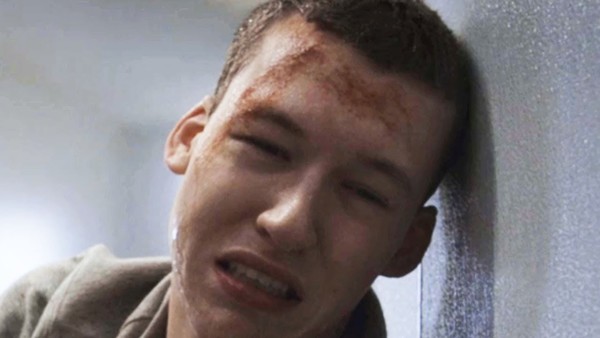
Netflix’s mega-controversial megahit 13 Reasons Why has never been shy about pushing viewer’s buttons with the show’s premise alone addressing sensitive issues as diverse as suicide, sexual assault, self-harm, bullying, and teenage drug use. However whilst the show’s debut season was criticized for its handling of a suicide scene which some felt was explicit to the point of being instructive, much of the first season’s content was lauded for handling these intensely difficult issues with relative grace and subtlety.
Once the show was renewed, the creators surprised everyone by opting to focus less on the casual misogyny of contemporary American adolescent culture and more on the intense physical bullying which is commonplace in the country’s high schools, replacing the smug villain Bryce with his more mindlessly aggressive teammate Monty.
However, viewers who presumed this thoughtless jock would be any less threatening were left shook by the explicit depiction of his sexual assault on the unsuspecting Tyler, whose subsequent trauma leaves him traumatised and arming himself up to open fire on the school dance.
The gruelling assault sequence spared no detail and left viewers shook. Admirable as the showrunner’s attempts to showcase a very real and underdiscussed problem were, the jaw-dropping scene was far more intense than anything the show had attempted before, and proved too much for many viewers.
6. The Not-So-Mighty Ducks - South Park

It’s hard to argue that South Park has “gone too far” when the show’s creators/ BASEketball stars Trey Parker and Matt Stone (we’re never going to stop shoehorning in any available excuse to spotlight that underrated flick) have made it their mission statement to offend as many viewers as possible on purpose. The R-rated adult animation prides itself on leaving no target untouched, regardless of potential controversy.
With the showrunners earning themselves a fatwa each for depicting the Prophet Muhammad and scripting episodes with titles like “The Wacky Molestation Adventure”, it’s hard to imagine that there’s much South Park could do to go too far.
But go too far they indeed did (we’re not sure that’s grammatically right, but it’s the truth) with season ten’s last episode, the sports movie parody Stanley’s Cup. Following series protagonist Stan Marsh as he attempts to coach a kid’s hockey team to victory and inspire hope in an ill child, the episode ends with… both attempts failing. Miserably.
The creators loved this “sweet and weird” denouement, but even hardened fans of the show’s uber-bleak sense of humour struggled with such a hopelessly cruel punchline and the episode remains more divisive amongst the fanbase than many of the show’s more explicit and violent chapters.
5. That Inexplicable Dramatic Domestic Violence Episode - Family Guy
Much like South Park, Seth MacFarlane’s most famous animated offering isn’t known for pulling its punches. Particularly since its renewal, Family Guy has been infamous for combining the family sitcom structure of The Simpsons with South Park’s more risqué and irreverent elements.
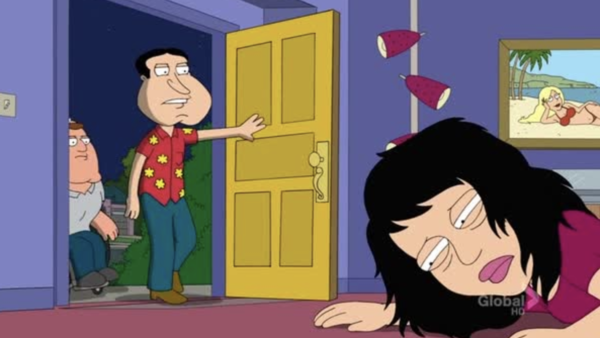
The show doesn’t shy away from controversial topics both in its jokes and plots, with one episode even being banned by American networks for making light of abortion despite the writer’s best attempts to treat the subject matter with sensitivity. However it’s not actually a tasteless joke that earned Family Guy a place on this list, but rather the odd, misjudged episode Screams of Silence: The Brenda Q Story.
Ostensibly parodying the format of melodramatic Lifetime movies of the week, judging by that title at least, the episode proper is a nearly humourless depiction of a battered wife struggling with her abusive partner until—spoilers, we guess?—the show’s heroes kill him.
To say it’s a divergence from Family Guy’s typical fare is putting it lightly, but unfortunately the writer’s room didn’t have the requisite dramatic chops to make the premise work, meaning viewers tuning in expecting animated antics instead got a cut-rate, needlessly explicit made-for-TV melodrama.
4. That (Surprisingly Solid) Anorexia Episode - American Dad
Another appearance for one of Seth MacFarlane’s never-ending franchises on this list, although as has been the case for much of American Dad’s history, this one received significantly better reception than its Quahog counterpart. Despite the ironic title “The American Dad After School Special”, an early episode of the darkly comic sitcom focused on the ever-relevant issues of body image and eating disorders, and managed to do surprisingly sensitive and solid job of it.
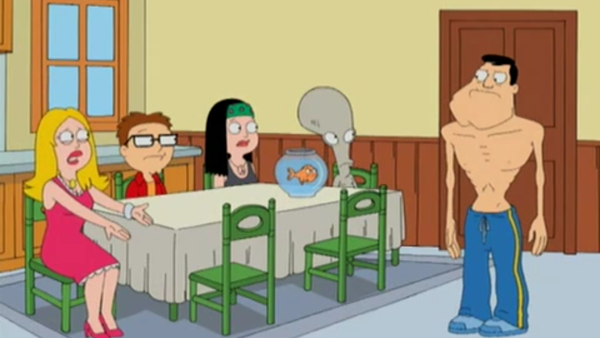
When nerdy son Steve brings home a heavier love interest than his dad had anticipated, it sends family patriarch/ uber-conservative CIA operative Stan into a self-conscious spiral. The protagonist starts focusing obsessively on his health, over-exercising and undereating yet seeing no results.
That is, until the shocking reveal, not played for laughs, that he’s suffering anorexia and has a wildly distorted self-image. The sight of a gaunt, hysterical Stan was jarring to say the least for fans of the typically irreverent and cynical show, and the episode was lauded for addressing a difficult problem with grace.
Despite this relative success, it’s doubtful that anyone expected something so dark and sincerely serious from the show, and the episode was amongst few times that the long-running series attempted such a feat.
3. Stevil The Terrifying Chucky/ Urkel Hybrid - Family Matters
Okay, so this one has to be the most famous entry on this list—or at least the most infamously dark. The beloved ABC sitcom Family Matters was originally envisioned as a spin off from parent programme Perfect Strangers, but despite starring Die Hard’s Reginald VelJohnson as patriarch Carl Winslow the show soon became a vehicle for the character of Steve Urkel.
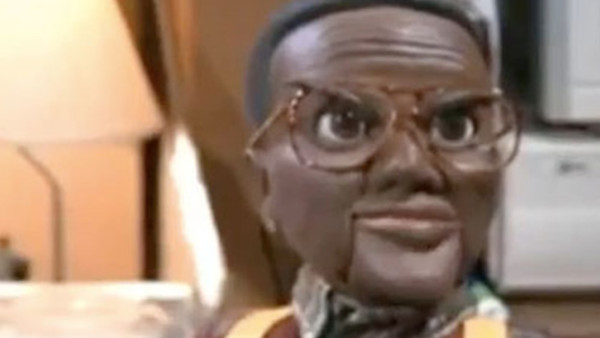
Played in a career-best turn by Jaleel White, Urkel was that perfect intersection between hilarious and insufferable, and carried many later instalments of the long-running series on his back (shout out to Jim Parsons who must have a hernia after those years on The Big Bang Theory). However, sometimes the show’s Urkel-centred approach backfired—as seen in the Halloween special where his ventriloquist’s doll counterpart, er, kills his entire family.
That’s it. That’s the bit.
The arrival of Stevil, a scheming puppet who conspires to—succesfully!—off the entire Winslow clan to gales of laughter from the studio audience is one of the most deservedly infamous moments of unexpectedly dark TV. And before you ask, no, the impact isn’t ameliorated at all by the reveal that the episode is a dream—after all, nineties sitcoms did “it was all a dream” episodes all the time without using it as an excuse to off the entire cast.
2. Homer Loses His Dignity - The Simpsons

There’s no denying that The Simpsons is, unlike some of the shows included on the list, a genuine masterpiece and one of the defining cultural documents of an era.
Hilarious, heart-breaking, and often surprisingly cerebral, at its best The Simpsons can stand toe-to-toe with any cinematic or literary achievement of the twentieth century and claim a place at the table as one of the greatest pieces of art made in the last four decades.
So how does a show this great manage to go too far?
Well, the fifth episode of the show’s twelfth season didn’t have much of the magic which used to make America’s first family so beloved, and the instalment contributed to its gradual decline as it saw the writers plum darker depths than usual for laughs and come up a cropper in the process.
As Homer becomes Burns’ prank monkey and partakes in an escalating series of public practical jokes which put his dignity on the line, the episode eventually culminates in an implied assault which didn’t earn much mirth from the audience at home. The shocking scene feels out of place at best and horribly misjudged at worst, whilst the rest of the episode does little to ameliorate this sour taste, making a point of “ironically” recycling old jokes and bits from other, better episodes
1. The Murder Of Drew Sharp - Breaking Bad
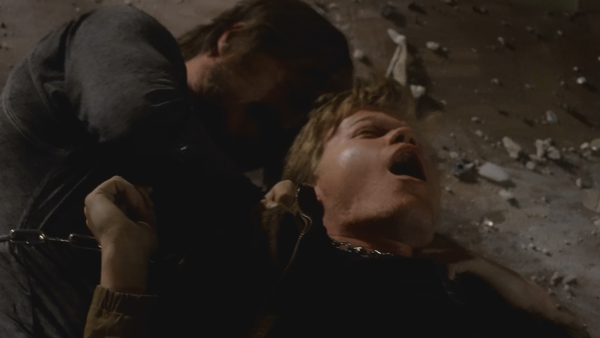
By the time Vince Gilligan’s masterpiece reached its fifth season, few viewers could argue that the propulsive, intensely dramatic thriller was a light-hearted show. By now the series had already explored overdoses, multiple murders, suicide, corpse disposal, and just about every conceivable human sin in its gradually escalating, blackly comic portrait of a man driven to desperation by an uncaring world.
That said, as seen when the tortured protagonist genuinely regrets endangering the life of a child during his usual meth-making shenanigans, the story of formerly mild-mannered high school teacher Walt White did have a few lines it wouldn’t cross. At least, until the closing moments of season five’s fifth instalment Dead Freight.
As relative newcomer Todd drew a pistol and murdered an innocent child in cold blood, the audience was left as shell-shocked as our pair of outlaw protagonists. Until this point Jesse and Walt had at least only encountered criminals with some semblance of a conscience, and Todd represented a darker turn for the series as a whole.
However unlike many entries on this list, the turn was seen by many viewers as a positive development, with viewers approving of the amoral new villains. You see, by leaping over the threshold of “too far” so early on, Todd and co gave us an excuse to revel in Walt’s violent revenge. Clever, that.