10 TV Shows Too Big To Fail (That Did It Anyway)
Steven Spielberg + dinosaurs is sure to be a hit, right?

Sometimes a TV show comes along and you know it's going to be a hit. The talent involved, both behind and in front of the camera, is just too good; with the budget and studio all working in its favour, it seems like a guaranteed success.
Sometimes, that works out exactly as it should. Take, say, Big Little Lies: with its insane cast, former Buffy writer, director of a Best Picture nominee, well-received source material, and the general production quality typically guaranteed by HBO, everything screamed it was going to be a huge success. And so it proved, becoming a buzzy sensation online, winning awards at every turn, and even being renewed for Season 2 despite a seemingly closed story.
Of course, it's not always so simple. Sometimes the best shows can come out of nowhere. Breaking Bad had some talented people involved but nothing to suggest it'd become one of the greatest TV series of all time. And sometimes the opposite is true: where a TV show appears to have just about everything going for it, from the starry cast to the 'I-can't-believe-he's-doing-TV director' and a big studio push, and yet, despite all of that suggesting it's a guaranteed hit, it somehow manages to flop.
10. Vinyl
Why It Was 'Too Big'
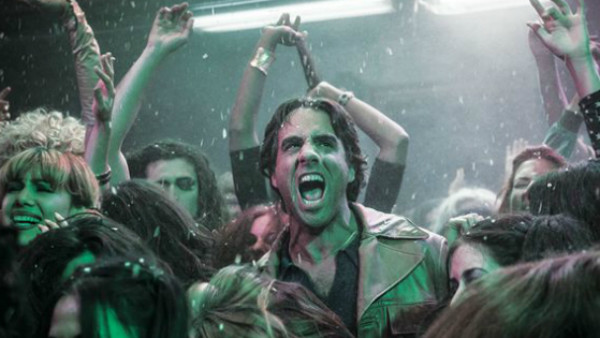
Two words: Martin Scorsese. Three letters: HBO. The pairing of the cinema legend and the cable outfit seemed like a match made in heaven. They'd already teamed up for one hit series, with Boardwalk Empire running for five seasons, so this seemed like another surefire thing. Scorsese was coming off the back of The Wolf of Wall Street, one of his best and most creative works in years. HBO were having a year that'd see them release the critically adored Insecure and the Reddit-breaking Westworld.
Add in the always great Bobby Cannavale as star, and Mick Jagger helping to oversee the story and music of a show about the music industry in the 70s, and we should've been in for a bombastic, hedonistic series that had the potential to run for years.
Why It Failed Anyway
Despite the amount of talent involved, the biggest problem with Vinyl is that there wasn't all that much story to go with it. Unevenly paced, bogged down in generic plotlines, and occasionally even boring despite Cannavale's game performance and the incredible soundtrack, it couldn't win over viewers.
It did seem like it might have a reprieve, with HBO renewing it for Season 2, before changing their minds a few months later and scrapping it entirely. It doesn't help that, for all his name was plastered all over it, Scorsese didn't have much of a hands-on role apart from the pilot, something the director himself has since lamented.
9. The Michael Richards Show

Why It Was 'Too Big'
Seinfeld was the biggest TV show of the decade. Through seasons 5-9 it was either the 1st or 2nd most-watched series on network television, and its finale was watched by 76.3 million viewers in the U.S., the fifth-highest of all time. Even with a divisive response to its ending, the was a lot of excitement to see what they'd get up to next, and Michael Richards (Kramer) was the first to attempt to break out. With three Seinfeld writers behind him, The Michael Richards Show was a no-brainer for NBC execs.
Revolving around a private investigator who misunderstands everything and constantly makes mistakes, yet always gets the job done, it seemed like a perfect vehicle for the popular and hilarious Richards' talents. If it could attract even a fraction of Seinfeld's viewers it'd be doing well.
Why It Failed Anyway
Although it wasn't known then, the Seinfeld Curse would become a strangely real thing. In 2001, Jason Alexander would star in Bob Patterson, and a year later Julia Louis-Dreyfus launched Watching Ellie. Both crashed and burned, but it was Michael Richards who was the first to fall victim to it, and he's the only one to never overcome it either (although the racist rant probably has more to do with that).
The Michael Richards Show, though, also tried too hard to be like Seinfeld; the execs forced his character into essentially behaving like Kramer, complete with his renowned physical comedy, even when it didn't fit the character or situation. The series received negative reviews, low ratings, and was quickly scrapped.
8. Camelot

Why It Was 'Too Big'
There have been a number of big-budget misfires from overeager studios keen to find a true 'epic', from Rome in the mid-00s to Netflix's Marco Polo. Somewhere in between them is Camelot which, even more than the others, seemed to have more going for it to lead to success.
Not only did it have a mammoth production - estimated at around $7m per episode, which is more than Game of Thrones was spending back when both shows launched in 2011 - but it actually received favourable comparisons to Thrones at first. With Chris Chibnall (then best-known for Torchwood) and Michael Hirst (the Oscar-winning Elizabeth and Elizabeth II: The Golden Age) running the show, and a cast led by Joseph Fiennes and Eva Green. Its retelling of Arthurian legend, with extra sex and violence for the cable crowd, only added to its insane amount of potential, and Starz were talking about having several seasons' worth of material on-hand.
Why It Failed Anyway
Despite a strong start - alongside the solid initial reviews, it was also Starz' most-watched premiere at the time - the ratings and reception for the series quickly began to decline. Game of Thrones didn't help, because it became clear Camelot wasn't capable of telling such a compelling, complex storyline alongside its lavish production values.
The official reason given for its cancellation was more mundane though: Starz cited 'significant production challenges', believed to be scheduling conflicts with its, er, stars, including Fiennes, Green, and Jamie Campbell Bower, although the $70m+ price tag for a series not that many people were watching can't have helped.
7. Viva Laughlin

Why It Was 'Too Big'
The kind of show you look back on and wonder how it ever happened in the first place, there was a belief that Viva Laughlin would be a real success for CBS. Although a couple of years before Glee would prove the worth in a musical TV series, this had its genesis in popular BBC series Blackpool, taking the story to the even more glamorous heights of Nevada. CBS pumped millions into the show, giving it a big marketing push at the Tonys and with its first episode costing an estimated $6.8m. Its ambition was clear to see, including the fact that its cast featured Hugh Jackman, who had only a year prior starred in an X-Men film.
Why It Failed Anyway
Despite its ambition, and some actually decent musical numbers, nothing else about Viva Laughlin really worked. The story, dialogue, and performances were all rather terrible, even leading The New York Times to ask "is it the worst show in the history of television?" It was such a bomb that CBS cancelled it after just two of a planned eight episodes, not even airing other produced instalments.
6. FlashForward

Why It Was 'Too Big'
With the incredible success of Lost came a bunch of network executives scrambling around to find 'the next Lost'. A number of shows crashed and burned harder than Oceanic Flight 815 , but none were quite as hyped as FlashForward.
This one had the benefit of actually airing on ABC, the same network as Lost, so it wasn't just billed as being the next Lost but also its direct replacement. Based on Robert Sawyer's book of the same name, it had well-established names behind-the-scenes, with David S. Goyer (The Dark Knight Trilogy) and Brannon Braga (Star Trek: The Next Generation) producing, while ABC gave it a massive promotional push. It couldn't have asked for a much better start either, with a great pilot watched by around 12.5m people.
Why It Failed Anyway
Unfortunately, those viewing figures were completely unsustainable, and had pretty much halved by the mid-season point. It quickly became apparent that the series had very little direction, nor the ability to sustain even one 22-episode run, let alone multiple. Showrunner Marc Guggenheim was replaced after just a month on air, and replacement David Goyer made for a complete tonal shift before he too departed just a few months later. The show's mysteries span out of control until it was just a complete mess, and ABC promptly cancelled it after one season.
5. The Defenders

Why It Was 'Too Big'
Five seasons across four separate shows were all building to this. The Defenders was effectively the small screen, street-level version of The Avengers, with the joint backing of Marvel and Netflix behind it.
While the Netflix MCU had taken a dip with Iron Fist, the majority had been acclaimed by both fans and critics, generating huge amounts of hype along the way for its more adult tone and jaw-dropping action. Even Iron Fist was somewhat forgiven, because it was all part of the build to The Defenders, in the same way not all of Marvel's Phase 1 films were great, yet important stepping stones. The Avengers had been a mammoth success, so surely The Defenders would be too, right?
Why It Failed Anyway
Although only eight episodes instead of the usual 13, The Defenders was plagued by the pacing issues that have in-part come to help define Netflix's Marvel Universe, with the biggest misstep being the wait until the end of the third episode for the titular team to assemble. We'd already been through most of the setup thanks to their solo shows, and the wait here dragged things out unnecessarily.
Compounding the issue was the Hand, the villain of Daredevil Season 2 and Iron Fist Season 1. They weren't exciting in either of those, and once again felt like a lacklustre threat, especially when combining the strengths of four superheroes. There was little justification for the team coming together, and The Defenders wasn't just a failure, but it's led to huge drop-offs in interest in the rest of the shows too, most of which have now been cancelled.
4. Joey

Why It Was 'Too Big'
Friends was one of the most popular sitcoms of its generation, and the biggest on TV at the time of its conclusion. While the finale wrapped things up neatly and went out on a high note, there was still a legion of fans not quite ready to say goodbye to their Friends. And that's a breach Joey aimed to fill.
Matt LeBlanc reprised his role, taking Joey from New York to Los Angeles in search of his big break. Given the popularity of Friends as a show and Joey as a character, along with how successful another spin-off of a similar beloved NBC comedy had been with Frasier, this should've been a success on a similar level. NBC certainly thought so, with the show launching just a few months after Friends ended, given the same time slot and a big promotional push.
Why It Failed Anyway
No one told us Joey was gonna be this way. The show had no jokes, felt broke; the love? It was DOA. It's like it was always stuck in second gear, and it shouldn't have lasted a day, nevermind a week, month, or even a year.
In the end, no one was there for Joey. The premiere episode may have shown just how many people were interested, but without the other five Friends the character just didn't work. It took Joey to really hammer home just how much the strength of the show was in the six of them, and that they were far stronger together than apart.
The show did get a second season, but, with a further decline in quality, goodwill dissipating, and a change of time slots, the ratings plummeted to a series low of just 4.1million, and NBC put it on hiatus before cancelling it altogether.
3. Studio 60 On The Sunset Strip

Why It Was 'Too Big'
After the conclusion of The West Wing - a series that attracted 17 million viewers at its peak, and won 26 Emmys - fans waited with bated breath to see just what genius screenwriter Aaron Sorkin would do next.
The answer was Studio 60 On The Sunset Strip, a behind-the-scenes look at an SNL-style live sketch show, complete with a show-within-a-show too. It was an exciting, new premise for the time, and was led by The West Wing star Bradley Whitford alongside Matthew Perry, in his first major role post-Friends. The show was the subject of a major bidding war between NBC and CBS, with the former paying a near-record fee to acquire it, and it was the most anticipated series of the coming TV season.
Why It Failed Anyway
Although audiences and critics were quickly taken with Studio 60, things quickly turned sour on the ratings front. By episode 5 there'd been an almost 50% drop-off from the premiere episode, which meant it was always going to have a tough task turning things around. There was, however, another reason for its failure too, in the form of Tina Fey's 30 Rock.
It can't go unnoticed that the shows, while different in execution, have basically the exact same premise. 30 Rock was by far the smaller of the two, given Studio 60 came from the biggest writer in TV at the time, but it was also smarter, funnier, and, most importantly, a lot cheaper. Only one of them could survive, and Studio 60 was cancelled after one season, while 30 Rock would run for seven in total.
2. Terra Nova
Why It Was 'Too Big'
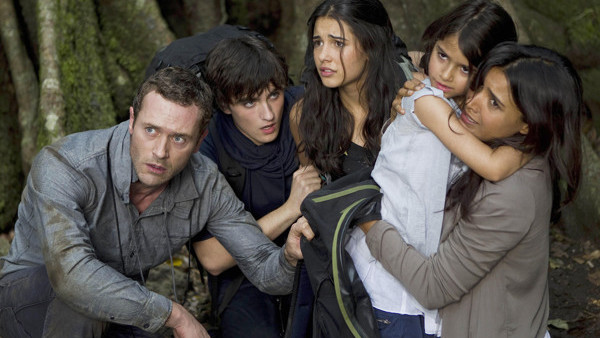
Steven Spielberg + dinosaurs! With Spielberg onboard as producer, Terra Nova went into Jurassic Park territory, telling the story of a family who flee an overpopulated and dystopian 22nd Century and attempt to set up a colony 85 million years in the Earth's past. Aside from having the cinema legend's name all over it, and the promise of both dinosaurs and time travel, Fox gave this a major marketing promotion, playing trailers in front of major cinematic releases and spending around $20m on the pilot episode alone.
Why It Failed Anyway
Despite all the money spent on it - including 250 sets and 400 extras for the pilot - the budget couldn't cover for one fatal flaw, which is that its human characters simply weren't very interesting. It's all well and good having some dino-action, which will sustain a two-hour premiere, but that's not enough to stretch out over 13 episodes.
With a clunky script stacked with terrible dialogue, reportedly stemming from some big behind-the-scenes problems, the show never became the ratings hit that its budget and talent suggested, and certainly didn't do well enough for Fox to renew it, with the series instead being binned after just one very expensive season.
1. Battlestar Galactica (1978)

Why It Was 'Too Big'
Coming hot on the heels of Star Wars, and with Star Trek still fondly remembered by TV audiences, Battlestar Galactica promised to break new ground in what sci-fi TV could achieve, aiming to do for the small screen what Star Wars had for cinema. It had a huge budget for its time, trailers more like those you'd get for movies, and its pilot was then the most expensive ever produced. Reports ahead of time suggested it'd be a surefire smash hit and the most watched series on TV, and its first episode was indeed a big ratings winner for ABC.
Why It Failed Anyway
With Battlestar Galactica an instant hit, CBS moved against it by programming two of its own hits in the same timeslot. And, despite its promise, the show couldn't compete with family sitcom All In The Family. ABC started to move it around the schedule, which resulted in further declining ratings, before it was cancelled to the outrage of fans. It was too expensive and, clearly, too ahead of its time, with the 2004 reboot becoming one of the most acclaimed sci-fi TV shows ever.
Which other TV shows were too big to fail, but did it anyway? Let us know down in the comments.