10 Unforgivable Mistakes That Ruined Great 2013 TV Shows

Bad endings, losses of identity, silly writing... And that's just Dexter.

Imagine you're meeting someone for a first date; you don't really know this person that well, but you've heard good things from others, so you figure you'd give it a try. The date starts off well: the other person is polite, friendly, interesting, and towards the end of the date, the two of you are swapping stories over dessert when suddenly and inexplicably, your date starts yelling, complaining loudly and basically just not being a sound person. It seemed like a non-sequitur, and you feel like he/she might calm down after a bit, but you now see that this person is not actually the great person you thought he/she was. This date is not the kind, enthralling person you imagined, but a lazy, upsetting waste of your time. Sometimes that moment where the date goes off the rails doesn't come until the third or fourth date - and in the worst cases, not until marriage. A few TV shows recreated this phenomenon last year in TV. Viewers went in, having heard good things, and for a while, things seemed great, but then the show started doing something you weren't so sure of. You still stuck around for a bit to see where things were going, but it became clear that this previously pristine show had taken a turn for the worse, and only a miracle could bring it back. In spite of a generally exceptional year for TV, a few shows of generally good quality, had weak outings. Some long running shows, after spending years building a strong fan base, betrayed their audience. Elsewhere, novice shows, like Low Winter Sun and Marvel's Agents of S.H.I.E.L.D., squandered potential by wasting talent and good source material. The new TV year is just now getting started; let's hope shows this year learn from last year's mistakes.

10. Arrested Development Forgot Its Premise

It would be somewhat tough to say that the fourth season of Arrested Development was a complete failure, because it wasn't. It packed in some laughs, the acting was top notch, and the writing wasn't out of left field - but Mitch Hurwitz's ambition in utilising Netflix's binge-watching model caused the show to lose its focus, which caused the rest of the season to be weaker. By having each episode focus on one character whose actions would temporally overlap with the actions of other characters, the episodes often grew dull. Part of what made the first three seasons so much fun was watching the ensuing dysfunction as the members of the Bluth family interacted, but in season 4, the characters were largely isolated, and so the familial-interaction-dynamic (otherwise known as the premise of the show) was removed. Furthermore, spending entire episodes with just one character often grew boring: for example, the early George, Sr. episodes, which revolved around his business dealings, lacked the laughs. If these scenes had been interspersed alongside scenes with other characters, they likely would not have felt so bothersome. This further emphasises that the true strength of these characters lies in bouncing them off each other--not in showing them in isolation. It seems Hurwitz wanted to utilise binge-watching model of Netflix and justify the show as a web series so much that he occasionally forgot the point of the show: to make us laugh and occasionally identify with the most ludicrous, dysfunctional family on TV, and not to show his characters on isolated, personal journeys.

9. American Horror Story: Coven Lost Focus
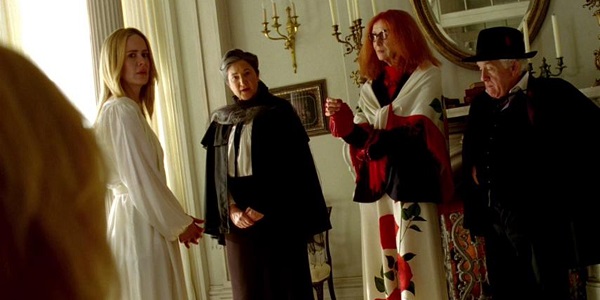
Similarly, American Horror Story: Coven was a step down from previous seasons of Ryan Murphy's anthology series, and it all comes down to ambition. Thanks to the small commitment that comes with an anthology series (as opposed to ongoing series), several phenomenal actors have signed on for American Horror Story each year. Many of them enjoy the experience so much that they return for another season (eg. Jessica Lange, Sarah Paulson, Dennis O'Hare), and this has resulted in a stable cache of talent for the show. However, this does not restrict even more great actors from signing on for a season: this previous season saw the arrival of Kathy Bates, Angela Bassett, Emma Roberts, and Gabourey Sidibe among others, and the effect this had on the show was a lack of focus, much like the problem with Arrested Development. In order to account for the large cast, Murphy and Falchuk had to create several story lines for several characters that had beginnings, middles, and appropriate endings before the conclusion of the 13-episode run. Because of this, many characters felt inconsequential: O'hare's and Evan Peters's characters went nowhere, and the historic LaLaurie-Laveau rivalry, which started the first scene of the series, wasn't even featured in the finale. Similarly, no prevalent themes emerged other than the cursory idea of female empowerment. Many other themes were dealt with, such as the struggle with mortality or marginalization, but only superficially; and they were lost in the subsequent chaos of the show. And so due to this large cast, not only were the shows characters inconsequential, but the themes and plot lines were not cohesive. The mistake is an easy one to make, however. How could Ryan Murphy refuse the presence of Bates and Bassett nonetheless reject a return from Paulson and O'Hare?

8. Homeland Had To Redefine Itself Too Many Times

Homeland was another show struggling with a lack of focus in 2013. After the insane tail end of season 2, it seemed that the writers didn't really know what to do at the beginning of season 3. A lot of this goes back to the show's original premise: a marine, having been captured and tortured for nearly a decade in the Middle East has been turned into a terrorist and is returning to the United States; and only one CIA agent suspects him. That original premise can only be sustained for so long: Brody either had to be ousted or be successful - imprisoned and put to death or killed by his suicide bomb - but instead, the writers found a way to keep him on the show, alive. That lasted until the end of season 2 when they seemingly wrote him off the show, sending him off as a fugitive on the run. Season 3 picked up here, and it had to redefine itself: it was no longer a show about a marine-turned-terrorist and the bipolar woman who was trying to catch him, it was a show about a CIA agent crushed by lost love. And just when viewers were getting used to the new status quo of the show, it brought Brody back for the season's end game. At this point, Brody had been turned by terrorists, turned into a double agent by the CIA, sent off as a fugitive, and finally brought back for a CIA mission. The show did not know how to handle Brody; it seems like he should've died at the end of season 1, and while the last few episodes of season 3 were probably the best, one couldn't help but wonder if that Brody was even on screen any more was a result of the critical acclaim surrounding Damian Lewis's performance.

7. Community Relied Too Much On The Past

The behind-the-scenes drama for NBC's Community is no secret: after season 3, NBC executives fired Dan Harmon, the show's creator and showrunner, and the result was a writing staff with no clear direction on where to take the show. Harmon had established Community as a show that took creative risks and pushed the viewers in different directions. The Harmon version of Community produced witty spoof episodes that also blended the show's emotional core. In seasons 1-3, the show felt authentic; it felt like it was alive and it was evolving. Following Harmon's departure, the show felt like it was only a shell of its former self. Many of its jokes were merely reiterations of or callbacks to previous occurrences on the show, and no joke proved this more than the "Troy and Abed in the morning" joke which, funny in season 1-3, became cringe-worthy by the end of season 4. Furthermore, the show accepted the more emotional aspects of previous seasons without pushing the characters' feelings in new directions. For example, it featured the underlying sexual tension between Jeff and Annie in several episodes without saying anything new about the characters or the nature of the relationship; it just reiterated that there is an uncomfortable, borderline-inappropriate tension between the two. Whereas above, Homeland tried to change itself too many times, Community didn't change at all. It no longer felt fresh and exciting. I stopped getting excited to see where the show would bring me each week. Luckily, after the disastrous season 4, NBC rehired Dan Harmon, and season 5 has, thus far, been a marked improvement.

6. Marvel's Agents of S.H.I.E.L.D. Wasn't Willing To Build Its Own Mythology
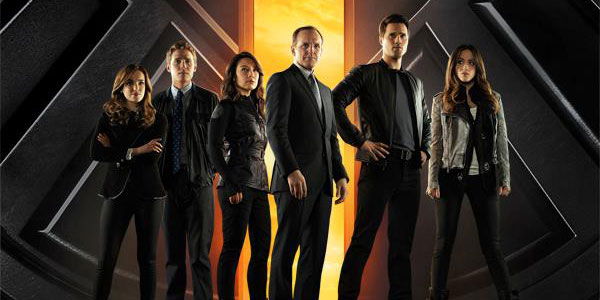
Agents of S.H.I.E.L.D. had a lot to live up to in the first half of its freshman season. It was riding into the TV world on the coattails of the immensely successful Marvel movie The Avengers; it had Joss Whedon, writer and director of the Avengers as well as creator TV favorites Firefly and Buffy the Vampire Slayer, as its showrunner. It also had a respectable cast led by the terrific Clark Gregg and a sizable budget. Or in other words, it had all the pieces to be a successful TV show. But the show was rarely willing to take risks in expanding its own mythology. The pilot episode was entertaining enough, but it represented the case-of-the-week status quo the show would find itself in. Many shows have found a successful way to balance procedural elements and mythology-building elements - Hannibal and Person of Interest come to mind - but S.H.I.E.L.D. settled into its case-of-the-week structure so much that it was unwilling to do much significant mythology-building. The show exposed the Marvel mythology mostly only in relation to what has already been seen in the Marvel movies. It relied on references to Thor, Tony Stark, and the Battle of New York not only excite viewers, but to 'expand' its universe only by reminding viewers of the Marvel universe as seen in the Marvel movies - parts of the universe that aren't even directly related to the plot of the show. For a show with such talent (especially the presence of Whedon who set the standard for single-season mythology building with Firefly) and good action scenes, it's a shame it wasted so much of last year relying on other Marvel media rather than asserting itself as a significant part of the Marvel universe.

5. Low Winter Sun Was A Giant Trope

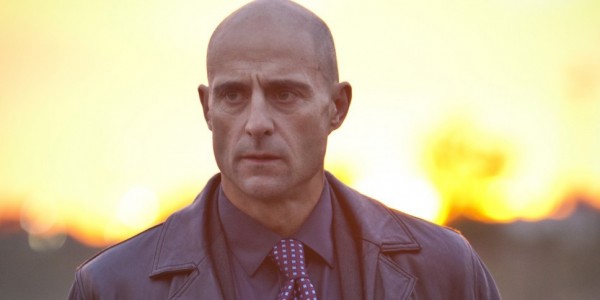
Much like S.H.I.E.L.D., AMC's Low Winter Sun, an adaptation of the British miniseries, had several ingredients for a good series: great source material; a great cast including Mark Strong, Lennie James, David Costabile, and James Ransone; fantastic cinematography; and the AMC network. This last point is what makes this one hurt the most. AMC has been seen to produce two of the best, darkest, most brooding dramas in modern TV with Mad Men and Breaking Bad. Low Winter Sun could've been AMC's next hallmark prestige drama, but it has, instead, become an easily forgotten mistake. It seems that, after the successes Mad Men and Breaking Bad, AMC just wanted to throw any old antihero drama on the small screen, and in the process, the AMC executives failed to perform a quality check on the new series. The premise of a cop who kills a dirty, murderous cop for revenge is shrouded in moral ambiguity, which is good; and the original Low Winter Sun explored this moral ambiguity with aplomb. But AMC's effort was filled with tropes. The dirty cop characters lacked nuance and the city of Detroit was characteristically dirty, but perhaps the most problematic of all tropes was the dialogue. Think about all the cop shows, nay, all they cop media in general that has been produced over the past few decades. Now think about the most common lines:
"Prove you're clean!" "I can't prove anything beyond my word!" "And we know what that's worth!"
Low Winter Sun was riddled with exchanges like these, and the trying performances by Strong and company were unable to offer any nuance to the dialogue.

4. The Bridge Had A Chance To Be Geopolitically Meaningful
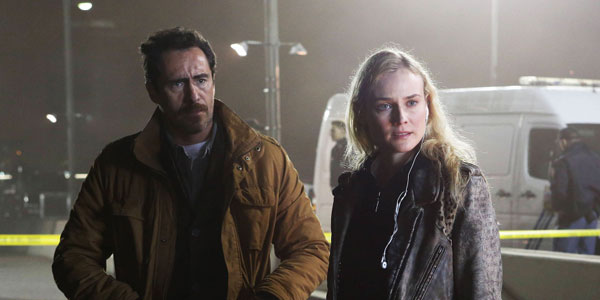
Unlike S.H.I.E.L.D. and Low Winter Sun, two shows which took turns for the worst relatively early in their runs, FX's The Bridge teased viewers for a bit longer into its freshman season. If S.H.I.E.L.D. and Low Winter Sun were the blind dates that went wrong at desert, The Bridge is the blind date who made you want to see him/her a few more times before going off the rails. In its first several episodes, the show conducted some fascinating world-building and raised some important geopolitical questions related to United States-Mexico border relations. With the standout acting of Diane Kruger and Demian Bichir at the center, The Bridge, more so than the freshman shows mentioned above, seemed to have the makings for an outstanding TV show. The whole season, the killer had been posing as this figure concerned with the preference given to United States citizens in crimes at the border. It seemed he desired some humanistic reforms with the El Paso law enforcement system. But then the reveal of the serial killer came. It turns out, he just wanted personal revenge on Bichir's character whom he blamed for the death of his family. He cared little for border relations. The show built up this vast world and tricked the viewer into thinking the show was about something exoteric, relevant, and internationally important; then the show betrayed the viewer with the inclusion of a hackneyed revenge story dealing with a Se7en-esque omniscient serial killer.

3. The Walking Dead Delivered On Its Central Conflict One Season Too Late

Season 3 of the Walking Dead was all about the central group's struggle with the maniacal Governor. The conflict between the Governor and Rick and company had built up during the entire 16-episode run of season 3, and all along it seemed it was approaching a climactic battle between Woodbury and the prison. By the end of season 3, the conflict reached a boiling point, and the Governor and his people invaded the prison. The long awaited climax was finally happening! But not really, as the result was a stealthy, relatively quiet ambush by Rick and company. This would not have been so frustrating if the Governor had died and the exact climax that viewers expected at the end of season 3 didn't occur during the mid-season finale of season 4. The writers first tricked the viewers into thinking they were watching the story of the conflict between the Governor and Rick's group, but it turned out that the main elements to the story were actually the death of Andrea and the salvation of Woodbury residents, the two scenes that concluded the third season. Then the writers tricked viewers again by bringing back the unnecessarily delayed resolution to the Governor conflict eight episodes too late. This postponement made the second half of the Walking Dead's third season seem superfluous and it forced the the first half of the fourth season to walk a trodden path.

2. True Blood Did Not Earn Its Season Finale

In much the same way, True Blood spent its sixth season building up a conflict between its protagonist Sookie and her half-faerie/half -vampire suitor, Warlow. That season-encompassing was resolved relatively quickly and anticlimactically in the finale, as Niall held Warlow as Jason drove a stake through him. Since the show resolved the other major plot--the one with Billith and the imprisoned vampires - the previous week, the question that ran through viewers' unsatisfied minds after this was likely: what could the rest of the episode possibly be about? Well, the writers probably wondered the same thing, as the show proceeded to fast-forward 6 months to a time when the characters are all in situations few had expected them to be in. Sookie was dating Alcide and had feelings for Bill again. Bill began writing books and became a major television personality. These two changes hinged on little, and it seems the writers had little idea of where to go, so they used the cheap mechanism of time lapse to lay the groundwork for the next season. More frustrating than the new situations for Sookie and Bill, however, was the reveal that Sam Merlotte had sold his bar and been elected mayor. Little had ever hinted that Sam would ever want to run for mayor; he always seemed willing to just be left alone in his little bar and to make ends meet. Out of nowhere (in 6 months no less) he gave up Merlotte's, which had been a defining hallmark of his character, and started up a political career. Maybe this would've worked if the writers took time to develop the character, but they were too eager to get to this point and to get themselves out of the narrative hole they had created that they allotted no time to character development.

1. Dexter's Ending Was Terrible

What sets Dexter apart from the above mistakes is that this show is not the date who tricked you into multiple dates, but the one who tricked you into marriage before going off the rails. For 8 years, Dexter viewers watched as the morally ambiguous antihero struggled with his murderous addiction, ridding Miami of its felonious scum. We questioned whether or not Dexter was actually good for society. He was eliminating some evil people, but he was doing so by murdering them. As the series progressed, it became clear that Dexter's methods were not at all exemplary. Because of his conniving, many innocent people died. Doakes died because he figured out Dexter's secret. Rita, his wife, died simply because she was closest to him. In season 7, He started killing innocent people to save himself (see: Laguerta). After his sister discovered his identity, she struggled with it, and she eventually shut Dexter out completely. It seemed like she would figure out Dexter's secret and he would receive punishment for his crimes. It seemed like Dexter would finally meet justice for his murderous addiction. Instead, he sent his girlfriend and son to Argentina and faked his own death in order to retire as a lumberjack. There was not retribution for his victims. The Miami Metro Police Department continued to operate in ignorance of Dexter's murderous past. Perhaps the tensest moments of a Dexter manhunt were wasted in season 2, but after watching for 8 years to see Dexter get his comeuppance or at least be punished in some sort of way for his crimes, viewers were left with the scene of a lumberjack opening his eyes. The writers tricked us into thinking we were watching a show about a man on a morally ambiguous journey when we were actually watching a show about a man who we were to see as a Batman of sorts. Instead of providing an interesting ending on the nature of Dexter's darkness, the writers delivered an ending with a damaged superhero, an ending totally uncharacteristic of its preceding 7 seasons. Which other mistakes derailed 2013's biggest TV shows? Share your own picks below in the comments thread.

Contributor
Contributor

Joseph is a student at the College of William and Mary in Williamsburg, VA, double majoring in Ancient Greek and Religious Studies. He has a deep passion for TV and consumes as much of it as possible.