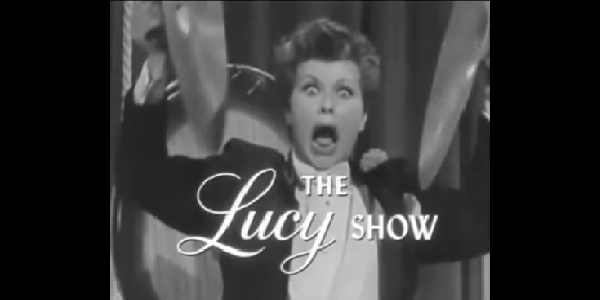
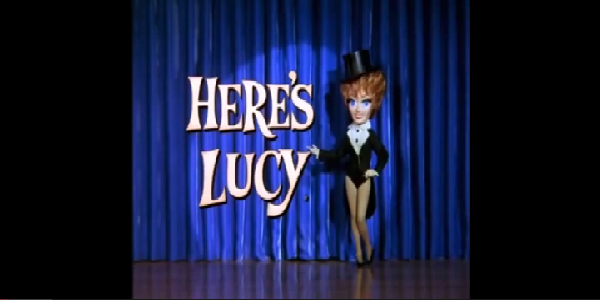
1 October 1962 11 March 1968. 6 seasons. 156 episodes / 23 September 1968 18 March 1974. 6 seasons. 144 episodes Another two lumped together because, like the Addams/Munsters thing, Here's Lucy was essentially a reboot of The Lucy Show. Lucille Ball played a widow called Lucy with two kids in both shows and even the houses she lived in were similar. Both The Lucy Show and Here's Lucy deal primarily with Lucy's general state of dysfunction in almost every aspect of life. The storylines of both series were generally derived of the commonplace and the everyday, with the humour driven by things that would never conceivably go wrong for anyone else always going catastrophically wrong for Lucy. Always filmed before a live studio audience, Lucy's fans would scream with hysterical laughter at the merest twitch of Lucy's eyebrow and be crying with laughter by the end of every episode. The Lucy Show initially sees widowed Lucy Carmichael and her two children sharing their home with Lucy's best friend, divorcee Viv, and her son. After the third season Viv and her son move away and Lucy's kids eventually disappear too. She gets a new best friend, a new job and relocates from a fictional town in upstate New York to Los Angeles. In LA she inexplicably begins meeting celebrities who invariably end up at her house for no apparent reason. By the end of season four Lucy Carmichael is an entirely different character to the Lucy Carmichael of the first season. For the 1968/69 Ball returned in Here's Lucy, a different program but with numerous similarities, including the same co-star. The character's name is now Lucy Carter. She still lives in LA, but now has two children (again), aged in their late-teens and played by Ball's actual son and daughter. An ever starstruck and stage-shy Lucy continues to chance upon celebrities who later visit her home while, almost perversely, the final season features an episode about a Lucille Ball look-a-like competition, in which Ball plays both Lucy Carter and Lucille Ball in the same scenes. Ball even gets a second credit as Guest Star for the episode. Through the course of The Lucy Show, Lucy's character becomes increasingly scatterbrained, clumsy and accident-prone. By the end of Here's Lucy, despite her voice having become far deeper and more gravely, she still cries like a baby at the drop of a hat and, despite things generally going wrong rather than right for her, always seems surprised at her various failures and howls loudly, much to the delight of her excitable audiences. Eventually Ball's brand of timeless humour fell foul of changing times and younger audiences that didn't have the same nostalgic connection to her. The last episode of Here's Lucy's in March 1974 was the final time she appeared in her own sitcom until the ill-conceived Life With Lucy which ran for only 14 episodes in 1986. Lucille Ball died less than three years later.
I'm just a guy who loves words. I discover vast tracts of uncharted enjoyment by chucking words together and coming up with stuff that talks about the things I enjoy and love most. I'm also a massive listaholic, so I'm probably talking about a list, looking at a list or banging away at another What Culture list as you read this. My tone's pretty relaxed and conversational, with a liberal sprinkling of sparkling wit, wilting sarcasm and occasional faux-condescension - with tongue almost always firmly planted in cheek.