10 Ways American Horror Story Cult Explores Mental Illness In America Through Ally
Creepy clowns? Check. Honeycomb? Check. An anxious, paranoid possible schizophrenic? Check.

No! Not the clowns! Yes clowns, and throw in some oddly shaped holes too.
Cult is the seventh season of the American Horror Story anthology and centers around the lives of residents in Brookfield Heights, Michigan following the 2016 presidential election.
Several months after the election, strange murders start occurring in their quiet suburban neighborhood, and a mysterious local leader begins his rise to power. The story primarily focuses on the experiences of Ally Mayfair-Richards, a wife, mother, and owner of a local eatery called The Butchery on Main, whose life begins to fall apart in the ensuing conflict.
Ally from suffers mercilessly from not only coulrophobia but trypophobia as well. While having some irrational fear is nothing to worry about, a line is crossed when someone starts seeing clowns committing sexual acts in public, pursuing them through grocery stores, and popping up in their backseats like the demonic spirit in Annabelle.
The line is completely left behind when the revelation comes that the person isn't even under the influence of heavy alcohol or illegal substances. Ally clearly suffers from some serious mental health issues, and her character tells the story of the prevalence and stigmatization of mental illness in America.
10. Ally Suffered A Breakdown After The 9/11 Terrorist Attacks

A breakdown is a normal reaction to a traumatizing event. Individuals with strong and healthy minds, along with a good support network, usually recover quickly and adjust to a new normal. Ally developed several phobias instead and spent years recovering, crediting Ivy and President Obama’s term when discussing the recent return of her phobias with her therapist.
However, that brief discussion of her past hints at the real issue: Post-Traumatic Stress Disorder. Experiencing or witnessing traumatic events can cause PTSD, and the sufferer may experience flashbacks, nightmares, and severe anxiety.
The 9/11 terrorist attacks were (and still are) a tragic and traumatizing event, and Ally didn’t recover. Instead, she developed uncontrollable anxiety and crippling phobias.
She also didn’t recover in a reasonable time frame. Ally suffered from PTSD long before the current events of the story, and the fact that her PTSD stemmed from the 9/11 terrorist attacks indicates a broader concept: she wasn’t alone. Eight million people suffer from PTSD at any given time…That’s a lot, even in the context of over three hundred million people living in the United States. PTSD is a prevalent mental illness in the United States, especially among veterans, and Ally’s character depicts that reality.
9. Ally Suffers From Extreme Anxiety

Okay, everyone gets anxious at some point. How can we not? We live in a society that values success, intelligence, and emotional suppression. From a young age, we’re fed the subliminal (and sometimes outright) message that we’re less intelligent if we don’t get that A on the test. We’re freaks if we start yelling at our neighbor because they keep letting their dog do business on our well-kept lawn.
Guess what that attitude contributes to? Anxiety disorders! 18.1% of the population in the United States suffers from anxiety disorders, and only 36.9% seek treatment.
Why do so few people receive treatment if it’s so common? Why? No one wants to admit to having an anxiety disorder, because mental illness is still stigmatized in the United States. Ally has a therapist and Ivy is aware of it, but you don't see her writing "I have an anxiety disorder" on her forehead. She’s concerned with what others think of her, which brings up the issue of young adults in universities.
College campuses have become a massive orgy of unhealthy anxiety and mental illness. 15.8% of college students have been diagnosed with anxiety and many are concerned about anxiety issues. However, that number only includes those who actually sought help (or responded to a survey) so the real number is likely even higher. Why? Young people are more concerned with their peers' opinions, believe they’ll be ostracized if they don’t conform, and are under increasing pressure to achieve. Thank you social media.
8. Ally Suffers From Hallucinations

While a murderous cult is definitely at work terrorizing the neighborhood, Ally's initial encounters with clowns are questionable. Ally goes to the supermarket in the first episode and witnesses creepy clowns having some...ahem, fun time on melons, and a clown attacks her in her car.
If the clowns were really there wouldn’t they have been caught on camera? The police said surveillance footage only showed Ally frantically running through the store and out the door. Sounds like hallucinations. What mental disorder is associated with hallucinations? Schizophrenia. Individuals suffering from schizophrenia have an altered sense of reality. Ally displays some positive symptoms of schizophrenia, which include hallucinations, delusions, and abnormal ways of thinking.
Not to say that Ally is schizophrenic of course, but she experiences hallucinations. This aspect of Ally brings attention to schizophrenia and the discrimination many with the disorder face in the United States. A 2008 survey by the National Alliance of Mental Illness (NAMI) noted that individuals living with schizophrenia have trouble getting proper care for physical concerns because physicians don't take them seriously. Also, 60% of the public believe violent behavior is a symptom of schizophrenia. In reality, most individuals want to be left alone and isolate themselves.
That’s serious. How would you feel if your doctor said you were just imagining your chest pain…and then a day later your relative calls an ambulance because you collapsed and fell unconscious?
7. Ivy, Ally's Wife, Calls Ally's Behavior Crazy

Ivy used the C-word on her partner. She did…She referred to her behavior as crazy. Crazy does not come with glowing praise. Crazy is defined in dictionaries as mentally unsound, mentally unstable, dangerously unstable, or mentally deranged. However, the word’s thrown around like slang now, and Chris Voss, a former kidnapping negotiator for the FBI, described its current use in politics as a way to ignore, dismiss, or run away from uncomfortable issues and opinions. This use applies outside of politics as well.
Now, nothing is wrong with using crazy in other ways, such as talking about that crazy roller coaster ride, but crazy is often used in arguments. Crazy describes a person acting in ways someone can’t understand (or doesn’t want to). Crazy suppresses an opinion and labels that person as mentally unstable, discrediting them.
Ivy disarmed Ally, but it didn’t help Ivy understand Ally’s problems any better. Using labels like crazy, psycho, or insane shuts down the conversation. That’s how mental illness is treated in America. The crazy label creates an environment of don’t ask, don’t tell. A commentator in the American Journal of Psychiatry best explains this environment, describing the stigma as being so pervasive that those who deny it do so because shame is brought by admitting to mental illness.
The result: families with histories of mental illness don’t seek help and make it taboo to talk about, because they’re afraid of being shamed. That's how it's always been, and that's still how it is despite efforts to reduce stigma.
6. Ally's Son, Oz, Might Have Hallucinated

Whether Oz witnessed the deaths of the Changs is questionable. Winter, the nanny, denies ever taking him over there, and as far as we know the police claim a murder-suicide…despite the weird smiley face symbol on their door and subsequent deaths. Additionally, Oz sees one of the creepy clowns and asks if they’re real in the second episode. They say no...Was the clown real?
As the show goes on more truths will unveil themselves (or just confuse viewers even more in traditional American Horror Story style), but going off the idea that Oz never actually witnessed the deaths raises the question of who (Ivy or Ally) gave birth to Oz. Who was the father? Taken at face value these similarities between Oz and Ally allude to the idea of genetic inheritance.
Some people are more prone to mental illness than others due to genetic risk factors. For example, a 2013 study found that people with autism, ADHD, bipolar disorder, major depression and schizophrenia were more likely to have abnormal genetic differences at four chromosomal sites. Schizophrenia in children is rare though.
It’s reasonable to conclude that Oz isn’t schizophrenic, but the possibility that he could have inherited mental illness from one of his biological parents is what his experiences in the show demonstrate. Mental illness isn't a choice. It's the result of genes and environment. However, one study from 2010 found that while knowing the cause increased support for services, stigma wasn't reduced in the United States. Greater knowledge hasn't increased social acceptance.
5. Oz Suffers From Night Terrors
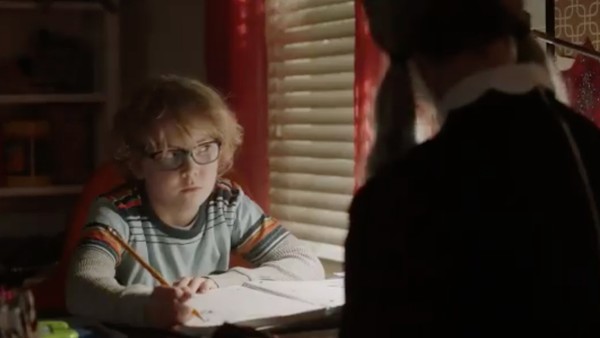
Following the logic of genetics, Oz is more likely to develop mental illness due to the cluster of genes he inherited. Night terrors are not directly caused by genetics but can be triggered by pre-existing conditions. Mood disorders, including anxiety, are listed as one of the possible causes of night terrors. Oz might be more predisposed to mood disorders if Ally has problems with her anxiety, and that might be the cause of his night terrors.
Again, that knowledge isn’t unique to the United States, but it’s worth pointing out that experiencing night terrors, especially beyond childhood, can carry a social stigma like mental disorders because the actions taken by the person during the night terror are unpredictable. Violent or aggressive behavior can occur, and in a full-grown adult that’s intimidating.
Imagine someone with the build of The Rock flailing or running around the house because they’re terrified. That’s frightening, especially if you’re physically weaker than the person and can’t restrain them. Plus, children usually grow out of it by their teen years, and that adds to the stigma because it’s a bit like wetting the bed. If you haven’t outgrown it you might be mocked, and they probably won’t invite you to spend the night at their house.
4. Ally Feels Isolated From The Beginning

When Ally witnesses the clowns in the supermarket, her experiences are questioned due to surveillance footage. Oz demonstrates that he's more fond of Ivy when he wants her to stay after a night terror rather than Ally. Winter leaves Ally and Oz behind during the blackout even though Winter knew that Ally was depending on her. When Winter’s attempted seduction and sexual assault of Ally is revealed to Ivy, she doesn’t listen to Ally’s side of the story. Instead, she slaps her and attempts to take Oz away, telling her she has Winter and her clowns.
All of these events push Ally into isolation, and it happens because people she considers important don't understand her behavior (Ivy and Oz in particular). Her mental state worsens because isolation is the nemesis of successful mental health treatment.
Many guidelines for mental health treatment, such as the treatment of schizophrenia, recommend socializing, such as assisted employment, community treatment and involvement, and family intervention. The prevailing stigma towards mental illness in the mainstream media interferes with socialization, especially in light of the recent shootings involving the mentally ill.
For example, Jared Loughner, the man who shot former representative Gabrielle Giffords, was described as deranged and demented by newspapers five years after the event, but it was well known by this time that he suffered from an untreated mental illness. Negative media portrayals can make someone with a controlled mental illness feel isolated. If they disclose their illness they might be treated as a danger for no reason. They'll feel different, and might end up harming themselves psychologically if they withdraw from social interaction.
3. Ally Doesn't Always Take Her Medicine

Ally's reluctance to take the medicine her therapist prescribed for anxiety is noticeable. Even in the bathtub scene with Winter she hesitates. If it’ll help her, why is she so resistant? Taking her medicine means admitting she has a mental health problem despite all of her efforts over the years to recover. Ally wants to see herself as what everyone considers a normal, sane person.
This desire to be normal is caused by the stigma of mental illness. However, the specific topic of medicine, as well as Ally's complete reliance on her therapist for treatment, alludes to the stigmatization of mental illness by the law. Medicare limits the number of days a patient can receive inpatient psychiatric care, and hospitals can use their funds without restriction on physical health but are restricted on mental health treatment.
Additionally, states have trouble keeping mental hospitals open because of lack of federal funding. The law discriminates against those with mental illness and makes it difficult to obtain good care. Congress is a source of mental illness stigma in the United States.
2. Ivy Called Ally's Therapist Without Ally's Permission
Ally missed an appointment with her therapist Dr. Rudy. Not only was Dr. Rudy concerned but Ivy was concerned as well, so Ivy invited him over as a surprise for Ally when she was having the house fortified. Ally wasn't happy, and because of doctor-patient confidentiality Dr. Rudy couldn't inform Ivy that Ally borrowed a gun from the neighbors. The result: Ally accidentally murders Pedro, a restaurant employee.
These scenes highlight an important procedure regarding the treatment of mentally ill in the United States. It's the physician's duty to warn if a patient is threatens to harm others or themselves. This legal responsibility was enacted by several states in the wake of the 1976 California supreme court case Tarasoff v. The Regents of the University of California.
Tatiana Tarasoff was murdered by a graduate student who had earlier confided to his psychiatrist his intent to kill her. Due to confidentiality, the psychiatrists didn't warn Tarasoff or her family, resulting in her death. Today, 33 states require physicians to report dangerous patients and Michigan is one of those.
Of course, Ally didn't threaten anyone, but this scenario also demonstrates the limits of current mental health practice and law in the United States. Despite her history, her increasing anxiety, fortification of their house and her possession of a handgun (which currently requires a carry permit in Michigan that as far as we know she doesn't have), Dr. Rudy couldn't have predicted she would actually kill someone. That requires Ally to threaten a specific person. Pedro's death was accidental, but could have been prevented if Dr. Rudy had legal authority to inform Ivy of the handgun.
1. Ally Becomes Extremely Paranoid

Who wouldn't be offended if their neighbors walked up to their door wearing sombreros and called them a racist while throwing taco bell sauce packets at them? That's a natural response, but Ally takes it to a new level when she automatically blames her neighbors for posting a false sex ad and killing the guinea pig they gave Oz as a peace offering.
Ally isn't thinking rationally, deluding herself into believing the neighbors are out to get her just because they came to her door one day and called her a racist. A little bit of paranoia can be healthy, but extremely high levels of paranoia are often associated with schizophrenia, psychotic disorders, and personality disorders.
Most interesting though is that individuals with a paranoid personality disorder can annoy or anger others because they display rigid or maladaptive behavior. Remember Ally's insistence that their house be fortified? What about when she wouldn't let Oz keep the guinea pig at first because of a no pet rule she couldn't defend?
Paranoid personality disorder is not as well known, but stories of paranoid neighbors with untreated mental illness, such as a woman in Schererville, illustrate the failures of America's mental health care system and create a stigma towards any sort of paranoia in general (even when the person has evidence their neighbors are purposefully antagonizing them).