10 Ways Star Trek Was Socially Progressive
 The 1960's was a period popularly characterized as a tumultuous time of revolutionary ideals and social dislocation. The longevity of the cultural, social and political upheaval of this period is remembered over the intense conservative reaction it received. Unsurprisingly, the enormity of the change in cultural perceptions, particularly in the United States, could not have been successful without a deep change in popular stereotypes and opinions. A new medium had arrived to assist in this radical departure from traditional values; Television. In 1966 a new show debuted on NBC; Star Trek. Since the inception of this peculiar cultural success it has driven progressive ideas of idealism, tolerance, and above all; hope. Here's ten ways the show was socially progressive...
10. Multiculturalism
 The cast of the original series was immensely multicultural in comparison to existent programs. A Scottish engineer, a Japanese pilot, an African American Communications Officer, a Russian navigator and an alien science officer. Remember, in 1966 the Civil Rights Act and the Voting Rights Act had only recently been passed, and Martin Luther King Jr. continued to push North to tackle racisms pervasive influence throughout American society. In a world that was rapidly globalizing, with markets in Asia beginning to open up to America, as well as a perverse xenophobic paranoia deeply embedded in the American mindset, this ramshackle brigade of ethnic differences was groundbreaking in the way it challenged the present paradigms regarding race.
9. The First Inter-Racial Kiss
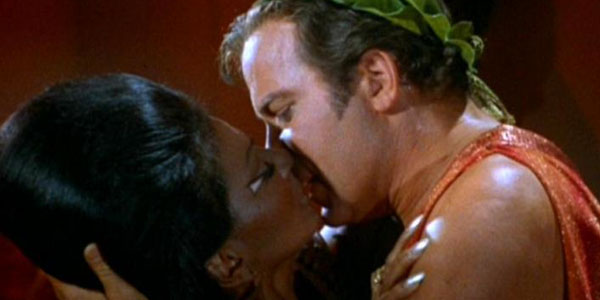 On November 22 1968, months following the brutal and tragic assassination of Dr King, Star Trek aired "Plato's Stepchildren.' In this now famous episode, Uhura and Kirk are forced to kiss due to a telepathic race. This was the first scripted moment on American TV where an African American woman kissed a White man. While we may see this as a minor piece of history, it remains significant when it is considered that Anti-Miscegenation laws, banning interracial marriages, had been ruled unconstitutional by the Supreme Court only one year before, and that Alabama did not fully repeal their laws until 2001. Again, it is beyond evident that Star Trek was instrumental to changing cultural perceptions, allowing the legal shift to be socially recognized; on an interesting side-note William Shatner, every-ones favourite over-actor, crossed his eyes on shot which could have replaced the kiss scene, facilitating the kiss and making cultural history.
8. Dr Martin Luther King Jr Supported It.
http://www.youtube.com/watch?v=pSq_UIuxba8 Martin Luther King, to many people the face of the Civil Rights Movement, is said to have phoned Nichelle Nichols urging her not to quit the show. He told her that the involvement of a prominent black woman was inspirational, and for her to leave the show would have been detrimental to the Black Freedom Movement. Although King had his faults and infidelities, it cannot be ignored that a man attributed with a crucial role in the Civil Rights Movement recognized the symbolic and powerful role the media could play in cementing the legal successes in the cultural collective consciousness.7. It Was Inspiring
 Whoopi Goldberg, an actress with phenomenal success during the 1980s, has claimed on multiple occasions that the presence of a strong, African American woman, in a non domestic position, gave her a sense of empowerment, leading to her acting career. She took a recurring role as Guinan in the spin off series The Next Generation, attempting to recreate the inspirational role Nichelle Nichols had played for her. The amount of change bought, in part, due to Star Trek cannot be understated in engaging the masses in a major shift in mindset. The Original Series was integral to the overthrowing of racially sources ideas and bringing in an age of supposed racial equality.
6. AIDs/HIV
 A series 2 episode of The Next Generation featured a story-line where a contagious disease causing accelerated aging was tearing through Federation colonies. This mirrored the quickly developing epidemic of the HIV and AIDs virus, a devastating, confusing and deadly disease which had only just reared its ugly head into the world. The embracing attitude of The Next Generation, as well as its dogmatic belief that a cure could be reached, sent a message of hope to victims who had none; this resonated so well as the media was especially hostile to AIDs and HIV, deeming it to be the 'Gay Plague'.
5. It Transcended Politics
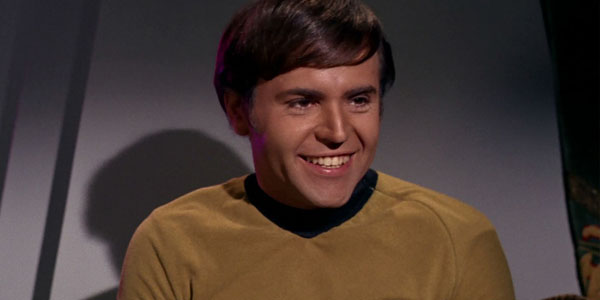 The 1960s saw the Cold War reach new, and potentially cataclysmic, velocities. The Cuban missile crisis could conceivably have eradicated humanity. The economic and political ideologies which caused the conflict, Capitalism and Communism, inevitably became attached to national identities; Russia for Communism and America for Capitalism. When the network forced Roddenberry to include a young male character, in order to attract a female audience, he created Pavel Chekhov. Portrayed by Walter Koenig, the character of Chekhov was an inherently contentious cast member. In the midst of the Cold War, an era where it was entirely potential and in some likelihood probable, that Nuclear Warfare could break out over the most minuscule of misdemeanors, the inclusion of a Russian character in an American show was innovative given the insatiable American desire to demonize and vilify their Cold War ideological enemies.
4. Non-Violent Resolutions
 In comparison to JJ Abrams action packed relaunch of Star Trek, the Original Series and its subsequent spin offs look tame and have a much slower tempo. Although a factor contributing to this lackadaisical appearance can be attributed to the fiscal constraints of the network, the dominance of diplomacy played an equally integral role; Other species, cultures, religions, politics and societies were compromised with to avoid the creation of a military empire as opposed to a peaceful Federation. The stark contrast between the 'Normal' Star Trek universe, and the 'In A Mirror Darkly' inspired universe delineates the power of concession; In this alternate universe Kirk was an imperial conquistador, intent on waging war with new species and new civilizations. Conversely, in the 'Normal' universe diplomacy led to a peaceful organisation. Again, given the Cold War context this emphasis on negotiation and compromise was shattering to the contemporary culture in which it aired.
3. Religious Tolerance
 In A Series 5 episode of The Next Generation two key contentious themes were tackled; Klingon security chief Worf is paralyzed and wishes for a ritualistic suicide in line with his customs, while a visiting physician sporadically practices euthanasia and unethically tests treatment on terminal patients. Worf requests Commander Riker enable his suicide by passing him a knife. In response Riker eloquently and passionately argues that he has to respect, but not agree with cultural differences, forcing Worf to come to terms with the fact that the Klingon custom would force his son to watch his father's horrific self slaughter. The social and ethical dilemma of Euthanasia and illegal testing on patients is correspondingly explored; The Enterprises Doctor told the visiting physician 'You put your research ahead of your patients' lives. And as far as I'm concerned, that's a violation of our most sacred trust. I'm sure your work will be hailed as a stunning breakthrough. Enjoy your laurels, Doctor. I'm not sure I could.' It is clear that the the Spin Off shows equally grappled moral and ethical dilemmas in a commendable manner, showing a great deal of social progressivism in an age of technological and medical breakthroughs.
2. It Placed Minorities In Power
 The spectrum of progress impacted by Star Trek is not confined to Racism; Star Trek Voyager was the first to place a woman in control of a vessel, while Uhura was both African American and a female, conceivably placing her on the lowest rungs of the social ladder in the 1960s, yet she had a prime position on the show. Deep Space Nine, a spin off from The Next Generation similarly placed Benjamin Sisko, a Black man, in the position of Captain. Combined with the placement of B'elanna Torres, a half Klingon woman, as the Chief Engineer on Voyager, it is evident that Star Trek played a quintessential part in breaking down the gender barriers which continue to impact our own culture in the present day.
1. Hope
 Star Trek inspired hope in a generation of apathy; Dissent, nonconformism, generational conflicts and social activism exploded during the 1960s and 1970s. While the cult show represented existent views, the impact of the show on its generation cannot be understated. One trigger happy soldier or politician had the capacity to begin the eradication of humanity, and given the apocalyptic ideas of the future as a nuclear wasteland, Roddenberry gave his audiences a far greater possibility. Unity, commonality, and a complete annihilation of barriers inspired hope in an world almost devoid of such aspiration. This fundamental and paramount concept was embedded in all subsequent spin offs, and remains the source of the phenomenal support and maintenance of the cult which has been erected around Star Trek.