11 Incredibly Racist Warner Bros Cartoons
Every single one of these would be a total career-destroyer if they were released today.
 Warner Bros.Early cartoons used to be racistlike really, really racist. We all know this thanks to characters that proudly displayed offensive traits that are guaranteed to cause a riot in todays world. If you need an example, look no further than the crows in the Disney's classic Dumbo, however you can still get a copy of this if you wanted, whereas the ones featured here are something else entirely. With that in mind, here is a group of cartoon shorts made by Warner Bros. that have been banned and withdrawn from syndication - unofficially dubbed the Censored Eleven. All of these were made in the 30s and 40s and the last time any one of them was seen on TV was 1968. For a long time they were forgotten, but new media has made it easy for people who found one such gem on an old VHS tape to share it with the world. Warners tried to play it cool, even holding a promotional viewing in 2010 and announcing that these cartoons will come out on DVD sometime in the future. But, after all, how bad can they be?
11. Hittin The Train For Hallelujah Land
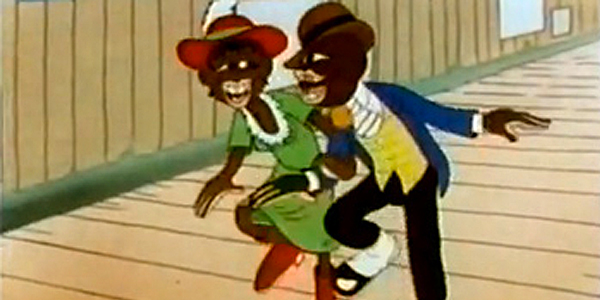
http://www.youtube.com/watch?v=giJBiwAuug0 Apparently, pretty bad. Coming out in 1931, this was only the second cartoon created under the iconic Merrie Melodies banner and is also the oldest of the Censored Eleven. Theres a minimal plot going on involving the protagonist saving his damsel in distress, but thats beside the point. The characters that get all of the attention are the blackface caricatures. Of course, showing characters in blackface was not at all uncommon during cartoons of that period. Tom & Jerry, Bugs Bunny, they all did it. However, most other cartoons can be fixed with a few well-placed cuts. In this case, the racism is apparently integral to the plot and you couldnt eliminate it without turning the cartoon into a nonsensical sequence of imageswhich is why it is part of the Censored Eleven.10. Sunday Go To Meetin Time
http://www.youtube.com/watch?v=Q-qUqK5LovQ Five years later comes our next entry which features a cavalcade of racist blackface characters. This time they arent simply anthropomorphised versions of animals, but simply offensive depictions of black people (might as well go all the way at this point). Despite being released in 1936 originally, this was one of the few Censored Eleven that was reissued later on in 1944. Dont worry, it wasnt to remove any of the offensive material - it was just to add colour. In the cartoon its early Sunday morning and everybody is getting ready for church. That is... everybody except our protagonist Nicodemus, a lazy black man who doesnt want to go to church. He would rather spend his time on other wholesome activities such as playing dice and stealing chickens. However, after a bump on the head gives him a vision of what life would be like in hell, he changes his ways and runs to the holy house. So this one at least gets some points for a positive message... right?.9. Clean Pastures
http://www.youtube.com/watch?v=RjIH1J8eMR4 1937 saw the release of the next short titled Clean Pastures and this one is a real doozy. You see, there is this special version of heaven for black people called Pair-o-dice (get it?) but the problem is that not enough black people are getting in, so a dimwit angel is sent to Harlem to try to convince more to come. The short ends with a funky jazz number that eventually convinces everyone that Pair-o-dice is the place to be. As before, the blackface characters are out in full force. However, its the little details that show that Warner Bros. was willing to go that extra mile for racism. For example, at one point the angel is trying to entice people to heaven with a billboard that shows all of the benefits of living there among them being clean living, good food... and watermelon. And yes, they felt the need to mention watermelon separately.8. Uncle Toms Bungalow
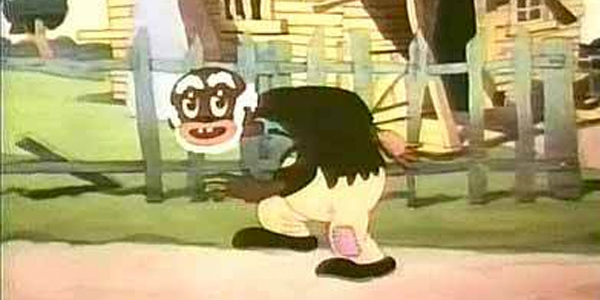 Warner Bros.1937 was a busy year for Warners but they still managed to put out two quality racist cartoons that year. Uncle Toms Bungalow is a clear reference to the novel Uncle Toms Cabin and the main character can be seen as a parody. The plot sees the villain - an evil slave trader - trying to get his slave, Uncle Tom, back from two girls who bought him after they missed payment. And, of coursehilarity ensues. In the end, Uncle Tom arrives with a newfound fortune and buys his freedom... one he earned through hard work and sensible saving. Just kidding, he won it playing craps (and cheating).
7. Jungle Jitters
http://www.youtube.com/watch?v=KXg5-UOa52c 1938 was another big year for the company which saw the release of two more cartoons that will later be included in the Censored Eleven and Jungle Jitters is one of them. The plot revolves a travelling salesman who visits an African tribe in order to sell them stuff. Of course, if the black tribe was portrayed with any kind of sensitivity, it wouldnt be on this list. Instead we get to see the stereotypical look which is starting to become the industry standard by this point. The tribe immediately tries to eat the salesman, but he is saved when the queen falls in love with him. And, of course, the queen is white. However, this might have something to do with the Hays Code. Back then, the Hays Code was a set of guidelines for the motion picture industry and depicting sexual relationships between white and black people was a strict no-no. So the queen probably had to be white because the salesman was, but heres the thing: the salesman is an anthropomorphised dog like Goofy while everyone else is human. This means that back then interracial relationships were out of the question, but bestiality was totally okay.6. The Isle Of Pingo Pongo
http://www.youtube.com/watch?v=K6ejI_wRVPU This short also from 1938 shows white people going on a cruise to an exotic island and the main character is actually Egghead a character frequently used by Warner Bros. who eventually evolves into the iconic Elmer Fudd. He provides narration over the course of the short when presenting the indigenous tribe and their customs in a style similar to that of a travel show. Not much to say about this one. It displays the same kind of racist portrayals of black people as before. At least this tribe is friendly and non-violent and only wants to party. Not to be diminished by the accomplishments of its predecessors, though, The Isle of Pingo Pongo still manages to find a new way to offend it refers to the music played by the tribesmen as primitive and savage despite the fact that the music is obviously modern jazz.5. All This And Rabbit Stew
http://www.youtube.com/watch?v=kvIuis5TIKk In 1941 Warner Bros. decided to bring out the big guns and created All This and Rabbit Stew, the only Censored Eleven short that features Bugs Bunny. The setup is a familiar one a hunter is after Bugs, Bugs outwits him and we laugh at their shenanigans. If the hunter would have been played by Elmer Fudd, everything would be ok. Instead we get another blackface caricature. If you learn to deal with the racist portrayal, most of the cartoon is relatively tame; Bugs keeps things clean despite the fact that by this time he had also donned blackface in previous cartoons. However, the ending might be an issue. When finally cornered, Bugs convinces the hunter to give up by offering him a better deal a game of craps. This is something the hunter apparently could not refuse as his eyes light up like a kids on Christmas when he sees that pair of dice.4. Coal Black And De Sebben Dwarfs
http://www.youtube.com/watch?v=JT2LSB1Bz2o This one is basically a retelling of Snow White and the Seven Dwarfs, just with added racism for flavour. Again, you get the stereotypical portrayal youre probably used to by now, but this cartoon did actually garner some acclaim. Believe it or not, it was actually defended by some black critics of the time - even now it's considered one of director Bob Clampetts masterpieces and even made a few Best Cartoons of All Time lists. Of course, there is still the matter of the racist portrayals to deal with - the short was made during World War II so theres also some anti-Japanese stuff thrown in there for good measure. Prince Charming (excuse usPrince Chawmin) would look pretty spiffy in his suit and monocle were it not for his gold teeth as well as his incisors replaced with dice because - apparently - black people really love craps.3. Tin Pan Alley Cats
http://www.youtube.com/watch?v=NPhB85p-8zA This 1943 cartoon is director Bob Clampetts follow-up to the successful Coal Black and de Sebben Dwarfs which was released earlier in the year. Like its predecessor, this one also managed to gather some critical acclaim for its energetic dance numbers, although nowhere near the first one. Since the previous cartoon was so successful, Clampett decided to take the if it aint broke, dont fix it approach and stuck to the same winning formula: Jazz music + Racism = Profit. However, this time its not just racism, its lazy racism. Many of the sequences use audio and video from older cartoons, although this move was likely a result of budget limitations during the war.2. Angel Puss
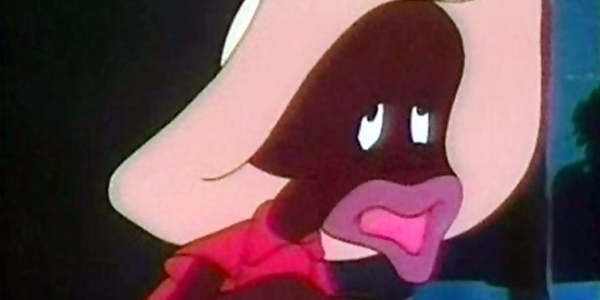 Warner Bros.The main character in this 1944 short is a character called Sambo who is very similar to the hunter in the previously mentioned Bugs Bunny cartoon, complete with blackface-style drawing animation. Racism aside, the plot of the cartoon is pretty dark. Sambo is paid to drown a cat in a sack and, although he has some hesitation, still does it. Unbeknownst to him though, the cat escapes and pretends to be a ghost in order to scare him. The idea is good for a couple of gags, but the end of the short sees Sambo figuring out the cats plan and actually killing him with a shotgun. Then it ends with nine ghost cats representing his nine lives coming back to take vengeance. Continuing the theme of black peoples infatuation with craps, this time things go even further the dice are not only enough to entice Sambo to a game, but their rattle is even capable of putting him into a trance.