11 TV Professionals Who Are Anything But

Entertaining to watch? Hell yes. Good at their jobs? Hell no.
Police procedurals. Medical dramas. Spy thrillers. TV loves to depict people at the height of difficult, complex professions. Part of this is because conflict is drama: and there's plenty of drama when someone's job can literally mean the difference between life or death whether they're diffusing bombs, negotiating the release of hostages or diagnosing a mystery illness. Another factor is escapism: people want to live vicariously and get a glimpse of a life different from their own. However conflict isn't always realism: the detective who beats confessions out of criminals, the doctor who doesn't maintain patient confidentiality, the CEO who spends more time by the pool than in the boardroom, might struggle in the real world without a writer to handwave away the consequences. From detectives to journalists, here is a round up of eleven characters who, while hailed as experts by their respective shows, would never be able to hold a job in the real world.

11. Gregory House M.D. €“ House

Gregory House M.D. is a brilliant, even genius doctor but it seems kind of redundant to say he has terrible people skills. If he didn't there wouldn't really be a show €“ no one wants to tune in every week to see a helpful, polite doctor after all. Prickly, arrogant and only taking cases that are interesting to him, House is less doctor, more medical detective, which makes sense as he's heavily based on Sherlock Holmes. Everyone who reads this article will likely be able to supply their own contender for House's Most Unprofessional Moment but for me the example that sticks in my mind is the episode where he attempts to settle a dispute in his team with a contest to steal their boss's underwear, combining the juvenility of a scavenger hunt with grounds for a sexual harassment suit. Or, if you're looking for a more expensive example, there's the time he shot a corpse and gave it an MRI scan to prove his diagnosis, breaking eye wateringly expensive medical equipment in the process. And that's not even touching the massive and entirely justified lawsuits likely to ensue after shooting a random corpse who wasn't donated for medical science and probably had grieving (and litigious) relatives at home. Add in a Vicodin addiction, a self destructive personality, generally terrible performance in the clinic and a habit of hitting on his boss and it's a mystery why Cuddy hasn't fired him yet. He'd be a terrible doctor if he wasn't so good at it.

10. Betty Suarez €“ Ugly Betty

You might be surprised to find Betty Suarez on a list for unprofessionalism as she is defined by hard work, personal integrity and a commitment to following her dreams rarely found outside of Disney movies. But Betty's strengths are also her weaknesses: she regards missing family gatherings for work as a betrayal, she's incapable of delegating and her willingness to help people mean that she's often surrounded by chaos. Usually this works out in her favour because this is a feel-good show but turning up to an interview at a fashion magazine in a novelty poncho after doing laughably minimal research hardly shows commitment or respect for her future employers. This is handled a lot better in The Devil Wears Prada where the protagonist is given a stern talking down by Anna Wintour stand in Miranda Priestly for not showing due respect to the fashion industry. Whether you agree with her or not, it's definitely not a good idea to have open contempt for the industry which pays your wages. The show also has a tendency of framing it as unfair she pitches articles which interest her and is passed over for ideas more relevant to the magazine's house style. Which is ridiculous. A huge part of being a journalist is learning to write in the house style of the publication you work for. And while it's commendable to maintain a sense of journalistic ethics it's at best naive and at worst a little pig-headed to ignore your employer's house style because it doesn't interest you.

9. Maurice Moss And Roy Trenneman €“ The I.T. Crowd

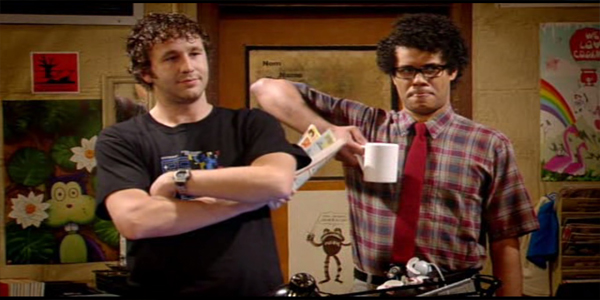
Moss and Roy from The I.T. Crowd might be the only people at Reynholm Industries who understand how to use a computer but for people working in I.T. support their support skills are sadly lacking. Not only do they memorably set the office on fire in the second episode, they avoid doing any real work to the degree where at one point they are successfully replaced by an automated message. In any other sitcom this would backfire horribly but here the joke is that it doesn't: their coworkers are so technologically illiterate and the questions they ask so monotonous that they can predict the conversations and set up an automated catch-all recording without anyone realising. An honourable mention goes to their head of department and relationship manager Jen, the Head of I.T. who doesn't know what I.T. stands for and believes that typing 'google' into Google can break the internet (to be fair, the other heads of department are just as bad when it comes to computers). Although Jen is deeply unsuited for her job she's saved from making the list because she at least tries to be professional and has some success in keeping the department running smoothly. Moss and Roy might not get much work done with her around, but when she gets promoted to Douglas' assistant and moves upstairs they regress to having jousting competitions with office chairs and not wearing trousers in an alarmingly short time.

8. The Big Bang Theory Ensemble €“ The Big Bang Theory

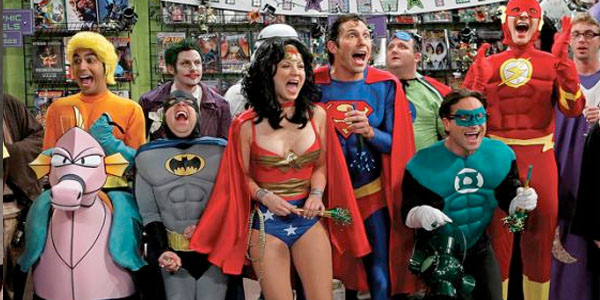
Considering that Big Bang Theory is a series where the main joke is that four of the main characters are geeks, you'd expect a certain amount of crazy sitcom hijinks in the workplace. Notable examples include Howard trying to impress women by letting them drive the Mars Rover, Leonard bringing home actual rocket fuel to power a model rocket (it goes about as well as you'd expect), Howard crashing the Mars Rover, Sheldon leaving a snake in Raj's desk drawer because... well... because Sheldon, Howard getting a robot arm stuck in an intimate area, Raj getting drunk at work and hitting on co-workers after an attempt to self-medicate his selective mutism/social anxiety disorder and Bernadette casually handing out untested medicine to her friends which may or may not cause them to lactate uncontrollably or cry acidic tears. The examples go on and on. Possibly the worst offender is the office share between Raj and Sheldon, which soon descends into a childish prank contest involving a comically oversized desk, keeping a live bird in the office and an attempt from Sheldon to smoke Raj out with hydrogen sulphide gas which ends badly when Raj tries to cover the smell with aromatherapy candles. Bear in mind that during this episode Raj is facing deportation if he finds himself out of work, so either he has a supreme (and based on past experience justified) confidence in his employers' tolerance for unprofessional behaviour or he literally cannot help himself. And to be fair, in a confined space with Sheldon Cooper, most of us probably couldn't either. Even Penny, the one non-scientist on the cast, is a terrible waitress and somehow a worse actress (to her credit at least she tries with her acting). And while sub-standard waitressing isn't likely to send diners rushing to the decontamination showers, having had a string of waitressing jobs in my teens I can guarantee that skipping work to go to Disneyland, being openly hostile to diners and threatening to spit in food is guaranteed to have your bosses rushing for the P45s.

7. Dr John Dorian €“ Scrubs

J.D. from Scrubs is not a bad doctor, despite his short attention span and feud with the janitorial staff. He saves more people than he doesn't and when he fails to save a patient he goes to sleep at night in the knowledge that he did everything he could. He's caring, compassionate and dedicated to his job. One of the recent arguments against a female Doctor (or Doctor Who for the five remaining people on the planet who aren't fans) was that the Doctor was a rare non-violent role model for young boys. Whether this is a valid argument or not (pre-Moffat the Doctor had committed genocide of at least two species, including his own, which is hardly an argument for non violence) J.D. definitely addresses the deficit. Unfortunately, Sacred Heart is a teaching hospital and J.D. is a terrible teacher. Much like Betty Suarez, his strengths as a doctor act against him as a teacher: he is too kind, too compassionate, wants too badly to be liked to establish any kind of discipline. In one epsiode he neglects work to find out who wrote the one bad evaluation in an otherwise glowing batch so he can track the student down and change their mind, even though the evaluation gives constructive feedback that he cares too much about being liked. Learning from Doctor Cox might be terrifying but at least he produces good doctors. J.D. produces feelgood slideshows. It's like he's trying to be the teacher from Dead Poet's Society but in a setting where the students actually need to knuckle down and work hard because if they don't pay attention they aren't going to mistake iambic pentameter for dactylic hexameter but potentially misdiagnose and kill a patient.

6. Ross Geller €“ Friends

I'm not questioning Ross Geller's knowledge of paleontology (mainly because I know next to nothing about paleontology) but there's no denying that his teaching style is idiosyncratic at best. This is a professor who attempts to solve a scheduling difficulty by coming to class on rollerskates and fakes a British accent for his first few weeks, among other standard sitcom hijinks. And that's not even counting the time he had sex in one of the exhibits when he was working in the museum. There's also a plotline where he dates one of his students, the twenty-year-old Elizabeth. This is very much played for laughs in the show, although in the real world rules exist for a reason. Sure, their relationship worked okay on the show because Ross is essentially a good guy (and Elizabeth has a terrifying dad to keep him in line) but if this was happening in a drama you'd expect one of the many ways that things could go wrong to be explored. Like what happens when they breaks up and Elizabeth's ex-boyfriend now controls her grade and essentially her future? What happens if he uses the threat of bad marks to push her into sex? Or even if he behaves like a perfect gentleman, what happens to the other students who are being graded on a curve and suffer through one person suddenly getting suspiciously good marks? Or what happens when she turns in a genuinely bad essay and he gives her an honest mark, for that matter? There are rules which prevent someone in a position of responsibility from getting too involved with people in their care. This is the reason you can't date your doctor (other than them knowing all the embarrassing things on your medical history) or a teacher, or a professor, whether you're over the age of consent or not. But Elizabeth wanted to date him, you might say. And yes, she did. But part of being a professor is that you're expected to be more responsible than the students.

5. Sherlock Holmes €“ Sherlock

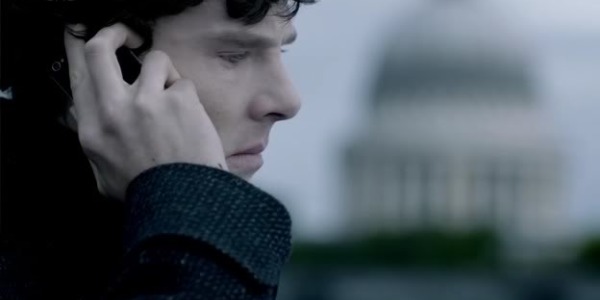
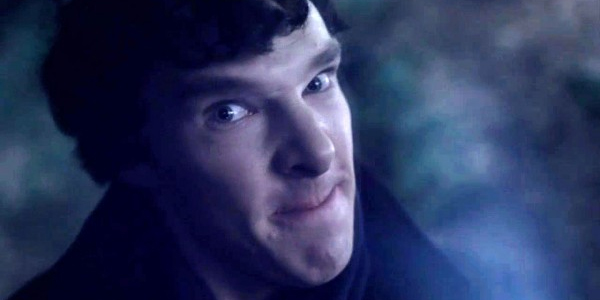
This spot was closely contested between Sherlock Holmes of Elementary and Sherlock. The first is antisocial, prone to rudeness and hates criminals to the extent that he's perfectly willing to frame people he knows but can't prove are doing harm. The second is antisocial, prone to rudeness and just does not care to the extent that he once turned up to Buckingham Palace wearing a bedsheet to prove a point. Recently however Detective Bell of Elementary took a bullet for Holmes, an injury that looks set to have lasting implications for both his physical health and career. It gave Holmes a chance to reflect on the consequences of his actions and showed his behaviour as irresponsible within the world of the show, effectively disqualifying him from the list. Sherlock of BBC fame however is a different story. The first episode shows him being shunned by the police and while we're clearly supposed to take this as a comment on their lack of due reverence to the misunderstood genius, I personally read it another way. Sherlock is a jerk. His first interaction with Sgt Sally Donovan set the tone for his treatment of women when he attempted to professionally humiliate her by loudly speculating that she'd recently performed oral sex on her married boss. Admittedly this is in answer to some unprofessional comments of her own, which of course excuses everything if you're under the age of twelve but not so much when you're a legal adult who for some reason was judged responsible enough to own and shoot a gun in an inner city area. Notably no judgement is passed on said boss by Sherlock or the writers, despite him being the one who is married. Isn't it sad that a purportedly modern version of Sherlock is still stuck firmly in the Victorian era when it comes to women? He clearly understands people's feelings but he doesn't care. Sherlock is, to put it bluntly, a bully and no amount of solving murders is going to excuse that, especially not when there's a much more compassionate version of him in New York who is just as capable and a hundred times as willing to admit when he is wrong or that his Watson is important to him, even though it is equally difficult. Admittedly Sherlock has recently done some soul searching and addressed the shortcomings of his character in his best man's speech at John's wedding. I'll be watching with baited breath to see if his treatment of the people around him changes as a result.

4. Detective Harry Morgan €“ Dexter

Harry Morgan, adoptive father to friendly neighbourhood blood spatter analyst/serial killer Dexter, is usually portrayed as a good father who did the best he could with a difficult situation. I'm not questioning that. I am however questioning the degree to which a cop who trains his son to channel his serial killer impulses into vigilante justice can be considered to be good at his job. And, while very little is going to top raising his son to be a serial killer (seriously, do therapists not exist in this world or something?), it probably wasn't the most responsible of career decisions to sleep with his informants.

Dexter was a brilliant show with an ingenious concept: a sympathetic serial killer working from inside the police. At its best it was morally complex, challenging and raised all kinds of questions about due process, justice, killing the guilty to prevent the deaths of the innocent, etc. Within the world of the show this was presented as For The Greater Good because of Dexter's habit of compulsively researching possible killers so his victims were definitely murderers themselves. But this falls down when you look at it in a real-world context. There have been enough cases of the police shooting the wrong person in the news lately to make the intelligent viewer question the myth of the beleaguered cop strangled by red tape.

3. Owen Harper €“ Torchwood

It says a lot about Owen Harpers levels of professionalism that he date-rapes two people in an establishing character moment and perhaps more about the writers of Torchwood that this is portrayed as an amusing thing he did on a night out rather than a sex crime. Which is essentially what it is: do a find replace on 'alien aphrodisiac' to 'rohypnol' and you have a very different episode and yet the result is essentially the same. And while we're talking about professional conduct, let's not forget that this was alien technology and therefore grossly irresponsible to take on a night out. Even discounting the idea that it might get lost or broken, I doubt they've had time to do extensive clinical trials to make sure that it's not only safe for human use but that there's zero chance of it reacting badly with any of the thousands of potential combinations of medication, supplements or birth control any given person might be on. Even if they had it would be grossly irresponsible to go around spraying it into random people's faces when you're drunk. Other examples include the time that Owen is discovered naked in the office (or rather the holding cells under the office) after attempting to have sex with a young woman possessed by a cloud of purple gas which fed by killing men at the point of orgasm. Not only am I sensing a pattern here but the fact that he knew what had happened to her previous sexual partners implies an unbelievable level of recklessness. Ironically it takes death to make Owen pay attention: after he is killed and reanimated he becomes more focussed and motivated, possibly because that without a beating heart he can't sustain the blood pressure necessary to get an erection.

2. Dr Magwilde €“ Bonekickers

If you've heard of Dr Gillian Magwilde of the short lived BBC series Bonekickers then there's a good chance you discovered it through internet critic Diamanda Hagan's vitriolic reviews. The vitriol is well deserved €“ the cast is inexplicably good, especially considering the content, but even they can't save a script which includes modern day Christian fundamentalist "crusaders" complete with broadswords, Excalibur, evil cultists and a team of archeologists who despite discovering history-changing artifacts and often more recent corpses every week are neither on the news or in jail. If Bonekickers was a film it'd be two hours of explosions with the odd reaction shot thrown in for emphasis. There is zero consistency in Bonekickers: the youngest member of the team is either the smartest or stupidest member as the plot demands, the team constantly do the exact opposite of what their boss tells them but never face any repercussions, and things like scuba diving or rock climbing equipment appear in the back of their 4x4 every time they have to unexpectedly abseil into a cavern or drag a lake. Even time doesn't move consistently with episodes set at Christmas, then Valentines Day, then Halloween back to back but with no indication that any actual time has passed. Not only does Magwilde destroy almost every historical artifact her team uncovers, but she compares Stonehenge unfavourably to the Colosseum as though history is a competition, uses centuries €“ if not millennia €“ old weapons for self defence and casually tosses ancient artefacts around like they mean nothing. Watch five minutes of Bonekickers and it is painfully obvious that neither she nor the writers know anything about history. At all. Watch ten minutes and your brain will leak out through your ears, and that's a scientific fact.

1. Detective Inspector Reid €“ Ripper Street

Take a good look at the way Detective Inspector Reid runs his department and it's not terribly difficult to see why his show just got cancelled. He started series one as a considerate and responsible employer whose only fault was his decision to hire the rather unpredictable Captain Homer Jackson, a retired army surgeon and former Pinkerton who identifies drugs by tasting them, brings a gun to work and on one occasion got so high he kept threatening to shoot his colleagues "for a joke". However by this time we knew that Reid had tragically lost his daughter in mysterious circumstances and his wife to charity work (how dare she find an outlet to cope with the death of her daughter!) so we excused him not asking questions like 'is this a safe work environment?' and 'what does a battlefield surgeon know about recreational drugs anyway?' Then we found out that Reid's daughter had disappeared (presumed dead) during a man hunt for the Ripper. Which he took her to. This botched attempt at Take Your Daughter To Work Day resulted in the single greatest 'You think?' moment in the history of television when he finally admitted the truth to his wife and conceded that maybe he shouldn't have taken their preteen daughter to hunt a dangerous serial killer. There was also the episode where Captain Jackson shot a guy in broad daylight and Reid announced to the crowd that they hadn't seen anything. I think the writers where going for something along the lines of the redemptive power of friendship but to me it always seemed more like a dystopian police state. From the first episode of the second series Reid's tendency to overlook the law went from a morally complex question of compassion vs justice to someone who just did whatever the hell he liked. The villain of the week was supposed to be Blush Pang, a Chinese immigrant who peddled heroin, a drug so new it wasn't even illegal, and who was figuratively and literally in bed with the corrupt inspector and recurring bad guy Jedidiah Shine. The episode ended with a screaming Blush Pang being dragged away on Reid's orders with the promise she'll spend her life in prison (out of pure spite towards Shine) when her only crime is stabbing a guy who was attempting to kidnap her €“ an action which saved lives, lest we forget. Remind me again who the corrupt police officer is in this scenario? If it's Shine it's only because Reid has surpassed him by going into cartoonish levels of evil that would make a Disney villain reconsider their life choices. The final episode of Ripper Street ended with Reid at a bare knuckle boxing match literally screaming "kill him" and meaning it. The competitors are Shine and Reid's recently widowed sergeant Bennet Drake whose trauma at his wife's death probably isn't being helped by this situation. It was difficult watching the final episode of Ripper Street to reconcile this man to the mild-mannered, introspective Detective Inspector who discussed theories of utilitarianism and advances in science in his spare time. Character development, Reid's fans might say, although I don't think 'development' is quite the right word in this case.

Contributor
Contributor

Kate Taylor has a BA in English Literature and Creative Writing and an MRes in Creative Writing. Her nonfiction, reviews and other articles have appeared on Cuckoo Review and Mookychick as well as WhatCulture. Her fiction has been published in Luna Station Quarterly, Eternal Haunted Summer and in anthologies by Paizo and Northumbria University Press. She is 23 and lives in the North of England.