15 Fascinating IMDb Statistics About Your Favourite TV Shows
The stats don't lie, do they?
IMDb ratings can be strange things. Determined using a weighted average system, it means anyone who is a registered user can vote but not all votes are equal, and despite the flaws it stands alongside Rotten Tomatoes and Metacritic as a solid, quick gauge of something's quality and popularity.
It's more well known on the movie side of things - the clue is in the name and all that - and its IMDb Top 250, whereupon The Shawshank Redemption has held the number one spot since before the dawn of time itself.
However, dig into the TV side of things and you can find just as many weird and wonderful statistics. For example, of the three top-rated series - all of which currently hold a 9.5 score - two of them are fronted by David Attenborough, with 2006's Planet Earth and 2016's follow-up Planet Earth II picking up the plaudits. Indeed, the top 10 also includes 1980's Cosmos (9.2), and it's long-time-coming sequel Cosmos: A Spacetime Odyssey (which arrived 24-years-later and has an even higher rating of 9.3).
Across all of the most popular TV shows from before, during, and after the Golden Age there are ratings to that will delight some fans, infuriate others, and all of which are really quite surprising.
15. Girls Night Out Is The Worst Episode Of The Entire Arrowverse
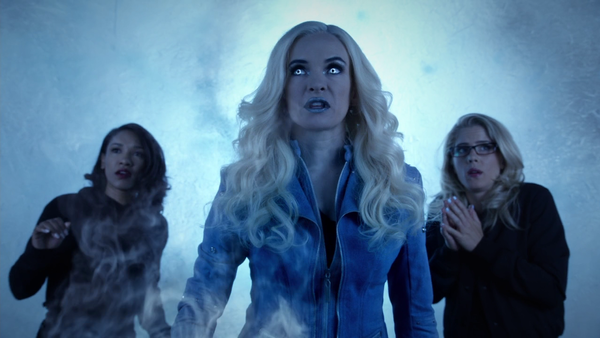
Schism, the finale of Arrow's fourth season, is widely regarded as the nadir of the entire Arrowverse, but that's not actually the case according to IMDb. Although the episode does have a lowly 5.6 rating, it's just the second-worst instalment in the franchise, above The Flash episode Girls Night Out.
A Season 4 episode centring around the female inhabitants of Central City (and Felicity Smoak), it revolves around Iris' bachelorette party while also serving as a Killer Frost-centric tale, and it marks a rare episode that doesn't feature speedster action. That might explain why it's low, although it might have more to do with the feminist messages throughout the hour.
That fits if you look at the next lowest-rated episode just above Schism, which also comes from The Flash Season 4: Run, Iris, Run, which put Iris West in the costume as the main speedster hero of the series.
14. The Highest Rated Superhero Show Is Batman: The Animated Series
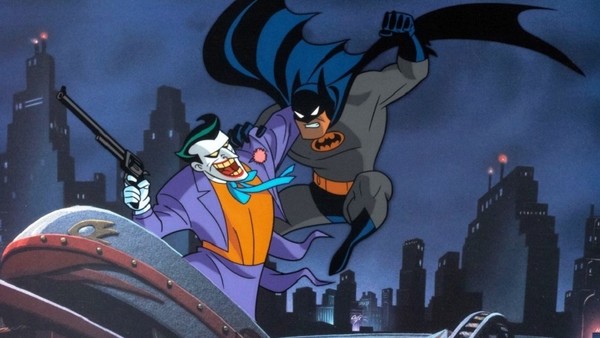
Superhero shows are everywhere nowadays, and thanks to Netflix there have been some serious efforts at turning them into award-worthy prestige dramas. So you might think that it'd be something like Daredevil or Jessica Jones that holds the highest rating among this genre, but instead it's an animated series from the 1990s.
Daredevil has 8.7 and Jessica Jones 8.1, but neither can compete with Batman: The Animated Series, which remains a seminal part of the Bat-canon.
B:ATS, which featured the classic pairing of Kevin Conroy and Mark Hamill as Batman and The Joker respectively, is about as thematically rich, dark, and compelling as you could hope for from a Batman adaptation, leading to its whopping 9.0 rating from over 67,000 votes.
13. The West Wing Season 7 Is Better Than Seasons 3 & 4
It's commonly accepted that The West Wing, while arguably the greatest political drama to ever grace the small screen, dropped off in quality after creator Aaron Sorkin left the show after Season 4. The writing wasn't as sharp (which isn't a surprise given Sorkin's talent), and the same magic wasn't quite there.
That's certainly true for Seasons 5 and 6, where there is a drop in ratings, but Season 7 does manage to pick things back up. So much so, in fact, that it has a slightly better average rating than the Sorkin-led Seasons 3 & 4.
Season 7 has 8.3 overall, whereas 3 has 8.28 and 4 just 8.22, so even Sorkin himself wasn't at his best for half his run on the show, and it really did peak with Season 2 finale Two Cathedrals.
12. The Last Great Simpsons Episode Was In 1997
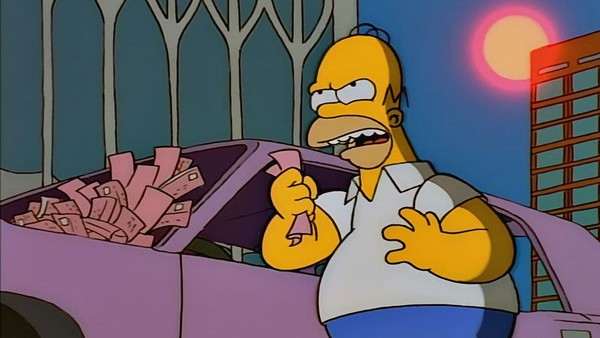
The Simpsons isn't as highly-rated as you might think on IMDb. The show as a whole is only 8.7, which is likely due to how many bad years it's now had compared to great ones, but it'd be fair to assume it'd had the odd high spot in the last 20 years.
Not so, because the last great episode - if we use the metric of a 9+ rating as being great - came way back in 1997, with Season 9's opener The City of New York vs Homer Simpson (which has a 9.1 rating). Season 9 is frequently cited as the beginning of the show's decline, and given no subsequent episode would ever reach such heights there is some truth in that.
Few episodes of The Simpsons have reached massive ratings though, and the show has a range of scores few series can match (it helps that it's had over 600 episodes): the highest is Homer's Enemy on 9.3 (let's not get into the fact that absolutely shouldn't be higher than the likes of Last Exit To Springfield, You Only Move Twice, Marge vs The Monorail, and King Size Homer), while the absolute worst is Season 23's Lisa Goes Gaga on 4.2, which is actually totally fair.
11. South Park And Futurama Both Have Higher Highs

The Simpsons isn't just the greatest animated show of all time, it's one of the most influential, helping to pave the way for the likes of South Park, Futurama, Family Guy, and countless others. However, according to IMDb, just because The Simpsons did it, it doesn't make the first best.
While The Simpsons tops out at 9.3, both South Park and Futurama better it.
South Park, which matches its 8.7 overall rating, has two episodes coming in at a 9.6: Make Love, Not Warcraft, and Scott Tenorman Must Die, both of which are landmark episodes and the latter of which is considered a major turning point for the series and particularly Eric Cartman. Its take on Lord of the Rings - The Return of the Fellowship of the Ring to the Two Towers - also has a 9.3 rating.
Futurama, Matt Groening's follow-up to The Simpsons, has two episodes on 9.3 (Meanwhile and The Late Philip J. Fry), while Luck of the Fryish has 9.4, and the devastating Jurassic Bark leads the way at 9.5, probably because it includes the most heart-breaking sitcom moment of all time.
10. Fear The Walking Dead Is Consistently Outperforming The Walking Dead

A lot has been made of The Walking Dead's decline, especially when it comes to viewing figures, but not as much has been said of Fear The Walking Dead's rise. With one ascending and the other descending, the spin-off is now the better show, and that's starting to come through in the IMDb ratings too.
Fear The Walking Dead's first season actually remains its best with an average of 7.56, although that's skewed by the fact it had just six episodes. The second season takes a dip to 7.17, then rises again to 7.4 for Season 3, and Season 4 is currently on 7.54.
Contrast that to The Walking Dead in the years since Fear started: Season 6 has a strong 8.33, but that drops right down to 7.5 for Season 7, and Season 8 plummetted to 7.11. The shows, despite their similarities, are going in completely opposite directions now.
Fear is also much more consistent too, with most episodes sticking around the same point as the season average. TWD, on the other hand, is capable of reaching massive highs but also plumbing serious depths too, with Season 8 ranging from 8.2 to 6.1, and Season 7 peaking at 9.0 but also hitting a 5.7.
9. Dexter's Finale Is The Most Disappointing

As series finales go, Dexter's is generally considered one of the worst to ever air (relative to what came before), and IMDb ratings show that it is the most disappointing. The series has an average of 8.7, with an episodic high of a staggering 9.8, and yet its finale (which is its lowest-rated episode overall) is down at 4.8, a gap that no other series can match.
Dragon Ball Z also has a remarkably disappointing finale, with a rating of 4.2 against an overall average of 8.7, but it pulled in a number of lower-rated episodes and doesn't have a single instalment above 7.5. To put Dexter's into further context, other hugely disappointing finales of the same era - True Blood's and How I Met Your Mother's - have ratings of 5.2 and 5.7 respectively, and come from lower starting points.
Going the other way, it's Glee with the most surprisingly good finale. The show has an average rating of just 6.7, showing its decline after the first couple of seasons, but the finale pulled in a massive 9.3.
8. Frasier Is Considered Considerably Worse Than Friends And Seinfeld

The 90s - and specifically NBC - was home to three giants of the sitcom world, with Friends, Seinfeld, and Frasier all on the line-up. All three were critically adored , hugely popular, and remain three of the greatest sitcoms to ever grace the screen.
It fits, then, that Friends and Seinfeld are both rocking 8.9 on IMDb (and you can argue both should be even higher), but one of these things is not like the other.
Frasier, despite being the smartest of the bunch and every bit as rewatchable, has an 8.0 rating. It's still good, but given the series won the Emmy of Outstanding Comedy Series five years in a row and a then-record 37 overall, it's really not high enough.
7. Angel's Finale Is Rated Higher Than Buffy's

Angel is a prime example of how to do a spin-off, taking a beloved character and fleshing them out much further in a series that gets even darker and stands on its own two feet. But also, it isn't better than Buffy the Vampire Slayer.
That's the general feeling from IMDb, which rates Buffy at 8.2 and Angel at 8.0 (both of which are too low), apart from the series finales. Chosen comes in at 9.3, but Angel's Not Fade Away is at 9.6.
That's not just surprising because of how much more beloved Buffy seems to be in general, but also considering how the finales were received at the time. Season 7 wasn't the show at its best, but Chosen was a perfect send-off; Not Fade Away is also brilliant, but was hugely divisive and quite controversial among viewers at the time.
6. Arrested Development/Community Season 4s Aren't As Disliked As You'd Think
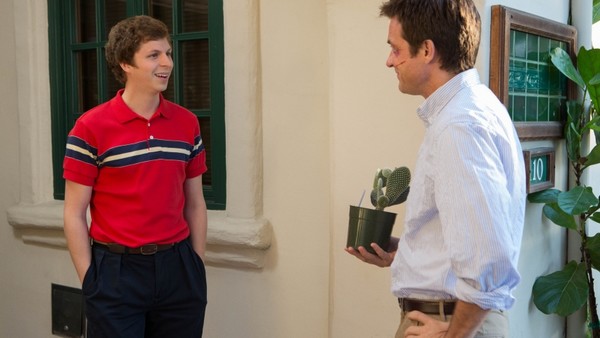
Arrested Development and Community have a lot in common: two hilarious comedies with a love of meta-humour, both of which have stared extinction in the face on multiple occasions and somehow kept on going. And both also have fourth seasons that were largely disliked.
Community's Season 4 was the first (and only) without creator Dan Harmon, and without him the soul of the show had been sucked away - it's even known as the gas-leak year because of how bad it is, and how much fans want it to be forgotten.
Season 4 of Arrested Development is at least ambitious, but without the cast all together and with an early misunderstanding of what streaming audiences wanted, it really doesn't work (no matter how you remix it). Both represent lows for their respective series and aren't episodes many fans want to revisit, but IMDb doesn't really reflect that.
Arrested Development Season 4 still pulls in a 7.94 average, compared to 8.9 overall, and Community's fourth season has 7.62 against an overall 8.5. Neither as good, but also nowhere near as bad as their reps would suggest.
5. Friends Peaked At The End

When was Friends at its best? Like with most sitcoms, it hit its stride in its second season, which then continued through its fifth, before a decline that became sharper around Seasons 8 and 9.
Not so according to IMDb, which actually has the final season as being the series' very best, with an average of 8.71/10, although this is helped by the two parts of the finale pulling in 9.5 and 9.7 respectively, with The Last One Part 2 the highest-rated episode of the show's entire run.
The next highest is Season 5, which is consistently brilliant, with an average of 8.69. That points to the fact that fans love the way they bring the characters together in a sense of payoff and eventuality (Ross and Rachel in Season 10, Monica and Chandler in Season 5), which also hammers home just how disliked Rachel and Joey was as a pairing: Season 8 (when it was first seeded) is at 8.5, and Season 9 (when they really started building towards it) is on 8.35.
4. Breaking Bad Was All About The Payoff

With a rating of 9.5 from over 1million votes, Breaking Bad ranks among the top-rated shows on IMDb, but there is a pattern within its seasons that is reflected in the ratings.
The show was very much driven by plot, building over the course of a season in such a way that it was designed to explode into life in the final few episodes. Looking at how the various instalments are rated, that rings true here.
Season 1, which admittedly only has 7 episodes, averages 8.58 for its first five episodes, then a solid 9 in its final two. In Season 2, which gives us a truer spread as Vince Gilligan could more fully realise his vision and serialise his story, the first eleven episodes averaged 8.69 with the last two at 9.1. It's then most pronounced in Season 3, with 8.6 against a whopping 9.5.
That represents the point where Breaking Bad started becoming a behemoth, and almost never dropping the ball. Season 4's first eleven average 9.1, and the first 14 of Season 5 are at 9.25, but the final two come in at 9.5 and then 9.75 respectively. Breaking Bad changed the game in terms of serialised storytelling, and that plays out in just how the seasons were structured and then paid off in such incredible fashion.
3. Neither Band Of Brothers Nor The Wire Have An Episode Over 9.0

Band of Brothers and The Wire are two of the greatest series to ever grace the small screen, helping to broaden the possibilities of just what is possible on television. And yet, despite their status and high placement on IMDb's Top Rated TV ranking - 2nd and 6th respectively - neither have a single episode over 9.0.
It's true that both are better as a whole than in an individual basis, and is perhaps more understandable for Band of Brothers given it only has 10 episodes anyway. But even then, it's got a 9.5 rating overall, and Why We Fight deserves to be ranked as high as possible.
The Wire, with 60 episodes, has two that are on 9.0 - series finale -30- and Season 3's Middle Ground - the latter of which contains one of the greatest scenes in TV history (Avon and Stringer on the rooftop), and which is definitely deserving of being much higher. Especially considering how high some other episodes are...
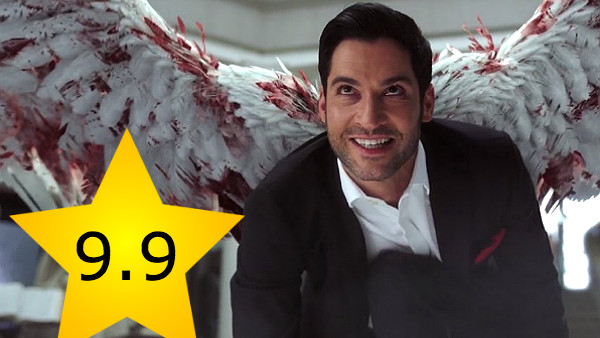
2. Of The Few TV Shows With A 9.9 Rated Episode, One Of Them Is Lucifer!?

As far as TV episode ratings on IMDb go, then hitting 9.9/10 is the holy grail. It's a rating that only nine episodes currently hold, and four of those come from Game of Thrones: Battle of the Bastards, Hardhome, The Rains of Castamere, and The Winds of Winter. Another two then belong to Breaking Bad: Ozymandias and Felina. The others, however, are way more surprising.
Hannibal's Mizumono, which served as the Season 2 finale, is among them with 9.9 from over 12,000 votes, as is Person of Interest's If-Then-Else (with just over 9,000 votes). Both episodes were satisfyingly emotional, thematically rich, and brought some major shocks, but still aren't necessarily the first names you'd think of when looking at what are - by IMDb's metrics - the all-time great TV episodes.
Even more surprising, though, is that Lucifer's Season 3 finale A Devil of My Word is also among these hallowed ranks. Besides being a strong episode of the show, it's also the last one after Fox cancelled it, meaning the ratings are likely skewed by fans taking part in the save Lucifer campaign.
1. Season 5 Has The Best And Worst Of Game Of Thrones

Season 5 is the worst of Game of Thrones, with so much time spent in a Dornish plot that is terribly translated from the book, and it being a transitional year for many: Tyrion is stuck travelling to Daenerys for the most part, Arya's Braavos storyline is frustrating, Tywin was dead, Bran was in a tree and so on.
It brings with it, then, the worst episode of Game of Thrones by IMDb's ratings, with Unbowed, Unbent, Unbroken pulling in 8.1. Yes, the lowest-rated episode of the entire show is still a very impressive 8.1, but it does deserve criticism for the Sansa rape storyline and the scenes with the Sand Snakes.
Conversely, though, Season 5 also brings with it the joint best episode of the entire run, and it comes just two episodes later in the eighth instalment, Hardhome, which pulls in 9.9.
Going on season averages, Season 5 is also the only one to drop under 9, with a total of 8.89. Season 4 is, unsurprisingly, the best with 9.33, but then the second best is the more heavily criticised Season 7 with 9.22, followed by Season 6 with 9.11, despite both coming when the show was past the books.
What are your favourite TV show IMDb stats? Let us know down in the comments.