15 Most Memorable 1990s Kids Cartoons

Batman1 The 90s will be remembered for a few things: Grunge, Michael Jordan, Bill Clinton's extramarital hullabaloo, and perhaps the greatest generation of TV cartoons ever. Just like the 2000s had the emergence of great television dramas on HBO, Showtime, and AMC (The Sopranos, The Wire, Six Feet Under, Deadwood, Mad Men, and Breaking Bad), the 1990s had the persistent excellence of Cartoon Network, Nickelodeon, and the Disney Channel. If this seems like an exaggeration, then you probably didn't watch the shows. Hand-drawn animation was still the norm, and characterization took precedence over background and scenery. But even though the animation was great, these cartoons had great stories. You can have a bad TV show with good animation, but you can't have a good TV show with uninteresting characters and narrative. This list is devoted to cartoons made specifically for kids, so no Dr. Katz, Daria, or The Simpsons. Also, this list is about cartoons that started in the 1990s, if they continued on into the 21st Century, that's okay, as you can't fault a series for its longevity. Some honorable mentions that just missed the cut: Courage the Cowardly Dog, Ren and Stimpy, Catdog, Cow and Chicken, and Aaahh!!! Real Monsters. Every show that is on this list deserves to be remembered for its iconic characters, humor, and real emotional impact. So without further ado, here we go...

15. Gargoyles

Gargoyles

Series Run: 1994-1997 (78 episodes) Network: Disney Channel (1994-96) and ABC (1996-97) Theme Song Rating: Appropriately epic and dark, theme song gets 4.5/5, gets your rocks off. A band of nocturnal heroes fighting off mythological and literary villains while striving for understanding in a prejudiced world, Gargoyles is like a cross between Buffy the Vampire Slayer and Teenage Mutant Ninja Turtles. Led by Goliath (voiced by all-time great Keith David), the Manhattan Clan of gargoyles dole out vigilante justice with the help of NYPD detective Elisa Maza. The show's style harkens back to Gothic architecture and seems to be influenced by the Tim Burton Batman films, as the New York in Gargoyles is a sort of steam-punk futuristic landscape with large buildings and columns. Drawing from Scottish and Japanese history, diversity is a key issue in the series. Known for having longer storylines with multiple arcs being carried out over a number of episodes, the central theme of the show seemed to be acceptance. With the diverse cast of characters, racial politics was an inevitable but surprising underlying issue for a cartoon. The show's Disney cancellation after the 52 episode second season led to a third season without show creator Greg Weisman, and the third season (subtitled The Goliath Chronicles) is not considered to be canon by the show's more ardent fans. But with a stellar voice cast including David, Ed Asner, Jim Cummings, and Richard Greico?! Gargoyles was a fascinating TV show that with a high literary pedigree.

14. Rocko's Modern Life

Rockos Modern Life

Series Run: 1993-1996 (52 episodes) Network: Nickelodeon Theme Song Rating: The catchy tune by the B-52s (the third and best version of the theme song) was the perfect intro. 5/5, makes you dance like a wallaby. Rocko's Modern Life is an absurd take on consumerist America that was a jumping off point for talents like Tom Kelly (Spongebob Squarepants himself), Dan Povenmire and Jeff Marsh (Phineas and Ferb), and Steven Hillenburg (who went on to create Spongebob). But Rocko's wasn't a talent-packed dry run for bigger and better things, it was a satirically funny show about an Australian immigrant making his way in bulk-sold goods America. The fact that each of the characters were animals was secondary to their personality; the type of animal they were informed the character but it did not dictate their actions. Often including not-too-subtle innuendo to appeal to an older audience, Rocko's Modern Life has aged well for a cartoon. It's a testament to the writers and animators that a show that is essentially about suburban angst can be so fun. The show doesn't take the weighty subject matter too seriously and lets the story flow. In fact, Rocko's doesn't typically adhere to the traditional TV storytelling model of a three act structure with an A and B storyline that converge happily in the conclusion - there's more of a stream of consciousness feel that separates it from most of its contemporaries. This approach wouldn't work if there weren't characters the audience wanted to spend time with, and Rocko's has some of the most fully-realized characters in cartoons. There's the fish out of water protagonist Rocko who self-consciously prattles about in life, his fun-loving best friend Heffer the steer, and the Woody Allen-esque Filburt whose very existence gives him nausea. Throwing around big ideas doesn't change the fact that this show is a hoot.

13. The Angry Beavers

beaver

Series Run: 1997-2001 (63 episodes) Network: Nickelodeon Theme Song Rating: The opening credits give you a good idea what the show is about, but the theme song itself is pretty pedestrian 3/5. The first two shows on this list tested the limits of the medium and tried to do something different with cartoons, but Angry Beavers didn't give a spoot about testing the form. More emblematic of a traditional sitcom and a closer compatriot to the Looney Tunes era of cartoons, Daggett and Norbert were constantly fighting brothers whose one-upsmanship often led to their mutual downfall. Angry Beavers takes place in the Oregon woods and is often about the intrusion of technology onto the beaver's natural environment (oftentimes by the beavers themselves). The show is hippy-centric, but it is neither judgmental nor overly romantic about nature and therefore isn't too cumbersome. The brothers have an "odd couple" kind of relationship, with Norbert being the intelligent and sarcastic older brother and Daggett being the restless and immature younger sibling. While many episodes focus on one-off characters, Angry Beavers doesn't have the consistent large ensemble of a show like Gargoyles and essentially every episode is centered around the relationship between Norbert and Daggett. Instead of being bogged down by formula Angry Beavers excels by making the core of the show a believable sibling dynamic, even with all of the ridiculous schemes and maneuvers.

12. Ed, Edd n Eddy

EdEdEddy3

Series Run: 1999-2009 (69 episodes) Network: Cartoon Network Theme Song Rating: Fun and catchy, 4/5. Created by Canadian animator Danny Antonucci, Ed, Edd n Eddy was the crass kids show, the one that parents didn't let their kids watch even though there wasn't any swearing or overtly sexual references (although it sometimes got pretty close to overt). In the words of one of my schoolmate's parents, "It just seems like those kids are up to no good." They seemed to be part of the counterculture because unlike in other cartoons they actually dressed the way kids dressed (baggy clothes and beanies), liked the things kids liked (namely jawbreakers), and acted the way kids act (stupidly). Ed is the not-too-bright member of the tripartite cul-de-sac crew, Edd known as Double-D is the genius, and Eddy is the consistently hoarse leader of the pack. Aside from its somewhat scandalous appeal, the thing that differentiated Ed, Edd n Eddy was the lack of parental figures and the morality that they commonly provide. Unlike other cartoon shows ostensibly about kids, the three Edwards are on their own and learn their lessons as a group rather than having all of the answers being provided to them by an all-knowing mother or father. They simply weren't in the show (save for one episode in a later season where Eddy's mother and father appear), which made their lives like a suburban Lord of the Flies. With the cootielicious Kanker sisters scouting for kisses around every corner and Johnny 2 by 4 and his imaginary wood friend Plank, Ed, Edd n Eddy did not lack excellent supporting characters. Chaos and fun reigned supreme in their cul-de-sac in Peach Creek.

11. Johnny Bravo

jb

Series Run: 1997-2004 (67 episodes) Network: Cartoon Network Theme Song Rating: The surf-rock tune outfitted with big brass doesn't do the show justice, but it gets saved when JB tells everyone to do the monkey, 2.5/5. A catchphrase spewing machine, Johnny Bravo the character was dim-witted and chauvinistic, but Johnny Bravo the show was clever enough not to make him the winner. As a concept the show could seem pretty repetitive, Johnny is a man who is extremely confident but he always gets turned down by women. This is essentially the basis for every episode. But it's his characterization (and supporting cast) that make the show immensely entertaining. As far as two-bit Elvis impersonators go, Johnny Bravo doesn't seem to be making much of an effort with his blonde hair and gym-rat bod. But that's the thing about the show, Johnny is constantly trying way too hard to make it seem like he is not making much of an effort. His incessant attempts to woo women are always rebuffed because he is a facade of a human being, all impersonation with no real personality. But you can't blame that on his Momma. Making her more of a brash woman in season two is one of the few times retconning a show has been more successful than its original intent; she is a strong and opinionated woman that just happens to have a dunce of a kid. But man, he's pretty. Consistently trying to prove his manhood by chasing chicks or taking martial arts classes, his failures never fail to satisfy. Featuring top-notch voice talent including Anthony Bennett in the title role, Brenda Vaccaro as Momma, Tom Kenny as Johnny's nerdy friend Carl, and Brian Tochi as Master Hamma (Johnny's martial arts instructor), the actors give the show some needed credibility. With Seth McFarlane as a writer the show often veered into pop-culture parody and reference humor, which was fitting considering the entire Johnny Bravo character is basically a pop-culture reference. The show also featured the direction of Butch Hartman, creator of the fantastic The Fairly Oddparents and had a similar comedic edge. Johnny Bravo was basically a one-joke show, but that one joke was good enough to make it the most popular show on Cartoon Network at the turn of the century.

10. Rocket Power

Rp

Series Run: 1999-2004 (61 episodes) Network: Nickelodeon Theme Song Rating: Pantheon theme song, I still have it memorized. 5/5. We are all riders. This is the least "90s" cartoon on the list, premiering in the second half of 1999, but Rocket Power deserves a spot on any list of memorable cartoons. Re-watching Rocket Power episodes today isn't a great idea, it doesn't hold up as well as any other show on this list, but that's because Rocket Power was so distinctly of its time. Instead of watching it again we should choose to remember it in all of its glory, a story about friendship, catching rad waves, skateboarding, and roller hockey. Being extreme has never felt so right, woogity woogity woogity indeed. Centering on the Roink family (who understandably call themselves the Rockets instead) Otto and Reggie Rocket are competitive siblings who still care for each other. Along with friends Twister (the fool) and Squid (the geek), the Rockets usually form sports teams that are nearly impossible to defeat. Rocket Power may not offer the more subtle and controversial thematic issues of the other 90s cartoons listed, but more than anything this show is a good time. It's like The Avengers of kids cartoons: each character has specific talents and foibles, they have a shared obstacle (either a Herculean task or defeating Twister's evil older brother Lars), and they have to overcome their differences and utilize their strengths in order to overcome their obstacle and achieve the goal. It's paint-by-numbers, but with really awesome paint and the coolest group of brushes. The show went a little stagnant when it tried to deal with the real issues like childhood without a mother or school bullying, but it's faults are easy to forget when there are so many good times to be had.

9. Pinky And The Brain

Pinky Brain

Series Run: 1995-1998 (65 episodes) Network: The WB Theme Song Rating: Like Brain it is brilliant, but the theme song is a little too detail-oriented, 4/5. A spin-off of the popular Animaniacs show, Pinky and the Brain was another show that was concept-oriented. Every episode Brain would develop a plan to take over the world, explain it to Pinky, and then watch as his plan failed miserably. More of a benevolent mad scientist than a Bond villain, Brain's schemes often sounded fool-proof to me. Brain's voice and face are based off of the great actor-director Orson Welles (there's even an acknowledgment of that in one episode where Brain briefly meets Welles and they simultaneously voice their desire to take over the world), which gives the film-studio based mouse an extra level of characterization. If you catch a repeat and wonder what's going to happen in an episode of Pinky and the Brain, it's going to be the same thing they try to do every episode Pinky, try and take over the world. Each episode has a self-contained plot, there isn't going to be much if any carry over from episode to episode, which made it an excellent show to watch and re-watch on Saturday mornings. It's all appropriately silly, the mice would often dress up in costumes as a part of Brain's schemes or meet various famous people to get something they need for an uncertain reason. The show doesn't have much originality behind it, it is a tasty melange of every pseudo-scientific world take over plot, but that doesn't make Pinky and the Brain dumb. I have seen some convincing articles on the internet about how Pinky is actually the genius and Brain is the insane one (as stated in the theme song). Brain's plots are always foiled and Pinky is always there to pick his spirits up at the end of the episode. As corny as it sounds, Pinky and the Brain really is a show that is about friendship. While Brain often gets frustrated at Pinky, they are the only two genetically spliced mice around and they need each other. The show ran its course as a concept, but seeing some episodes today shows that the show had a clever spark behind its references, parodies, and characters.

8. Recess

RecessSeries Run: 1997-2001 (65 episodes) Network: ABC (Produced by Walt Disney Television Animation) Theme Song: Good but not great, the intro was fun but could be skipped over 3.5/5. Some people are going to be very disappointed that Recess sits only at number eight on this list. I understand that, I watched Recess more than any other cartoon when I was growing up, and the show is undeniably great. But there are just too many great shows from this period, which makes eighth place high praise. Like most boys that were in elementary school when this show came out, I tried to fashion myself after T.J. Detweiler, the clever lead of Recess. Unlike many other cartoon protagonists, T.J. was easy to relate to, he wasn't the jock, he wasn't too smart, he was T.J. the clown/prankster and he had a great group of friends. What made Recess truly great isn't that the show didn't use archetypes, it's that the characters weren't defined by the archetype they were prescribed with. T.J. was also a great friend and group leader, Spinelli the tomboy sometimes liked to be the girly-girl, Vince LeSalle was the fun-loving jock that still dealt with various insecurities, Gretchen the brainiac wasn't a socially awkward dweeb, Gus was a socially awkward dweeb but he was also the glue that kept the group together.And Mikey, sweet Opera-singing (later voiced by the great Robert Goulet!) candy-bar toting Mikey was the best character on a show filled with great characters. Recess was the easiest show to relate to as a kid; it's about the need to be yourself, but with a loving group of close-knit friends. The only way you can be yourself was in the freedom of Recess, a magical time in which you could try to make your own rules (as long as you could get away from Miss Finster). Along with one of the greatest movie spin-offs for a TV show ever (Recess: School's Out), Recess's run as a television show was as much of a formative experience in my childhood as school itself, and its impact was felt amongst pigeon-holed kids everywhere.

7. Animaniacs

AnimaniacsSeries Run: 1993-1998 (99 episodes) Network: The WB Theme Song: Cute, cheesy, showtune-based, and perfect for the show, 4/5. The Animaniacs could have easily been a simple cash-grab for the WB and Steven Spielberg (the show's full title is actually Steven Spielberg Presents The Animaniacs), but the show was a fun call-back to the classic Looney Tunes TV program. With a large ensemble including Pinky and the Brain, Slappy and Skippy Squirrel, Rita and the Runt, and the Goodfeathers there were opportunities for even more spinoffs. The central characters Yakko (voiced by a man, his name is Rob Paulsen), Wakko (voiced by Jess Harnell), and Dot (voiced by Tress MacNeille) were animals of an indeterminable species who were drawn to be generally cute rather than a specific creature. Yakko was based off of Groucho Marx, and the anarchic comedy of the Marx brothers is the most direct influence on the show. Full of sight gags and slapstick, the Animaniacs is a near-perfect kids show that doesn't let emotionalism bring down funny ideas. Sure, the family dynamics of the Warner Brothers (and sister) serve to give the audience an idea of the central group and how they feel about one another, but the comedy comes from the situations rather than the characters. Fast-paced and zany, the Animaniacs has aged well because the humor of the show is classic comedy (although Yakko's attraction to Michelle Pfeiffer seems particularly dated). It had more of an explicitly educational slant than any other show on this list, some people probably still remember the Presidents based off of the song in the show, which makes for a few dull moments. But even when the show is trying to teach you something it cloaks it in enough fun to make it worth your while, and as soon as the show gets back to its regular antics it picks up its form. The Animaniacs is memorable for having so many iconic characters, and its reliance on theatrical comedic tropes make it more timeless than some of the more "modern times" oriented cartoons.

6. The Powerpuff Girls

Powerpuff

Series Run: 1998-2005 (78 episodes) Network: Cartoon Network Theme Song: There isn't much music in the introduction, but the up-tempo theme music gets a 4/5. I was an elementary school aged boy when The Powerpuff Girls came on, so I was in peak "anti-girly stuff" mode. If the My Little Pony television show was on at that point, I would have hated it for its flowery femininity. But regardless of gender, there was one thing that was certain in this world: The Powerpuff Girls were awesome. The show was a parody of superhero conventions, but a loving one that used the idea as a starting point for a show that had a distinct personality of its own. It's Kick-Ass starring three pre-teen girls. The show had mass appeal, commercial, and critical success including six Emmy nominations including two wins. Sugar, spice, everything nice and (my personal favorite) Chemical X were the ingredients used by Professor Utonium to make Blossom (everything nice), Buttercup (spice), and Bubbles (sugar). And each character was great, but what really made the show worth watching were its great repertoire of super villains. Him, the devilish creature that feeds off of negativity, is the type of savage character that would fit perfectly into several superhero comics. Sedusa, the femme fatale character, harkens back to Poison Ivy and (obviously) Medusa and provides The Powerpuff Girls with a worthy female adversary. But Mojo Jojo, the monkey mad scientist, is the group's archenemy for a reason. He constantly switches between hilariously inept, fiendish, dastardly, and surprisingly scary. For ten year old me, guys. I'm not scared of Mojo Jojo anymore. Not even a little. I swear. Being the primary evildoer and creator of the "Beat-Alls" makes Mojo Jojo the biggest villain, but giving so much attention to the villain gives The Powerpuff Girls an added depth that most comics don't even have. Being smart enough to give your bad guys the time of day means that the audience cares not only about the inevitable victors (The Powerpuff Girls are pretty awesome) but the losers as well.

5. Dexter's Laboratory

1314642780139_DextersLaboratory_2x1_590_295

Series Run: 1996-1998, 2001-2003 (78 episodes) Network: Cartoon Network Theme Song Rating: The wordless theme is short and sweet but doesn't pack much of a punch, 3.5/5. Seriously Dee Dee, get the hell out of my laboratory. Created by animation titan Genndy Tartakovsky (who worked on The Powerpuff Girls and went on to create Samurai Jack), Dexter's Lab was a science-fiction fun house. The highest rated show on Cartoon Network in 1996 and 97 was nominated for four Emmys, showing it off as yet another popular and critical success. The show generally consisted of three segments, the first and the last revolving around Dexter and Dee Dee and the middle being about someone related to their family. Dexter's parents were the genial dim-witted type that would later be seen on The Fairly Oddparents (Butch Hartman also worked on this show), and the temperamental young scientific genius was obviously an early influence on Stewie Griffin (Dexter's was another testing ground Seth MacFarlane as well). The show did have one great villain, Mandark Astronomonov, who was the protagonist's rival genius who often attempted to steal Dexter's plans. An archetypical villain, Mandark had a "dark world" version of Dexter's lab and he was in love with Dexter's sister. But the show was more focused on portraying the relationship between Dee Dee and Dexter than having a more overt villain. Obviously Dee Dee and Dexter have an antagonistic relationship (the first few minutes of almost every episode is about the various ways Dexter tries to keep her out of the lab), but as shown during the intro Dee Dee often has a more practical view of the world that enables her to come up with simple solutions that evade the big-thinking Dexter. If you are a kid watching the show you want to have all of Dexter's cool toys and you want to see him succeed, so Dee Dee becomes a nuisance for you like she is for Dexter. But in re-watching the show, you can see that what the show is really doing is advocating for a more tempered way of thinking. Dexter is immensely creative and enthusiastic, but he lacks simple problem-solving skills, whereas Dee Dee doesn't have Dexter's engineering acumen but she has the capability to simplify complex ideas. So even brainiacs need a nice balance of left-brain/right-brain thinking, and Dexter's Lab is an extremely entertaining show about trying to get to that balance.

4. Rugrats

RugratsSeries Run: 1991-1994, 1997-2004 (172 episodes) Network: Nickelodeon Theme Song Rating: The perspective-bending intro coupled with the simple and fun song do a good job of summarizing the show, 4.5/5. I liked this show so much that I watched every episode of All Grown Up. I liked this show so much that I contemplated having a baby at age 11 so I could watch it hang out with its fun group of friends. The brain-child of Klasky and Csupo (just try and forget their tag at the end of each episode), two Simpsons animators who created another of the longest running cartoon series of all-time. Rugrats was centered on a group of babies led by Tommy Pickles that traversed the world of their own imaginations and learned some valuable life lessons along the way. If you think that this is an overly sentimental concept even for a kids show, then you are stupid and you should leave the internet. Tommy is a perfectly suitable protagonist, and the hero that the group needs, but he has a distinct personality which allows the show to focus on the foibles of the other characters. Chuckie, Tommy's best friend, is the worry-wart who has been deeply impacted by his mother's passing (pretty dark stuff for a show that is literally about babies). He has all of the noticeable traits of the neurotic: several phobias, glasses, a goofy outfit, and a nasally voice. But he proves time and time again to be there for his friends when they need him. Phillip and Lillian, or Phil and Lil, are the rascals of the group, energetic and fun-loving. Susie serves as an older positive influence on the babies, she can talk to both babies and adults, and although it would be easy to see her as the token black character she is given a lot of story involvement in the episodes she is in. Finally, we get to Angelica, the big meanie. Angelica is a spoiled bully, the worst kind of kid you meet in the schoolyard. Entitled yet never satisfied, Angelica is mean to the other kids so that she can feel better about herself, but she's never given the satisfaction. Rugrats made a deep impact on my viewing sensibilities, and its continued brilliance made it a great television show.
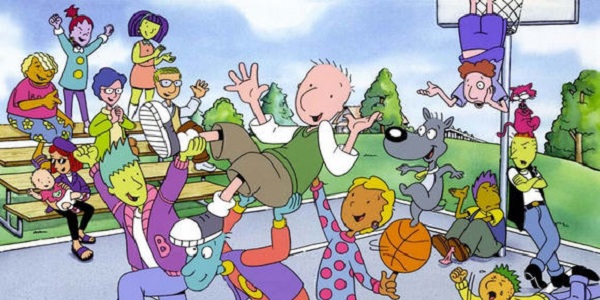
3. Dougdoug

Series Run: 1991-1996 (52 episodes), 1996-2000 (65 episodes) Networks: Nickelodeon for its first run, ABC/Disney for its second Theme Song: A great song, but it's no "Bangin' on a Trash Can" 4.5/5. Doug Funnie is an eleven year-old kid with a big imagination, and with his clever dog Porkchop and best friend Skeeter he maneuvers around reality to get to the world of his day dreams. Created by Jim Jinkins, Doug is really a coming-of-age animated show with the added benefit of having a protagonist who doesn't really age. The show made the jump from Nickelodeon to ABC in the middle of 1996 after Disney purchased the rights to the show along with Jinkins's animation studio. In my opinion the original show is superior, but both versions feature excellent animation and fleshed out characters. A suitable live-action counterpart to Doug would be the fantastic Freaks and Geeks created by Paul Feig, both shows center around children of a middle class family and traversing through the sometimes terrifying "real" world. Doug's cute relationship with Patti Mayonnaise is fortunately not as disgusting as her name; a perfect pre-adolescent unconsummated relationship. The school bully named Roger Klotz (voiced by the same actor who plays Doug, Billy West) is uncommonly layered in the Nickelodeon show. He lives in a trailer park with his single mother and the show gives plenty of evidence that he bullies people to make up for his troubled upbringing. It's rare to give multiple dimensions to the bad guy in a kids show (and his family becomes rich in the Disney series), but that's what makes Doug so memorable. It doesn't look down on its audience and say that Doug's problems aren't real, the fact that he narrates the show allows him to be in control of the narrative.

2. Hey Arnold!

hey-arnold

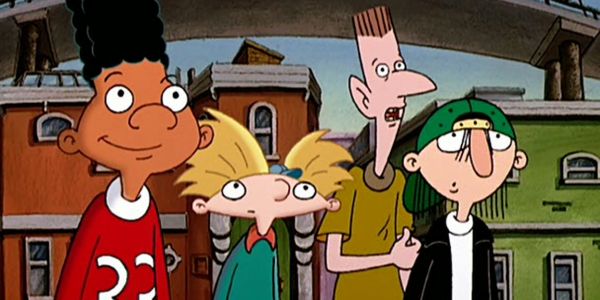
Series Run: 1996-2004 (100 episodes) Network: Nickelodeon Theme Song: Like the show, catchy and fun and it only grows on you with time, 5/5. Created by Craig Bartlett, who worked on Pee-wee's Playhouse, Hey Arnold! has so many devoted followers that Tumblr is going to have to create a whole new website just to contain them. Set in Hillwood, an amalgamation of big cities in the Pacific Northwest and Brooklyn, Hey Arnold! features a diverse cast of characters not typically found in contemporary cartoons. The show occasionally dealt with extreme or fantastical stories, but it was at its best when it focused on realistic depictions of childhood, with an interesting layer of the story being that Gerald (Arnold's best friend) and Arnold are both raised by war veterans. They are the children of American history who use stories to magnify their own histories. When Arnold and Gerald go to a middle school dance in the first season, it is a momentous and significant occasion, and that's exactly what it would have felt like if I were invited to a dance by the cool older girls. When the gang gets stuck on a subway, the claustrophobia that sets in feels real, and their fear is honest in a way most comedy shows don't try to acknowledge (children's or otherwise). An important side note, it's not a skirt it's a button-up shirt that's too long to fit under Arnold's sweater. And that's all I have to say about that. But enough about Arnold and his male friends, the real star of the show is definitely Helga Pataki, a harsh female character that hides her undying love for Arnold. It's hard to feel sympathetic for a person that builds a gum-based shrine to our football-headed protagonist, but it's a testament to this show that she is the most dynamic and interesting character. Although her borderline pathological obsession with Arnold makes her insane, she feels like a real person. Her various quirks are occasionally scary but her redeeming qualities turn her tics into the charming characteristics of a girl who is desperately in love with a boy in a way most nine year old boys are secretly and desperately in love with a girl. But it would be a shame not to acknowledge some of the other great characters: Grandpa Phil is the surprisingly energetic old man that Arnold lives with, Grandma Gertrude is his wise wife, Big Bob Pataki is Helga's father and a funny beeper salesman, Miriam is Helga's drunk mother, Phoebe is Helga's intelligent best friend and Gerald's love interest, and Sid, Stinky, and Eugene round out their group of friends while having their own unique quirks. Hey Arnold! will stand the test of time because it's a show that's honest about what it feels like to be a kid, hopelessly in love and looking for adventure.

1: Batman. The Animated Series

Batman1

Series Run: 1992-1995 (85 episodes) Network: The WB Theme Song Rating: Thoroughly epic and slightly scary, 5/5. Wait, a WhatCulture! list that says Batman is number one? No way! Listen, I understand that Batman is an outlier on this list, but anyone who has seen it knows that it deserves the number one spot. Anyone who says that this show is too dark for kids is both underestimating children and failing to recognize the intended audience for the show. Batman: The Animated Series is a children's cartoon that happens to transcend its genre; it revels in its darkness and maturity but still makes sure that it is fast-paced and fun so as not to alienate its primary audience. Taking cues from the Gothic stylings of the Burton Batman films as well as some of Frank Miller's Dark Knight art made for a supremely interesting visual palette. Perhaps the only criticism of the series is that it tended to place more emphasis on tone than story, but just because it's easy to get wrapped up in its visual style doesn't mean that it lacked quality narratives. Adapting many storylines directly from comic book arcs, BTAS graciously took some of the most complex stories in Batman's canon to make a true work of art. The show was also the first time Mark Hamill voiced The Joker, and he does a tremendous job at capturing his maliciously chaotic spirit. Along with Arleen Sorkin's take on Harley Quinn, BTAS had some of the best screen iterations of several classic Batman villains including the Paul Williams voiced Penguin, Ron Perlman's Clayface, and Roddy McDowall's The Mad Hatter. If you haven't seen Batman: The Animated Series, you've missed out and you should get on that as soon as possible. If you have, then you know it's the most memorable cartoon of the 1990s. Are there any classic cartoons that I left out? And quibbles with the order? Let us know in the comments section.

Contributor

Bryan Hickman is a WhatCulture contributor residing in Vancouver, British Columbia. Bryan's passions include film, television, basketball, and writing about himself in the third person.