20 Best TV Episodes Of 2017
Farrah Fawcett spray?

Networks are making, and people are watching, more TV than ever before. It's the era of Peak TV, when there are so many shows vying for your attention it's impossible to keep track, and 2017 has only seen that intensify.
Conversely, the art of the individual episode is, while not completely lost, something that's seemingly given less attention. Streaming services offer everything up in one bingeable gulp, meaning episodes good and bad can get lost in the bigger whole, and it's an approach more and more viewers are taking to other, non-streaming series, preferring to wait for them to all be available. It makes some sense too, since prestige shows are increasingly complex narrative puzzles, and an episode is just one part of that.
It means that an episode has to have something special to stand out, to be remembered and celebrated on its own terms. Whether that's a unique voice, a strong message, awesome spectacle, or just a number of memorable moments, all of these episodes managed it in 2017.
20. Agents Of S.H.I.E.L.D. - Self Control
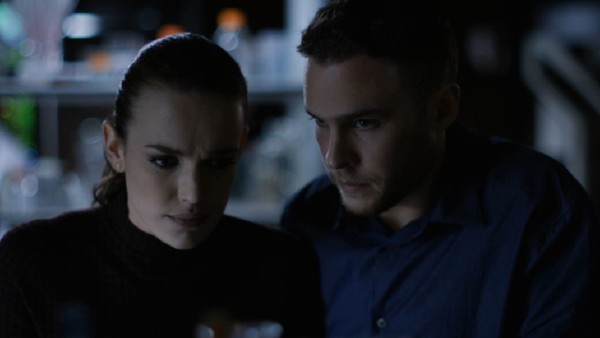
After three seasons of varying quality, where the show never quite felt like an essential cog in the MCU, Agents of S.H.I.E.L.D. changed things up for Season 4. It aired later and got darker, while the season itself was split into three different 'pods': Ghost Rider, LMD, and Agents of HYDRA.
Each had their merits, but it was the middle that took the most storytelling risks, with the Life-Model Decoy doppelgangers and simulated world the Framework, and all that paid off in Self Control, which stands alongside 4,722 Hours as one of the series greatest episodes.
But where that was praised for being so different, Self Control utilises the main elements of SHIELD to their full potential. It was co-creator Jed Whedon's first episode as director, and it's a hell of an effort, with strong action, impressive effects, and an emotional core to the episode too.
The latter comes via the team-up of Daisy Johnson and Jemma Simmons, along with the FitzSimmons arc in the episode. It has some thrilling moments as Daisy unleashes her powers, but more impressive are the twists and turns involving the LMDS that keep you guessing and keep on surprising you throughout, with great payoff at the end for both the instalment and the whole middle pod.
19. Mr Robot - Eps3.4_runtime-err0r.r00

After a disappointing second season, the third run of USA's breakout hit Mr Robot restores a degree of faith in the series. It's not a full return to the stunning form of Season 1, but it's a lot closer, and all of the show's tricks are on display in the fifth episode, which is arguably a series best.
Runtime Error puts Elliot on the run, brings us the long-awaited Stage 2, and does so in a way that utilises those stylistic elements that are so intrinsic to the show in a way that's perhaps better than anything before.
The entire, 42-minute episode appears to be one long shot. It's not, with cuts visible if you look close enough, but it nonetheless unfurls much like it is. It's a great achievement of filming and editing, and one that puts the viewer into the story even more-so than usual.
It's important that it's not just a gimmick, but instead serves a function. It allows the events to unfold as if in real-time, and there's an electricity as we race through time with Elliot and then Angela, while even beyond the camera trickery it retains the same sense of social and political commentary the show is known for.
18. GLOW - Live Studio Audience

For much of its run, it's the events outside the ring that matter on GLOW, but the show's strongest episodes comes when it really puts the spotlight on the actual wrestling - and, of course, the wrestlers.
Live Studio Audience, the seventh instalment of the show's debut season, sees the group finally putting on their first live show, and naturally, things don't exactly go to plan. It's a great showcase for the series' ability to blend humour and drama both in and out of the ring, and displays all of its weirdness as well.
There's genuine emotion to be found in the way Carmen (the show's nicest character) struggles with her stage-fright, but also serious hilarity when Sam's camera gets stolen. It's odd at times, with a racially charged tag-match that really shouldn't work (yet somehow they pull it off), and a sense of triumph and empowerment by the end, accompanied by Rhonda's bizarrely brilliant rap.
Oh, and it has a training montage set to Stan Bush's Dare, and TV in 2017 doesn't get much more wonderfully 80s than that.
17. Catastrophe - Episode 6

Rob Delaney and Sharon Horgan's Catastrophe continues to be a catastrophically under-watched gem of a sitcom, although in the third season it stretched the meaning of that last word farther than ever.
That was most evident in the finale which, while supremely funny, also brought bucketloads of drama and emotion.
The humour largely comes at a funeral, oddly enough, which is a great example of how this show finds something humorous in everyday situations and contributes to how real it feels. And, of course, there's Carrie Fisher's performance which, while tinged with sadness after her passing, is razor-sharp and bitingly funny.
But where this episode is at its best is with its exploration of Rob and Sharon's relationship, and the way it brings together the season-long strands of Rob's returning alcoholism in harrowing, devastating fashion. The show can easily make you laugh, but this episode is just as likely to make you cry.
16. Legion - Chapter 7

In a hotly contested field, Noah Hawley's Legion has a strong claim to being the weirdest TV series of the year. A dizzying portrayal of David Haller, superpowers, and mental illness, there's little actual resemblance to anything X-Men or Marvel here, but that all works to the show's advantage.
It didn't always make sense, and some viewers were disengaged, but those who stuck with it were in for a real treat with Chapter 7, an episode that took everything great about Legion and hurled it at the viewer in a mesh of kaleidoscopic visuals, mutant powers, and silent horror movie homages.
At this point of the season, it still wasn't clear where Legion was headed. Chapter 7 offered up some satisfactory answers, but did so without losing any of the show's inherent oddness or ability to bend minds.
Dan Stevens once again does terrific work as David, playing two versions of the character interacting with each other; there are moments of humour between Oliver and Cary; a surprising (and surprisingly great) animated sequence that connects the show to the comics and answers some big questions; and of course, the thrilling, terrifying black-and-white sequence - featuring title cards and set to Bolero - that leaves an indelible image on the viewer and confirms Aubrey Plaza as the show's MVP.
15. American Gods - Git Gone

Speaking of the year's weirdest TV shows, American Gods - from Bryan Fuller and Michael Green, who have now sadly left - is another claimant to that title, and while that gave it a great tone and some gorgeous visuals, it resulted in the opening episodes being beautiful but messy.
That's where Git Gone, and more specifically the character Laura Moon, comes in and make such a difference to the series. Her expanded role is the biggest change Fuller and Green make to Neil Gaiman's epic novel, and it's also the best. Whereas Shadow serves as our narrative anchor, it's Laura who becomes the audience's emotional tether to the show.
Taking things to the past rather than advancing the narrative, we get to see how she and Shadow met - she worked at a casino he gambled in - and fell in love. Even in the show, Shadow is very much a Gaiman protagonist, whereas this Laura Moon fits more to Fuller's style, and that's definitely to her strength.
Git Gone acts as a terrific character piece, making you understand and care more for both Laura and Shadow, while still managing to be disturbing, visually dazzling, and extremely funny (the bathroom scene with Laura and Audrey is one of the season's funniest).
It adds the human element that American Gods was very much in need of, and does wonders for Laura, Shadow, and the show as a whole.
14. Arrowverse - Crisis On Earth-X

Taken individually, each of the Arrowverse shows have a number of strengths and flaws, all of which have been evident across Arrow, The Flash, Supergirl, and Legends of Tomorrow in 2017. The crossovers, while not necessarily having a major impact on the overarching narrative, tend to push the strengths to the fore and hide the flaws, and that's certainly the case with Crisis on Earth-X.
With all the major players from each show assembling for the West-Allen wedding, it's a chance to cut loose and have some fun... until the villains from Earth-X arrive. What's so impressive about Crisis is that it works as one long 3-hour superhero movie, and yet each show also retains a sense of identity, with certain character moments and reveals coming in the specific hour.
It'd be difficult to pick one part of this 4-show run, since it's really best taken as a whole. The crossover allows for some great character pairings, such as Sara and Alex, big emotional moments, surprises, shocks, and quips (Oliver's "I don't have superspeed" is a particular highlight). But mostly we're here to see a bunch of heroes in action, and Crisis delivers that in spades. Everyone gets their moment, all the powers are utilised to wonderful effect, and a bunch of Nazis get punched.
It's the best Arrowverse crossover to date, and the DC superhero team-up event of the year.
13. Big Little Lies - You Get What You Need

Big Little Lies sailed by on the strength of its stunning cast, helped in no small part by the strong visual aesthetic from director Jean-Marc Vallée and sharp writing from David E. Kelley. The high melodrama, wit, and darkness made the whole thing excellent, but it could've fallen apart if it hadn't stuck the landing.
You Get What You Need, then, gave us what we needed - and a little bit of what we wanted for good measure.
It's a brilliantly crafted episode, dropping hints and clues throughout and gradually building to the big reveals: who died, and who killed them. Along the way there are a number of great character moments, from the affecting scene with Celeste and her son to the Elvis performances, and everything contributes to a sense of tension over the episode. The dread is palpable, but so too is the promise of relief.
It all comes together in dramatic fashion, offering payoff in a surprising way and ending the series on an empowering note.
12. Master Of None - Thanksgiving

After a very good first season, Master of None moved things up a gear in Season 2, delivering a lush, heartfelt comedy that served as a commentary on everything from race to dating to food. It had a few great episodes, but just about standing out as the best was its Thanksgiving instalment.
Moving from the 90s to the present day through a number of different Thanksgivings, this instalment highlights and deepens Dev's friendship with Denise, and shows her trying to come out to her family. We see her realisation as a 12-year-old that she is a lesbian, then coming out (as "Lebanese") to Dev a few years later, right through to telling her mother and bringing dates to Thanksgiving (though she has to pretend otherwise).
It's a wonderful story, as the narrative function allows Denise's journey and struggles with her identity and family to really grow and change over the years, something not often afforded to most coming out stories on TV. It still manages to find a lot of laughs in the episode, largely through the extended family, while the central duo of Lena Waithe (Denise) and the powerhouse that is Angela Bassett (her mother Catherine) deliver a much more complex range of emotions around the subject.
It's aided by some dreamy direction and a brilliantly sharp script, giving us one of the year's most heartfelt and downright lovely TV episodes that has authenticity, humanity, humour, and drama.
11. Crazy Ex-Girlfriend - Josh's Ex-Girlfriend Is Crazy

Crazy Ex-Girlfriend had a great year, with a stirring run of form across the back-half of Season 2 and the first-half of Season 3. It took things with Rebecca's mental health and relationships in more serious, darker directions, but without losing its sense of fun along the way.
Josh's Ex-Girlfriend Is Crazy works so well because of how it balances those elements, and how it manages to craft something very different without losing the show's sense of identity. It's in-part a Fatal Attraction-esque thriller, but retains much of the pathos and humour of Crazy Ex-Girlfriend.
There's a marked shift in tone and style towards horror, which lends itself to the episode's narrative of revenge, and helps the scary movie structure work. Rachel Bloom and her supporting cast all do great work, from the ferocious put-downs early on to the way they find the grains of truth in them, and Josh Groban drops by to deliver a scene-stealing song that speaks to the very ethos of the show.
"Life is a gradual series of revelations / That occur over a period of time / It’s not some carefully crafted story / It’s a mess and we’re all gonna die."
10. The Deuce - My Name Is Ruby

David Simon did it again with The Deuce, crafting another colourful, gripping TV series from a subject that, in lesser hands, could've been overly cliched. He - and his writing partner George Pelecanos - show a deft touch, and there's a remarkable amount of humanity shining through in the show, and especially in its finale.
The end of Season 1 sees the sex stream going mainstream, and My Name Is Ruby shows us both the winners and losers of that. The lead characters like Vincent and Eileen are largely coming out on top but, as ever with Simon's work, there's a real focus on those who get left behind too.
The show takes a couple of heartbreaking turns with this story, in ways as surprising as they are sad, and the writing from the show's creators combined with Michelle MacLaren's strong direction means these tragedies really land. Even the successes are dubious, as reflected in the relationship between Vincent and Abby.
It's a big episode for the series. It's a period of change - the next season, should everything go to plan, will be a different era - and it's not easy or pretty. But, as James Franco's Vincent says towards the end, "it's The Deuce."
9. The Good Place - Michael's Gambit

The Good Place lived up to its name in the first few episodes from Season 1, but it became The Great Place in its season finale.
It's an episode with major ramifications for the show, and its construction makes it an absolute delight to watch (as can be said for most of the series, really). Pulling at various threads from across the season, and piecing together clues both overt and well-hidden, it layers everything together to create a ridiculously smart episode that'll leave you looking more shocked than Kristen Bell's Eleanor above.
The entire cast is as great as ever, but Ted Danson does some particularly surprising (and obviously funny) work with his character here. The chemistry between all the key inhabitants of the Good Place is at its best in Michael's Gambit, while it's the best showcase of just how cleverly this sitcom pulls off its high concept. It was a perfect way to cap Season 1, and brilliantly set up the events of Season 2.
8. Stranger Things - The Spy

With the exception of the seventh instalment, episodes 6, 8, and 9 serve as a great final run of Stranger Things 2, and choosing between them isn't easy. But if you're going to plump for one, it should be the episode that gave us 2017's most surprisingly brilliant character pairing.
The Spy offers up almost every element that makes Stranger Things so great. There's no Eleven, but we do get a number of genius character moments, real humour, warmth, 80s references, supernatural scares, and some thrilling action.
With the season nearing its endgame, the episode moves the plot forward with a sense of urgency, but never rushes its character beats. It gives us the best moment yet between Jonathan and Nancy as they finally give in to their desires, complete with the "pull-out" gag. It gives us another stupendous turn from Noah Schnapp, further confirming his status as the acting MVP of this sequel, who ranges from quiet and vulnerable to shrieking with rage.
It gives us a tense, scary sequence as Steve attempts to take on the demodogs with his trusty baseball bat. And, of course, it gives us Dustin and Steve becoming friends and bonding over Farrah Fawcett spray.
7. The Handmaid's Tale - Late

Hulu's The Handmaid's Tale, based on a 1985 book, felt painfully relevant in 2017. While it was largely faithful to the source material, the TV format offered the chance to expand the scope beyond the point-of-view of Offred. Nowhere was that opportunity used better, or more horrifically, than in Late.
Elisabeth Moss shines, as always, in an agonising hour of television. In flashback, we see Gilead's takeover of the United States, which happens not with one big bang but in a much quieter and scarier way. In the present, Offred is punished for the 'crime' of not being pregnant. Moss conveys so much with just her face, and does a superb job of selling the confusion and then fear of her character, while Yvonne Strahovsk rises to the challenge of channeling Serena Joy's more menacing side.
The star of Late, though, is Alexis Bledel. Not known for showing much range beyond a variation on Rory Gilmore, she excels here in a wordless performance, as unspeakable acts are committed against her. The final moments, in particular, are among the most technically brilliant, unforgettable, and downright horrendous of the year, the sort that will haunt you long past the credits, and one hell of an artistic achievement from Bledel, writer Bruce Miller, and director Reed Morano.
6. BoJack Horseman - Time's Arrow

Episode 11 seems to be the episode of BoJack Horseman. If the penultimate instalment is when Game of Thrones delivers its biggest action sequences, it's when BoJack Horseman delivers its most heart-shattering moments.
Season 4 was a different season of BoJack in many respects, with the lead character separated from the main players for parts of it and it becoming much more of an ensemble piece than ever before, but it continued the eleventh episode trend.
Time Arrow points backwards, finishing off a story first started back in the second episode of the season, The Old Sugarman Place. This is about a horse, but it's Beatrice, not BoJack, who is at the centre of things.
We start with a flashback to her young self, and then take gradual jumps through all the key events of her life - childhood, love, marriage, childbirth; time's arrow marches forward. But then it goes back, and forth, and cuts between the two as the major reveals start coming.
By the end, we're left with just BoJack and Beatrice in a room, in what becomes one of the most quietly powerful moments of the whole series. The episode as a whole is a stunning portrayal of life's hopeful fantasies and sad realities; the relationship between son and mother one of love and bitterness; it's a worthy, devasting study of dementia; the closing moments a crushing, beautiful realisation of the passing of time.
5. Game Of Thrones - The Spoils Of War

Ever since Daenerys emerged from Khal Drogo's funeral pyre in the Season 1 finale, fans had been waiting to see just what Daenerys' dragons could be truly capable of. We had a few glimpses over the following years, but the question was properly answered by The Spoils of War in a jaw-dropping display of fiery destruction.
Season 7 may have had some real issues, but its sense of spectacle wasn't one of them, and the Loot Train Attack (or more preferably, Field Of Fire II) ranks among the best of Thrones' big battle sequences.
The Dothraki being unleashed on an open field is a thrilling sight, and spells disaster for the fools we meet them there. We follow Bronn through the crowd in a mirror of Jon in Battle of the Bastards, a stunning shot that gives him the big moment his fan-favourite status deserves. Everything is coloured in shades of grey, a moral dilemma as you don't know who to root for.
There's more to it than the battle though. Jon and Daenerys get closer, and Arya sparring with Brienne is both a great bit of fight choreography and among the best character moments either of them had in Season 7.
And, of course, there's Drogon. Raining down fire, wreaking havoc, and showing just what he's capable of. The show is about more than dragons, but it's still incredible to see even just one of them unleashed.
4. Better Call Saul - Chicanery

Better Call Saul's third season was its best yet, one that should eviscerate any lingering doubts (not that there should be any) about its place in Breaking Bad canon. This was best exemplified in its centrepiece, episode 5, Chicanery - the series' crowning achievement thus far.
Despite its main characters, the show focuses much more on the sibling rivalry between Jimmy and Chuck - not to mention the former's trickier ways - than it does serious court-is-in-session business. This marks the first time it has truly gone into full-blown courtroom drama territory, and it completely nails it.
It's a tense, slow-burning delight to watch this drama methodically unfold, going back-and-forth as Jimmy and Chuck go head-to-head in a battle of brotherly wits, each thinking themselves the likely victor. The true genius of the episode, and the series, is that there actually is no real winner, and by the time we get the big reveals it's a heartwrenching, sombre moment of tragedy for all involved, viewers included.
Tautly directed by Daniel Sackheim, you spend almost the whole hour in the stifling courtroom, totally gripped even with a lack of action, and it is - as ever - one of the most perfectly shot shows on television.
Bob Odenkirk and Michael McKean somehow manage to reach new levels with their respective performances here. McKean, in particular, is astonishing, bringing so much nuance to Chuck's illness and villainy, with shocking results. The heart of Better Call Saul is the relationship between Jimmy and Chuck, and Chicanery takes a knife straight to it.
3. Twin Peaks: The Return - Part 17
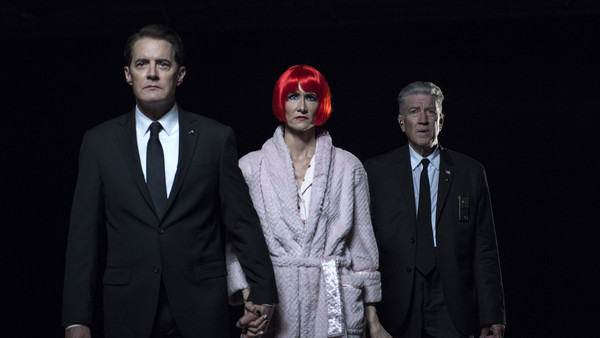
Truly the strangest TV show of the year, Twin Peaks: The Return did the impossible. It picked up a beloved story 25-years later, and set about defying expectations and breaking convention. For almost its entire run, The Return was weird, confusing, brilliant, and on more than one occasion frustrating; Part 17 ensured it was all worthwhile.
David Lynch had been toying with us for 15 episodes, before starting to truly bring things together in Part 16. One episode later and it all became clear, payoffs started happening, and we received an episode that perfectly blended Twin Peaks: The Return with both Fire Walk With Me and the original series fans first fell in love with.
It brings everything together in surprising and thrilling ways, from Lucy's big moment to the dramatic, joyous return of Agent Dale Cooper to the town of Twin Peaks. Good, at least momentarily, seemingly triumphs over evil.
It connects a number of the dots from across all three elements of Twin Peaks mentioned above, bringing back a version of Philp Jeffries, the real Diane, and revisiting Laura Palmer. It's not just a great, gorgeous, and daring episode in its own right, but one built on a quarter-of-a-century of history and desire, and that makes what we see truly powerful.
2. The Leftovers - The Book Of Nora

The Leftovers' final run is one of the most powerful and beautiful TV seasons in recent memory, and it's all perfectly capped off by The Book of Nora, which is its strongest episode and one of the series' greatest.
The final season is all about closure, so by the time we reach The Book of Nora it doesn't even need to feature most characters. It's a remarkable achievement - and a testament to the work of Damon Lindelof, Tom Perrotta and everyone else involved - that the series finale can focus almost solely on Nora - introduced as a supporting character - and be so wonderfully captivating.
Save for a brief, early moment between her and Matt, Carrie Coon is largely left to carry the instalment by herself. She's done great work on two TV shows this year (see also: Fargo), but this is her masterpiece, making you feel and believe absolutely everything the character is going through. It is, of course, gorgeously directed by Mimi Leder, especially in its closing moments.
Anyone hoping for too many answers should've learned better by this stage. Instead what we get is a meditation on life, loss, and ultimately love, with those moments between Kevin and Nora a standout, giving this unique series a touching, satisfying, and incredibly human send-off.
1. Twin Peaks: The Return - Part 8

Showtime president David Nevin promised us one thing about the new season of Twin Peaks: "It's the pure heroin version of David Lynch," and it's almost certain he had Part 8 in mind.
It's an episode difficult to describe; one that laughs in the face of anyone who would dare try and recap or explain it. With Twin Peaks: The Return, Lynch displayed zero interest in playing by the TV rulebook; in this episode, though, he tore it up completely and, after asking for a light, set fire to it.
The instalment opens with BadCoop and the terrifying creatures who come to claim him; it's so dark you can hardly make out what's going on at times, the viewer left deliberately disturbed and confused. That's the normal bit.
From there we're plunged into the darkest recesses of Lynch's mind, as his obsession with 50s America takes us right back to the beginning with the atomic bomb. The sequence could be stock footage (it's CGI), and the rest is imagery that will linger long past the season's end.
With gorgeous black-and-white cinematography and freakish characters, it's a visually and sonically dizzying tale of horror that largely stands alone, yet also - as time would prove - gave a number of surprising answers. It's the most ambitious, avant-garde TV episode of at least the year, and perhaps of all time; hauntingly beautiful and entirely unforgettable.
Gotta light?
What do you think is the best TV episode of the year? Let us know down in the comments.