20 Mind-Blowing Facts You Never Knew About Star Trek

It's life, Jim. But Spock never said this.
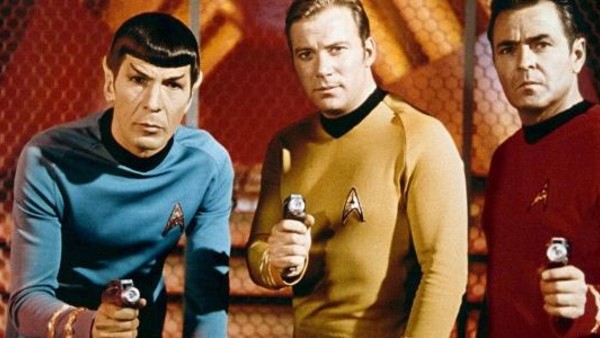
Being a Star Trek fan means having to remember a lot of trivia. For one thing, you have to decide what you call yourself, since followers of the show have been called €œTrekologists,€ €œTreksters,€ €œTrekkies,€ and €œTrekkers,€ with much debate going on with regards to the latter two, which some still find offensive and consider to mean different things. Moving swiftly away from that can of worms/air vent of tribbles, Star Trek: The Original Series €“ as it's come to be known €“ remains one of the most successful, beloved and popular science fiction properties on the planet. It began as a humble series of three seasons, cancelled before it got a chance to get its hooks in. It has since blossomed into the biggest sci-fi franchise in history, earning a cult following in re-runs which lead to four more separate TV series, movies which recently got rebooted and are box office smashes, not to mention countless video games, books, comics, and other spin-off materials. There's a lot out there for a Trekkie €“ sorry Trekker €“ wait, or is it Trekkie? €“ to get their heads around, and no mind meld has worked between a human and a television franchise. You can't possibly know everything. Which is why even the most ardent fan may be unaware of these twenty mind-blowing facts you never knew about Star Trek.

20. Nimoy Invented The Vulcan Neck Pinch
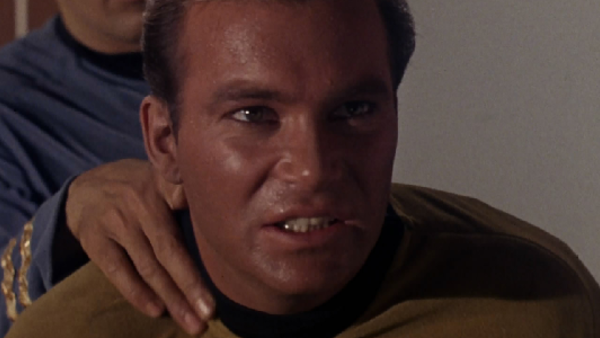
It's since become a cultural meme, name-checked in everyday conversation and Beastie Boys songs alike, but there would be no Vulcan neck pinch were it not for Leonard Nimoy. The actor who played Spock in the original series came up with the novel self-defence move after being dissatisfied with a script. The stage directions in the screenplay for the episode €œThe Enemy Within€ had Spock knocking out Kirk by battering him around the head, an action which Nimoy thought was rather undignified for a character as restrained and pacifistic as his had been up until that point. So he came up with the so-called €œFamous Spock Nerve Pinch€ as it was described in later scripts. He pitched it to the director by explaining that Spock was a graduate from the Vulcan Institute of Technology where he took a number of courses on the human anatomy, so he knew the right place to knock 'em out. Shatner got it straight away, which sealed the deal.

19. There's No Chest Hair In The Future
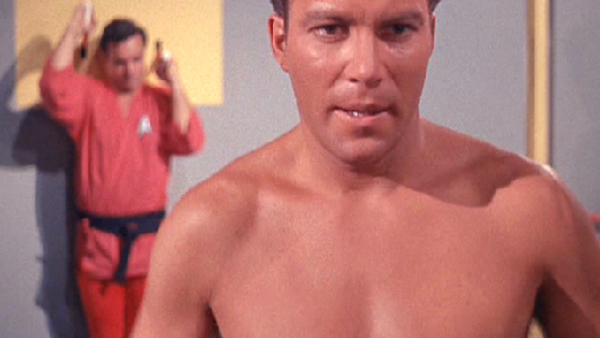
At least, that's what Gene Roddenberry reportedly believed. Whilst many of Star Trek's predictions for the near future have yet to be realised, apparently the Enterprise was rather prophetic when it came to the modern trend of manscaping. Maybe it's even to blame for the culture that expects everyone to be totally waxed and shaved all over... Anyway, that's why William Shatner had to have his chest shaved by the studio's barber any time he appeared topless in a scene, which happened quite a lot in the original series. On the days the actor wasn't feeling fat, at least. Which is why the other hirsute Shatner was smooth as a Ken doll. Roddenberry was of the considered opinion that the utopian future Star Trek was set in would men would have €œlittle or no body hair.€ Kirk had his first big half-naked scene in the episode €œCharley X€, which Shatner tried to veto because he hadn't been to the gym in a while and was feeling self-conscious. He was overruled, and the razor came out.

18. Nobody Ever Says "Beam Me Up, Scotty"

It's arguably become the best-known catchphrase from the show. Whenever the ship's crew needed extraction from an alien world, they simply got in touch with Scotty, who would €œbeam them up€ using a transporter €“ which as created to avoid the special effects costs if they were to show the ship landing on the planets instead. Which is a natty piece of trivia (as is the fact that the original effect was created using a sheet of kitchen foil and some carefully-placed lights before compositing it over the scene), but what's probably lesser know is nobody ever says €œBeam me up, Scotty€ in the original series. It's one of those weird famous misquotes that has somehow filtered through into popular culture despite being wrong, like €œPlay it again Sam€ or €œSam Worthingon is talented€. There's been similar phrases €“ €œScotty, beam us up€ etc €“ but nobody has said the €œfamous€ phrase in any Star Trek movie or series.

17. Spock's Hand Gesture Has Jewish Roots

Much like €œBeam me up, Scotty,€ €œwhere no man has gone before€ and many other tropes and catchphrases from the show, Spock's €œlive long and prosper€ gesture €“ separating the fingers on one hand to make a V-shape €“ has become ingrained in popular culture, to the point even non-Trekkies recognise it. The gesture was actually devised by Lenoard Nimoy himself, who didn't have to look far for inspiration. He just nicked a gesture made by various Jewish denominations, including Orthodox and Conservative, which the actor learned from visiting his grandfather's synagogue as a child. The gesture forms the Hebrew letter €œShin€ which represents €œAlmighty God€, and is usually used by Jewish priests during a blessing ceremony performed during the prayer service. Nimoy improvised the gesture during the filming for the original series episode €œAmok Time€, though he had an easier time pulling it off than most.

16. I Love Lucy Stopped It From Getting Cancelled
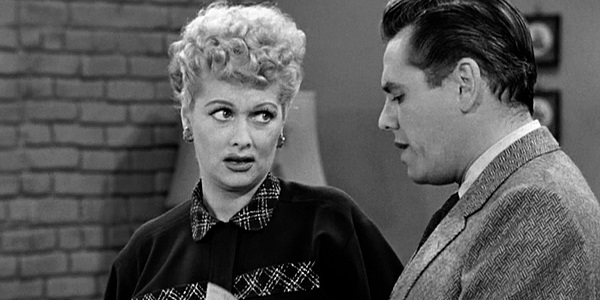
Star Trek was never a particularly popular show. Gene Roddenberry had to fight to get it made in the first place, and that combative nature didn't sit well with the network executives when it was on the air; his behaviour combined with the more €œradical€ aspects of the series further placed him in their bad books from the start. Coupled with some fairly low ratings, NBC was all but ready to pull the plug after the first season. The only reason it managed to last another two? Because of the last minute intervention of actress Lucille Ball, the titular star of the network's phenomenally popular sitcom I Love Lucy. Ball was the head of Desilu Productions, the parent company of the studio that produced Star Trek. She had a soft spot for the show and got it saved from the chopping block...the first time, anyway. Eventually the show got axed after three seasons and 79 episodes. Just enough to get it playing in re-runs, where it found even more admirers.

15. Scotty Invented The Klingon Language...
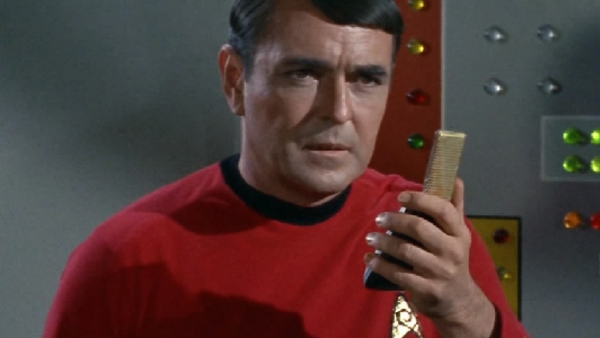
Much like Tolkien's Elvish and George RR Martin's Dothraki, the fictional language of Klingon has been fleshed out so much by Star Trek's various series, movies, ancillary materials and fans who have way too much time on their hands to the point that you can actually learn them. There are people on this Earth who speak fluent Klingon. There are Klingon dictionaries. People have adapted Charles Dickens' A Christmas Carol into Klingon. The majority of the language was created by linguist Marc Okrand, who mainly stuck to Star Trek-specific phrases to do with interplanetary warfare, which make it a little cumbersome for everyday use. Orkand didn't originate the language, however. That honour goes to actor James Doohan, who played Scotty in the original series. In previous appearances the bumpy-headed aliens spoke English, before he came up with the Klingon language for Star Trek: The Motion Picture.

14. ...And He Was Missing A Middle Finger
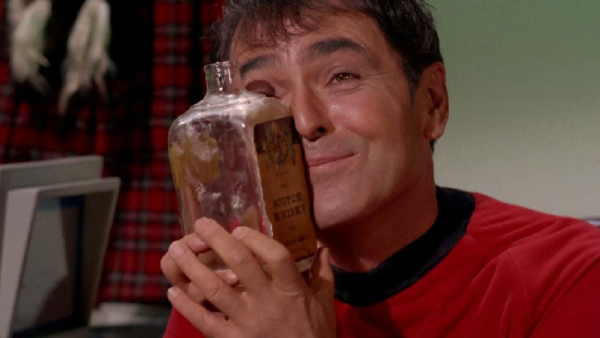
Before you go off on James Doohan for being a huge dork who invented a fictional alien language, though, you should probably bear in mind the guy was an American hero. An American hero who lost his middle finger during battle in the Second World War, meaning all episode of The Original Series and the spin-off movies filmed Scotty in such a way as to conceal it. The story of how he lost that finger, meanwhile, might be even more entertaining and unbelievable than anything Doohan got up to on the Enterprise. A lieutenant in the Royal Canadian Artillery, the young actor was part of the Western Front's D-Day assault. Doohan was shot four times as his regiment headed up Juno Beach, navigating a minefield and German sniper nests. During his time in France he got shot in he leg four times, one in the chest that was deflected by a cigarette case, and the one that took his finger €“ the last of which was friendly fire.

13. Martin Luther King Kept Uhura In The Show

Actress Nichelle Nichols did not have a great time filming the first series of Star Trek. Getting Lieutenant Uhura on the show in the first place was something of a coup, given the dearth of black representation on television and the network's discomfort at there being a strong woman aboard the Enterprise. She even had to deal with Paramount security hurling slurs at her. She was ready to tender her resignation after the first season, and actually handed in her notice. The following weekend she was at an NAACP, where she bumped into an enthusiastic fan who labelled himself as an avid €œTrekker€, dismayed to hear she was leaving. In fact, the fan managed to convince her to stay. Because that man was Dr Martin Luther King, Jr, and he was delighted at the character of Uhura. €œThis is why we are marching,€ he told her. €œWe never thought we'd see this on TV.€ Realising that she was making a difference, Nichols stayed with the show.

12. And Nichelle Nichols Later Worked At NASA
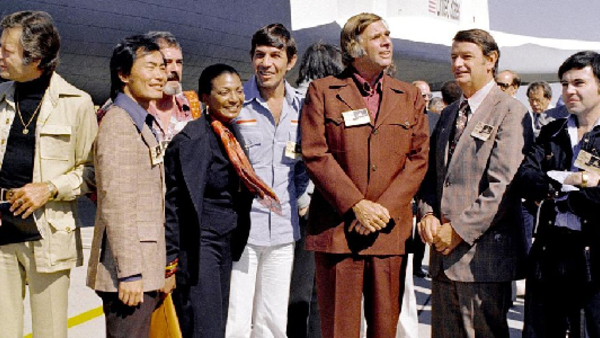
Even after the show finally did get cancelled after three season due to consistently low ratings, Nichols didn't quite give up on Uhura. Sort of. After Star Trek ended the actress took a volunteer position with actual star trekkers NASA, a joint effort with her Women In Motion company to recruit women and minorities to the space programme. Something she had a crazy amount of success with. Because obviously she did. If you were a woman of certain age and Lieutenant Uhura asked you if you wanted to go where no one had gone before, of course you would! Among those recruited were Dr Sally Ride, the first American female astronaut, and Colonel Guion Bluford, the first African-American astronaut. She also recruited current NASA administrator Charles Borden, former Deputy Administrator Lori Garver, and Dr Judith Resnik and Dr Ronald McNair, who flew several successful shuttle missions before dying in the Challenger disaster.

11. Chekov Was Inspired By The Monkees
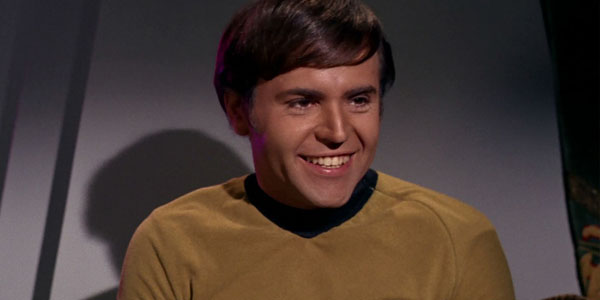
The sixties was the perfect era for Star Trek to get off the ground. It would've been totally different were it created a decade earlier or later, influenced by different media €“ maybe there would've been less Wagon Train and Forbidden Planet in the mix €“ and it allowed the show to comment on contemporary issues. It also, on occasion, was informed by those same contemporary issues. If by issues you mean manufactured bubblegum pop bands meant to cash in on Beatlemania and the British invasion. Right when Star Trek was getting big the Monkees were also on the rise to supertsardom in the US, and Roddenberry was watching. So he created Chekov in the second series, who was supposed to resemble Monkees lead singer and hear throb Davy Jones €“ except, y'know, Russian. And not a singer. He appeared first when George Takei was away for several weeks making a film, and the actor assumed Sulu had been replaced. Still, he and Walter Koenig became lifelong friends.

10. Spock Was Originally Much Weirder

Whilst the addition of Chekov was welcomed, NBC were nervous about Spock from the start. They thought the eyebrows and the pointy ears combined to make Leonard Nimoy looked positively devilish, which just wouldn't fly in good god-fearing sixties America, and those traits were airbrushed out of early publicity photos. It could have been so much worse, however, if they went with Roddenberry's original concept for what the Vulcan would look like. The only reason that idea got nixed was because Nimoy didn't want to spend as much time in the make-up chair, but common sense may also have been involved. Instead of the mostly human-looking second-in-command of the Enterprise audiences came to know and love, Roddenberry initially envisioned Spock as having bright red skin and a plate in the middle of his stomach. He didn't have to eat or drink because the metal plate absorbed energy. Yeah that's...too weird, Gene.

9. Loads Of Old TV Props And Sets Were Used
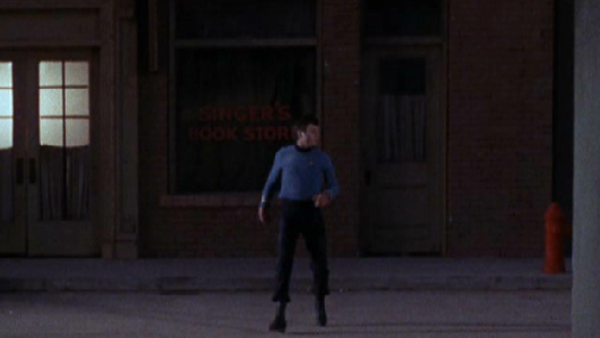
The original series is all the more impressive when you consider Star Trek was made on a minuscule budget. Despite taking place across the universe in the far future, requiring any number of sets, outfits and make up jobs to be provided, the low-rated early series was a big risk for NBC, and so they refused to sink any particularly large amount of money into the show. In fact the production was on such a shoestring that they frequently Paramount[/caption] There was actually a lot more to the uniforms in the original series than you think. The infamously doomed red shirts indicated support services €“ such as communications, engineering, or security €“ whilst the blue tops of Spock and Bones were to identify them as science officers, and the yellow of Kirk, Sulu and Chekov meant they were on the command track. Eventually those outfits became just as iconic as much of the other production design on the series, although in this case it came at a price. Because of that insanely low budget the production was working on, they couldn't afford to get proper costumes provided by union-approved labourers. So instead those iconic outfits were made by what were essentially sweatshop workers, in sweatshop conditions. They were non-union-approved, made overnight and then smuggled in through the back door to be used for shooting the following morning. Not quite the utopian world of Star Trek...

7. Leonard Nimoy's Dad Offered "Spock Cuts
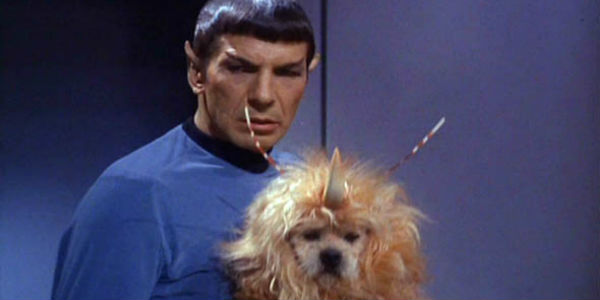
Even when the initial make up and prosthetic plans were abandoned, Leonard Nimoy went through a lot to be Spock. Initially caused great discomfort when pulling off the fake pointy ears he had to wear as the character, and that was even after months of tests to decide on what exactly was the correct level of pointy-ness. One producer even half-jokingly suggested that Nimoy have plastic surgery to make his ears look like Spock's permanently, suggesting it would be less painful than constantly having to tear glue off of the side of his head. Then there was the process of shaving his eyebrows to make them appear more €œVulcan€, and the haircut... ...Well, despite all that, Spock ended up becoming something of an unlikely sex symbol for the young women watching the show. And who better to capitalise on that than Nimoy's own father, a barber by trade, who started to offer €œSpock cuts€ at his salon for young men wanting to replicate the apparently sexy bowl cut.

6. Shatner Is A Terrible Person

Well, you probably did know that already, but you probably didn't know the specifics. Despite it being the reason he's known at all to the wider world, William Shatner has never watched the original series of Star Trek €“ neither has he sat down in front of the films, or anything he's ever made. Which is fitting, because despite trading on his legacy, he rarely honours it. During the making of the show and since he's alienated almost everybody else who he ever worked with on the show, drawing ire especially from George Takei. Why exactly is he such a hated figure? Well, in Takei's case it's because Shatner frequently called for Sulu's lines and overall camera time be cut down in favour of focussing more on Spock. In fact eventually Shatner worked it into his contract that he always had to have more lines than anyone else, and frequently other actors' lines cut or given to him instead. He also demanded his name appear 10% bigger than anybody else's in the opening credits. Now that's some ego.

5. But He Did Make TV's First Interracial Kiss Happen
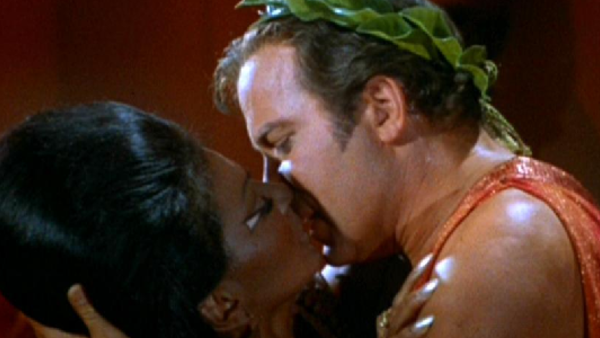
Sure, he was an egotistical asshole, but Shatner isn't all bad. He's consistently surprised the world with his unconventional cover versions of pop classics, and that cameo in Dodgeball was relatively good natured. Plus, who's going to say anything bad about TJ Hooker to his face, huh? Plus when he wasn't busy looking after himself, the Kirk actor managed to put himself out there to make a difference for others. Most people probably know that the first interracial kiss to be broadcast on television was in an episode of Star Trek, but did you know Shatner forced it to happen? The scene in €œPlato's Stepchildren€ €“ where Kirk and Uhura have a quick smooch €“ was shot from several different angles, including some where you wouldn't actually see the lips locking. Shatner and Nichols deliberately mucked up those takes, meaning the network's only usable footage saw the pair clearly making out.

4. Roddenberry Was Sort Of A Drunken Lech
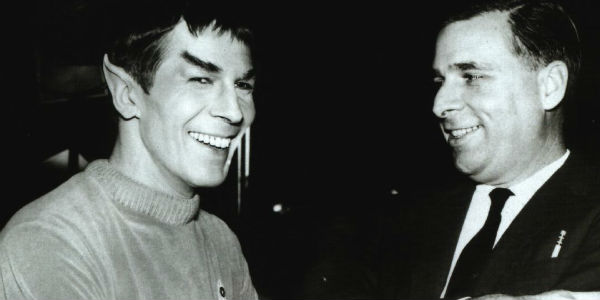
Along with facing constant push back from the suits upstairs at NBC, Star Trek creator Gene Roddenberry appeared to be at war with...well, everybody involved in the creation of the original series. From the sounds of it he was almost constantly doing battle with the first, showrunner John DF Black, along with the show's producers, cast and crew. He was especially unpopular with the various big-name guest writers drafted in to work on the early seasons. Roddenberry was a big sci-fi fan, and so he would routinely comission scripts from masters of the form like Richard Matheson (I Am Legend) and Harlan Ellison (I Have No Mouth And I Must Scream), only to completely rewrite them, much to the authors' dismay €“ and, in Ellison's case, some fairly typical outrage and slander. Not only that, but he apparently did much of this re-writing whilst drunk, which then necessitated further rewrites from other people involved in the production to have the scripts make any sense. Roddenberry usually took these opportunities to try and put more explicit sexuality in the show, which the network almost always censored.

3. Star Dates Don't Mean Anything

Each episode of Star Trek lead in and out with Captain Kirk narrating, supposedly recording his €œCaptain's Log€, and each of those entries would begin with a star date which supposedly placed the events of the episode within a certain time span. Dates that are not based on the current Gregorian calendar that most non-hippies use. It turns out that, at least in the original series, those star dates were largely arbitrary. Seriously, go back and compare a couple, and it seems like episodes that aired within a week of each other were set decades apart. Weren't the crew of the Enterprise only meant to be on a five year mission? The star dates were mainly picked to sound futuristic, with the series set in a far-off future, but later series and movies tried to be more consistent with their dating. Before that happened, however, there was a long-running debate within Star Trek fandom as to what year the original series actually took place, with Roddenberry unhelpfully suggesting it was set in anywhere between 21st to 31st Centuries.

2. There Was Going To Be A Seventies Spin-Off

Eventually, thanks to a cult following built up by endless re-runs in the decades after its cancellation, Star Trek returned first with a series of movies starring the original cast and then, a decade or so after that, with The Next Generation TV series which introduced the show to...well, a whole new generation of viewers. Neither was Gene Roddenberry's first attempt to bring the Enterprise back to screens. There had already been the rather fine animated series, and although the show's creator had been actively involved with that and has gone on the record as saying it isn't canon. Besides, he had plans of his own for a follow-up. Star Trek: Phase II was set to air in early 1978 and follow the original crew (well, Kirk and Bones at the very least, with Shatner and DeForest Kelley interested in reprising their roles) on another five-year mission. The twelve episode series would've aired on Paramount's mooted Television Service channel, which never actually happened. Instead, the pilot got turned into Star Trek: The Motion Picture.

1. The Theme Song Has Secret Lyrics

Not content with producing, re-writing the lion's share of the original series episode and creating Star Trek in the first place €“ along with trying to get his girlfriend a recurring role, casting her in the pilot only for the network to fire her €“ Gene Roddenberry demanded even more of the Enterprise-shaped pie. Which he did. By ensuring he got 50% of any royalties from the theme song. Now, Gene Roddenberry is many things, but he is not a composer. And if you check the end credits, you'll see that the iconic, operatic orchestral theme was actually the work of Alexander Courage. And yet Roddenberry gets half of the money whenever the show airs, or the theme is used elsewhere. How did he swing that? By writing lyrics for Courage's theme song. Except he made those lyrics so silly and borderline un-singable that they never got used, but his contract with the network meant he got credited as co-composer of the theme anyway. Not a fact that Courage was happy about. Still, if you want to try singing them at home, you can find Roddenberry's lost lyrics here. If you really want to, at least. They're no Rocket Man... Beyond The rim of the star-light My love Is wand'ring in star-flight I know He'll find in star-clustered reaches Love, Strange love a star woman teaches. I know His journey ends never His star trek Will go on forever. But tell him While he wanders his starry sea Remember, remember me.

Contributor
Contributor

Tom Baker is the Comics Editor at WhatCulture! He's heard all the Doctor Who jokes, but not many about Randall and Hopkirk. He also blogs at http://communibearsilostate.wordpress.com/