20 Mind-Blowing Facts About Twin Peaks

Steven Spielberg nearly did an episode. ET would've fitted in at the Black Lodge...
It looked like that show you liked was coming back into style. David Lynch looked downright prophetic when it was announced that Twin Peaks would finally be making a return to our screens in 2016, 25 years after the show was unceremoniously cancelled, ending on one of the biggest cliffhangers in television history - coupled with a promise from one of its characters, in one of many surreal scenes in the show, that she would see us again "in twenty five years". Spooky, right? Turns out that Laura Palmer was mistaken in that instance, though. Well, probably anyway. Both new fans (who've picked up the show thanks to Tumblr's propensity for borrowed nineties nostalgia) and the original viewers were equally dismayed when, this week, it turned out that David Lynch had left the project, after Showtime apparently wouldn't commit to a necessary budget for the eight episode miniseries they'd announced. What constitutes a necessary budget to Lynch remains as much a mystery as...well, anything involving Lynch, but even with his cast rallying around him, it may well turn out Twin Peaks continues to be marooned in the Black Lodge. No matter €“ we still have the original series, with its quirky set of characters, weird sense of humour, slightly naff sub-plots and that supremely dark ending. A new series might've spoilt that. But if it's new stories in the Northwest Passage that you're clamouring for, don't worry €“ there are still plenty of mysteries in that small lumber town than who killed Laura Palmer. And you might not have even known they existed until now. From secret origins to celebrity fans, here are twenty mind-blowing facts you never knew about Twin Peaks.

20. It Was Inspired By Frost And Lynch's Failed Marilyn Monroe Show
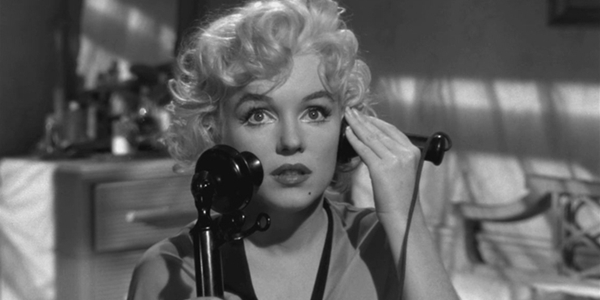
€œThere are two things that continue to trouble me, and I€™m speaking now not only as an agent of the bureau but also as a human being,€ says FBI Agent Dale Cooper in one of his trademark monologues that would go on to epitomise the character, this particlar one introducing him and the show's primary concerns. €œWhat really went on between Marilyn Monroe and the Kennedys, and who really pulled the trigger on JFK.€ On the surface, it makes sense for a distrust of authority and penchant for conspiracy theories €“ especially when they concern people in power whose public images were squeaky clean compared to their murky private lives €“ to come through in Cooper from the very beginning. Those are qualities that would lead him to the darkness beneath Twin Peaks. But the real reason for its inclusion was that Twin Peaks co-creators had previously worked together on an (eventually unmade) Marilyn Monroe biopic, titled Goddess. Many of the themes and characterisations they had cooked up for that project wound up in Twin Peaks, with the tragic death of smiling blonde prom queen Laura Palmer echoing the troubled private life and death of the actress.

19. The Pilot Was Shown In European Cinemas (And Had An Ending)
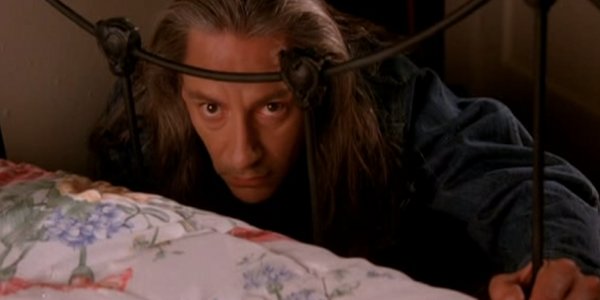
In what's actually standard practice the Twin Peaks pilot was closer to feature-length than the hour of television it would take up in the majority of its run (47 without commercial breaks). In fact, it surpassed even the ninety minutes most pilots clock up, coming in a hair over two hours. This meant that ABC would air the pilot as a TV movie if they didn't pick it up as a series, and during most re-runs when it did pick it up they split it into two hour-long parts. But in the time between producing the Twin Peaks pilot and actually commissioning the series, it was released elsewhere. Including European theatres. Along with a home video release in the US and elsewhere that contained the full two-hour pilot, Twin Peaks actually hit the big screens years before Fire Walk With Me. And it had a totally different ending. Frost and Lynch reluctantly gave an answer to €œWho Killed Laura Palmer?€ fairly early on in the show's run, despite not being 100% who the perpetrator was themselves. They had to scramble to explain the murder in this feature-length release which used an ending that appeared nowhere in the show, where Killer BOB was an actual person who was responsible for Laura's death, gunned down by Cooper in the final reel.

18. BOB Appeared By Accident

David Lynch is known for playing fast and loose with his projects, never having a set path when he starts off and allowing improvisation and sudden inspiration to guide him. It works for the dream logic of his films but, if it appears that it would be a little off with the structure of a serialised murder mystery TV show €“ well, you'd be wrong, because he did it there too. The supernatural mythology of Twin Peaks that slowly emerged over its two seasons appeared to have some logical, historical basis and sound planning behind it, and it mostly centred on Killer BOB €“ the spirit that allegedly infected Leland Palmer and drew him to kill his daughter, amongst others (erm, spoilers for 25 years ago?). That's both disputed and refuted by Fire Walk With Me, but there's no denying BOB was a key element of the show. Which is impressive, considering he wasn't originally planned to appear at all. In fact, BOB actor Frank Silva was just the show's set dresser €“ but when his reflection appeared by accident in a mirror in Laura Palmer's room during a shot, Lynch kept the blooper in and worked it into the story, with Silva's interesting looks and intense expression being the kernel from which the supernatural side of Twin Peaks developed.

17. The One-Armed Man Was Also A Late Addition
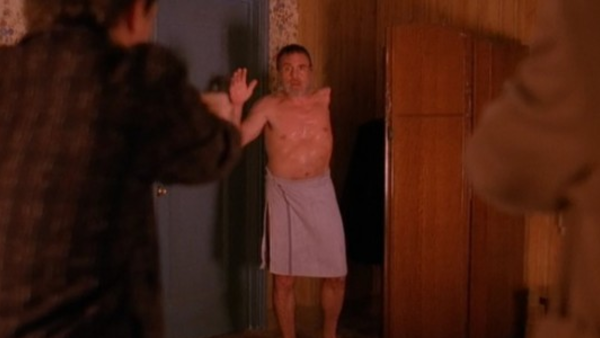
It was in this ending that the One-Armed Man recited the infamous Fire Walk With Me poem, which wound up becoming an important part of the shows mythology. Originally the One-Armed Man was simply meant to half a brief walk-on role, as a tongue-in-cheek reference to the old Fugitive TV series where Dr Richard Kimble was framed for the murder of his wife with a similarly disabled man. This One-Armed Man, too, was named Gerard. As it happens, David Lynch was reportedly so impressed by the performance of Al Strobel in the role of Gerard/MIKE €“ especially his recital of the poem in that filmed-for-Europe movie ending €“ he decided to make the character integral to the series mythology and give Strobel a recurring role, much in the same way he did with BOB. From there, the One-Armed Man became almost as integral a part to the supernatural side of Twin Peaks as BOB and The Man From Another Place, with it implied that the rather short resident of the Red Room is somehow an embodiment of Gerard's missing limb €“ he has stated €œI am the arm€ on numerous occasions in his signature backwards-then-forwards fashion. Gerard/MIKE wound up being so important in the overarching story of Twin peaks Strobel returned for Fire Walk With Me.

16. Washington Is Important

The original plan was for Twin Peaks to shirk the woods that later on made for such a compelling and thematically apt visual. €œLong before we moved into the Pacific Northwest, we were playing around with this idea of the plains and a place far away from the world,€ said co-creator Mark Frost, with the series at first planned to be set in North Dakota, with a name to match. The Northwest Passage move happened further into pre-production. And it's a good thing it did, because Washington state proved to be a crucial setting in many ways. Whilst Sheriff Harry S Truman is technically named after a local resident Lynch was friendly with, not the US President, they still played up to the association with the White House resident with his €œTHE BUCK STOPS HERE€ quote under some moose horns in his office (which President Truman said). Meanwhile Dale Bartholomew Cooper shares his last name and first initials with DB Cooper, a somewhat more unsavoury character. Cooper was mysterious hijacker who disappeared after demanding a massive pay-off from the government for taking a plane hostage, before jumping out of it over the Washington-Oregon borderlands and never being seen again. That was in 1971 and yes, he has still not been located, nor has the very real money that was handed over to him.

15. Madeline Ferguson Was Invented To Keep Sheryl Lee Around
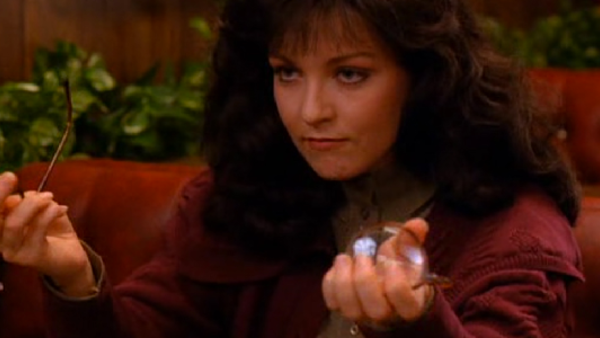
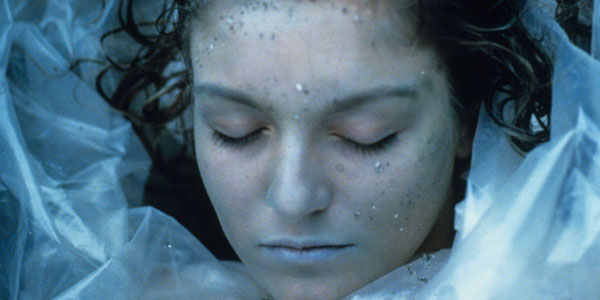
Whilst Laura Palmer was the character whom the whole series revolved around (at least at first), she didn't actually appear all that much. By virtue of the first episode opens with her murder. Actress Sheryl Lee was on board to film her uncovering, wrapped in plastic, along with appearances in that home video seized as evidence, but mostly he appearances in the show boiled down to that one prom photo of her. Which, FYI, was Lee's actually prom photo. Lynch thought it a shame that an actress of Lee's caliber would be so underused by the show, once he realised how good she was, and so he devised a way to keep her around. Which is how Laura Palmer's cousin, Maddie Ferguson, was cooked up €“ she wasn't originally planned to appear at all. It should be noted that Lynch's personal affinity for Lee as an actress and Maddie Ferguson as a character was reflected in her back story: she's saidt to be from Missoula, Montana, which is also David Lynch€™s hometown. Which probably isn't a coincidence. Lee later reprised her role as Laura at greater length for Fire Walk With Me, the movie spin-off.

14. The Back Lodge Pattern Is Everywhere
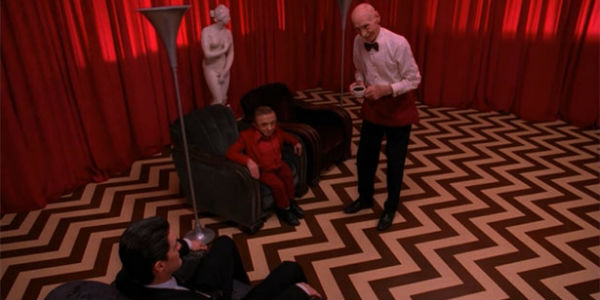
The Black Lodge and, specifically, the Red Room that sits at the centre of this bizarre purgatorial netherworld that lies beneath Twin Peaks is one of the most visually arresting images in a show not exactly wanting for them. Josie getting trapped in the knob of a drawer notwithstanding. The draped red curtains on all sides, the bashful nude marble statue, the Man From Another Place sat on a couch in the middle of it all. And, of course, that famous black-and-white zig-zag pattern across the floor, making for any number of crossed eyes and visual trickery. Whilst nowadays it appears on bedspreads you can by from Wilkos the pattern is actually a favourite of Lynch's, having previously used it for a carpeted floor in his feature film debut Eraserhead. If you thought Twin Peaks was weird, you should never ever watch Eraserhead, because it will make you very sad and very confused and very scared about everything. But especially babies and Philadelphia. Meanwhile the pattern appeared elsewhere in Twin Peaks, most importantly on Leland Palmer's jacket during one of his many sad slow dances with his dead daughter's prom photo €“ potentially an early hint at his (and BOB's) involvement in her death.

13. Isabella Rossellini Was Supposed To Play Josie
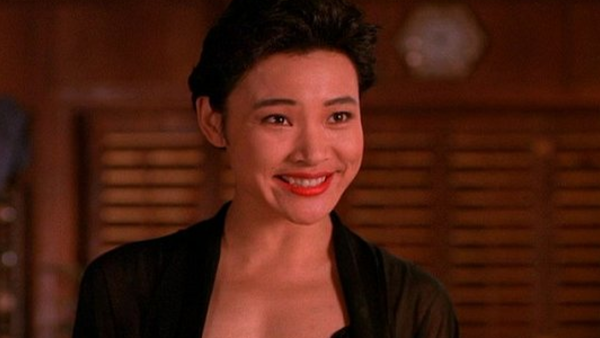
Much as he's a striking visionary whose public persona seems to be almost as much a lolloping eccentricity as his work (or is it...?), David Lynch still has something in common with your garden variety classic Hollywood guy: he's a bit of a dirty old man. As certain scenes in Blue Velvet and Mullholland Drive will attest to, he's not averse to putting some bare female flesh on the screen €“ and the more €œout there€, the better. He also has a habit with hooking up with the female stars of his films, with one of the longer relationships in his life €“ Lynch has been married umpteen times €“ being with Isabella Rossellini, who played the kidnapped and blackmailed dom to Dennis Hopper's psychotic, infantilised sub in Blue Velvet. She was supposed to be in more his stuff, though. In fact the part of Josie Packard was conceived with Rossellini in mind. It was only once she and Lynch broke up that she departed the project, and the Italian heritage of the character was thrown out for Chinese as Joan Chen was cast in the role instead.

12. It Was A Family Affair

The interplay between €“ and dark secrets that lie beneath €“ the supposedly-perfect all-American nuclear family is an important recurring theme in David Lynch's work, but especially in Twin Peaks. Whereas most of the families in the show are dysfunctional at the very best, and are murdering at the very worst, all the families that appeared throughout the show's production were actually quite friendly. And boy was there a lot of them. Lynch enlisted his daughter Jennifer to write the tie-in book The Secret Diary of Laura Palmer, with co-creator Mark Frost getting his brother Scott to pen The Autobiography of FBI Special Agent Dale Cooper. On the show, meanwhile, Kyle MacLachlan€™s brother Craig worked as a production assistant and appeared on-screen as Windom Earle€™s first murder victim in the second season. The grandson of one of Laura Palmer's Meals on Wheels clients, with his hands full of creamed corn, was played by Lynch€™s son, Austin Jack. Meanwhile Frost€™s father, Warren, played town doctor Will Hayward, Leo was played by casting director Johanna Ray€™s son, and producer Robert Engels' wife played Trudy the waitress,at the Double R diner. Meanwhile Jack Nance (Pete Martell) and Catherine Coulson (The Log Lady) were exes, having been married from 1968-1976. Awkward.

In this post: 
Twin Peaks
 
Posted On: 
Contributor
Contributor

Tom Baker is the Comics Editor at WhatCulture! He's heard all the Doctor Who jokes, but not many about Randall and Hopkirk. He also blogs at http://communibearsilostate.wordpress.com/