4 Ups And 5 Downs For Star Trek: Strange New Worlds 3.4 — A Space Adventure Hour
A Space Adventure Hour is some kind of murder mystery on another kind of Star Trek.
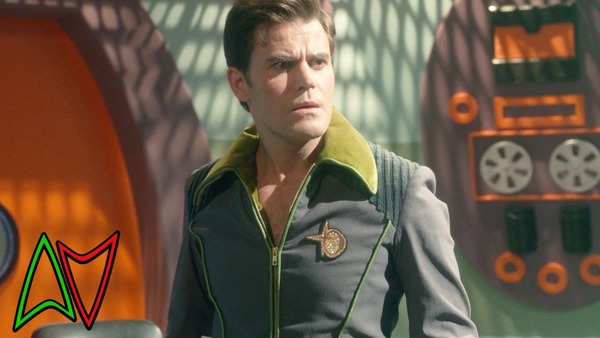
Oh how we wanted to love it, hyped as it was in the months before in interviews, in trailers, by pop-up, and even with a full showing at San Diego Comic-Con. This was the 'murder mystery'. This was the 'holodeck episode,' both before and after there were holodeck episodes.
A Space Adventure Hour should at least be praised for trying to do something innovative with the old as new again. In the end, it wastes both of its promising premises, preferring instead to become an ill-advised, at times uncomfortable, parody of Star Trek itself. A Space Adventure Hour feels more like a comedy skit made into an episode, interspersed with enough 1960s kitsch to restock Carnaby Street.
The episode can't seem to decide whether to lambast or to sing the franchise's praises. Amongst the meta-critiques and pursed lips, we're treated to a lengthy speech about how inspiring 'The Last Frontier' (i.e., Star Trek) is. All the while, the episode fails to realise that commentary on social commentary is not social commentary, and that Star Trek about Star Trek is also not Strange New Worlds.
10. DOWN — Cold Open, Thin Ice
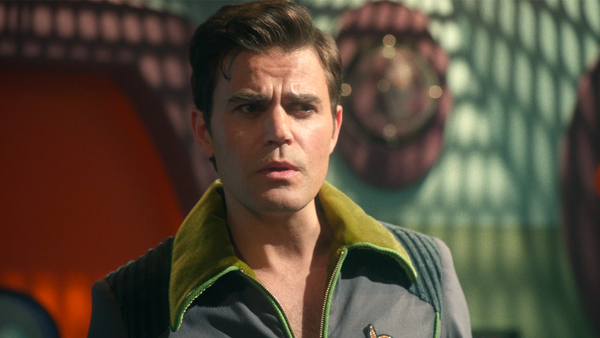
A good Star Trek cold open can shock, even baffle, its viewers in anticipation of a little explanation. The start of Tinker Tenor Doctor Spy was memorable for its reworded rendition of 'La Donna è mobile'. In A Mirror, Darkly surprised from the beginning with a shotgun at First Contact. In the first few minutes of its previous episodes, Strange New Worlds itself has dared to crossover with animation and turn the page on a subspace songbook.
The cold open to A Space Adventure Hour defies classification. Rarely, if ever, has anything in Star Trek been quite so metatextual without providing an ounce of context until later in the episode. 'The Last Frontier' (a television space adventure hour) is the TV show within the TV show. A parallel to that kind of mise en abyme worked brilliantly in Far Beyond the Stars. Here, it is so eerily self-referential as to be self-evidently for the sake of it.
The opener to A Space Adventure Hour is not subtle. Just how the holodeck managed to know the production history of Star Trek quite so well throughout, along with the mannerisms and proclivities of its actors and producers, is a mystery bigger than 'who killed Tony Hart'. The 'simulation hypothesis,' or even the writer's dream, doesn't quite cut it in this case as a form of internal consistency. And besides, there is already one way to talk about Star Trek in Star Trek: make an episode of Star Trek.
All in all, A Space Adventure Hour would have done far better without its opener (and ending, moreover). The introduction narrated by La'An in her log post-opening credits would have sufficed.
9. UP — The Many Space Science Of Technobabble
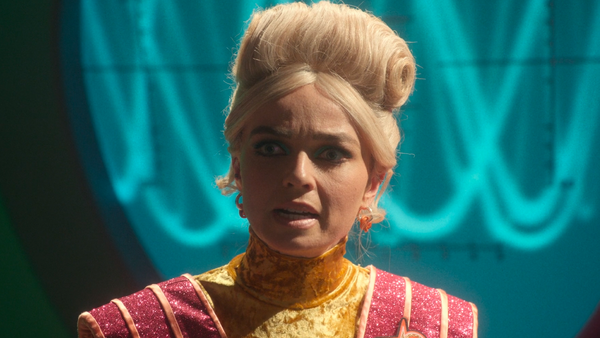
Though out of place, the cold open to A Space Adventure Hour wasn't completely unsuccessful in its aims. It did provide funny satire on one element of Star Trek (and other sci-fi) — technobabble — bane of those who have to learn it, loved and loathed in equal measure by fans. You could almost feel the actor half of director Jonathan Frakes reaching out from across the room.
"We need it [our brain cells], for many science reasons" was about as pointed a line as you could possibly get, read with as many layers of sincerity and deadpan humour by Jess Bush as Adelaide Shaw. "Nuclear lasers" and "photonos beams" were also a nice touch, making about as much sense as the fictional 'real' thing.
In retrospect, there is a certain terminological strangeness to the early episodes of Star Trek: The Original Series in particular. That is, of course, in part because terms were still being invented and re-invented within the confines of a 1960s lexicon. Technobabble's not a science; it's an art.
8. DOWN — Abbreviated Abbreviations
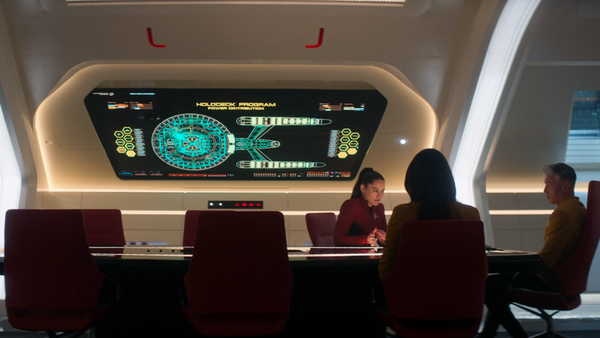
There is an obvious, if often slight, difference between terminology and technology. Having a holodeck in the mid-23rd century is not the problem. Calling it a 'holodeck' is.
Pike: "The device we're going to be testing is called the… Recreation Room?"
Una: "Holodeck, for short. Sounds better."
That is one hell of a lexical leap — the most curious (hypothetical) etymology:
'Holodeck,' mid-23rd century Federation Standard: abbreviation of 'Recreation Room,' from 'recreation': late Middle English, via Old French from Latin recreation(n-), from recreare 'create again, renew,' + 'room': Old English rūm, of Germanic origin… and so on and so forth. (Source: Oxford English Dictionary/Oxford Dictionary of Federation Standard)
Of course, the point was not to provide any kind of cogent origin story. The point was to get to the word 'holodeck' as quickly as possible. 'Holo' + 'deck' might seem like the most obvious combination. In reality, it only "sounds better" because we've been hearing it for nearly 40 years.
On the whole, A Space Adventure Hour does a good job of anticipating the evolution of holodeck technology. As for the terminology, instead of 'short cut,' we'd have preferred a more circuitous route.
7. DOWN — Meta Data
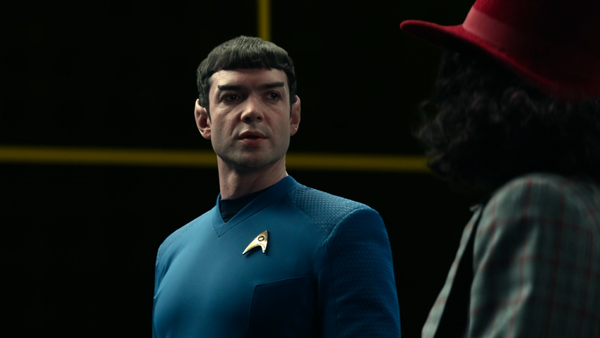
It was La'An's task this week to "put [the holodeck] through its paces […] [To show] it could work under genuine, rigorous circumstances". Surely this was the chance for Star Trek: Strange New Worlds to throw the holographic kitchen sink at the multi-genre approach for more than just a murder mystery? Instead, the same causes produced the same effects. The same ideas caused the same ideas.
After the rush to name things, the hurry to paint the walls yellow. As if the aped design of the prototype holodeck grid weren't enough, La'An's instruction to the computer was more than just familiar. "Create a new mystery that I will find challenging to solve" sounds rather similar to "create an adversary capable of defeating Data".
Holo-Spock was hardly holo-Moriarty, but, compounding things, "the game [was] afoot," as a certain "ancestor" would write. Sir Arthur Conan Doyle did not, in fact, coin the phrase for his detective. The first recorded use of "the game is afoot" and "the game's afoot" is in Shakespeare's Henry IV, Part I and Henry V respectively. In Star Trek, the less than Holmesian General Chang uttered the phrase in Star Trek VI: The Undiscovered Country. More to the point, so did Data in Elementary, Dear Data.
Plot points and episodes also converged outside of the holodeck. For holo-Moriarty's second appearance in Ship in a Bottle, the Enterprise-D was at the Detrian system "to observe […] the collision of two planets" into a star. In A Space Adventure Hour, the Enterprise 1701 was at the "Kitolian Belt" to study the collapse of a neutron star.
6. UP — Neutron (Guest) Star
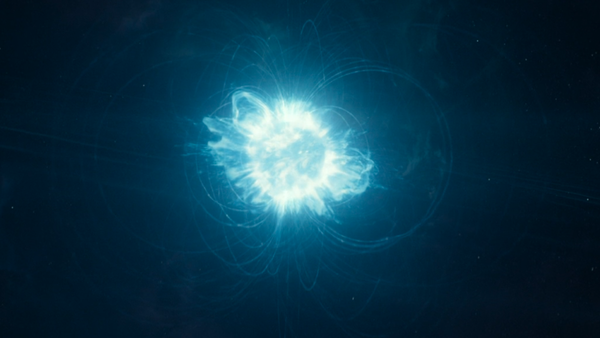
The neutron star was a side character in A Space Adventure Hour. The existential threat it posed by way of gamma burst was quickly avoided, all too quickly. A little rerouting of power here, some rapid acceleration there from the suddenly reinstated Ortegas, and ship and crew were saved. That is not a DOWN, however.
On the contrary, this is an UP for the visuals of the star itself. Neutron stars have been seen in Star Trek before, though never this close. A Space Adventure Hour, much like Star Trek: The Next Generation's Evolution before it, was also scientifically accurate in its depiction.
Reaching temperatures of thousands upon thousands of degrees Kelvin, neutron stars are typically blue-white in colour like the one in the episode. They also emit gamma-ray bursts. As per the episode, a neutron star may also collapse into a black hole if it accretes enough matter from, or collides with, a companion star.
5. LATINUM UP — The Reel World
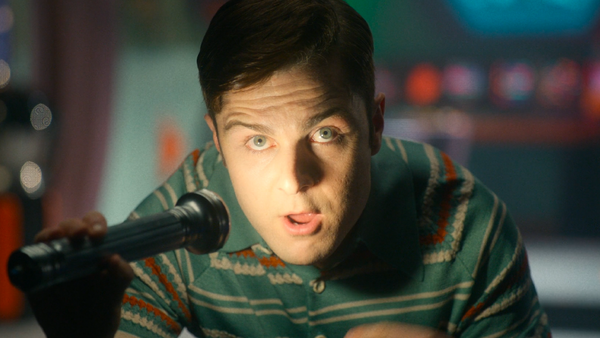
It's two LATINUM Ups in a row for Martin Quinn, and also, this week, for Celia Rose Gooding. Quinn continues to play the younger Scotty without a false note. Rose Gooding proves her talent once more, playing the diametrically different Joni Gloss and Uhura. As in previous weeks, Quinn delights with a range of emotions in A Space Adventure Hour. At times, we find ourselves laughing. At others, we are deeply moved.
The scenes outside the holodeck are by far the most interesting of the episode, as Scotty rushes to keep program and Enterprise running. His set of 'hypotheticals' to Uhura, who plays along whilst keeping things lovingly real, make for a welcome counterbalance to the far less subtle comedy elsewhere in A Space Adventure Hour.
It is also Uhura — the "hypothetical hero" — who comes up with the idea to communicate with La'An inside the program. Scotty's then self-insertion onto the film reel for The Last Frontier is one of the best executed moments of the whole piece, and a clever nod to similar methods used in previous holodeck episodes such as Projections, and to a certain degree, Worst Case Scenario.
4. UP — Moon Shine
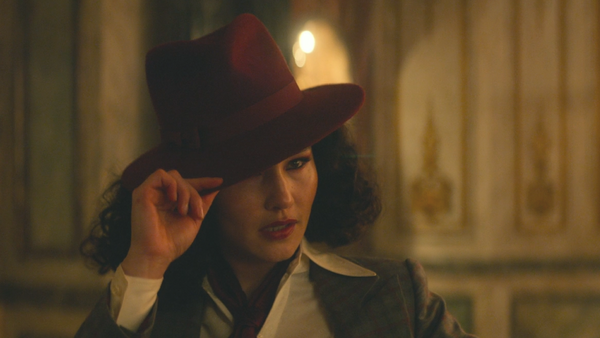
In amongst all the holographic eccentricity, at least one person was having a good time. La'An fully embraced the role of Amelia Moon, as did Christina Chong. Even when the safety protocols malfunctioned, the chief of security took it all in her stride. If you've fought flesh-and-blood Gorn and survived one of their 'breeding planets,' a few holograms are hardly going to be a bother.
Chong deserves as much credit here as her co-stars mentioned above. Not only does she play detective in a different accent, she also dances (again) with dialogue, and delves back into La'An's romantic side. However we might feel about the Spock-La'An romance itself moving forward, we certainly can't fault the acting.
If the holodeck had stuck around, it would have been fun to see more (less meta) adventures with Amelia Moon.
3. DOWN — Holo-Whodunnit
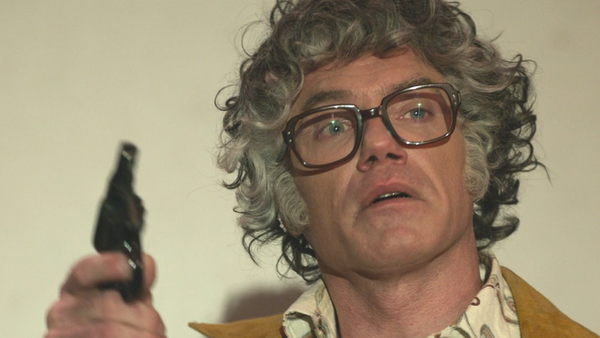
Technically speaking, A Space Adventure Hour never solves its original murder mystery. At the end of the holoprogram, La'An only explicitly links the deaths of Sunny Lupino and Lee Woods to holo-Spock. If we accept T.K. Bellows' statement — "I didn't kill anybody!" — then who did kill Tony Hart?
The convoluted answer is still holo-Spock. At first glance, holo-Spock couldn't have killed Hart. He was there with La'An/Amelia Moon as the program was activated, and Hart was dead from the get-go. Never mind means or motive, holo-Spock didn't seem to have a moment's opportunity.
That is unless the game was afoot before the game was afoot. Similar to the holodeck within the holodeck of Ship in a Bottle, holo-Spock was always the program within the program. He was already the murderer of the computer's new Moon mystery, and La'An/Moon's 'partner,' made to appear like the real Spock, at the same time. It is little wonder La'An only (half) figured things out at the last minute!
Perhaps all that is far more clever than we're giving it credit. Perhaps it is the stuff of headaches and loose ends.
2. DOWN — Pastiche, Parody, Or Just Taking The Piss?
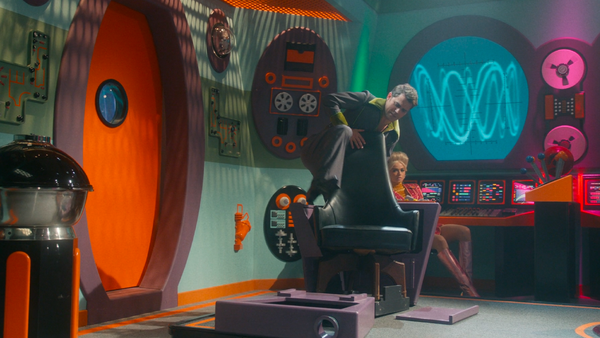
This week, you'd be forgiven for thinking you were watching the wrong TV show. Both opener and closer would have made for great sketches on Saturday Night Live (SNL). We were almost waiting for Bobby Moynihan's 'Spocko' to walk across the screen shouting, "now, THAT's a Star Trek!" or for Paul Wesley as Maxwell Saint to tell someone to "get a life".
So wrapped up in its parody of Star Trek, A Space Adventure Hour seemed to forget what it actually was — Star Trek. Far from pastiche of 1960s sci-fi more widely, the episode, at times, descended into overt, unfunny mockery of The Original Series in particular, of its creators, and stars.
The faux outtakes/behind the scenes of 'The Last Frontier' at the end of A Space Adventure Hour provided some egregious examples. Wesley as Saint was now partly free to improv his way through a series a 'Shatnerisms,' hyper-exaggerated by their very nature, but never quite so out of place.
"I was trying to get my leg over" was more than just a nod to the 'Riker manoeuvre'. Ending the entire episode on a series of grotesque 'pursings-of-the-lip' as the TOS music played was then neither pastiche nor parody. It was, quite simply, just taking the piss.
1. Cetacean Observations
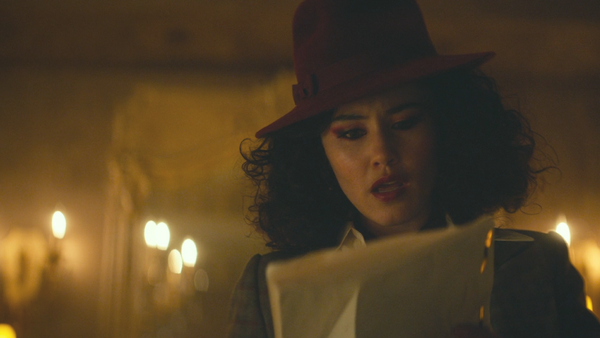
The demands of meta meant there was a lot of Star Trek in Star Trek this week. 'The Last Frontier' rather speaks for itself. The series' creator, T.K. Bellows, was obviously Gene Roddenberry, or E.W. (Eugene Wesley) Roddenberry, if you prefer, as he was cited on the front cover of 'Incredible Tales of Scientific Wonder' in Far Beyond the Stars. "Does no one here care about my vision?"
Sunny Lupino was Lucille Ball, without whom we wouldn't have Star Trek. 'Lucille' (from Latin via French) means '[of] light,' hence 'Sunny'. 'Lupino' is 'lupine' is 'wolf,' which may or may not be a reference to Lucy Cries Wolf, episode of I Love Lucy.
Before his turn as McCoy, DeForest Kelley was most well-known for his roles in several Westerns. Lee Woods was, then, "an actor, not a doctor," also working on a project of the genre. That's not to forget Star Trek's own 'Wagon Train to the stars' premise.
"A Space Adventure Hour" and/or "all that with weekly space adventures?" was reminiscent of NBC's on-air announcement at the end of The Omega Glory on 1st March 1968 (cited in The Making of Star Trek):
We are pleased to tell you that STAR TREK will continue to be seen on NBC Television. We know you will be looking forward to seeing the weekly adventure in space on STAR TREK.
The network had listened to fans who had come out in droves to save Star Trek from cancellation.