6 Reasons Farscape Is An Underrated Classic

A couple days back, the rumor that Space Jam 2 was happening hit the internet, creating massive shockwaves amongst those still blinded by 90's nostalgia. However, around the same time, another rumor popped up for a slightly more niche audience - Farscape, the Australian Sci-Fi TV series from the Jim Henson company was under consideration for another outing (most likely in TV movie form). Have you never heard of Farscape? If not, shame on you! Chronicling the story of lost U.S. Astronaut John Crichton, this is a show that was way ahead of its time back in 1999, boldly going into dramatic and storytelling waters that few science fiction shows ever go even today. Developed by Rockne S. O'Bannon and David Kemper, Farscape ran from 1999 - 2003, at which point it was abruptly cancelled by the Sci-Fi channel (before it was known as "Syfy") at the end of its fourth season. Fans were very displeased at this development, and eventually Brian Henson (with much financial support from wealthy fans) acquired the rights to make a 3 hour miniseries to wrap the show up. After all this is said and done, though, Farscape is a relatively small entity, even when compared to shorter lived shows like Firefly (a show of comparable tone and quality that followed a similar pattern in cancellation and revival). To hype everyone up for this potential movie venture from Henson & company, I have compiled a list of reasons why Farscape is one of the greatest science fiction series' no one has heard of. Enjoy!

6. John Crichton Is A Brilliant Audience Surrogate
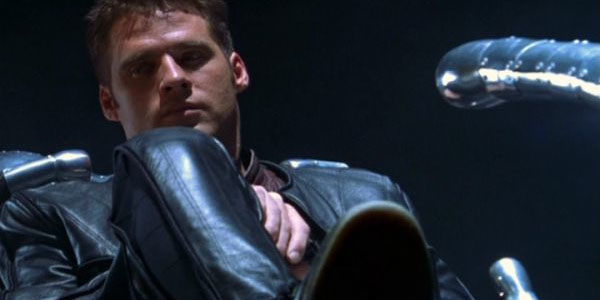
Every science fiction show needs an audience surrogate - a character who is as out of his/her depth as the audience themselves, allowing the show to break them in slowly, and introduce the world they live in. The protagonist of Farscape is John Crichton, an astronaut who, while very smart, is in way over his head from minute one, when a wormhole opens up and throws him into this strange corner of the universe. At first, Crichton comes off as a little too "everyman-y", as he stumbles from one side of the universe to another throwing an impressive array of pop-culture references at aliens that have no reason to understand them. Throughout the course of the show, he grows to become more and more at home in this alien environment, but he always remains emotionally tied to earth, ensuring that the audience never loses the human element. Ben Browder is exceptional in this role (you may know him from a recent appearance in Dr. Who, "A Town Called Mercy"), making a guy who is one of humanity's smartest and most capable pilots seem like an idiot compared to all the advanced alien races he encounters. His performance is so down to earth and measured, that when the show pushes him to the brink (something that happens more and more frequently over the course of four seasons), it is painful to the audience as well.

5. It Has A Truly Unique Aesthetic

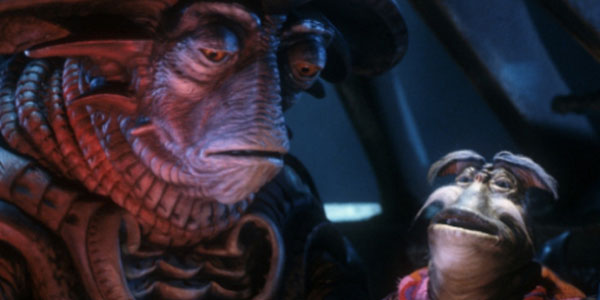
How is it that science fiction has become generic as of late? Lens flares and chrome industrial complexes seem to be what the modern conception of science fiction television has become. Maybe that is a reflection of our growing cynicism toward the future, or maybe just ironically coincidental creative choices, but it has been a long time since a science-fiction show as eye-poppingly unique aesthetically has graced Television. The most obvious aspect that makes this show's aesthetic stand out initially is the puppetry. Two of the show's series regulars are fully manipulated puppets, and it is a credit to the Jim Henson company that they feel as alive as the human characters. From the two regulars to a rotating door of fascinatingly designed and meticulously controlled creatures, the show reaches from live action to puppetry and back, touching on all the things in between - especially very effective uses of prosthetics. This reliance on practical creatures minimises the use of CGI, so that the show holds up very well visually after so many years (a VFX wide shot here and there may look phony, but the editing sells it for the most part). Also, this is a show that is very unafraid of exploring genre with its editing and direction, very ahead of its time in the science-fiction sphere of Television. Episodes had a ridiculously diverse pool for visual and storytelling inspiration - ranging from Don Quixote and The Twilight Zone. And somehow the show keeps the tone consistent between this genre hopping madness - it helps to have the main cast already be outsiders in their own world, so that departures from normalcy are just more examples of the universe screwing with them.

4. It Was Honest About Alien Sexuality
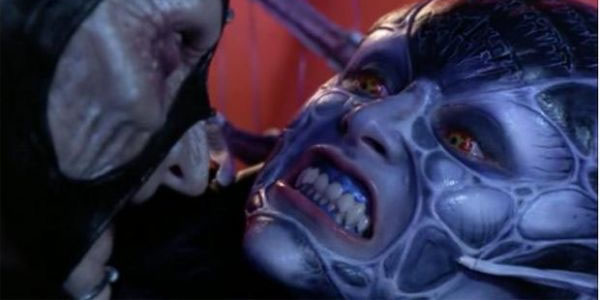
True, there has never been a science fiction equivalent of Game of Thrones. Science Fiction and sexuality has been something very much left in the shadows - a dangerous can of worms few writers want to play around with. Farscape is no HBO program, but its up front attitude toward Alien sex is a surprisingly refreshing element in this universe. Sure, Captain Kirk was out screwing exotic Aliens long before O'Bannon had even conceived Farscape, but Star Trek always steered clear of making those little escapades the focus of their show. Farscape, however, wholeheartedly embraces the weirdness that one will run into with Aliens and their sex lives (within reason, of course - as I said, it is no HBO program). Showrunner David Kemper was once asked by a fan why he chose to incorporate Sex into this space opera. His response was, "Can you imagine being stuck on a spaceship for years without it?" A simple answer, but one that makes Farscape all the more endearing - its characters are real people (even if some are alien people), with the same urges that come with being alive.

3. It Was Cruel To Its Characters, Physically And Mentally
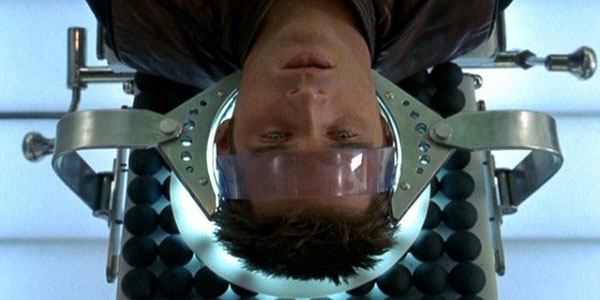
"Joss Whedon, Steven Moffat, and George R. R. Martin walk into a bar... and everyone you've ever loved dies." A time honored internet joke, this encapsulates what makes certain showrunners and writers so notorious and loved - they ruthlessly kill of characters. And while Farscape is nowhere near as ruthless as any of the three mentioned above, they subject their main characters to such a degree of pain that it is indeed comparable to the tumblr-proclaimed masters of cruelty themselves. A few seasons in, the show develops a habit of messing with John Crichton's mind. What makes the (increasingly frequent) departures from reality so gut-wrenching is how this man has lost everything - his home, his life - so the only thing he has left to cling to is his sanity, his memories of earth. This is his stronghold, and the show is merciless about attacking it with episode after episode of fever dreams, reality distortion and surrealism that recalls the weirdest of Twin Peaks. A pattern the show gets into after its first season was ending every season's main conflict one episode before the finale, allowing opportunity for a fantastic cliffhanger at the end. While this could be a gimmicky or irritating trope, the show uses this habit as an opportunity to end a season right when the characters are at their most pained or distraught, actively screwing with any sense of closure or comfort one would get from a traditional season close. (ironically enough, this tradition came back to bite them when the show was cancelled and they were forced to end it on a cliffhanger)

2. It Pioneered the "Band of Misfits on a Ship" Sub-genre of Science Fiction
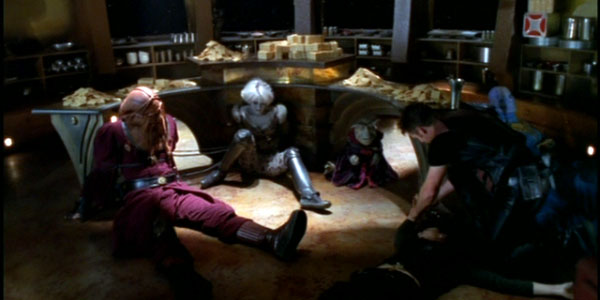
Almost every "explore the universe" TV show has a uniting theme - all the characters on board the ship have to form a unit of some kind, be it a functional crew (Star Trek) or a gang of outlaws (Firefly) they must all work together to overcome their unique problems. Farscape however, provides one of the first wrinkles in this cliche: None of these characters belong together. Moya, the ship that the entire show takes place on, starts as a prison vessel half of the main cast are attempting to escape from. When John Crichton is thrown in the middle of this mess, the prisoners on board (and a few stragglers from the ensuing battle) are forced to coexist on this ship without causing grievous injury to each other - something that proves much more difficult than one would expect. These characters all have backstories and cloudy pasts ("why were you imprisoned on this leviathan?" is a one of the main tension questions of the first season) but their unwillingness to trust each other means their growing competence as a group is more forced through adversity than the will of any individual member. Another thing that defines the characters of this show is their initial eagerness to double-cross each other in pursuit of their own conflicting goals. All they want is to get off the ship, but Murphy's law prevents them from doing so, meaning they become one of the most begrudging (and ultimately heart-warming) family units in science fiction.

1. It Was Unafraid Of Pushing The Envelope
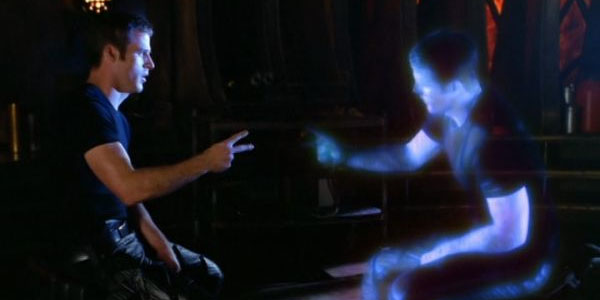
This is ultimately the reason that ties it all together. The thing that separates a decent show from a great (or even just good) one is the willingness to take dramatic risks. A common pitfall of television is when they create a unique and creative premise, then proceed to milk it for all its worth without bringing a new idea to the table. Farscape avoids this particular trap by having a premise that could quite literally go anywhere. "Astronaut gets thrown into alien universe" is about as vague a pitch for a TV show as possible, and the path they choose to go on is one that is festooned with strange, twisted, and dangerous things, allowing the writers to take a huge slew of risks with their storytelling. From non-linear editing to unreliable narrators, this show is willing to push itself to the limits, trusting the audience to keep up. Among the many dramatic risks taken during this series' four-year run include turning the entire main cast into lunatics, cloning entire characters for a whole season, giving Crichton a spectral version of the antagonist in his head to be a devil on his shoulder, and making an entire episode animated in a Looney-Tunes vein. In addition to the storytelling risks, Farscape takes many risks in character development as well - double crosses, conflicting values, budding romance that is later crushed, creepy obsession, none of it is off limits to this writing staff, and it is always entertaining to watch. I hope these reasons have convinced you to either pick up this series (Farscape is on Netflix instant watch now, so you can jump right over) or rewatch it if you are a fan excited for the prospect of a new TV movie in this unique universe!

In this post: 
Farscape
 
Posted On: 
Contributor
Contributor

Self-evidently a man who writes for the Internet, Robert also writes films, plays, teleplays, and short stories when he's not working on a movie set somewhere. He lives somewhere behind the Hollywood sign.