6 Times Arrow Improved Green Arrow Mythology (& 4 Times It Failed)
As Arrow draws to a close, here's how the series has impacted the DC Comics favourite.
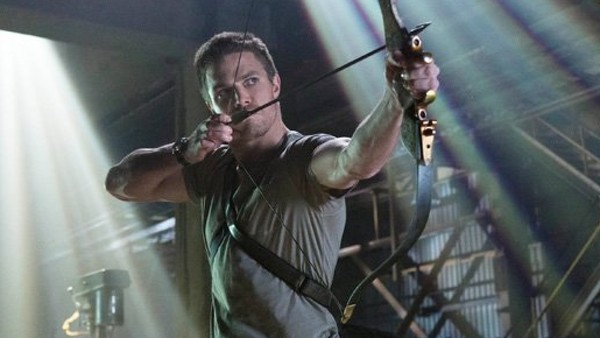
As of this writing, there are just three episodes of Arrow left before the show calls it a day.
Across eight seasons, the Stephen Amell-starrer has generated a huge fan base and impressed many a naysayer who thought that nobody would care about a Green Arrow TV series. After all, this wasn’t Batman, this wasn’t Superman, this wasn’t Wonder Woman, this wasn’t The Flash, this wasn’t… you get the idea.
Despite all of the fans that Green Arrow now has as a result of Arrow, the initial buzz around the show was largely flat as the majority of the series’ potential audience had no real interest in the Emerald Archer. But boy, how that changed as the show progressed – particularly from Season 2 onwards.
Like all such series, of course, Arrow hasn’t been a complete homerun. For the most part, it’s certainly been a brilliant genre show, yet there have still been a few issues and niggles along the way.
Spotlighting that here, then, here are six ways that Arrow has improved the mythology of the Green Arrow… and four ways that the series has had a negative effect on the Master Bowman.
Improvements To Green Arrow Mythology...
6. Felicity Smoak

Many casual comic book fans may think that Felicity Smoak was purely a creation of Arrow. While Emily Bett Rickards’ incarnation of Felicity is indeed rather different to her comic book counterpart, Felicity Smoak actually first appeared in the pages of DC Comics back in 1984.
She may have been a supporting character who only appeared briefly, but Felicity’s 1984 funny book debut in The Fury of Firestorm #23 saw her positioned as the boss of a New York computer software company. Not only that, but she found herself butting heads with Firestorm… before marrying the father’s hero, Ed Raymond.
What Arrow did so well, is that it took this comic book character and improved her one hundred times over. Sure, Emily Bett Rickards’ Felicity retained her computer smarts, yet Ms. Smoak was made into a pivotal part of the overall eight-season arc of Arrow. To the point that she managed to be one of the few people to calm the wild beast that is Oliver Queen.
Arrow’s Felicity Smoak was far from 100% perfect, but it’s a tough task to write a character flawlessly for seven full seasons and a sprinkling of eighth season appearances. There have clearly been ups and downs in the depiction of the character, yet the job done with Felicity Smoak in Arrow is largely a fantastic one. At least in comparison to what fans had previously seen from the character in the comic books.
5. It's Helped To Showcase Lesser Villains

For the majority of viewers, Arrow villains such as Ra’s al Ghul and Deathstroke, Arrow – like so many of its fellow Arrowverse shows – has used its platform to showcase certain lesser-known villains.
There were plenty of one-and-done appearances from various DC rogues, but Arrow also managed to give so many bad guys and gals multi-episode arcs that dug deeper on what makes them tick, or even integrated them directly into the story of Oliver Queen.
Characters such as Malcolm Merlyn, Damien Darhk, Brother Blood, Deadshot, China White, Ravager, Count Vertigo, Bronze Tiger, Cupid, and Brick are just a smattering of comic book villains who were brought back for several episodes of Arrow in order to give you a sense of their own personal arcs.
In fact, some of these – such as Ravager and Brother Blood – were main players for an entire season, while Malcolm Merlyn has obviously been used as a mainstay of Arrow throughout the majority of its eight-season run.
Arrow has never simply settled for having an overarching ‘big bad’ across each season, and the series has brilliantly managed to keep just such a ‘big bad’ fresh and like a legitimate threat while simultaneously dropping in other villains who aren’t merely just throwaway characters.
4. The Show Doesn’t Shy Away From Oliver’s Killing Streak

More often that not, the golden rule of comics is that superheroes do not kill. Well, not unless there is absolutely no other alternative. And even then, the majority of heroes will refuse to go through with taking the life of another person – no matter how evil they may be.
Even in the Green Arrow books, whichever origin story has been served up over the decades, none of them have ever shown the Emerald Archer as a merciless killer. But in Arrow, the show’s first season completely and utterly embraces that and isn’t embarrassed to do so.
In the context of Arrow, it would make sense for Oliver’s five-year stint in the wilderness to result in him returning to Star(ling) City on a ruthless mission of revenge. Not only did Ollie have several stays on Lian Yu during that period, he was also trained to be a coldblooded killer by some truly despicable sorts.
Upon arriving back in his home city with a hitlist of names who had “failed this city”, this version of Oliver Queen wouldn’t just pussyfoot around and give villains a slap on the wrist. No, he’d instead just put an arrow through them in an act that he saw as these slimeballs paying their debt to the city that they’d spent years corrupting.
Despite running the risk of making their central hero look far less than heroic, Arrow embraced the vengeance and brutality that Oliver Queen would realistically have on his mind in those early days. And then, well then the show built on that and used it to project Oliver’s growth as a character as the series progressed through its next several seasons.
3. The Brutal Effects Of The Lazarus Pit

In the world of DC Comics, the Lazarus Pit is synonymous with Ra’s al Ghul. For centuries, the Demon has regularly taken dips in these pits in order to keep himself alive and well – hence why Ra’s doesn’t appear to ever age, and any wounds he suffers aren’t quite as fatal as they should be.
But while the comic book Lazarus Pits are merely dropped into a story now and again with no real hoopla, and merely just to perk up somebody who may find themselves on death’s door, it’s rare that the Lazarus Pit has been shown to have any major aftereffects.
Bar Jason Todd initially going insane, the Lazarus Pits of the comics seem relatively safe to use. In Arrow, however, this is a far different predicament.
Ever since the notion of the Lazarus Pit was introduced in Arrow, it has been made abundantly clear that any dip in these pools will have some severe side effects. To the point, we’ve seen people outright refuse to use a Lazarus Pit, regardless of their wounds.
Arrow has established that bathing in the Lazarus Pit does come at a cost. And that cost, for the most part, is a severe case of bloodlust and a freshly unhinged personality.
2. Slade Wilson’s Descent Into Madness

Names don’t really get much more badass than Deathstroke the Terminator. But while Slade Wilson has long been a fan favourite comic book villain of many, he’s never been as wonderfully fleshed out as he has been during Arrow’s eight seasons.
Season 2 of Arrow remains one of the very best single seasons of genre TV from the past decade. A bold statement? Sure. Yet seeing the descent into madness of Manu Bennett’s Slade Wilson was glorious to watch unravel.
If you remember, Slade and Oliver ended the show’s first season flashback moments as ‘brothers’, and that was a relationship that continued to develop in the flashbacks of the show’s second season. In that second year, the flashbacks ran concurrently with present-day attacks on Starling City that were ultimately revealed to have been masterminded by the presumed-dead Slade Wilson and his army of Mirakuru soldiers.
Since that second year, Wilson has turned up at several occasions – as enemy, as friend, and as uneasy ally.
Even though the comics have positioned Slade Wilson as an antihero at times over the decades, never has Slade been given more room to breathe and show as many sides as he has in Arrow.
1. It Got Fans More Invested In The Comics

One of the very best things accomplished by Arrow during the show’s eight seasons, is that the success of the storytelling and characterisation of the series has led to fans taking a deep dive into the comic book world of the Green Arrow.
What greater effect can a TV show have on an established comic book mythology, than getting people to check out said comics?
That may possibly be the greatest compliment to place on Arrow – that the show made new fans of Oliver Queen, both in terms of Stephen Amell’s live-action Oliver and in terms of his comic book counterpart.
Previously, many non-Green Arrow fans may have simply labelled the Emerald Archer as a Robin Hood knockoff or possibly even Batman-lite. Instead, Arrow proved that, while Green Arrow does indeed share certain characteristics with both of those other heroes, the Master Bowman is a fantastic character in his own right.
Purely from watching Amell’s Oliver Queen for eight seasons, some have taken to checking out classic comic book runs from names like Mike Grell and Denny O’Neil. And that can’t be anything but a good thing for the mythology of the Green Arrow.
Failed To Improve...
4. Butchered Black Canary

No one character is as important in the comics to Green Arrow as Black Canary. Not only do these two so often fight side-by-side, not only do they become romantically involved, but Oliver Queen and Dinah Laurel Lance actually become man and wife.
Upon Katie Cassidy being confirmed to be playing Laurel Lance in Arrow, the seeds were already sown amongst longtime DC fans that we’d eventually be getting Black Canary. And we did! Well, kind of.
The first Canary was actually Sara Lance, with Caity Lotz’s totally-not-dead Sara being a brilliant, badass Canary. That was until she was killed… and then resurrected again courtesy of a Lazarus Pit.
Laurel Lance did indeed take up the moniker of Black Canary, of course. Yet the problem was, this Laurel just felt a little off. The way that the character was written, she was a complete and utter hindrance to Team Arrow as she began to suit up. And not just in a ‘learning the ropes’ kinda way, for Laurel became a drag on the entire show – to the point that when the character was killed off, nobody really cared.
Thankfully, the Dinah Drake version of Black Canary proved to be a great addition to Arrow, and the show has even made amends in how it's handled the Earth-2 version of Laurel Lance.
3. Death Is Irrelevant

Now, for the most part, death in comics is completely and utterly irrelevant. That is, apart from a handful of exceptions - such as the Green Arrow.
Ever since Superman was revealed to have simply been having a massive kip in 1993’s legendary The Death of Superman, death in comic books has usually been simply a plot point used to advance a story, with it no longer the permanent arrangement it once was.
Back in 1995, Green Arrow sacrificed his own life in order to protect Metropolis – and its millions of citizens – from being wiped out. This was a hard-hitting death that was felt across DC Comics for years to come, particularly for poor Connor Hawke as he tried to continue on with the Green Arrow moniker his father had made so famous.
Oliver Queen wouldn’t be fully back into the fold of the main DC Comics landscape until 2001, when Kevin Smith’s Quiver arc brought Ollie back. But even then, it wasn’t simply a case of Oliver being back as Green Arrow with no questions asked. Instead, the resurrected Queen would struggle to find his place in the world, with him likewise struggling with his memories, and he’d take several years to actually become the Green Arrow once again.
In Arrow, sadly death has been a complete nonfactor. When Oliver was brutally stabbed through, kicked off a clifftop and left for dead by Ra’s al Ghul during Arrow’s third season, the seemingly dead Queen was back on the road to recovery by the very next episode. Sara Lance and Thea Queen killed? Let’s just dump them in a Lazarus Pit. Laurel Lance left dead? Let’s just bring in the Laurel of an alternative Earth to fill that void.
2. Too Reliant On Lian Yu

Okay, so Oliver Queen was presumed dead after the Queen’s Gambit was lost at sea, rendering all aboard as supposedly deceased. Instead, Oliver was washed up on the shores of Lian Yu, where he would begin to hone plenty of the skills he’d later utilise as the Green Arrow.
That was great, that was fine, and the first two seasons of Arrow culminated – in a flashback sense – in Ollie finally making it off Lian Yu. Despite following seasons seeing the flashback elements of the show taking Stephen Amell’s Green Arrow-in-waiting to Hong Kong and Russia, he always seemed to end up lumbered back on Lian Yu. And similarly, the modern-day narrative of Arrow kept bringing Oliver back to this strange and brutal island.
Those scenes on Lian Yu have been handled well, yet Arrow has spent eight seasons becoming a little too reliant on Lian Yu. Even now, as the show heads towards its final few episodes, we saw Stephen Amell’s Emerald Archer making yet another trip to Lian Yu – this time to visit his sister, Thea – and all of this pushes the narrative that Lian Yu is some inescapable monster in terms of the greater mythology of Green Arrow.
1. It Reiterated That Green Arrow Is Batman-Lite
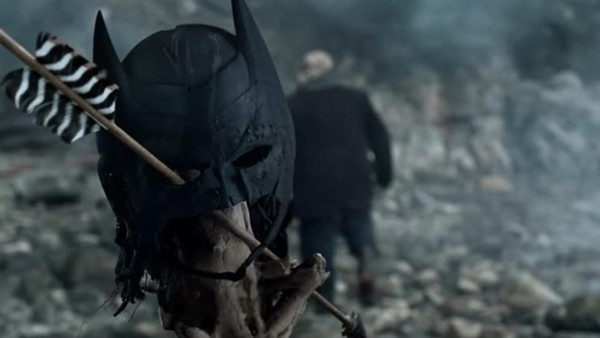
With Stephen Amell’s Oliver Queen, The CW and Warner Bros. TV gave audiences one of the greatest characters in the history of DC TV projects. After a slightly ropey start in the first season, Amell grew into the Oliver role and has worn it like a second skin throughout the show’s eight seasons.
Even though Amell has been fantastic, the eight seasons of Arrow have managed to hammer home the point that Green Arrow is Batman-lite. No superpowers? Check. Millions of dollars at his disposal? Check. Dead parents? Check. A rotating roster of sidekicks at his disposal? Check. Playboy lifestyle? Check.
Of course, elements of those points have altered over the years – Ollie putting paid to his playboy lifestyle by marrying Felicity Smoak, his millions of dollars being lost, etc etc – yet the basic characteristics of the Master Bowman for so much of Arrow’s run has seen him being depicted as a Batman wannabe.
To make things worse on this front, Arrow has utilised a whole host of villains usually associated with the Caped Crusader during its eight seasons. From Ra’s al Ghul, to Deadshot, to Firefly, to Anarky, to Dollmaker, to Clock King, and so many more, Arrow’s use of Bat-foes again hit home to audiences that one of the main reasons we even got Arrow as a show is because Warner Bros. wouldn’t agree to a straight-up Batman series being made.