7 Things Game Of Thrones Toned Down For TV
A song of censorship and omissions.
'Toned down' is not a phrase we commonly associate with HBO's hit TV show Game of Thrones.
Love it or loathe it, it's famous for its graphic depictions of sex and violence as well as its sharp writing, strong characters and tendency to kill of fan favourites at unexpected moments. But what makes Game of Thrones so loved by the old fans and the new is that this graphic mixture of sex and death is not an attempt at fanservice but a faithful representation of the hugely graphic A Song of Ice and Fire series.
George RR Martin famously came up with the idea to the series as a reaction against the limitations of writing for television at the time. He could have horses or Stonehenge, as the story goes, but not both in the same scene. In retaliation he wrote a book that he considered unfilmable.
Stonehenge never made it in but there are plenty of horses, as well as dragons, direwolves, three eyed crows, battle scenes, shapeshifting assassins, a huge wall made of ice and basically everything else he could think of that would make a special effects producer weep.
Fans fell quickly in love with this richly imagined world and, more than a decade later and once technology had caught up, that love fuelled the demand for a no expense spared adaptation. But there were some things in the book which would be too complicated, controversial or even flat out illegal to show on TV.
Read on for the seven most controversial moments Game of Thrones had to tone down for TV.
7. Tyrion's Nose Being Cut Off

It's a well known fact that characters described as homely or even ugly in their books usually become vastly more attractive in the TV adaptation (exhibit A the way Hermione Granger's famous bushy hair gradually metamorphosed into artfully tousled curls between movies). While Tyrion in the books is described as hideous and misshapen as well as being of limited stature, he is portrayed on TV by the rather handsome Peter Dinklage.
Tyrion's appearance was set to take a turn for the worse in the episode Blackwater when a large chunk of his nose is cut off during an attempt to assassinate him on the battlefield, leaving him looking not unlike Lord Voldermort. In the series this "disfiguring" injury was reduced to a scar that was more rakish than anything else and was described by Margaery Tyrell as making him more attractive.
This probably wasn't a bad decision when you consider the extra time spent on makeup and the fact that TV is a visual medium and TV audiences by and large expect at least moderately attractive actors to look at. Peter Dinklage's natural charisma, charm and good looks have turned a character traditionally loved for his quick tongue and clever mind into one who many consider a sex symbol.
I can't help feeling that Tyrion, the self proclaimed "god of !*$% and wine" would approve.
6. Daenerys' Wedding

Daenerys' wedding to Khal Drogo made the list despite her actual wedding night being made if anything worse in the TV show (in the book Khal Drogo goes out of his way to get consent from Dany, in the series he does not).
In the book the Dothraki men are described as publically grabbing dancers, pushing them to the ground and mounting them as well as fighting each other to the death for the privilege. A Dothraki wedding without at least three deaths is considered a very dull affair apparently and Dany has the dubious honour of an unusually high death toll.
The fact that this is brushed over as culture shock for Dany makes it kind of more disturbing: how the Dothraki women feel about this is never addressed despite the fact that Dany goes on to establish close relationships with Jhiqui and Irri, her two Dothraki handmaidens.
Although the series shows the Dothraki engaging in an orgy of sex and violence the implication seems to be one of enthusiastic consent from all parties and the carnage, or at least the carnage shown on screen, is much reduced. As well as appeasing the censors or just viewers who (not unreasonably) don't want to see graphic depictions of rape every episode this makes narrative sense as it gives Dany more of a reason to be shocked later in the series when she sees her husband's khalasar raping the survivors of a raid.
5. Greywind's Death
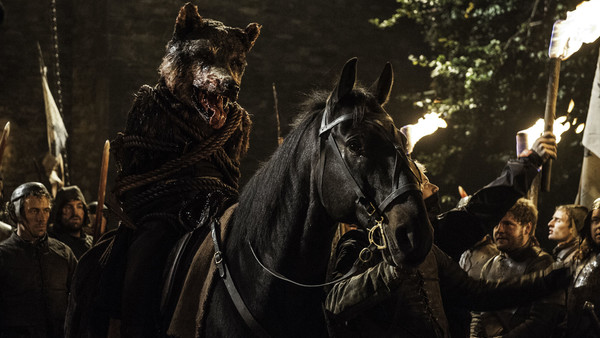
But if Daenerys' wedding had a higher death toll than she would have liked then spare a thought for poor Roslin Frey and Edmure Tully, the bride and groom at the infamous Red Wedding. Both in the book and on the screen, the Red Wedding is infamous for not pulling any punches.
The TV version was arguably worse because of the extra time invested in developing Robb's character and the decision to kill off the pregnant Talisa (her book counterpart Jeyne Westerling is not only not pregnant but not invited). However Robb's direwolf Greywind had a much reduced role, being shot ignobly while penned up in the stables as opposed to ripping Frey's apart left, right and centre before finally being overwhelmed by sheer numbers.
Is it because direwolves are expensive to animate? Probably not. Game of Thrones famously has an Emmy for visual effects and a special effects budget of six million dollars per episode and it shows in every single frame as this video from Youtube user TheCGBro demonstrates.
Greywind being shot while trapped and defenceless was probably a better metaphor for Robb's own death. The writers of the show seemed to focus more on pathos than an epic fight scene, cutting the Tully-Stark's attempts to fight and focussing on the fact that they barely had time to fight. But by turning an unfair fight into a massacre, the writers also reinforced just how nasty and personal the motivations behind the Red Wedding were.
I don't think anyone enjoyed seeing the pregnant Talisa being impaled through the stomach but it left little doubt as to just how badly the Freys had taken Robb's decision to marry for love.
4. The Younger Characters Being Aged Up
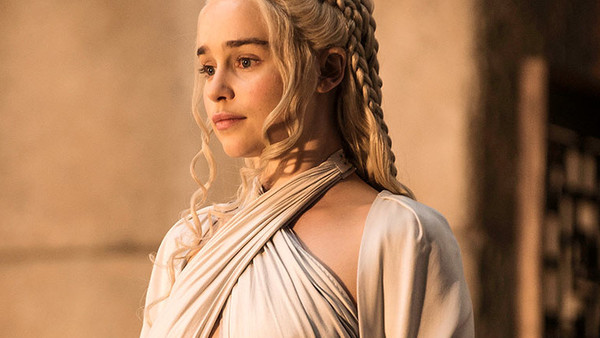
This point is not strictly a moment but still a significant change. Due to UK laws about the representation of minors in sexual situations in TV and film, HBO was forced to cut sex scenes featuring characters under sixteen or change the ages of characters to comply with the law.
Although (as we all know) HBO is an American company much of the series was filmed in Northern Ireland and many of the actors are British citizens. This led to thirteen year old Daenerys being aged up to sixteen (and played by the much older Emilia Clarke), fourteen year old Jon Snow aged up to nineteen (but portrayed by twenty six year old Kit Harrington), eleven and nine year old Sansa and Arya aged up to thirteen and eleven respectively (and portrayed by Sophie Turner and Maisie Williams, who were fourteen and thirteen respectively at the time of casting).
The adult characters, mostly in their thirties in the book are played by actors closer to their forties or even fifties, allowing the roles to go to mature actors who not only have the necessary weight and gravitas to play kings, queens and liegelords but look more like thirty year olds weathered by living in a harsh fantasy environment without the benefits of indoor plumbing, good dentistry or moisturizer.
George RR Martin himself is in favour of this and says it is in line with what he would have written had he not been planning on writing a five year gap into the books (an idea he has since abandoned). Fans too have largely embraced the changes as it has allowed talented actors in their late teens to mid twenties to take roles that are wholly unsuited for child actors.
The decision to cast attractive twentysomethings has also probably done wonders for introducing new people to the fandom and in fuelling the already existing demand for fanfiction, fan art and cosplay.
3. Arya's Time At Harrenhal
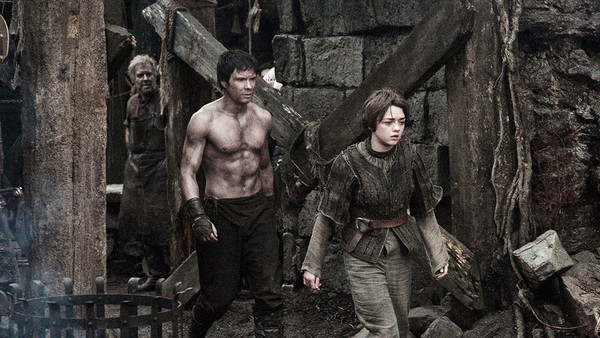
Arya's time as a prisoner at Harrenhal had some unpleasant moments in the series but in the book she Gendry and Hot Pie are stuck there for several chapters and survive several regime changes as the cursed castle is captured again and again. It's a bleak look at the way ordinary people suffer when the aristocracy goes to war but opinion remains divided on whether it was necessary to show this through sexual exploitation, torture, characters describing rapes they've committed in graphic detail and women in stocks being brutally and repeatedly gang raped.
My personal opinion? No. If anything the repeated rape of background characters (especially when men's 'blood is up' after a battle) creates a disturbing sense of normalcy, as though every man in Westeros is just one adrenaline rush away from becoming a rapist. However with a book roughly the size of a brick to cram into just ten hour long episodes there also simply wasn't time to dwell on every single plot event.
Arya's time at Harrenhal was condensed into a brief spell as a prisoner and a stretch of time as Tywin Lannister's (not Roose Bolton's) cupbearer, which included all of her important interactions with Gendry and Jaqen H'ghar, some new conversations with Tywin and the development of her vendetta against those who have wronged her and her family.
2. Sandor Clegane's Rape Attempt Omitted
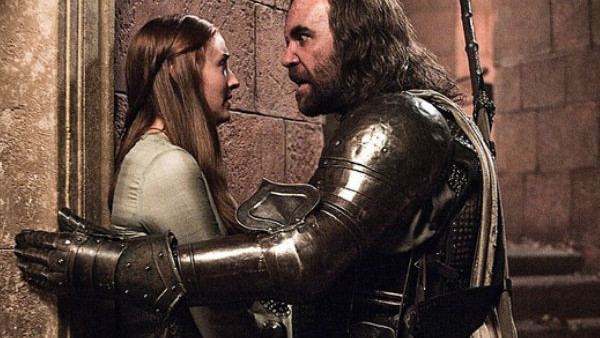
While many controversial scenes from the books were only toned down, a few were omitted entirely. One of the most notable was the scene in the books where the Hound, Sandor Clegane, deserts during the battle of Blackwater, forces his way into Sansa's room, seems to consider raping her (and later tells Arya that he 'should have raped her when he had the chance') and offers to take her with him when he leaves King's Landing.
Understandably Sansa politely rejects his offer and stays with the Lannisters who, while abusive, are at least predictable. In the TV series the interaction between the two of them does not include implications. The series has also been praised by some critics for depicting rape as unpleasant and uncomfortable viewing as opposed to fetishising it (although the portrayals of rape, sex and female agency remain a divisive topic).
Perhaps this is why the writers decided to cast Sansa's relationship with the Hound (a popular fan couple despite the difference in ages) in a less blatantly exploitative light, leaving in a scene where he slaughters three men attempting to rape her but removing any suggestion he considered doing the same thing himself.
His later reference to Arya is changed to one about how he prevented her sister from being raped, which is probably far more likely to garner sympathy not only from Arya but from the show's fans.
1. Sansa And Tyrion's Wedding Night
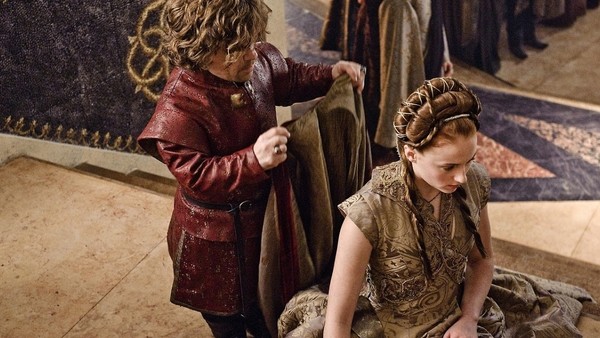
As already mentioned, it is illegal under British law to depict minors in sexual situations, whether the actors playing them are over the age of consent or not. While Daenerys was aged up to sixteen so her sex and nudity scenes could continue unimpeded, Sansa, who was still in her early teens, had hers cut or changed. For example the scene where Joffrey orders one of the Kingsguard to rip her dress reveals only a modest corset, not her bare breasts as in the book.
Probably the biggest change was her wedding night to Tyrion. It's a complicated scene because although Sansa manifestly does not want to marry Tyrion she's been so beaten down and brainwashed that she doesn't believe she has a choice but to go ahead with consummating the marriage.
In the TV series Sansa begins to undress and Tyrion swears he won't touch her until she wants him to, even if that means never consummating the marriage. In the book Tyrion undresses her, undresses himself, shows her his erect penis (described in graphic and intentionally unpleasant detail) and thoroughly traumatises her before deciding that he can't go through with it.
It's a scene that few people could watch and still find Tyrion sympathetic after and therefore the changes were more in character for the more likeable version of Tyrion portrayed by Peter Dinklage. As changes go, this one was definitely for the best.