8 Reasons Joss Whedon's Dollhouse Deserves Another Look

Dollhouse is the forgotten trinket in the toy store that is the Whedonverse.
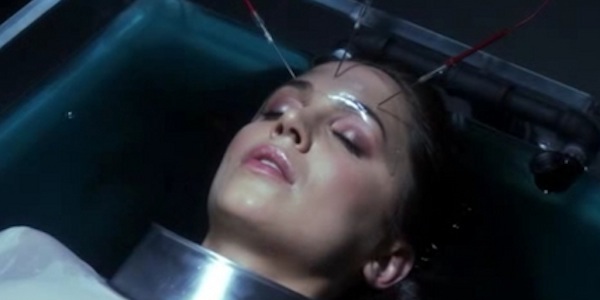
Dollhouse is the forgotten trinket in the toy store that is the Whedonverse. Initially met with mixed reviews and unceremoniously cancelled after two seasons, Dollhouse seems to be relegated to creator Joss Whedon's junior varsity team in favor of the fully realized worlds of a Buffy the Vampire Slayer or its' counterpart Angel. Even the short-lived Firefly had Serenity, a movie spinoff offering a sense of closure to fans of the short-lived series. Instead, those who tuned in to the show quickly abandoned it, and Dollhouse is now whispered under the breath by Whedonites. If mentioned at all. The show is certainly not without its share of problems. A good chunk of the first season feels unfocused and generic in the first batch of stand alone episodes. Dependent upon the performance of an uneven at best, downright shaky at worst Eliza Dushku, Dollhouse's attempt to entice first-time viewers in at any point without feeling left out of the mythology fell short. And the initial concept of the show itself, of a large corporation erasing the minds of hot young things and renting the bodies out with new personalities attached to the wealthy for whatever service they require, felt far too icky for viewers to immediately connect with. But with distance comes perspective and appreciation. Here are eight reasons the underrated and under appreciated Dollhouse deserves another look, from Whedonites and the uninitiated alike.

8. Topher Brink

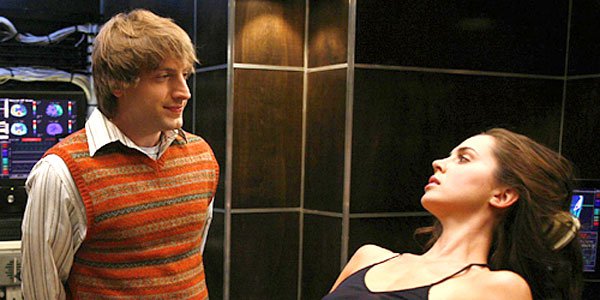
Fran Kranz offers a master class in humorous sidekick in his lived-in portrayal of arrogant scientist Topher Brink. As the man responsible for creating and imprinting customized personalities in the namesake "dolls", he fully inhabits the ego and giddy exploration of a virtuoso pursuing the potential of his brain studies. His performance showcases a sense of humor more sophisticated than the material he is given, and his ability to rattle off the unending tongue-twisting list of neuroscience terminology each week with ease is a thing to behold. But the boy brings more than just the funny, and his character was rewarded in Season Two with more worthy material to sink his teeth into. Over the course of the show, Topher's slow burn transformation from goofball genius to moral martyr is devastating in its' heartbreak, while never losing the comic center that made you fall in love.

7. The Reveals

In a world where people are wiped of the personalities (often with no say in the matter) to become "dolls", devoid of any human mannerisms or tics, how do you know who's real? Who loves you? Who's after you? It brings to mind the old colliqualism: Just because I'm paranoid doesn't mean that they're not after me. Dollhouse posits a world where your entire identity can be stripped away. Where at any time someone in your life, be it a teacher, a friend, even a spouse, may betray you at a moment's notice. And, in the most extreme cases, try to kill you. The shows' concept accomplishes what good science fiction aims for. It grabs a handful of basic psychological fears, and offers a fascinating and increasingly paranoid take on them.

6. The Fan Favorites! The Guest Stars!
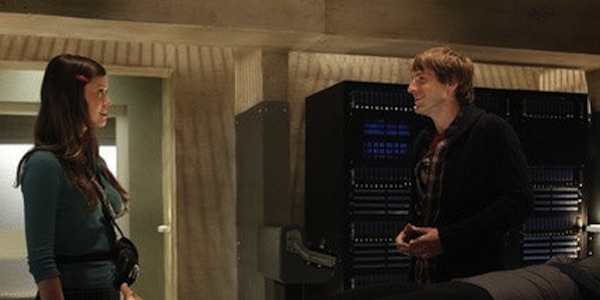
To many fans of his work, Joss Whedon is known for two things: brutally killing your favorite characters, and utilizing actors from previous projects in new ones. Star of Dollhouse Eliza Dushku portrayed Faith on both Buffy the Vampire Slayer and Angel. Amy Acker was fan favorite Fred on Angel. Alexis Denisof, Wesley from Buffy the Vampire Slayer and Angel, appears in four episodes. Former Browncoats from the Serenity (Firefly) Alan Tudyk and Summer Glau appear in multiple episode arcs as well. For all of the fans of Dr. Horrible's Sing-Along Blog, Felicia Day stops by for two episodes. And he didn't stop there. Battlestar Galactica fans can rejoice in knowing Tahmoh Penikett, Helo from BSG, appears in all 27 episodes. His fellow BSG cast mates Jamie Bamber (Captain Adama) and Michael Hogan (Colonel Tigh) make guest appearances as well, and Mark Sheppard checks both cult show boxes, having appeared in both Firefly and BSG. Even Comedian / Internet Hero Patton Oswalt appears in two episodes. In other words, Whedon knows what the fans want. And he delivers.

5. The Rossum Corporation

What kind of dystopian future would it be without an evil corporation, hellbent on becoming all-powerful and taking over the world? Sure, the trope the Rossum Corporation fills is a common one of science fiction, but it's an still effective one within the context of the show. A nearly omnipresent big bad business, capable of knowing any and everything about you? With sleeper agents infiltrating governmental agencies? Well, that's just good ol' fashioned fun if you ask me. And Rossum isn't any the run-of-the-mill evil corporation, either. When all the show's cards are laid on the table, viewers may find themselves truly shocked at where the story of Rossum takes them. It's not the what that pays off big in this case. It's the how and why.

4. The Moral Ambiguity

Fans of modern television love a complicated character. The recent rise of cable network programming has offered a plethora of options in antihero television, and it seems most new dramas offer their own version of a Walter White, Don Draper or Tony Soprano. The new law of the TV landscape appears to be "The more moral concessions made, the better". While none of Dollhouse's characters ever devolve into antihero status, outside of Echo they never reach true hero status, either. Each week, the show presents a myriad of ethical dilemmas for its' protagonists to navigate, and each character comes away compromised in some manner. In fact, the true antihero of the show may be science itself, as the show asks a multitude of questions with no easy answers. Such as, should science stop asking can we do it and start asking should we do it.

3. The Disappearing Act Of Eliza Dushku
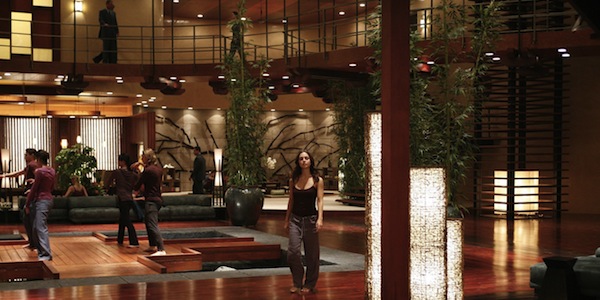
For Dollhouse, Joss Whedon effectively handed Eliza Dushku the keys to her kingdom. She received an empty canvas on which to paint a career-making performance. The opportunity to play a different character each week, to offer a display of formidable acting prowess. And the final result? A portrait of... Eliza Dushku. Sometimes she soared, but most weeks she stumbled. At some point in the first season, the producers seemed to come to the realization that, though not without her talents, Dushku simply was not the chameleon they hoped for. As the show progressed, the ancillary characters were brought to the forefront and Dushku was asked less and less to carry the show on her shoulders. Perhaps asking Dushku to do less was the plan all along, but the integration of the talented supporting players gave the show new life, and Dushku a much needed breather.

2. The Attic

The final resting place for dolls and disobedient Rossum Corporation employees alike is alluded to in the show by several characters as a kind of catch-all living hell, a final engagement from which no one returns. The scattered mentions throughout two seasons give it the feeling of an everpresent chill, slowly creeping up the viewers' spine whenever the Attic is mentioned. The intrigue begins the first time someone is assigned to the psychic purgatory and only escalates with each reference, finally culminating in the Season Two episode "The Attic". Often in science fiction, the idea lands more than the final product. But when viewers finally find themselves inside the Attic for an entire episode, the mind-bending terror proves more than worth the wait.

1. Victor The MVP

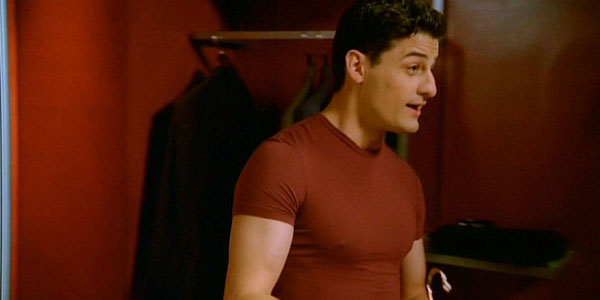
Victor (Enver Gjokaj) is the wild card, the scene-stealer, the piece of this show that I will miss the most. Oft deployed as comic relief (but never in a way that felt cheap), he has been at different points a Russian gangster, a British lover, a Southern race-horse owner, a serial killer, and a nubile female college student dancing in the club. Each accent is perfect in its' inflection, each personality and affectation embodied with more than mere impersonation. You will never hear the words "man reaction" without thinking of Victor. Though, to be fair, you probably wouldn't hear that phrase outside of the show anyway. And the episode where he is imprinted with the personality of Topher Brink (#5 on the list)? Possibly the apex of his expert mimicry. Gjokaj's portrayal of Victor belongs in the Pantheon of tragically comedic (or is it comedically tragic?) television characters. He simply elevates any subpar material to worthy Whedon canon. In an alternate television universe, one that is fair and just, he is the star of Dollhouse, now finishing it's 6th Season, and Eliza Dushku's Echo is merely a cog in what is affectionately known by the viewing world as the "Enver Gjokaj Star-Making Machine".

Contributor
Contributor

He writes half-baked novels and twitter fiction. He makes short films for contests. He plays mostly unheard music. He painted something once, and it was... okay. A lover of all things pop culture, a master of none, Stephen nevertheless will continue his pursuit to become a modern-day renaissance man. And post it all at stephenstories.com