8 Reasons Why TV Is Better Than Ever
Have you ever stopped to realise just how well we've got it right now?
 AMCTelevision has undergone something of a revolution in recent years. Long gone are the days when people crowded around a miniscule set to watch scheduled programming on just a handful of channels, replaced by the ability to watch programmes about seemingly anything, at any time and on any device with a screen, from mobile phones that fit into a pocket to gargantuan monstrosities that take up an entire wall. Once viewed as inferior to film, the medium has evolved to the point where elements of its output are now considered superior to big-screen offerings. The film industry is hardly struggling as a result, however, and the fact that both mediums (alongside others such as video games) are continuing to grow and thrive makes it an exciting time to be a fan of screen-based entertainment. The focus of this piece is specifically television, however, over the next few pages we'll analyse how the medium has diversified and innovated, and why it is better than ever as a result.
8. Exposure Of International Programming
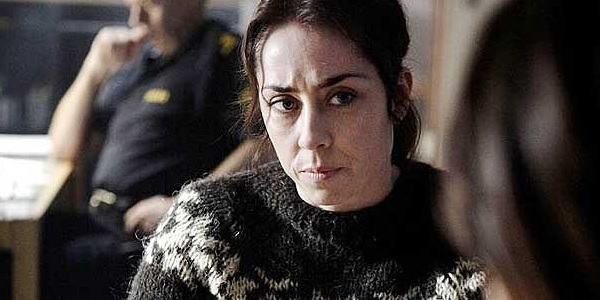 AMCThough elements of British and American programming are popular across the world, most shows go unnoticed by audiences outside of their home country, largely due to language and cultural barriers. As a result of this, many countries have a domestic television industry that is appreciated solely by its inhabitants and its inhabitants only. This has begun to change in recent years, however, as the merit and quality of selected foreign-language (non-English) dramas have become recognised by audiences in both the USA/UK and across the rest of the world, aided by exposure on channels such as BBC4. As a result of this, fans of such shows have been keen to find others, enhancing their popularity as they seek out the next foreign phenomenon. They'll always be people who refuse to watch foreign programming (even with subtitles) purely because it isn't in English, but such individuals will forever miss out on Danish greats such as Borgen (a political drama), The Killing (a neo-noir crime drama) and The Bridge (an international crime drama made in collaboration with the Swedish), as well as other assorted shows from around the world (from the gritty original Israeli version of Homeland to French crime/legal thriller Spiral) that have made an impact on the contemporary television landscape and are well worth checking out.
7. Breakdown Of Boundaries
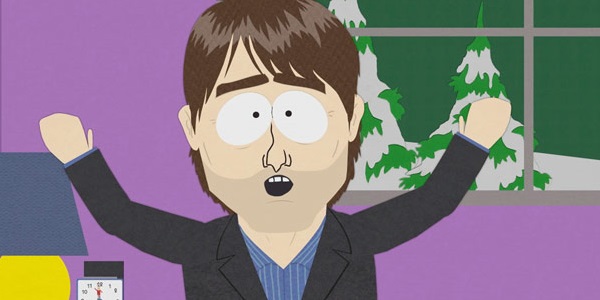 Comedy CentralEvery country has broadcasting standards, which dictate what can and can't be aired (or what can't be aired at certain points of the day), though it is arguable that this equates to censorship in countries where freedom of speech and freedom of expression are supposed to be a given. Certain networks and production companies have, over the years, sought to constantly challenge such standards and erode boundaries through the airing of groundbreaking risqué programming. In the UK, the best example is Channel 4, which has built itself a reputation as an 'edgy' network, having done things such as air the first public autopsy for 170 years, air the first lesbian kiss in a British drama and air Chris Morris' Brass Eye, which attracted rave reviews despite attracting masses of controversy (mostly from people that hadn't seen it) for its satirising of taboo subjects. Other networks are not afraid of taking risks either, however, something that they are able to do through the existence of the 9pm watershed. In America, the 'big four' core networks of ABC, NBC, CBS and Fox are still forbidden from airing such things as profanity and nudity at any time, and have been eclipsed as the homes of high-quality drama by cable networks such as HBO, which has constantly challenged the belief that all television should be 'family friendly' throughout its history and developed some of the greatest shows ever made as a result. Others, such as Comedy Central, have allowed the mocking of anything and everything through the animated series South Park, which courts controversy with every episode its airs but rightfully takes the stance that nothing should be off-limits.
6. Decreasing Importance Of Ratings
 NBCSince the inception of television, ratings have always been the be all and end all of determining the success of a television show to executives of the 'big four' American networks. A countless array of beloved programmes have been unceremoniously dumped well before their time as a result, solely because they are perceived as being unsuccessful at attracting viewers to the products and services advertised during commercial breaks. Though there are exceptions to the rule (NBC's Chuck was saved on several occasions by fan campaigns, for instance), the 'big four' continue to drop widely appreciated shows left, right and centre. There now exists several streaming services, however, which have sought to pick up a number of shows with dedicated followings and give them a new lease of life - Arrested Development, cancelled in 2006, was revived by Netflix in 2013, whilst Community, recently axed by NBC, has been picked up by Yahoo TV. Though such services arrived on the scene far too late to save Firefly, which was criminally brought to an end by Fox after just 14 episodes in 2003, its reassuring to know that there is hope for future cult programming to live on after it is deemed lifeless by executives determined to fill their schedules with the same repetitive show formats (here's looking at you, medical dramas). In contrast, many cable networks rarely (and thankfully) let poor ratings get in the way of a show's development - would Breaking Bad have been allowed to continue its run anywhere else after achieving under a million viewers in its first season? It's doubtful.
5. Attraction Of Talent
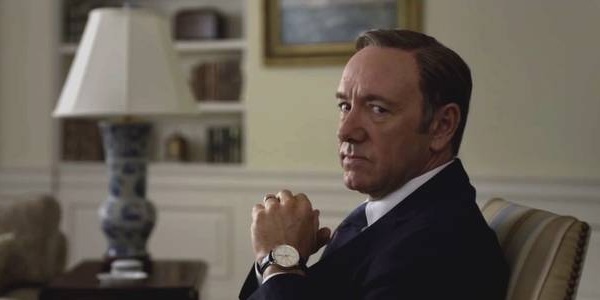 NetflixWho are Michael Mann, Martin Scorsese, Frank Darabont, Oliver Stone, Gus Van Sant and David Fincher? For starters, they are the directors responsible for great films such as Heat, Goodfellas, The Shawshank Redemption, Platoon, Good Will Hunting and Fight Club, but they are also just a selection of directorial talents that have been lured to television in recent years, either to direct episodes of shows or function as showrunners of entire series. It's not just directors that are flocking to the small screen, however, as numerous acting talents have also been making the move in droves in recent years, from Kevin Bacon (who has been heading Fox's serial killer drama The Following) to two time Oscar winner Kevin Spacey (who has been stealing the show as Frank Underwood on Netflix's House of Cards). Just what is attracting such individuals to television, however? Given that is a medium that many of them likely started their careers on before graduating to the world of film, which has always been perceived as much more glamorous and profitable. Increased investment probably isn't harming proceedings (HBO's Game of Thrones has an estimated budget of around $6 million per episode, for instance), but more likely is the fact that television is increasingly being perceived as a place where creative freedom can thrive - films are constricted by their 2-3 hour run times, which only allow so much of a story to be told, television, meanwhile, can run for anything from 4-20 hours per season, allowing a story to be told in much more detail.
4. Quality Over Quantity
 HBOIf there's one difference between American and British television that's always been immediately noticeable, it's that a British 'series' will have a typical run of six episodes per year, whilst an American 'season' will have a run of around twenty four episodes. This is largely due to the fact that British shows are the brainchild of one writer, whilst American shows are written by a panel of writers. As a result of this, British programmes are frequently cited as being of a higher quality than their American counterparts, which struggle to maintain a high standard throughout their 16-18 hour run times and often contain large amounts of filler material. More and more American shows (mostly those on cable networks) are adopting the British model, however, airing in seasons of anywhere between six and thirteen episodes per year. This allows them to be much more concise - whilst many Game of Thrones fans would undoubtedly be over the moon if they were promised twenty four episodes next season, for instance, the production would suffer greatly from the commitment of producing these in time. Though it may be catching on with cable networks, the American 'big four' will continue to try and ensure that their hits are on the air for as much of the year as possible for reasons of consistency and profit, though even they have embraced the 'quality over quantity' approach on their (often superior) sister networks, notably FX (Fox), which has been the home of contemporary greats such as Justified, The Shield and Sons Of Anarchy.
3. Network And Genre Variety
 BBCWhat do you feel like watching today? Desperate polar bears hunting walruses? A man attempting to eat ridiculous portions of food whilst travelling across America? People attempting to drive lorries across treacherous roads made of ice? A show where you observing other people watching television? Chess boxing? Thanks to the diverse array of programming that is offered by television today, you can freely watch any of those, as long gone are the days where every channel focused on general entertainment in an attempt to entice as many viewers as possible, replaced by specialist networks and niche-targeting shows that seek to cater to any and every demographic imaginable. General networks still thrive as the home of most of the shows that fall under the banner of drama or comedy, which are the foundations of television, but these are supplemented by everything from twenty four hour sports coverage and wall-to-wall music videos to endless gameshow airings and channels dedicated to military history. If you want it, you can find it on TV, and it's ridiculous how many gems can be found amongst trash when engaging in the simple act of channel surfing.
2. New Approaches To Distribution
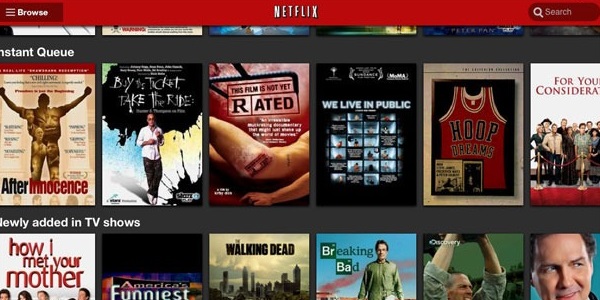 NetflixTechnically, television is an outdated term these days, as viewers are no longer restricted to watching shows on the device of the same name. Instead, they are now free to immerse themselves in programming by a diverse array of means. The continuing growth of the internet has been key to this development, as it has allowed streaming services such as Netflix to thrive. Such services have given viewers instant access to a frankly ridiculous amount of content on a number of devices, allowing them to catch up on familiar programming whilst discovering unfamiliar programming at the same time and expanding their tastes (British viewers discovered Breaking Bad in droves through the service for example, after it was never deemed airworthy by a traditional network). Netflix's subscription model has given it significant financial clout, to the point where it can now compete with networks by offering original programming such as the stunning House Of Cards to its members all in one go without forcing them to wait a week for each episode. Elsewhere, the internet has allowed traditional networks to diversify by offering catch-up services such as iPlayer, whilst more experimental twists on the subscription/streaming model continue to emerge, such as dedicated services for specific types of programming like the WWE network. It's also allowed people to embrace television through illegal means, but we won't delve too greatly into that...
1. More Original Programming
 AMCUnless they began life as a specialty channel offering the likes of sports or music programming, most networks outside the American 'big four' and the core five British terrestrial channels spent much of the eighties, nineties and early noughties (following their establishments) airing repeats of established programmes. HBO, a network that had achieved success with boxing programming and original comedy such as the Larry Sanders Show, began a trend in 1997 with their airing of Oz, a gritty prison drama that set the bar high. It was followed by The Sopranos and The Wire, arguably the two greatest shows of all time, and many other networks soon began to follow suit and create their own original dramas, to the extent where almost every ongoing and recent American great airs on a network such as HBO, Showtime, AMC or FX. Here they are free from the constraints of 'family friendly' censorship, the constant need to achieve high ratings and the constricting requirement of having to churn out episode after episode to meet season quotas. That isn't saying that traditional networks no longer maintain a commitment to original programming, as the 'big four' still produce several hours of it per day whilst in Britain, the shows considered 'the best' have been or are still produced by the likes of the BBC and Channel 4, who have given us the likes of Life On Mars, Sherlock and Black Mirror in recent years. Reality shows are as contagious as ever, but people still flock to original stories in droves, and will continue to do so long as such stories continue to be written.