9 Reasons We Can't Wait For Orange Is The New Black Season 2

It's one of Netflix's best new shows, and we can't wait for it to come back.

Orange is the New Black created a frenzy when it hit Netflix screens in the summer of 2013. I know people who signed up to Netflix just because they'd seen an episode at their friend's house and couldn't wait to see more. It's so engrossing that I can't even write this whilst watching it because it's difficult to tear my eyes away from the chemistry on screen even on my third viewing of the undeniably brilliant first season. What was it about this new TV programme that has attracted so much attention? Why could fans not exercise some self-restraint and ration episodes instead of powering through all thirteen one after another? Why did Netflix agree to renew it for a second season before the first had even aired? It's not the first programme to be set in prison and tackle the issues that that involves. But Orange Is The New Black takes on a refreshingly interesting spin, balancing both comedy and drama in order to provide an uncompromising exploration behind the prison walls. A combination of compelling writing and exceptional performances meant that viewers were captured by this alluring show and its very real characters in a way like never before. With the much-lauded series due to return later this year, let's take a look at what made it as addictive as it was and why we can't wait for it to come back to our screens.

9. Litchfield Prison

Litchfield Penitentiary is situated somewhere in upstate New York and is the facility that houses this compelling prison drama. The community within it effectively serves as a microcosm for the outside world, where friendships and animosities are as present as ever and it's important to observe appropriate etiquette at all times. Much like high school, and more subtly in the adult world, inmates have established their own crowds and it's an important part of prison life that you pick one and stick to it. A well-tested narrative technique that works brilliantly in Orange is the way in which the viewers' perspective is aligned with the newcomer, in this case, college girl Piper Chapman. Piper acts as our window into this unfamiliar environment, where the rules are inflexible and you'd do well to remember your place, something which Piper struggles with at first. One commendable achievement of Orange writers is the refreshing way Litchfield manages to avoid all the clichéd prison tropes. There's no constant threat of territorial aggression or sexual abuse. You don't need to always be scared of getting shivved or raped in the shower. The biggest adjustment is getting used to the lack of privacy and a very rigid lifestyle. Even though Piper tried to prepare as much as possible before she surrendered herself, this is instantly shown to be useless. Everything you thought you knew about prison is about to be thrown out the window as and despite asserting that she did her research, Nikki and the other inmates think it ridiculous that she 'studied for prison'. Some prison tropes do make an appearance but are given novel twists. For example, the staff that run Litchfield are mostly corrupt creeps who are out to further themselves, whether it's Healy fighting his own personal issues with women and lesbianism and taking it out on Piper, or ball-buster Natalie Figueroa covering up scandal after scandal whilst embezzling money from the prison budget. But these issues are all portrayed with sufficient detail and intricacy that they work as part of Litchfield's complex and fascinating environment. Every character in the Litchfield community is given the same realistic treatment and none of them come across as 2D tools to pad episodes. Consequently, Litchfield emits this air of 'never-before-seen' authenticity that is part of what gives Orange its charm. It's not just a backdrop for the goings on that take place throughout the season but is very much part of the character of the show as it captures the eccentricity of prison life and all that it equates to; the loneliness, the camaraderie and the antagonism.

8. The Binge-Watching Culture

Ok. Let's face it. If we're honest, how many meal times went by unnoticed or plans got thrown out of the window because we couldn't tear ourselves away from the intoxicating experience that was the first season of Orange Is The New Black? Largely due to exceptional writing, Orange was notoriously addictive and many fans were known to take to their social media pages and share how they had just powered through all thirteen episodes in a single weekend. This was partly due to the slowly increasing tension as the season progressed. Nearly every simultaneous plot line drew you in deeper as they accelerated towards the season finale, most obviously the friction between Piper and Tiffany 'Pennsatucky' Doggett (more on this later) and it became more and more difficult to look away from the gravitational momentum the show gathered because we always had to know what happened next. But a more significant factor that lead to the palpable magnetism was the fact that Piper served as a kind of Trojan Horse (Taylor Schilling's words), taking us into an environment most of us never have and in all likelihood never will experience. In what has been lauded as the most realistic portrayal in recent memory, Orange gives us a fascinating insight into this totally unfamiliar world through a completely relatable character that couldn't be any more out of her depth. Like us, she's pretty naïve and has no real idea what to expect and so each episode makes for increasingly compelling viewing, as Piper learns new prison life lessons each day. Thirteen episodes just wasn't long enough. I mean obviously it is wise to leave us wanting more but we can't wait to get back to prison life so we can completely lose another weekend to this zany and absorbing world. Let's hope season two is a bit longer!

7. The Characters

Without a doubt, the biggest draw and the one thing that kept us hitting the 'play next episode' button on Netflix was the fabulous cast of characters that Orange writers created. Every single character is skilfully created with such detail and sophistication that they all feel as real as possible. And because Netflix put all thirteen episodes up at once, those of us who binge-watched the entire season in one weekend spent a considerable amount of time with these people. The characters are constantly driving the show into surprising areas €“ their backstories of heartbreak and indignation penetrate the narrative and guarantee that there are no two-dimensional, unrealistic personalities in the entire season. Embedded throughout the various plot lines are unexpected nuances in each character's personality. Characters we primarily admire and respect commit reprehensible acts that question what we thought, whilst characters we dislike acquire our sympathy at times, much like in real life. We are shown how outside of prison, Red was an insecure and supportive wife who was trying to climb the social ladder. It is simultaneously both difficult but possible to see how she has transformed into the hardened prison inmate who runs the kitchen. Whilst Sam Healy's attitude towards Piper and his venomous vendetta are enough to make anyone's skin crawl, the minute we see his domestic situation and the way his mail order bride is taking advantage, we can't help but feel a morsel of sympathy for him. Even Piper, who is initially the only relatable character, ends up becoming less than admirable as she yo-yos between Larry and Alex and continually insists that she didn't ask for this to happen to her. When Suzanne informs her in the penultimate episode that Piper is 'a mean person,' viewers don't feel she is being unfair to Piper but that it's a just judgement in light of what has happened. We have been shown relatively small snippets of these characters' existences, yet already we've been given such fleshed out and complicated lives that there is certainly enough potential to last years. This is probably why Netflix agreed to sign for season two before season one even aired €“ the quality of character is undeniable and the well of possibilities they provide is a very deep one indeed.

6. The Relationships

The fallout of beautiful characters is beautiful relationships, which Orange has in buckets. In both romantic and platonic form, it seems prison is the most unlikely place for some truly devoted friendships. It's not surprising that there is that underlying sense of sisterhood amongst all the inmates (and on set too), something which is especially strong when Piper arrives and certain inmates reach out to her in order to try and help her reorient quickly. But there are some standout friendships and relationships that emerge as the season unfolds. Tasha 'Taystee' Jefferson and Poussey Washington have perhaps the most touching friendship on the show. It's heart-breaking when it seems Poussey has missed her opportunity to say her final goodbyes to Taystee before she's paroled and we all breathe a sigh of relief when Taystee hears Poussey's banging on the window and turns to wave goodbye. And when Taystee is sent back to Litchfield, they share a moving moment in the library as she explains that the outside world was too harsh without her best friend to ask how her day was going. The blossoming relationship between inmate Daya and CO John Bennett is the source of some of the more uplifting moments in the season. They share some very tender scenes from when Bennett leaves gum under Daya's pillow to when Daya embraces Bennett's artificial leg. There isn't a relationship we're championing more and we're anxious to see how they will overcome the obstacle of an accidental pregnancy when season two returns. But the relationship we really can't wait 'til season two for has to be the rollercoaster that is the confusing and complicated love triangle between Piper, Alex and Larry. Piper and Alex have the love/hate thing down to a tee. They are not only ex-lovers but ex-partners in crime and so there's a lot more baggage than with your average old flame. They're forged together by circumstance and have a lot of unfinished issues which are explored throughout the season, most of which aren't concluded when the season ends. In a possibly overly simplistic reading, Larry represents Piper's longing to be part of a nice, normal life (which she frequently mourns the loss of) whilst Alex symbolises her innate desire to constantly indulge in that more edgy and exciting side of her character. But her indecision to dedicate herself to one or the other leaves her stranded and by the end of the season she has neither. So all we're left to ask is where can she go from here?

5. The Flashbacks

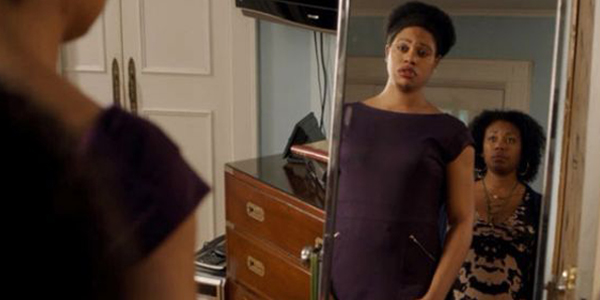
One of the most notable narrative devices that defines Orange's style is the beautifully timed histories of how each inmate ended up at Litchfield which are interspersed throughout the season. This contributes to the very complex and multi-layered characterisation, as it instantly makes each inmate more relatable, contextualising them in lives outside of prison. It underlines how we come to understand them and helps us to make distinctions between each character. It also injects that extra level of humanity into the series as the show very deliberately explores their motivations and circumstances that led them to commit crimes, something which obviously needs clarifying if a law-abiding audience is to effectively relate to a prison population. Yes, we get a sense of who they are through their interactions and relationships in prison, but when we're shown the crimes they committed to end up there (each varying greatly in severity) we get a level of understanding that shows it's not always as straightforward as we may have thought. Most of the women are suffering greatly with their crimes and through the use of these flashbacks they become mothers, daughters and wives to us, rather than just prisoners. We see the humiliation Piper has to go through when explaining to her wealthy upper-middle class parents why she has to go to prison, especially when they seem more shocked that she was a lesbian than that she broke the law. Through this scene, we start to understand what she was rebelling against when she decided to smuggle a case full of drug money for her girlfriend Alex; a different but equally oppressive environment where you must abide by rigid social etiquette and live up to people's high expectations. The most poignant example of just how effective the flashbacks are is the story of prison hairstylist Sophia Burset. The scene (pictured above) in which her wife helps her decide what to wear with a breath-taking level of understanding shows how Sophia sacrificed everything to become a woman and is one of the most heart-breaking moments in the series. It is obvious that both Sophia and her wife Crystal are agonised by the consequence of her decision, but her resolve to physically become a woman €“ despite it costing her her family €“ shows how important it is. Orange confronts viewers with an uncompromising insight into the struggles these women are faced with and how these issues aren't erased by their incarceration but are in fact made a hell of a lot more difficult. There's still a few characters' backstories we have yet to see, such as Suzanne aka 'Crazy Eyes' or Sister Ingalis and some that would benefit from even more disclosure. Only time will tell what the writers plan to share with us next!

4. Excellent Depiction Of Diversity

The cast of characters that make up the population of Litchfield come from all walks of life, every age, race, size and class, creating a rich and engrossing community. We're brought into the lives of everyone, from young Tricia Miller to the reverent Miss Claudette, with the same level of respect and complexity the writers use to craft all their characters. This extends to the way the writers handle the racial issues with a level of sensitivity and style that demands some serious recognition. In a similar way that the show avoids two-dimensional and clichéd prison tropes, Orange smartly gives each racial group the same depth and explores their distinct identities in delicate yet evocative ways. The inmates of Litchfield tend to break off into their own racial group as Morello informs Piper on her arrival. When Tricia kills herself, each group reaches out to the white inmates who are mourning her loss. They all acknowledge they didn't know her that well but offer their condolences to the white girls, bringing gifts of comfort food and toilet hooch to drown their sorrows, which demonstrates the philosophy behind this apparent segregation. It's not about racism €“ it comes down to a sense of belonging and familiarity. Feeling a part of something is a subtly important part of prison life. Those of you that might be thinking this is completely a none-issue just help to demonstrate how well the writers have done to create this realistic community housing every kind of woman you could imagine. The writers' artistic integrity ensured that this programme portrayed a true, non-discriminatory depiction of prison life and, with the prison concept always allowing for the introduction of new inmates, we'd love to get some more characters to make this cast even more eclectic in season two.

3. The Feuds

One of the greatest sources of tension throughout the series is the antagonism between many of the characters, most explosively between Piper and Tiffany and Mendez and Red. These feuds gathered alarming momentum towards the end of the season, ensuring there is a constant sense of volatility throughout season one. Given that both climaxed in the finale, we can only hold our breaths and wait to see what happens next. From the very start of the series, George 'Porn Stache' Mendez's menacing antics are constantly offsetting the comic, lighter moments of the show and this is what gives Orange its strength. The writers' ability to effectively create very funny scenes but seamlessly transition into scenes of intense drama through these antagonistic interactions really made it resonate with audiences this year. Similarly, the scene in which Tiffany confronts a naked Piper in the shower and wipes her self-mutilated bloody hand all over Piper's chest is one of the most chilling, and exemplifies the real danger Piper is in for the first time. She might have felt threatened and vulnerable when Sam Healy throws her in the SHU but she knew she was never in mortal danger. We all know that the season finale sees the Piper/Tiffany feud come to a rather exciting head when Tiffany corners Piper with a sharpened cross in the yard. We're kind of excited to finally see Piper stop resisting her situation and start acting appropriately. This is probably the most obvious single plot point that we can't wait to see the conclusion of when it returns later this year, as it fades out to Piper relentlessly beating Tiffany beyond submission. But we also can't wait to see who will finally win the battle of wits between Mendez and Red, or if Healy will get his comeuppance for exacting his revenge on Piper by sinisterly ignoring her cries for help.

2. Great Performances

In an era where the biggest Hollywood stars are popping up all over our television screens, Orange's cast is made up of relatively unknown actors and whilst there are some that are outstanding, I can honestly say the entire cast delivers staggeringly strong performances. The group have been pretty active on their social media pages and, by all accounts, there's a strong bond shared amongst them which perhaps explains why they convey such brilliant chemistry on screen. Each actor brings a level of commitment to their respective roles that reinforces the brilliantly complex characterisation the writers have constructed. Natasha Lyonne in particular deserves a special mention. Her portrayal of drug addict Nikki is the epitome of what makes these characters great. Whilst predominantly a comedic role, this doesn't mean Nikki isn't as multifaceted as the rest of the cast. Her relationship with Red, especially, makes for some moving moments as their complex relationship goes through some tough times. Uzo Aduba as Suzanne 'Crazy Eyes' Warren has also been picked out by critics as a scene stealer and having the ability to turn a potential one off character into a fan favourite. Initially declaring Piper as her wife after she threw her pie at Piper's ex, Suzanne is also a comedic role and serves to signpost the very different world Piper has now entered. But as the series progresses, we see so many different sides to her character and the dedication that Aduba brings ensures that Suzanne is as real and human as the rest of the cast and not just underdeveloped comic relief. With all the cast confirmed to return for at least some of season 2, we're almost guaranteed the same high quality of performances from an ensemble cast that is possibly one of the strongest we've seen in a while.

1. The Exquisite Exploration Of The Human Psyche

The central theme that runs through the entire first season of Orange is most certainly the effect of incarceration on Piper and the other women at Litchfield. Piper is constantly struggling with adjustment to a lot of things when she enters prison, but none more than being confronted with her real self. This is what gives Orange its emotional punch and elevates it above just an ordinary prison dramedy. Initially it's just superficial observations that assert her difficulty to adjust, such as Piper saying she still has a few seconds when she wakes up every morning where she forgets she's in prison. She cries when she gets her hair cut just because she's grateful for the human touch. But it's a much deeper realisation that comes to her a lot more explicitly in the latter half of the season. Piper slowly begins to understand her innate flaws and what makes her who she is. As she shares with an at-risk teen visiting the prison to be scared straight, there are no distractions in prison. In a powerful monologue that probably landed her the Golden Globe nomination, she goes on to say how on the outside you can convince yourself you're something you're not but in prison there's nothing to stop you coming face to face with who you really are and 'it's the truth that's going to make you her bitch'. Slowly but surely as she's stripped of her relationships €“ both with Alex and Larry €“ and she manages to offend other inmates she valued via Larry's radio interview, Piper has nothing left to lose but her life and even that might not last long with Tiffany deciding the world would be a better place without Piper in it. In a brutal final scene that's made all the more effective through juxtaposition with the joyous Christmas pageant, Piper warns Tiffany out in the courtyard that she best not f**k with her given Piper's mood. Viewers can see the revelation in Piper's face as she realises what she must do and it is clear that she is more than defending herself when she unleashes the excessive blows. Piper is finally coming to terms with her situation and, having fought it for all thirteen episodes (she was still insistent she could reason with Tiffany), it comes to a destructive and jaw-dropping end. The overarching theme that ties all these points together is that the writers of Orange is the New Black have delivered an exceptionally authentic and humanistic programme that honours every issue the show takes on. We can't wait for season two because season one was so undeniably entertaining. It had something for everyone and every mood and thirteen episodes just weren't enough. What are your thoughts? What stories can't you wait to see continue when the show returns? Let us know in the comments section below!

Contributor
Contributor

Born in Yorkshire, Katie is a freelance journalist currently based in Essex. As a keen sports writer, Katie has a diploma in Multimedia Journalism from the Press Association and has worked on the busy Newcastle Chronicle sports desk. She has also written for Gateshead FC and contributed to various websites including Give Me Sport. When she's not watching sports, films or playing music, she's gaming. 8 hours and eventually reaching wave 80 on Modern Warfare 3′s Resistance is a productive day!