10 Plot Holes That Kind Of Ruin Breaking Bad

Breaking Breaking Bad.
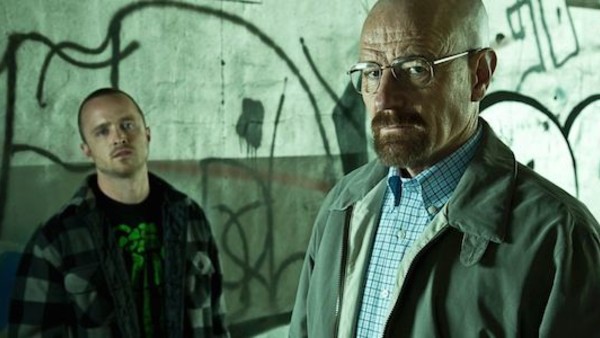
Ever since the world caught onto its genius and decided that Breaking Bad was the best thing on TV (despite the fact that it took most folk until the show's fifth season to realise such a thing), it has been revered with something akin to God-like status. Say something untoward against the characters, the writing, or any of its many twists and turns, after all, and you're going to have a bad time. People are super passionate about Breaking Bad, and levelling any form of criticism at the show usually results in a rabid dog-style meltdown of the highest proportions. But the truth is that Breaking Bad is not perfect - far from it, in fact. Though the show is undoubtably one of TV's all-time great achievements (to say otherwise would be a little bit ridiculous), it ain't fool proof, and - along with a number of notable contrivances and narrative bumps - there are plot holes in abundance scattered throughout. Though most of said plot holes are forgivable offences, there are a small number - 10 of which you'll find gathered up here to ponder and pour over - that kind of ruin the show when you actually think about them all in tandem. In a series that has been continually lauded for its intelligent characters and airtight plots, these holes really have no place...

10. "Pure" Meth Wouldn't Be Blue - "Pilot" (1.1)

A minor plot hole, perhaps, but no doubt an aspect that shows itself to be intrinsically annoying when you consider that Breaking Bad purports to be a show about chemistry, a chemistry teacher, and the illegal drug business - all it once. Plainly put, then: in the real world, the purest form of crystal meth wouldn't - and couldn't - be blue, and none of the chemicals that Walter White uses to render his batches as such would result in blue meth, either. In reality, the purer the meth, the clearer and more see-through in quality. If it were to have a colour tinge as a result of its purity, experts claim that meth would in fact be of a "yellowy" colour. A mere creative embellishment? Sure. But also it's kind of annoying to know that - as far back as its first episode - Breaking Bad failed to stick with any sense of realism regarding crystal meth and its properties.

9. Hydrofluoric Acid Would Never Eat Through A Bathtub - "Cat's In The Bag..." (1.2)

Given that Breaking Bad - at least, according to the people who made the show - prides itself on presenting viewers with "real-world science," this is something of a doozy. Whilst lots of the chemistry moments inherent to this chemistry-themed TV show are accurate in their depiction, others are not: one such example can be viewed in season one episode "Cat's In The Bag...", which saw heroes Walter White and Jesse Pinkman attempting to "melt down" the corpse of a drug cartel member in a bathtub. To do this, they filled the tub with hydrofluoric acid and - as instructed by Walt - waited for the chemistry magic to kick in. This set-up eventually pays off unexpectedly when the acid melts through the tub - and indeed - the floor beneath it, culminating in a comical scene where blood and guts (to Walt and Jesse's shock) come falling through the ceiling in a comical fashion. In reality, though, hydrofluoric acid would never have been strong enough to eat through the kind of bathtub glimpsed in the scene. It's a minor mistake, but one that kind of makes the supposed Nobel prize-winning protagonist, Walter White, look a tad stupid.

8. Meth Doesn't Cause Hallucinations - "Cancer Man" (1.4)

In one memorable scene in season one's "Cancer Man," Jesse Pinkman - high on crystal meth - grows overtly paranoid when two Mormon missionaries approach his house; he hallucinates and sees them as bikers of the Hell's Angels kind, hulking forwards with faces marked with death and carrying recently-sharpened machetes. It's a funny sequence, but it makes no sense at all. Why? Well, as those folk who have smoked crystal meth will know, the drug doesn't cause hallucinations. It's not a substance like LCD and doesn't provoke similar effects to the likes of magic mushrooms. And though this might seem like a minor oversight of the creative kind, it's somewhat irritating that a show built around selling crystal meth forgets one of the key things about the drug in question.

7. Really? The Plane Collision Occurs Right Over Walt's House - "ABQ" (2.13)

The defining plot twist that caps Breaking Bad's second season involves a two-way plane collision that results in the tragic deaths of 167 people. The accident occurs, indirectly, when Walt allows Jesse's girlfriend, Jane, to choke and die in her sleep. Later, Jane's father, an air traffic controller, is so affected by her untimely death that he loses concentration during a shift at work and fails to do his job properly. Thus, two planes collide. It's a somewhat strange narrative event, and one that Breaking Bad fans have found themselves polarised over ever since. As a plot twist, it's one of the most bizarre things that the show has embarked upon - if only for its contrived nature, which undoubtedly allows it to qualify as something of a ham-fisted coincidence. When you think about it, isn't it insanely implausible that the plane crash that Walt causes happens to occur right above his house? So much so, in fact, that wreckage from the collision actually ends up on his property - namely that pink teddy bear that the show took so much joy in foreshadowing the twist with across the span of the series? It just doesn't add up, does it? It's a coincidence to end all coincidences, and - naturally - it breaks viewer immersion as a result.

6. Why Doesn't The DEA Pay For Hank's Therapy? - "Kafkaesque" (3.9)

After Hank Schrader - Walt's DEA officer brother-in-law - finds himself severely wounded in the aftermath of a battle against two Mexican cartel member assassins, he's desperately in need of therapy in order to get himself back into shape. As a well-respected and incredibly high-ranking DEA officer with tons of friends and colleagues around him, you'd expect that the DEA - and their insurance policies - would fund Hank's intricate recovery. Nope: due to a plot contrivance, Breaking Bad ensures that Walt ends up paying for Hank's therapy as both an admission of guilt and as way to move the story forwards as a result of the show's "gambling winnings" plot. But it doesn't seem all that realistic that the DEA refuse to help Hank out in all the ways necessary; the fact that there's a fundraiser held as a means of celebrating Hank's parking lot heroics should have guaranteed all the required money for his therapy was acquired. And surely such an influential member of the DEA - working on such a high-profile case - would have found himself at the tail end of endless charitable gestures or a special arrangement courtesy of his employers?

5. Why Does Mike Trust Walter To Deliver His Bag? - "Say My Name" (5.7)

Though they're brilliant in a lot of ways, the characters in Breaking Bad seem to change their personalities whenever the show requires them to do something to move the plot in a new direction. That's to say, they tend to lack a definitive sense of consistency - depending on the episode, a character might act in ways that go against what we know about them with little forewarning. One such example can be glimpsed in the episode titled "Say My Name," which sees hitman come cleaner Mike, associate to both Saul Goodman and Gus Fring, trusting Walt for no reason other than "uh, plot." Mike is inherently distrustful of Walt - and rightly so. And yet in the episode, Mike defies his established traits and sends Walt to deliver his go-bag, which pretty much makes no sense in any way, shape or form. Why would Mike have suddenly decided to trust Walt, of all people, the one man he knows not to trust, both instinctively and from experience? Wouldn't he have chosen Jesse instead - or literally anybody else?

4. How Did Walt Poison Brock? Like, Actually? - "Face Off" (4.12)

Breaking Bad happens to be a show with a lot of poisonings, but it's also a show with a noticeable lack of explanations regarding said poisonings. One such example is that of Brock, a little kid who Walt poisons in an attempt to turn Jesse against Gus Fring. At the end of season 4, it is heavily implied that Walt poisoned Brock using a plant known as "Lily of the Valley," though the show never offers up an explanation as to how he actually manages to do it, presumably because it was either too tricky to write in or because the writers failed to come up with a legitimate way to present such an act without compromising the tension. Because Walt, somehow, would have had to have gotten Brock to eat the berries from the plant in order to poison him. And according to those unlucky folk who have done so in real life, they taste incredibly bitter - slipping them into Brock's food or drink would have resulted in the kid spitting them out. It would have been nice, then, for the show to have given viewers the opportunity to learn how such an evil deed was done; it seems fairly difficult, and - unexplained - feels like a plot hole. And speaking of unresolved poisonings...

3. How Did Walt Manage To Poison Lydia? - "Felina" (5.12)

The final episode of Breaking Bad, perhaps in its attempts to tie up as many loose ends as possible and imbue ever character with the fate they deserved, felt a little heavy handed, despite its achievements. Whilst some nagging details were padded out, others were left unexplained, leaving viewers to imagine and surmise how certain things went down. In some cases, this worked. In others, it felt a little bit like lazy storytelling. Which brings us to Walt and Lydia. Walt poisons Lydia, of course, using the ricin that had been floating around in the show's background ever since season 4. He slips it into her tea-sweetening pack, which - as a creature of habit - she unknowingly adds to her drink during their final meeting. Later, she dies. But how did Walt pull off such a deceivingly complicated task? If Lydia brought her own sweetener, how did he get it into the sealed pack? If she used a packet provided at the diner, how did he ensure that she picked up the right one? Lydia wasn't even sitting in her regular, habitual seat, after all. There are tons of variables involved, and no solid answers.

2. How Did Walt Know Where He'd Park His Car? - "Felina" (5.12)
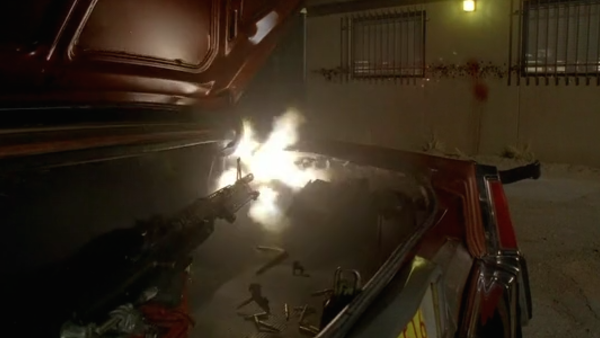
At the end of "Felina," the very last episode of Breaking Bad, Walt hatches an ingenious plan to get inside Uncle Jack's secret compound in order to take him and his Nazi buddies out, whilst also rescuing Jesse in the process: he builds a makeshift machine gun turret in the trunk of his car, which is activated via the car alarm button on Walt's car keys. When activated, the machine gun fires whilst rapidly, left and right. Very smart. In order for this plan to work, though, Walt needs his car to be parked in exactly the right spot - parallel to the clubhouse where Jack and his goons hang out. Somehow Walt manages to position the car in precisely the right place when he arrives; no obstacles get in his way in the process. But how did Walt know he'd be able to do such a thing? What if one of the Nazis had insisted on driving the car up to the clubhouse from the compound gate? Or if Walt had been told to park in a different place, away from where he hoped to park his car? He had no backup plan; the whole thing, though expertly undertaken in the context of the show, is actually incredibly sketchy as far as plans go. It was far from full-proof, and extremely prone to error. As a result, it seems incredibly unlikely that Walter White would have decided on the automated machine gun idea, given its proximity for failure.

1. The Entirety Of Walt's Reverse Transformation
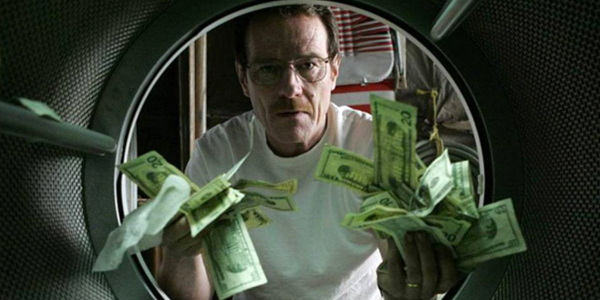
Remember this: it took Walter White the sum of five seasons to make his full-on transformation from "Mr. Chips into Scarface." And yet, for all intents and purposes, the show does not stick with its own ethos to the bitter end like it should have done - it backs out at the last minute, and decides to give this character - who was originally supposed to be a Tony Montana-type; somebody audiences feel little sympathy for by the end - into a kind of anti-hero who realises that he's done a lot of stuff wrong and then tries to correct it. And that "moment of realisation" comes far too quickly, given how long it took for Walt to make the transition to his new, villainous mindset to begin with - one where he'd stop at nothing to "win." Walt breaks bad so frequently in the show's final season, after all, and then, out of nowhere -and armed with an endless money pile - he decides to quit the business and resign himself entirely. But if the show was actually never about the money, but Walt's own pride, why would he ever have attempted to quit in the first place? "I did it for me," he tells Skyler in the last episode. So it doesn't make all that much sense that he decides to throw in the towel when things are going so well, does it? And it's the quick and almost flippant speed at which Walt decides to end his time at the top of the meth empire that he spent the entire show building that stands as Breaking Bad's most erroneous plot hole; it lacks substance, logic and realism, and goes against everything audiences expected of a show they thought they knew. Walt, poised as the king, would never have chosen to step down. Quitting was totally out of character.

Contributor

Sam Hill is an ardent cinephile and has been writing about film professionally since 2008. He harbours a particular fondness for western and sci-fi movies.