Doctor Who: 10 Things Fans Want From Series 9 (But Won't Get)

As Series Nine of Doctor Who approaches some fans are once again set to be disappointed as their hopes for the show are dashed for another year at least.
Steven Moffat is not adverse to giving the fans what they want. After all he's brought back Paul McGann, reverted to the pre new paradigm Daleks, made the anniversary special a multi-doctor romp, swapped the cybusmen with the genuine article and given us scenes of the Time War and Gallifrey. Series Nine will continue the trend, providing fans with plenty to get excited about. For starters we will see the return of the much missed two parters. The producer has also brought on board two new female writers (Catherine Tregenna, Sarah Dollard), fulfilling another wish within fandom. But nevertheless, some hopes for Series Nine are likely to be nothing but pipe dreams. Many of them resurface in every interregnum. Even if Steven Moffat has emphatically said "no" the rumours continue on the basis that he has been known to be economical with the truth and sometimes downright misleading. So are there any wishes for Series Nine that we can with any confidence blow out of the water? Here are ten things that we are unlikely to see. And if we do then, unlike Paddy Ashdown, I will eat my hat. Really.

10. Another Multi-Doctor Episode

This year is the tenth anniversary of the rebirth of Doctor Who under Russell T Davies, and some had hoped that this would be marked by a special episode - perhaps one even penned by the former showrunner. But as it happens the landmark has passed by with barely a mention - and quite right too. The show is 52 years old, not 10 and the memory of the 50th anniversary special is still fresh in viewers' minds. The ambitions of that epic year took their toll on the producer - it's not an experience he'd want to go through again. The complexities of multi-doctor adventures, both in terms of story and production mean that they are almost certain to be avoided. In an interview with Blogtor Who (Nov 2013), when asked about the possibility of another return for Paul McGann Moffat said: "It would be very odd to sell two Doctors at the same time. Who'd go on the lunchbox?... we haven't got plans." There's no indication that he has moved on from this position. Hopes were raised for a Twelfth Doctor meets Third Doctor episode when Sean Pertwee began posting images of himself in his Father's costume. The resemblance is uncanny. But an actual appearance in the role? Not going to happen any time soon. If ever. And even then it would more likely be in the form of a short sketch, in a similar vein to Children In Need's Time Crash (with David Tennant and Peter Davison).

9. A Fixed Transmission Time

The broadcast time for Doctor Who has chopped and changed considerably in recent years. Last year saw a much later average start time, which fans wrongly assumed meant that the series would be less suitable for younger children. The expectation this year is that the show will air a little closer to Saturday teatime, with BBC executives admitting that the move to a later time was a mistake. It's something of a myth that in the good old days weekend television schedules were more consistent. Sporting events regularly affect timings and broadcasters have always sought to get one over on the competition through clever scheduling. So if I was you I'd set the digital recorder to series link. Chances are the start times will continue to fluctuate from week to week.

8. Clues To More Missing Episode Recoveries

With the omnirumour in full swing, the return of the Yeti-controlling Great Intelligence and a reference to the London Underground in The Snowmen led to claims that members of the production team were clearly in the know about the recovery of the Patrick Troughton classic, The Web Of Fear. Since then optimistic fans, expecting a larger haul of episodes from the Indiana Jones of Doctor Who, Philip Morris, have read all kinds of oblique clues into Series' Seven and Eight stories. It sounds a little far fetched, but the editors of the official Doctor Who Magazine allegedly encouraged such a way of thinking by printing clues onto the spines of previous editions. Yet as Russell T Davies' Gridlock demonstrates, even an obscure monster from the archives can be unashamedly brought back from the dead in a fairly arbitrary manner (in this case the crab-like Macra from The Macra Terror). Nobody was thinking back then that The Macra Terror must have been found. There is a deafening wall of silence surrounding the ongoing work of Philip Morris' company TIEA, which can either mean there's nothing more to report or that complex negotiations and Non Disclosure Acts are still in play. Either way, unless Steven Moffat wants to prank us, references to missing episodes will be coincidental or unintended because he's either sworn to secrecy or out of the loop. What's to say that like many of us the producers have had enough of all the nonsense surrounding these alleged returns? It's not in the show's interests to add fuel to the fire.

7. The Irreversible Death Of A Companion
Steven Moffat likes those stories where "everybody lives" (The Doctor Dances) and yet the shadow of death has hung heavy over many of his episodes and arcs. River Song, Rory Williams, Strax and Danny Pink are all characters that have lived on beyond their deaths. Both the Doctor and Sherlock have also been "killed off" with a deliberate emphasis on finality in order to set up the mystery of how they cheated death. The reaction to this has been a strange desire among some to call for blood, specifically that of poor Clara Oswald. Already the longest serving new series companion, Steven Moffat has written the character out twice (Death In Heaven and Last Christmas) only for Jenna-Louise Coleman to change her mind about leaving. Series Nine will see the return of Osgood who was apparently killed by Missy in Death In Heaven. And with the episode titles of The Girl Who Died and The Woman Who Lived it looks like this preoccupation will continue. But as for Danny Pink; though he could have taken the opportunity to come back from the Nethersphere, he sacrificed himself in order that the boy he killed in war be saved. Dream sequences and flashbacks not withstanding, this surely is the end of the character. With Clara still grieving for her loss it's unlikely that we will see another major death in Series Nine. Instead the Doctor and Clara will be escaping into their new adventures and the word is they'll be having a whale of a time.

6. The Return Of Gallifrey And The Time Lords

In The Day Of The Doctor, Steven Moffat in typical form effectively brought back from the dead a whole race and planet, only to then have them neatly cordoned off inside an inaccessible pocket universe. Artistically and story wise the return of Gallifrey would present major headaches and so Russell T Davies wisely brought back the Doctor as the last of the Time Lords. The classic series vision of Time Lord society and history is fraught with inconsistency, largely down to Robert Holmes' reimagining in The Deadly Assassin. The mystical figures lost much of their gravitas and intrigue in the process. The full return of Gallifrey would need to wrestle with this backstory or face the ire of fans, not to mention some explanation as to what happened to former companions Romana and Leela. It's a minefield best left untrodden. Intriguingly the door has nonetheless been left open by Steven Moffat. In The Time Of The Doctor, it became apparent that the Time Lords are not completely unreachable and can potentially journey back to this universe, so long as they deem it safe enough to do so. In Listen, Clara travelled to the Gallifrey of the Doctor's childhood. And just in case we'd forgotten all that, in the series finale Missy goes and teases the Doctor with fake coordinates to their home world. But finding Gallifrey for the Doctor would be like finding Earth to Admiral Adama (Battlestar Galactica). It would signal the end of the show - unless the planet he finds is one he decides he must reject, making the whole thing a fruitless and unnecessary quest. The desire to find Gallifrey has not been spelt out strongly enough to create sufficient pathos. If Gallifrey is to be referenced in Series Nine, the chances are it will be to increase the Doctor's desire to find it. We are a long way from the resolution of that particular plot point. With Steven Moffat confirmed to be continuing as showrunner into Series Ten, there's no hurry to complete the quest just yet.

5. The Regeneration Of John Simm's Master Into Michelle Gomez' Missy

One of the favourite elements of the 50th anniversary celebrations was the minisode The Night Of The Doctor which finally brought a resolution to the Eighth Doctor's story. It's not a given that a regeneration scene has to be filmed, and indeed the botched opening scene in Time And The Rani remains one of the lowest points in the show's history. Colin Baker's Doctor deserved the full final story that the actor requested, but instead we witnessed a bewigged Sylvester McCoy play a poorly disguised Sixie. As if that wasn't ignominious enough, some BBC insiders explained that the regeneration was triggered by a fall from the Doctor's exercise bike. Colin Baker quite rightly refused to be part of such a travesty, but when he said no, the BBC should have broken with tradition and avoided the regeneration scene altogether. Arguably too, the TV Movie would have been more successful in attracting a new audience and securing a future for the show had it started with McGann - the approach taken by Russell T Davies with Eccleston in Rose. But the most vexing of the unanswered questions from Series Eight is the untold story of how the Master, last seen travelling back to Gallifrey with Rassilon in The End Of Time Part 2, came to be Missy. It has led to expectations that all will be revealed in a future story and even the hope that John Simm will return to film a regeneration scene. But is it strictly necessary? The Master is an escape artist extraordinaire and it's not the first time the character has returned from the dead without explanation (Planet Of Fire - Survival). While in 2009 John Simm wasn't adverse to returning to the role, he and the show have since moved on and I can't see Michelle Gomez in a wig mimicking her predecessor. Besides, Steven Moffat likes to tease us with open-ended plot points and unanswered questions. The decision to bring back the master was character driven, not story driven. The idea of a female Master has been a big enough thing to play around with, without having to work out a convoluted plot to explain how she came to be. In the June edition of the official Doctor Who Magazine, Moffat was asked point blank "Is Missy the regenerated John Simm Master?" Judging from his answer, that part of the Master's story has yet to be written, "In my head, as it stands, she's the one after John. But my researches aren't complete, so I'd better say nothing."

4. Improved Audience Share

Every year the naysayers claim that falling ratings signal the demise of the show. There is a particular type of fan who pours over BARB ratings and audience share statistics using a fine tooth comb, with the intensity and frenzy of a frustrated parent trying to yank nits out of their childrens' hair. But the figures are understandably affected by changing viewing habits and increased choices of what to watch, how and when. The drop has not been as steep as many predicted - a testament to the consistency of a show that is now on an unbroken ten year run. And right now the wave of popularity is huge, especially when we consider the global picture. Doctor Who is now even considered marketable enough to warrant its own Lego set and a leading role in the forthcoming Lego Dimensions console game. The viewing figures for Series Nine are unlikely to reverse the trend. Increasing competition from other channels and today's 'I'll watch it when I finally get round to it' mentality mean that the stats will continue to drop. In fact without the spike of a new incumbent in the title role, the naysayers may have a field day. Thankfully, the figures present an incomplete picture, one that doesn't mean the show is losing its appeal. In September BARB will be launching its beta "TV Player Report" which will collate viewing figures from computers and mobile devices. Whether it will be effective enough to make a difference to Series Nine figures remains to be seen.

3. A Softer Approach From Peter Capaldi
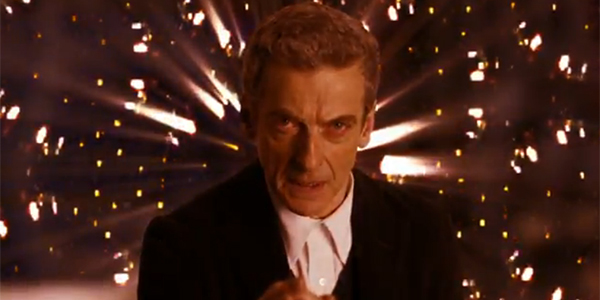
Peter Capaldi hasn€™t been subjected to anywhere near the levels of criticism that Colin Baker received in the 80s with his tetchy and arrogant Sixth Doctor. But it€™s fair to say that the acerbic Twelfth Doctor hasn€™t been everyone€™s cup of tea, especially to some of the newer fans who only have Matt Smith and David Tennant as reference points. Steven Moffat has promised that the Twelfth Doctor in the new series won€™t be quite the same man we saw first time around. Specifically we have been told to expect more humour. It would be a mistake to assume that this means he will have a personality transplant and suddenly lose his offish demeanour. He€™s not going to start hugging everyone and acting like the hero he was questioning in Series Eight. The difference is that he will no longer be so self-absorbed. Having worked out that he is neither a good nor a bad man he will be more comfortable in his own skin. With more confidence we can also expect a less readily identifiable hero, one who carries on regardless. Clara will no doubt continue to be annoyed and frustrated by his actions and words. The lighter side of this particular incarnation isn€™t going to be zany like Matt Smith, or infectious like David Tennant. There will be a dark, alien-like quality to his humour. Steven Moffat in Doctor Who Magazine issue 484 goes into some detail about how much of the Doctor€™s character was shaped by the script and how much it was down to Capaldi€™s style of delivery. He writes €œif you give a very, very mildly ascerbic line to Peter, it comes out like a gale force.€ Moffat is deliberately pushing Capaldi€™s performance towards the lighter side for Series Nine, but the character isn€™t intended to be radically different. Tellingly, Moffat€™s Series Nine notes to Capaldi included the following: €œYou€™re kind of the don€™t-give-a-damn Doctor. You actually don€™t give a damn what you say to people.€ So we should expect a less intense characterisation, but certainly not a more likeable, softer one.

2. The Return Of Classic Daleks As A Major Plot Point

One of the biggest talking points in the Series Nine trailer was the appearance of a classic sixties Dalek in the background of a shot of a Russell T Davies style drone. Queue excited speculation that this iteration of the pepperpots will play a major role in one of the stories. But haven't we learnt our lesson from Asylum Of The Daleks which promised us "every Dalek ever?" It failed to deliver on that front, except for a brief shot of the inactive Daleks driven mad by the past interventions of the Doctor. The curious shot of what looks like a Dalek city also fuels the rumours of a return to Skaro and earlier this year the press were reporting a scene in which the Doctor meets Davros as a boy. It's all a bit tenuous at this stage. We know that the BBC built new classic Daleks for the drama An Adventure In Space And Time so this could very well be one of those models. But the design is one thing, what about those classic voices as performed by such talents as Roy Skelton, Peter Hawkins and David Graham? Although the versatile Nicholas Briggs can do a passable impression of his predecessors' tones, it would be overly ambitious to do so in an episode. Dalek history is confusing even for the ardent fan. Surely the writers would avoid muddying the waters further and alienating the general audience? Even a two parter would struggle to give enough exposition for such shenanigans. We'd need Daleks' Masterplan length at least. The chances are that just as the iconic old style Dalek features only in the background of the shot, so too it will play a peripheral role in Series Nine, leaving their successors to steal the limelight.

1. The Return Of A Former Companion

Eagle-eyed fans will have spotted photographs of various former companions posing with Peter Capaldi on the new Tardis set, including Louise Jameson (Leela), Katy Manning (Jo Grant) and Frazer Hines (Jamie). Although they are in their civvies and clearly not involved in Series Nine it hasn't stopped fans from speculating that one or more could be set for a comeback. The return of an old companion features as number 5 in a top ten list of what readers of Doctor Who Magazine would most like to see in the next series. Top of most fans' wish list is Carole-Anne Ford as Susan Foreman. The actress has made no secret of the fact that she would jump at the chance to reprise the role of Susan. In all the speculation about the identity of Maisie Williams' character, who in the Series Nine trailer says to the Doctor "what took you so long, old man?" Susan Foreman, the Doctor's granddaughter is a popular suggestion. But chances are she will be a new character; one introduced earlier in the story the clip was taken from. The best way to honour the illustrious past and talented actors of Doctor Who is to take the show forward into imaginative and daring new directions. It is only two years ago that the show went into overdrive in deference to the past - rightly so given the 50 years landmark. But now it's time to move on. As Steven Moffat nears the end of his tenure, his focus will no doubt be upon ensuring the continued longevity of the show. He is reluctant to even bring back his own creations such as John Barrowman's Captain Jack and Alex Kingston's River Song, pointing out that they would only return if a story warranted it. Speaking to Zap2It last December he said their return is "never, ever closed off. It's all about 'Do you have a story that's worth it?' Unless you've got a story that is absolutely informed and invigorated by their presence, just bringing a character back in an ordinary story won't do. Both River Song and Jack Harkness are massive characters in Doctor Who mythology. Their returns would have to be seismic, not routine. Giving them anything less would be a disservice to the characters and the actors who brought them to life. Besides, it€™s better to let them be missed than wear out their welcome, right?" How much more would that apply to the Doctor's first companion? It's certainly not something that could be done quietly, without bags of advance publicity. While fans continue to wish for the old in the new, Big Finish is pleasingly reversing the trend by bringing the new into the old, with classic Doctors and companions set to face off against new series monsters in a forthcoming audio series. But if it's old companions you are looking for, then that's the most likely place you'll find them.

In this post: 
Dr Who
 
Posted On: 
Contributor
Contributor

Paul Driscoll is a freelance writer and author across a range of subjects from Cult TV to religion and social policy. He is a passionate Doctor Who fan and January 2017 will see the publication of his first extended study of the series (based on Toby Whithouse's series six episode, The God Complex) in the critically acclaimed Black Archive range by Obverse Books. He is a regular writer for the fan site Doctor Who Worldwide and has contributed several essays to Watching Books' You and Who range. Recently he has branched out into fiction writing, with two short stories in the charity Doctor Who anthology Seasons of War (Chinbeard Books). Paul's work will also feature in the forthcoming Iris Wildthyme collection (A Clockwork Iris, Obverse Books) and Chinbeard Books' collection of drabbles, A Time Lord for Change.