Doctor Who Series 11: 3 Ups & 2 Downs From 'Rosa'
Rosa Parks and Martin Luther King join Jodie Whittaker's new Doctor in the 1950s...

Given this brave new era of Doctor Who, you might have been forgiven for wondering just how old school Chibbers and his creative team were going to go. The latest episode - Rosa - proved that consideration perfectly. The Doctor took us back to 1955, and this episode took Doctor Who right back to 1963, back to Sydney Newman’s office and right back to where Doctor Who all began.
The episode was thoughtful, important and very powerful and it is very justifiably earning plaudits across the board. This was a change of pace for the series after the first two episodes and the beginnings of change in Jodie Whittaker's wonderful new doctor, as the material warranted. And while it was a great episode, there is balance in this conversation and it's worth exploring what it could perhaps also have done a little better alongside the praise.
First, the negatives...
Downs
2. The Story's Reasoning Lacked Punch
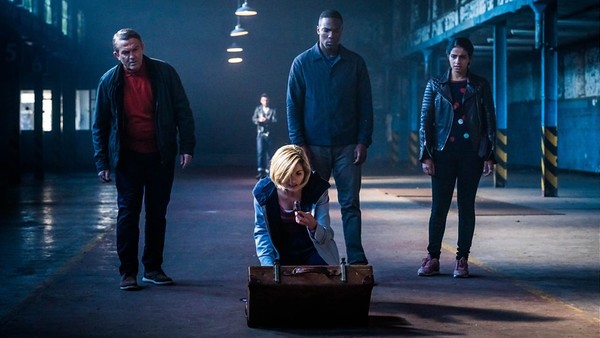
Wibbly wobbly, timey wimey stuff is what got The Doctor into the mess at the start of this episode in the first place. That's how she, Ryan, Yaz, and Graham ended up chasing after Rosa Parks in the 1950’s where we were introduced to Krasko, the main villain of this episode (though you could call society at that time the villain of the week), who deserves some attention.
He recognised a TARDIS, he knew of Time Lords and he was wearing a vortex manipulator. It seems that he’s trying to throw history off-course, nudging the past to change the outcome of the future. But why? Who is he?
Could he be a Time Agent, like Captain Jack Harkness? When Ryan confronts him, he says ‘your kind,' which could either mean people of colour, or humans.Presumably, he’s not human, since we got some backstory about him and his time in space prison...
And then, suddenly, poof, off he went, zapped into the past. He was the reason The Doctor was dragged here in the first place, as this setting needed a concise reason why she and her companions would be here. Surely The Doctor, knowing her companions, wouldn’t willingly bring them to this backward time within American society?
But with Krasko and the energy readings, there was a reason. Sadly, the execution means it was a little thin on the ground as reasoning goes.
1. Something A Little Familiar
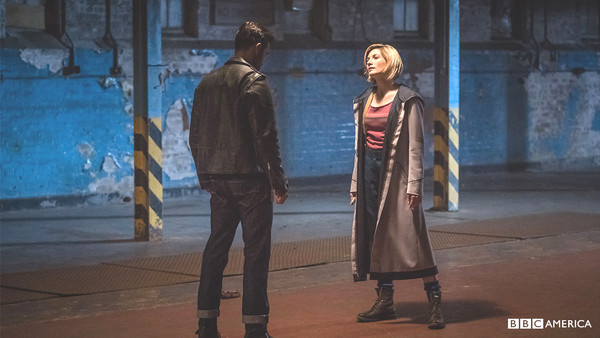
Now notice how I said "zapped into the past" - not vaporised, or murdered, or flattened by a bus, zapped into the past. He’s still alive. Sound familiar? Tim Shaw - DNA bombs detonated, but he teleported away. We’re not sure if he’s still alive, but his race, the Stenza, were re-introduced in only the next episode.
Are we going to get the same with Krasko? Another villain introduced to crop up throughout the series? Now, Chibbers definitely needs to not play it so safe like the last episode, but if he’s going to start dropping a ton of potential plot threads that might end up going nowhere, that’s not a good sign.
It could just be the case that Krasko was a thinly-sketched villain meeting an abrupt end, or it could be that he's set to play a larger part across the series.
And now the positives...
Ups
3. The Supporting Cast
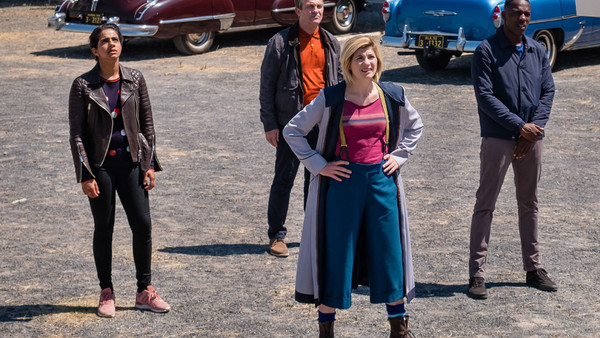
There was a lot to love about the performances in this episode, including the Doctor herself (particularly that Banksy moment), but it's the supporting cast who get the lion's share of the praise.
Graham is becoming a truly great character as the series progresses. This time out he bluffs a bullock, calls himself Steve Jobs and pitches the iPhone 63 years early. Very on-brand.
The companions are very sensible. Makes sense since they’re aware of their climate, but it hasn’t stopped companions in the past! *cough* Clara got herself killed because she’s an idiot. *cough* It’s a nice change! Up.
Finally, Vinette Robinson. You might remember her as Sgt. Donovan from Sherlock. She gets one hell of an up for her magnificent performance as Rosa Parks. This is going to be a role that both she, and none of the audience who did or ever will watch this episode, will ever forget. Bravo.
2. The Social Commentary
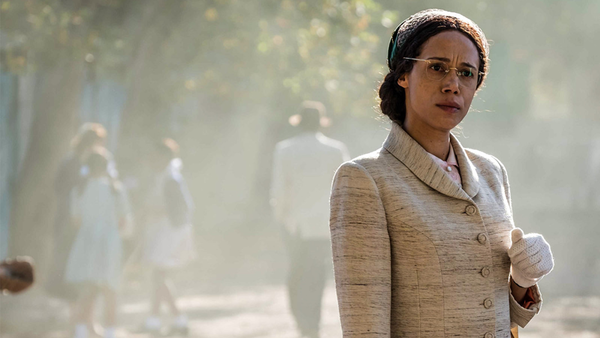
Not going to lie, I went into this episode concerned: not because I was worried it was going to be bad, just concerned as to how they’d go about it. It’s 1955 Alabama: the entire episode revolves around the irrefutably influential Rosa Parks. We already immediately know what we’re up against, and for it to be released in this political climate? Wooh, this was going to be an interesting one.
Doctor Who has taken in social issues in the past, especially in the series just gone by, but it was a bit more out of place - a bit more out of context - and it's occasionally felt shoe-horned and unnecessary. With Rosa, however, this wasn’t some one-off comment; this was an entire episode dedicated to commentary.
But most importantly, this was very much what Doctor Who was meant to be way back in 1963 - a history lesson and a part of history brought back to the masses. Rosa Parks, what she did and how she shaped today. Sydney Newman’s original vision for the show, history and education, not bug-eyed monsters, was brought to life again last night.
1. The Emotional Impact

Race has been mentioned before in NuWho, but nothing like this.
So I’d heard we were getting the scene set for us right from the off and those early hints we heard about the episode before airing weren’t half kidding. Ryan gets slapped across the face by a white man after he tries to give a white woman her glove back, which she unknowingly dropped. It’s brutal and something we’d never thought we’d see in Doctor Who.
It highlights within society how far we’ve come, but still how far we have to go. It brings a mirror up to our face and shows us a reflection of the past, and one of the present. It doesn’t blow anything out of proportion, nor does it hold back either. We’ve travelled through time with the Doctor for years, but now we’ve seen it. This happened.
We’ve seen historical events before, thrown way out of proportion by wibbly-wobbly, timey-wimey nonsense, but this remained relatively untainted and it hit home for a lot of people.
---
Honestly, I’m not sure what else to say about this episode. It was executed brilliantly, it’s powerful, relevant, and will stick as one of the most important episodes of Doctor Who ever. Scratch that, one of the most important episodes of a television series, ever. The means of getting The Doctor to these particular events was a little flimsy, but that pales in comparison to just how good Rosa was overall.
I was worried this wasn’t going to be very ‘Doctor Who’ going in, but once it was finished, it turned out that this was the most ‘Doctor Who’ Doctor Who has ever been. Sydney would be proud.
Let us know what you thought of Rosa in the comments section down below.