Game Of Thrones: 10 Lesser Known Fan Theories (That Might Actually Be True)
Because everyone in Westeros is the secret child of an illicit love affair.

With five novels (and a sixth allegedly on the way...), three novellas, a companion book, and a TV series watched by tens of millions of people, Game of Thrones/A Song of Ice and Fire spawns a lot of discussion.
George R.R. Martin has created a vast, layered world full of fantasy and intrigue, and stuffed with tiny details and potential clues. Because of this, and a rabid fanbase, the saga has given rise to an endless labyrinth of fan theories as readers and viewers attempt to unpack secrets and solve mysteries.
R+L=J is, by some distance, the most famous of these, and Season 6 finally confirmed that Jon Snow is indeed the child of Rhaegar Targaryen and Lyanna Stark. Going beyond the parentage of Ned Stark's bastard, though, and there's plenty more most people will be at least familiar with.
Almost everyone has got hype for Cleganebowl, thought about the Grand Northern Conspiracy and Southron Ambitions (two of my personal favourites), or pondered the identity of the Prince That Was Promised - and they're just the believable ones. There's all manner of tinfoil theories too that people love to repeat, from Varys being a merman to Roose Bolton being a skin-stealing immortal.
When it comes to Game of Thrones fan theories, the well runs deep. X+Y=Z, the person you think you know is really someone else, everything is a conspiracy, and there are lots of theories that don't get the same attention as Jaime killing Cersei or Tyrion being a Targaryen, but are just as well thought out.
10. Lem Lemoncloak Was Rhaegar's Squire

Lem Lemoncloak, unfortunately, never made much of an impact on the TV show. He made a brief appearance in Season 6's The Broken Man, but was despatched by Sandor Clegane in the same episode. He has a bigger role in the books as an important member of the Brotherhood Without Banners, and his importance may run far deeper than that.
Rhaegar Targaryen - now confirmed, in the show at least, as Jon Snow's father - had a squire by the name of Richard Lonmouth, one of his closest companions (he's believed to be among those who were with Rhaegar when he 'kidnapped' Lyanna). Of these companions, though, it's Lonmouth's fate that is left unknown.
As broken down by ladygwynhyfvar, there is lots of supporting evidence within the text to suggest that Lem is actually Lonmouth. For starters, their colours are similar: The colours of House Lonmouth are predominantly black and yellow (with some red, too); Lem wears the cloak that gives his name, and also a black helm (and when Arya meets him, he's stained with blood).
It does, obviously, go beyond that superficial level though. When he meets the Ghost of High Heart, both she and he reference "kisses... lemons... bones." The lemon part is obvious, while Lonmouth was the Knight of Skulls and Kisses. There are also clear associations between both characters regarding the notion of choice. We see in the books Lem performing actions for the Brotherhood based on the choices of others, and the words of House Lonmouth are 'The Choice Is Yours'. There's also a line connecting him to the royal family:
"Lem, is that you? Still wearing the same ratty cloak, are you? I know why you never wash it, I do. You’re afraid all the piss will wash out and we’ll see you’re really a knight o’ the Kingsguard!"
We know what happened to Rhaegar's other close companions - Arthur Dayne and Oswell Whent died at the Tower of Joy; Miles Mooton was slain by Robert Baratheon at the Battle of the Bells; Lewyn Martell died at the Battle of the Trident - but no word is made of what happened to Richard Lonmouth.
Similarly, while we know - to varying degrees - the backstories of the other prominent Brotherhood Without Banners members, Lem seems to have appeared from out of nowhere.
The significance of all of this is that Lonmouth was present at the Tourney at Harrenhal, and along with Robert Baratheon endeavoured to discover the identity of the Knight of the Laughing Tree. That means he might know the identity of that person but, more so, could well have key knowledge regarding Rhaegar and Lyanna, putting him on a par with that other mysterious, knowledgable character, Howland Reed.
9. Tywin Knew About The Joffrey Murder Plot

Tywin Lannister, one of the all-time great characters in both book and show, didn't let an awful lot get past him. He was one of the best, shrewdest players of the game around, and tended to know even more than he let on (and he let on that he knew quite a lot).
So could Joffrey's death have really gotten past him? It wasn't a spur of the moment thing, but carefully plotted out, and while the people involved wouldn't have told Tywin, there's a good chance he would've gotten wind of it... except, of course, for the fact that he doesn't do anything to prevent it from happening, so surely he can't have known.
And yet... Joffrey was something of an embarrassment as King, and increasingly unstable. Tywin had already likened him to both Robert and Aerys II, two Kings he knew well and detested for their style. The War of the Five Kings was largely done by this point, and Joffrey's madness was only likely to become a bigger obstacle than anything positive for the realm and the Lannisters.
Tommen, on the other hand, is a much different character. A far kinder boy, he's also much more manageable, the kind Tywin could use however he wanted - while he does have some control over Joffrey, he's also unpredictable in a way Tommen isn't.
Thus he can allow the plot to go ahead, without having a hand in it himself - thus not dirtying his name by being a kinslayer (although there are rumours he killed his own father, which would nicely link him and Tyrion). It'd take care of a few problems: Joffrey gets replaced with a better king, one who can be better managed and is less likely to ruin the relationship with the Tyrells, and the blame can be pinned on Tyrion, who Tywin has long been disgraced by.
On the flip side of this, there's the question of whether Tywin would really allow a member of his family to die (after all, he didn't kill Tyrion), because of the damage to the family name and the chance of harm it could do to the Tyrell relationship. There's also the unforeseen circumstance of Oberyn championing Tyrion, and of course Tywin's death that comes of it.
But if Tywin did realise Joff was an unsolvable problem, then it's certainly within the realms of possibility that he allowed this to happen, because the death would do less damage to the name (and the realm) than Joffrey being alive would.
8. B(loodraven)+S(hiera)S(eastar)=M(elisandre)

One of the most powerful characters in Game of Thrones, and also one of its most mysterious, we know only a few details of Melisandre's life before she joined Stannis in the hope he would turn out to be Azor Ahai. Raised in Asshai, she was sold as a slave, thinks her name was Melony, and was sold to a red temple at a young age.
Because of this - along with her power - she's the subject of a few theories, including the notion she could be Maggy the Frog or that she's immortal, but the more believable (and indeed interesting) is that she's a Targaryen (because, well, isn't everyone in these fan theories?).
Sheira Seastar, whose name only appears briefly in both show and books, was the last of King Aegon IV Targaryen's Great Bastards. Her mother, Serenei of Lys, was said to practice the dark arts to make her appear more youthful, when in truth she was considerably older than the King - and it was said that Sheira shared these gifts. As we've seen on the show, Melisandre is much older than she looks, using magic to hide her true appearance. Sheira was described by George R.R. Martin as:
“She was the greatest beauty of her age, a slender and elegant woman, slim of waist and full of breast... She had a heart-shaped face, full lips, and her mismatched eyes were strangely large and full of mischief."
And here's a description of Melisandre from A Clash of Kings:
“Slender she was, graceful, taller than most knights, with full breasts and narrow waist and a heart-shaped face. Men’s eyes that once found her did not quickly look away, not even a maester’s eyes. Many called her beautiful."
The similarities there are uncanny, if not enough to support the theory on their own. Mel's other features don't fit: she's tall, with pale skin, and red eyes. They do, however, fit with Bloodraven - aka Brynden Rivers - another of the Great Bastards, and a lover of Sheira, who also possesses some magical abilities (becoming the Three-Eyed Crow/Raven). Both Mel and Bloodraven are frequently described as being hooded and cloaked, and dressed in scarlet. As for her hair, that doesn't come from either parent, but it is indeed possible that she dyes it, as we've heard comments about hair dye in Westeros previously, and she could do that because of her connection to the Lord of Light.
This notion then connects itself to Mel's own belief in Azor Ahai. One of the parts of the prophecy is "When the red star bleeds and the darkness gathers...". Melisandre is known as the Red Woman, or Red Priestess, and everything about her is red - a colour also associated with *Blood*raven. Her mother, meanwhile, was called Sea*star*. That would make Mel herself the red star, and her bleeding would herald the arrival of Azor Ahai. There's also the fact that Melisandre is obsessed with the power of King's Blood: if this theory is true, then both her parents, and subsequently herself, have King's Blood in them.
7. Robin Arryn Is Littlefinger's Son
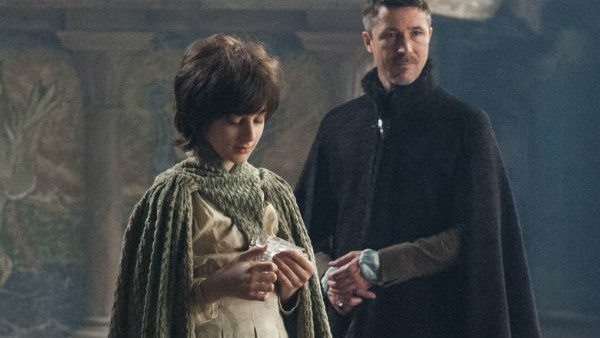
Robin Arryn is one of the absolute worst characters in A Song of Ice and Fire/Game of Thrones. Although designed to be an irritant, his sickly, petulant, and often pathetic nature becomes unbearable, and not in keeping with the good man we've heard his father, Jon Arryn, was.
We know that Arryn was an older man by the time he conceived a child with Lysa Arryn, and that meant his seed was weak, while she too had complications owing to previous miscarriages, all of which could contribute to what we see and hear of Robin being a small, sickly child. But what if there's another reason?
After all, Jon was - in his youth - blonde-haired, blue-eyed, and broad-shouldered. Lysa, meanwhile, also had blue eyes, and the auburn hair that is typical of the Tullys. Robin, on the other hand, is small and dark-haired, with pale eyes. Petyr Baelish was also known to have been a small and slight child, and is still considered short now, as well as being dark haired with grey-ish eyes.
We know that, long before they were married, Petyr and Lysa had a sexual relationship: she lost her virginity to him, and later actually became pregnant to him, before her father forced her to abort the child by drinking Moon Tea, from which she nearly died.
After being married off to Jon, it took numerous attempts before she successfully gave birth to a child - Robin - after miscarriages and stillbirths. At this point, they were living in King's Landing, and sometime later she and Baelish started a secret affair, with the pair eventually conspiring to kill Jon. It's not entirely implausible, then, that the affair started earlier than previously outlined, and that Petyr is the true father of Robin, not Jon.
6. Faceless Men And Maester Conspiracies

Conspiracies are everywhere when it comes to looking at Game of Thrones theories. The biggest is the Grand Northern Conspiracy, which speculates the Northern Lords are plotting against the Boltons to make Jon King in the North (something that played out in a bit of a different manner on the show). There's also Southron Ambitions, which posits that numerous noble houses were conspiring against the Mad King, before the events that kickstarted Robert's Rebellion happened.
Somewhat lesser known, yet equally as captivating, are the conspiracy theories surrounding the Maesters and the Faceless Men.
The Grand Maester Conspiracy goes that for centuries the Citadel has been working to eradicate magic from the world. They are men of science and order, and magic throws all of that into chaos and goes against the natural way of things. This theory actually comes directly from the text, rather than evidence being pieced together: it's the notion of Archmaester Marwyn, aka Marwyn the Mage, that Maesters drove dragons from the world, and conspired to send Maester Aemon - a Targaryen - to the Wall, rather than raising him to Archmaester (although Aemon chose to go, as far as we know). The given reason for dragons dying is that they were locked up, but we've seen Daenerys' dragons grow despite this, so there may have been some foul play in how they were erased from existence.
It's further believed (and this ties into Southron Ambitions) that Lord Rickard Stark was being manipulated by his own Maester, Walys, into uniting the other major houses against Aerys II, as part of a wider Maester plot to remove the Targaryens from power. The reason being, of course, the Targaryens' close link to dragons and thus magic.
The notion of destroying dragons also plays out in the Faceless Men conspiracy. Are they just assassins-for-hire, or do they have a bigger plot?
The Faceless Men are said to have originated in the mines of Valyria (before the Doom), where they mercy-killed slaves who could no longer stand the horrid conditions they were forced to work in, before moving on to their masters and eventually becoming the 'death cult' we now know them as. And if they want to give the gift of death to everyone - which is the farthest possible extrapolation of their system - then the best way to do that is with the Others/White Walkers: a death cult allied with a group who can control the dead.
The other possible reading of this is their motivation is to remove dragons from the world, because of their role in the slavery of Valyria. This is why Jaqen H'ghar (in the books) is seemingly at the Citadel, to research dragon lore and how to destroy them.
5. Septa Lemore Is...
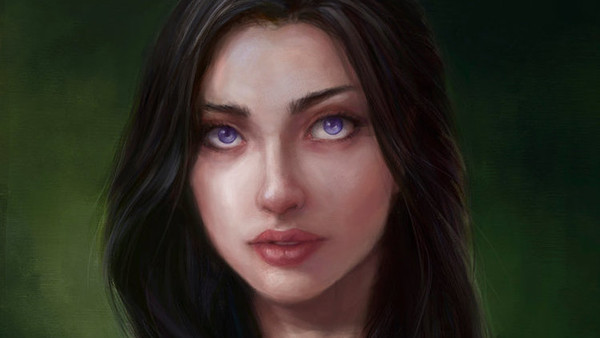
Septa Lemore hasn't made it to the TV series - and it's almost certain she never will at this stage - but within the context of the books she could be rather important.
She appears in A Dance with Dragons as part of Young Griff's storyline - largely seen from Tyrion's point-of-view - and serves as his spiritual tutor. She has a habit of bathing naked in the river, due to which Tyrion notices stretch marks on her stomach, indicating that she'd given birth and was not always a Septa. When she disguises herself as a merchant's daughter, he believes there's more to her than meets the eye.
When it comes to Lady Lemore, there are two main theories. The first, and more enticing, is that she is Ashara Dayne. Sister of Arthur, Ashara was a great beauty of Westeros who captured the hearts of men like Barristan Selmy and, supposedly, Ned Stark. It's said the pair fell in love at the Tourney at Harrenhal, where Selmy also believes someone dishonoured her.
After defeating Arthur at the Tower of Joy, Ned took his sword, Dawn, back to the Dayne seat of Starfall. After this, Ashara committed suicide by jumping from one of the towers, but the body was never recovered. Interestingly - and ignoring the rumours of her being Jon Snow's mother, which we know aren't true - suspected reasons for this include a stillborn or stolen child, which would explain stretch marks. At the same time, her defining feature is her violet eyes, something Tyrion never mentions, so either it's not Ashara or she is disguising them (which I suppose the character would do if trying to hide her identity).
Lemore bathes in the Rhoyne, a river the Dornish have a strong connection to. Given she attempted to kill herself, it's plausible Ashara would want to hide her identity if she survived, or just a necessity: much in the same way Griff and Young Griff are hiding theirs. It's also easy to believe that she'd devote herself to helping the (alleged) son of Rhaegar Targaryen, since Ashara was lady-in-waiting to his mother, Elia Martell.
The alt-theory to this is that Lemore is the mother of Tyene Sand, one of Prince Oberyn's many bastard children. While not much is said about the Sand Snakes' mothers, we do know that Tyene's was a septa. Given George R.R. Martin's love of hidden/switched identities, it could well be that the Septa who gave birth to Tyene - whom Tyene and Arianne Martell do visit at one point - may now be caring for the child of another Martell.
4. Bran Stark Is Bran The Builder
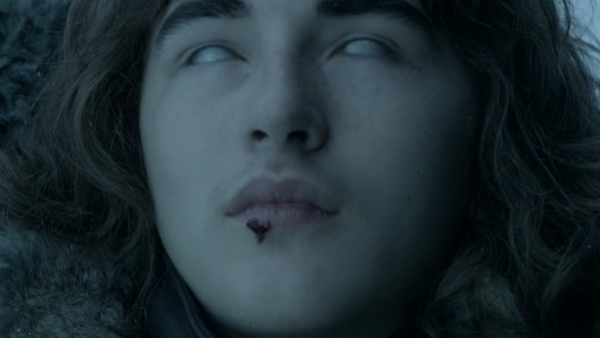
Bran Stark, long expected to gain some major powers, changed the game last year when he had a vision of young Hodor and warged into him, blurring the two timelines and creating a causal loop that resulted in Wylis becoming Hodor and, eventually, led to his sad, shocking demise.
That in turn gave rise to a number of theories about Bran, including the idea that he was the voice inside the Mad King's head whispering 'burn them all', but one that really came to prominence - although it was seemingly first mentioned a few years earlier - is that this Bran Stark was also the first Bran Stark, aka Bran the Builder.
There's no concrete proof of whether the Builder ever actually existed, or if he's just the stuff of legend, nor is there a real explanation for how he lived long enough to build the Wall and go on to found Winterfell and House Stark. But if it was all the Bran from the future, well, that'd be an answer of sorts to that.
Old Nan would tell stories of the various Brandon Starks, and they all became the same person in her head. Maybe there was more to that then anyone realised? In Westeros Histories and Lore, narrated by Isaac Hemsptead Wright, we see the story of Bran building the Wall, and it appears as though he's being carried - perhaps because, like this Bran, he was crippled, or just included as a deliberate nod towards him.
There's a sense of poetry to this idea. If Bran did indeed build the Wall, he's also going to be the person )partially) responsible for it coming down, breaking whatever magic holds it when he passes back through in Season 7 (and perhaps in a later book).
3. Descendants Of Duncan The Tall
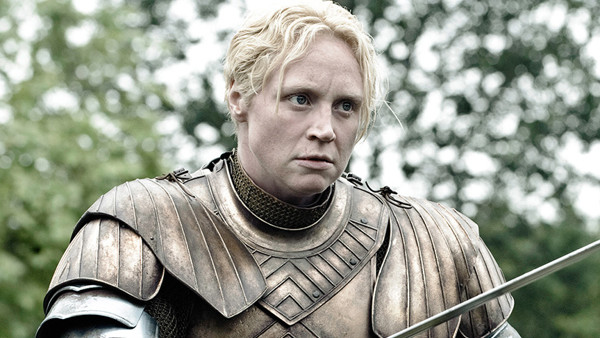
Duncan the Tall is one of the greatest Knights in Westeros history, and the centre of the spin-off novellas The Tales of Dunk and Egg. While he lived decades before the events of Game of Thrones, it seems he has left with mark, with George R.R. Martin previously saying there are four descendants of Ser Duncan in the series.
The most popular theory was the Brienne of Tarth was one of them. In A Feast for Crows (the book Martin said a descendant would be revealed), she recalled seeing his shield in the armouries at Tarth. Combined with her height and proficiency with a sword, it was widely assumed she was the descendant in question - something GRRM confirmed last year. So who might the others be?
One popular idea is that Hodor was a descendant of Old Nan and Duncan. We know that Dunk visited Winterfell at one point, while Bran had a vision of a young Old Nan kissing a tall man, and it's widely believed that Old Nan is related to Hodor anyway.
The other theories are less based in textual evidence, but more on who fits the bill size wise. For this reason, both Sandor and Gregor Clegane are speculated to be descendants. Sandor does, to an extent, uphold the virtues of what a true knight should be without actually being one, in a similar way to Dunk; Gregor reflects the opposite of that.
The other names that often come up are Small Paul and Grenn, both from the Night's Watch, and Olenna Tyrell's bodyguards Left and Right. Again, this largely comes down to size, although there are some comments about Paul that line up with Dunk:
"Small Paul, thick as a castle wall."
"Dunk the lunk, thick as a castle wall."
"Small Paul was one of his; the strongest man on the Wall, even if he was slower than a dead snail." A snail appears on the shield of Dunk. Grenn, too, is referred to as being "thick as a castle wall."
2. Tourney At Ashford

When it comes to fan theories, it's the Tourney at Harrenhal that gets the most attention, but there was another - taking place 72 years earlier - that could be rather significant too (in the books at least, if not the show).
The Tourney at Ashford Meadow is considered one of the most famous and historically significant to have taken place. It was held by Lord Ashford to celebrate his daughter's 13th name day - she would have five champions, and if a champion was defeated the victor would become the new champion. Once the three days of jousting were finished, it would be decided whether the daughter held on to her title of queen of love and beauty, or if another claimed it.
While two Ashfords were among the initial line-up of champions, by the end the five were: Lyonel Baratheon, Leo Tyrell, Tybolt Lannister, Humfrey Hardyng, and Valarr Targaryen.
In the books, Sansa was betrothed to Joffrey Baratheon, then there were plans to wed her to Willas Tyrell, she then did marry Tyrion Lannister, and is now betrothed to Harry Hardyng (which is where the show diverges, as she's married to Ramsay Bolton instead).
Assuming this isn't just a coincidence - and little is in the world of Ice and Fire - then it means Sansa won't end up marrying Harry (which isn't too surprising, really), and will have a Targaryen suitor. Techinically this could be Jon, who is half-Targ, and many do theorise (for both book and show) that the pair will get together, despite the obvious grossness of that.
More likely is that it would be Aegon Targaryen instead. It doesn't really matter if he's fake or not for this, as he'd be presented as a Targaryen. Aegon needs allies in Westeros if he's to make a serious bid for the Iron Throne. A marriage with Arianne Martell seems obvious, but he could still be supported by Dorne without it. Sansa, meanwhile, would bring the Vale to his side, and potentially the North and the Riverlands too, and it'd help her own growing political ambitions quite significantly (and is the sort of power play Littlefinger would try to orchestrate).
1. The White Walkers Built The Wall

Ok, this one is admittedly the most tinfoil of the bunch, but there has to be more to the Others/White Walkers. Yes, the show revealed they were created by the Children of the Forest, but for the most part we know nothing else about them or their motivations, instead just representing a more pure evil, which doesn't seem too fitting for this world.
So what if it was the White Walkers who built the Wall, in order to keep the First Men out? After the war had raged, they separated themselves from Westeros, because they're not wholly the 'bad guys' of this story.
Instead, that is just the history that has been written, because the First Men won the war. The Wall is 700ft tall, 300 miles long, and made mostly of ice - and that was supposedly built by men? White Walkers, being magical creatures, would be better equipped to actually make it, and keep out the humans trying to drive them out of existence, before retreating to the Land of Always Winter.
There is, then, the question of the magic that seemingly keeps them from crossing it. But what if the WW built the Wall, but the magic was then put on it after the event by the Children of the Forest. Martin has said in an interview that it was manmade, but, well, the White Walkers began as man. It'd at least be an interesting wrinkle to their story, and give them more depth.
What are your favourite lesser known fan theories? Let us know down in the comments.