Game Of Thrones: 11 Most Unforgivable Cuts From The Books

The book readers send their regards...
Game of Thrones is a phenomenally popular show that manages to incorporate original fantasy elements, political intrigue, and a whole lot of gratuitous nudity in a surprisingly cohesive fashion. Of course, the HBO hit is helped along by the fact that it is based upon a remarkably nuanced book series entitled "A Song of Ice and Fire." Unfortunately for readers, however, the textual nuances that have aided in the establishment of three-dimensional characters on the program come neither quickly nor simply; by this point, the series feels almost out of control. What began as an intended trilogy of books has expanded drastically since A Game of Thrones was published in 1996, and there is some doubt that it's possible for author George R. R. Martin to wrap up all of the plots in the span of the two final books. With waits between instalments long enough to put even the most rabid Harry Potter fans to shame, the danger of the show overtaking the published materials grows more and more imminent. Season 4 already has nervous readers wondering if the producers are veering into spoilers for the sixth and seventh books or merely taking greater artistic liberties than ever. Not that Game of Thrones is particularly uncomfortable with artistic liberties. With each book filled with an ever-expanding variety of characters, sigils, places, and names, it's understandable that there have been a lot of cuts in the television adaptation. Would fans have loved to see Strong Belwas' scars and hear Hot Pie's war cry? Sure. But the story had to be trimmed somewhere. Still, some of the cuts are so major that it's almost hard to believe that the producers have actually read the source material. Other cuts are less influential to the overall plot, but would have been so incredibly easy to incorporate that it's difficult to overlook their absence. So, here are the 11 most painfully, heartbreakingly, frustratingly unforgivable cuts from the books to the show.

11. Mirri Maz Duur's Full Speech

After five books of prophecies, plots, and increasingly unpronounceable names, we can look back at A Game of Thrones and realise how simple things once were. Granted, there were still plenty of fantastical elements with which we had to familiarise ourselves, but there was far more black and white morality in the first book than in the subsequent four. One of the most notable exceptions, however, is the character of Mirri Maz Duur. We had spent hundreds of pages watching Daenerys Targaryen grow from cowed younger sister and helpless wife to an assertive khaleesi with a son in her belly and a husband preparing to lead his Dothraki horde across the Narrow Sea to take the Seven Kingdoms for her; so, when the Lhazareen maegi Mirri Maz Duur tricks Dany into sacrificing the life of her unborn child to grant a comatose existence to Khal Drogo, it would have been easy to call her a villain and move on. But she kind of had a point. Khal Drogo and his warriors had assaulted, pillaged, plundered, enslaved, and/or murdered the innocent people of her town...and all because the Dothraki needed to accumulate enough wealth to fund the journey to Westeros. "When the sun rises in the west and sets in the east. When the seas go dry and the mountains blow in the wind like leaves. When your womb quickens again, and you bear a living child. Then will return , and not before," says Mirri Maz Duur...and we realise that Daenerys Stormborn will in fact remain the last Targaryen. The spiteful maegi is admittedly not the most reliable source of information, but the important bit to take away is that Dany believes her. It's pretty powerful. Unfortunately, the gravitas of the scene in the book is lessened by its counterpart in the show, as seen in the Season 1 episode "Fire and Blood." While Mirri Maz Duur does mention the sun, the seas, and the mountains, she fails to include Daenerys' "womb quickening" as one of the impossible terms.

10. "Jaime Lannister Sends His Regards"
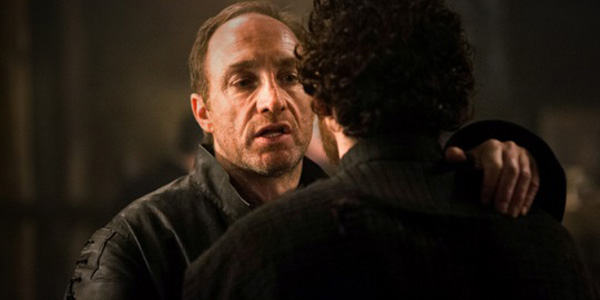
In A Storm of Swords, Jaime Lannister joins the ranks of characters with point-of-view chapters. While he remains one of the less sympathetic narrators, his role as pawn rather than player is never more clear than in his interactions with Roose Bolton. Unaware of the upcoming Red Wedding, Jaime flippantly asks Bolton to give Robb Stark his regards and goes on his merry way back to King's Landing. At least Roose Bolton keeps his promise. "Jaime Lannister sends his regards," Bolton says to Robb, then thrusts a sword through his heart in front of the hysterical Catelyn. It's an iconic moment for readers, and many were anxious that it might be omitted from the show altogether. It was and it wasn't. The final moments of the Red Wedding are remarkably canonical on screen, and Roose Bolton does get in a parting shot before murdering his king. "The Lannisters send their regards," he says. Much like the condensed version of Mirri Maz Duur's speech, the switch from "Jaime Lannister" to "The Lannisters" may seem negligible. After all, Jaime's Season 3 redemption arc might have be tarnished by any connection to the Red Wedding. However, Roose Bolton's specific phrasing in A Storm of Swords has a lasting effect on the survivors of the massacre at the Twins...and a certain not-so-survivor. When Catelyn Stark is resurrected as Lady Stoneheart, little of who she had been remains. What she does recall are the last minutes of her life. Her belief that Jaime had a heavy hand in the Red Wedding overwhelms all reason, and Brienne's affiliation with the reformed Kingslayer in A Feast For Crows is enough to condemn her.

9. Jeyne Poole

From the very beginning, Arya Stark has been a fan-favourite. So, naturally, many were inclined to find Sansa just as irritating as did Arya. Even worse was Jeyne Poole, the Winterfell steward's daughter and Sansa's closest friend, who delighted in pointing out Arya's shortcomings. Jeyne accompanies her father as part of the Stark retinue to King's Landing in A Game of Thrones, and she is sequestered with Sansa after Ned's arrest and the slaughter of the Northmen. Jeyne is soon taken away by Littlefinger, never to be seen or heard from again. At least, not until A Dance with Dragons. In the fifth book, Jeyne makes a reappearance as she poses as Arya in order to marry Ramsay Bolton and secure the Boltons' rule of the North. Only former Stark ward Theon Greyjoy is able to recognise her, and she's brutalised by Ramsay to the point that she joins Theon in leaping off of the walls of Winterfell. Jeyne Poole is one of the most notable examples of a minor character to disappear early on only to show up unexpectedly in a far more significant capacity. Unlike other substitutions - such as Locke for Vargo Hoat - however, Jeyne's status as a companion to the Stark girls who had lived the majority of her life at Winterfell was essential to her presentation as Arya Stark to the Northern lords. For the Boltons to produce a random young woman by the time that the show catches up with the books both lessens the impact of what has happend to poor Jeyne as well as requires some serious suspension of disbelief.

8. Joffrey Sent The Assassin

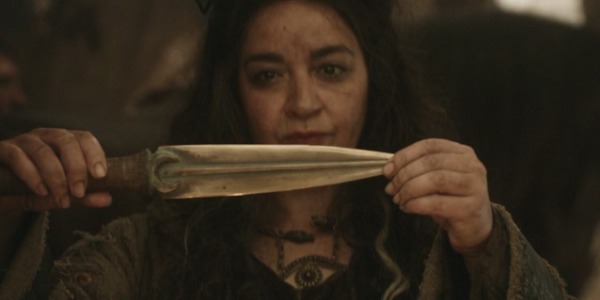
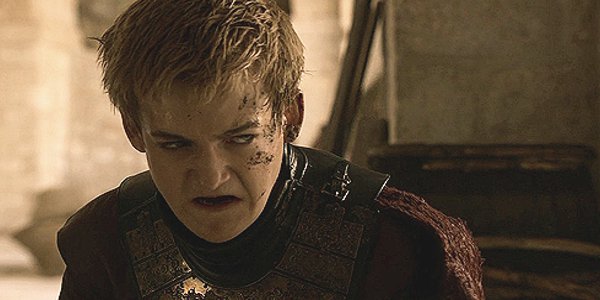
After five books and three full seasons of Westeros spiralling downward into utter chaos, it's fun to look back from time to time and try to figure out who did what to whom to start off the war that would decimate the Seven Kingdoms. Was it when good old Ned lost his head? Was it when Catelyn kidnapped Tyrion? When Jaime flung Bran off of a tower? Or even way back when Jaime and Cersei began their incestuous affair? There's plenty of blame to go around, but the first move that really set off the chain of events was when an assassin appeared in Winterfell to murder the unconscious Bran with a Valyrian steel dagger, and it was thereafter a mystery that overshadowed most of the happenings of the first book (and season) of the saga. It was not until A Storm of Swords that we learned the truth. Upon hearing Joffrey boast of his familiarity with Valyrian steel, Tyrion connects the dots and realises that Joffrey was the only one vicious enough to order the murder of the young boy and foolish enough to arm the assassin with such a distinctive and valuable blade. The identity of the person who had tried to have Bran killed may no longer be particularly relevant to the overall plot in light of far broader atrocities over the years, but nevertheless, audiences deserved a resolution to one of the earliest mysteries of the series; with Joffrey now dead, it's unlikely that Tyrion will have the opportunity to associate him with the crime.

7. Rhaenys And Aegon Targaryen

By the beginning of A Game of Thrones, Rhaenys and Aegon Targaryen were long dead, and Rhaegar's two innocent children were basically devices used to explain conflicts between certain characters. Still, they were always more than just two names on the long list of deceased. Princess Rhaenys was dragged out from where she hid beneath her father's bed and stabbed to death in her nightdress. The babe-in-arms Prince Aegon - or, at least, a babe-in-arms - had his head smashed against a wall. The story of their murders was as resonant as that of King Aerys, and characters ranging from Ned Stark to Beric Dondarrion to Ser Jorah Mormont have told the tale with nothing but distaste. Tywin Lannister's character was tarnished before he even appeared, and Robert's approval of the slaughter provided a depth beyond drunkenness and lechery. Yet in the show, neither Rhaenys nor Aegon have even been mentioned by name. And then there are the events of A Dance with Dragons. Many readers were irritated by the sudden introduction of a young man claiming to be the long-lost son of Rhaegar, smuggled out of King's Landing by Varys and replaced before the Lannisters could sack the capital. Since then, many elaborate explanations as to how and why he must be a false Targaryen rather than the true Aegon have been formulated. Is it possible that he is indeed the son of Rhaegar and therefore before Daenerys in the Targaryen line of succession? Absolutely. But Aegon's - or 'Aegon's' - belated entrance into the game of thrones presented a new complication to the series that cannot be written out for the show, and his lack of real mention in earlier seasons will almost certainly cheapen his later arrival.

6. Edric Storm

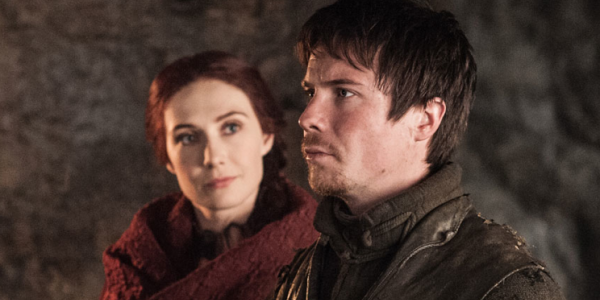
Speaking of innocents serving as plot devices, the many illegitimate children of Robert Baratheon have been instrumental in several large events over the course of the books. With between 8 and 16 blue-eyed and black-haired bastards running around the Seven Kingdoms, it's not surprising that a handful have crossed paths with our point-of-view characters. While the most prominent (and possibly eldest male) has been apprentice blacksmith Gendry, the bastard with the most political significance has been Edric Storm. Fathered by King Robert and born of a highborn maiden, Edric Storm is Robert's only acknowledged bastard. As such, Edric has long been considered by many readers as one of the candidates for the Iron Throne at the end. Originally fostered with Renly at Storm's End, Stannis seizes the boy to use as proof of Joffrey's illegitimacy. Although Edric is treated well at Dragonstone, Melisandre requests that he be sacrificed and his royal blood used for one of her spells, leading Ser Davos to smuggle him away. Edric Storm is a good - if somewhat minor - character, and his presence in the Free Cities gives him the potential to return with far greater significance in the future. In the books, that is. On the show, his absence subjected fans to the butchering of Gendry's character, the tainting of the Brotherhood Without Banners, Melisandre's random trip to the Riverlands in her off-screen time machine, and one of the most ridiculous scenes of the series thus far as Melisandre seduces and mounts Gendry in order to leech him.

5. Jaime Returns After The Purple Wedding
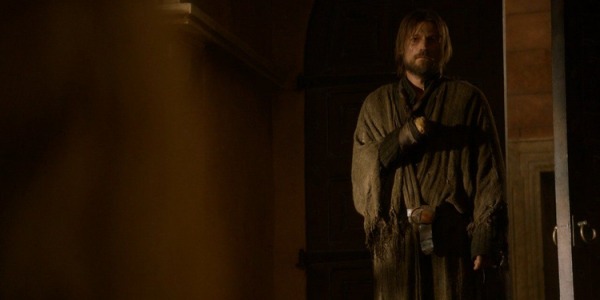
Over the entire series, no character has embarked upon a greater redemption arc than Jaime Lannister. He was our first real villain - after all, throwing a child off of a tower is one heck of a way to make a first impression. As time went on and we got a look into Jaime's head, his villainy grew far less pronounced. Humbled by the loss of his sword hand and affected by his long journey with Brienne, Jaime is a far different man when he arrives back at King's Landing than when he'd left. He takes his oath as a member of the Kingsguard more seriously, refusing to resign whn ordred to do so by his father. He grows a backbone in his interactions with Cersei. Perhaps most importantly, Jaime holds true to his vow to Catelyn. Although duty requires him to remain in the capital, Jaime gives his own magnificent Valyrian steel sword to Brienne and sends her out on a mission to find and protect Sansa. He asks that the sword -reforged from the ancestral Stark greatsword - be called Oathkeeper. Has Jaime become one of the shining heroes of the story? Not exactly. But his character has experienced such growth that he has become one of the most popular of A Song of Ice and Fire. Well, the show screwed that up. Having TV Jaime return prior to Joffrey's death, Tyrion's arrest, and Sansa's flight from the capital arrest forced a regression in his character; instead of showing a determination to actually keep one of his oaths, Jaime...doesn't really care. He comes across as lazy and selfish than at all reformed. And then there was the scene in the sept. Yes, that scene. In A Storm of Swords, the lovesick Jaime reunites with his sister in the Sept of Baelor, and they engage in a clearly consensual - if rather twisted -tryst over the corpse of their eldest son. On the show, Jaime forced himself on her. There's that.

4. Bran's And Rickon's 'Deaths'

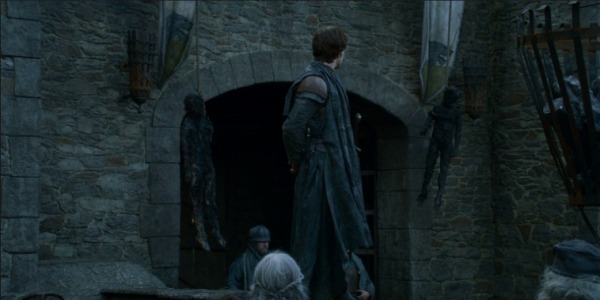
For the first book and a half of the series, Winterfell felt like one of the safest places in Westeros. The North was too vast and wild for any Southern armies to do any conquering. Then, Theon Greyjoy messed everything up as he led a band of Ironborn from the shores rather than the South to assault his former home. His grasp on Winterfell is tenuous at best, and one final power play causes him to murder young Bran and Rickon Stark, burning their bodies and hanging them from the walls of the stronghold. Okay, maybe they weren't actually the Stark boys, but what truly matters with regard to Theon's crime is that everybody else believed the two dead and acted accordingly. False as they may have been, Bran's and Rickon's "deaths" devastated those who cared about them and presented unique opportunities who did not. Enemies of the Starks suddenly knew that Robb was the only remaining male heir to Winterfell, leading Sansa to suddenly become a very enticing marriage prospect. Ramsay Snow was sent to avenge them. Heartsick Catelyn Stark freed Jaime Lannister from Riverrun in the hopes of a reunion with two of her three remaining children. With the loss of Robb's heir and spare in his brothers, he writes a will legitimising Jon Snow to grant him rule of the North in the event of Robb's death prior to the birth of a son. Oh, and then there's that other thing that Robb did, which brings us to...

3. Jeyne Westerling

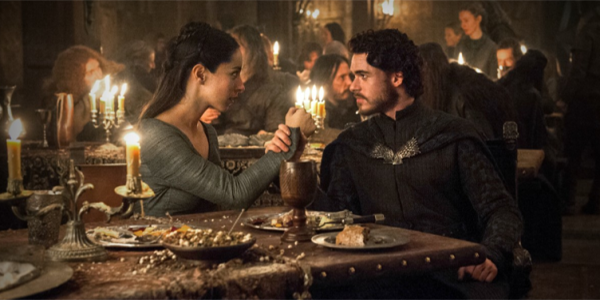
Few aspects of the show have infuriated readers more than the replacement of Jeyne Westerling with Talisa Maegyr as Robb Stark's ill-advised bride, and with good reason. The character switch was not only unnecessary, but also served to annihilate any faith in Robb's judgment. In A Storm of Swords, the foolishness of Robb's marriage to Jeyne Westerling is tempered by a sense of tragedy that makes it difficult to entirely condemn him for his actions. Bedding Jeyne was a bad idea, and wedding her even worse, but he did the former out of grief for his murdered brothers and the latter out of the honour instilled in him by his father. He knows that he grievously erred in breaking his oath to marry one of Lord Walder's daughters, but he broke that oath out of a sense of duty rather than desire. It was a decision that would ultimately cost him his life and his cause, but it was one brought about by youth and grief rather than simply a disinclination to marry a Frey. The show...handled things differently. Robb and Talisa spent several episodes in Season 2 flirting with one another, until Robb - who has been aged up several years for HBO and cannot plead the follies of youth in this affair - finally makes up his mind to just go ahead and sleep with her. As in Storm of Swords, he shortly thereafter decides to marry her. This time, however, his decision has nothing to do with honour. Rather, he wants to marry her for love. Ignoring Catelyn's warnings, the King in the North Robb Stark marries Talisa before the Seven. The tragedy of Robb's marriage to Jeyne is entirely absent in his marriage to Talisa, and the Red Wedding of the books is far more heartbreaking than on the show.

2. The House Of The Undying Sequence

Prophecies are tricky things in any medium, and A Song of Ice and Fire is full of them. While most characters have been touched by a prophecy in some manner or other, a majority of the predictions seem to revolve around Daenerys Targaryen and her quest for the Iron Throne. The words of Mirri Maz Duur and Quaithe have haunted her throughout the series; most fascinating of all are the secrets revealed to Dany at the House of the Undying in A Clash of Kings. The headquarters of the warlocks of Qarth has many mysteries hidden within, and Dany sees vision after inexplicable vision as she explores its depths. She looks in one door to find a tableau in which a man with a wolf's head presides over a feast of corpses. In another, she witnesses the first mention of the actual "song of ice and fire" as Rhaegar looks at the infant Aegon. She watches the Mad King order the burning of the capital. Rhaegar dies at the Trident with a woman's name on his lips. A blue rose grows out of a wall of ice. There are enough images of the past, present, and possible future to keep readers guessing and analysing for years. Dany's exploration of the House of the Undying is one of the sequences from A Song of Ice and Fire that would have been impossible to faithfully translate to television. Budget and spoiler issues aside, the lack of context from Daenerys' on-page visions would be more confusing than compelling on screen. The show provided a decent enough alternative to the text, showing Dany walking through an empty and snow-covered Red Keep. It even gives us a surprisingly emotional cameo from Jason Momoa as Khal Drogo. It's a good scene; the unabridged version, however, could have been amazing for readers.

1. The Tower Of Joy

A Song of Ice and Fire is a complicated series, and between all of the mystical and political misdirects, there is plenty of theorising to be done. Of course, with the vocal fanbase and highly debatable nature of much of the material, few theories are widely accepted by readers. There is one, however, that has united many: that Rhaegar Taryargen and Lyanna Stark are the parents of Jon Snow. At first, this may seem like a crackpot conception. According to every in-universe account - including those with high opinions of Rhaegar - Lyanna was kidnapped and held against her will. Why should readers think otherwise? Well, largely because of the Tower of Joy. In A Game of Thrones, a feverish Ned Stark dreams of the day on which his sister died. Ned and six companions ride to the Tower of Joy in Dorne to rescue Lyanna. Rhaegar and Aerys are both dead by this point, but three legendary knights of the Kingsguard remain to guard the tower. As a battle ensues between the ten warriors, Lyanna screams for her brother from her "bed of blood" within. When the fighting comes to an end, Ned makes a mysterious promise to his sister, and Lyanna dies. Overall, it's an amazing scene. We get a look at some of the heroes of the previous generation, and we see just how the subsequent knights of the Kingsguard pale in comparison. There is a sense of respect between all of the men, in which honour and duty are of paramount value. It's also a remarkably well-written scene, and despite the fact that this is their only actual appearance in the entire saga, we can't help but mourn for the three knights, who either died to protect the woman whom their prince had abducted and assaulted or the woman who had given birth to his only surviving heir. It's kind of a big deal. Sadly, none of it made the cut for the show. Although there certainly would have been difficulties in shooting such a sequence, the Tower of Joy is one of the most iconic scenes for readers. Also, if fans are correct and Rhaegar + Lyanna = Jon, the lack of foreshadowing on screen will be downright shameful. Neither Rhaegar nor Lyanna have received more than passing mentions over the three and a half seasons that have aired. With Ned dead and gone, it's unlikely that we'll be able to see it on screen for a very long time, if at all.

Contributor
Contributor

Fiction buff and writer. If it's on Netflix, it's probably in my queue. I've bought DVDs for the special features and usually claim that the book is better than the movie or show (and can provide examples). I've never met a TV show that I won't marathon. Follow on Twitter @lah9891 .