Game Of Thrones: 10 Things The Show Did Better Than The Books
When Benioff & Weiss actually managed to outdo George R.R. Martin.

It's largely accepted by most that any adaptation, no matter how successful, is never as good as the original source material, and very rarely is it actually better. This is especially true of Game of Thrones, now more than ever, as the series came under fire for its dip in quality.
The books are a masterpiece written to play to the strengths of the medium as well as being full of brilliantly realised characters and locations all fleshed out with extremely nuanced detail. It would be impossible for anyone to adapt all of it to such a high standard.
But when the show played to its own strengths and captured the spirit and the tone of the books, it didn't just match the novels but sometimes surpassed them.
From increasing a character's screen time, to altering their actions or just through their being on TV, the show was able to expand on events and persons in unexpected ways.
Now it's all over it feels like the perfect time to celebrate those stand out and seminal moments that have gone on to influence and re-shape the medium.
10. Fleshing Out More Of The Characters

Remember all your favourite characters and how you bonded with them or formed deep emotional attachments? Characters like Robb Stark, Jaime and Cersei, Olenna Tyrell, Joffrey and Tormund Giantsbane? Well they're not in the books as much as the show, especially the first two novels.
Due to Martin's writing style each chapter is told from a specific character's perspective, meaning you only get to hear about things that happen rather than experiencing them first hand.
That doesn't translate to TV. Characters need equal time to get their personalities across and for their actions to define them. As such we see a lot more of the secondary characters, more dialogue and actions are invented to suit the characters, and deeper bonds are formed. Their victories and their tragedies carry far more weight.
Do you remember how you felt when we lost Robb?
9. Ygritte's Death

This was such a big but simple change, showing the benefit of forcing certain characters to get more involved.
In the book, during the battle of Castle Black, Jon (due to an injury) is forced to pick off the wildling folk from afar with a bow and arrow. After the battle he finds Ygritte, dying, and they're able to say their goodbyes.
In the show, Jon Snow is actually in the thick of the battle and forced to fight on the opposite side to his first true love.
Due to his lying and subterfuge she feels betrayed so when the two come face to face, Ygritte having the upper hand, there’s emotional conflict and struggle raging inside her.
She is unable to decide whether to kill him and her hesitation is her downfall, as she's shot by an arrow and Jon is forced to watch her die in his arms.
Even though it ends the same way, the show's version is far more powerful.
8. Ned Versus Jaime

This one's pure fan service, but we actually got to see Ned fight on the show. It wasn't any old fight either but with Jaime Lannister, one of the most celebrated blades in the Seven Kingdoms.
In the book, Jaime ambushes Lord Stark and promptly kills his men, but they can't risk attacking Ned so there's no duel between them.
In the show, Ned fights back hard, which pleases Jaime at first, until he starts to struggle. Ned is a true soldier after all.
There's been tension between the two since the war against the Targaryens, Jaime betrayed the Mad King he swore to protect and Ned found him sitting on the Iron Throne.
This single fight helps encapsulate the sourness between the two and their families, as well as developing their own characters. Jaime is quick to anger, overly confident in his abilities, and itching to prove himself. Ned doesn't need to show off his bravado, preferring to rely on other methods, resorting to violence only as a last resort.
7. Tyrion's Character

Tyrion has always been a fan favourite in both the books and the show. It's easy to see why: he's smart and funny as well as enduring the trials of both his enemies and his own family.
The show did make a few subtle changes though. Hardcore fans of the book may cry foul and say he was given far too much sexing up and how later in the show (when it went beyond the books) he lost his cool and made too many mistakes.
But in the beginning, TV Tyrion is so much more likeable.
Yes, he's still a cynical smart arse, but he's also far less self-centred and conceited than his literary counterpart. In the first book, he's not exactly sympathetic when an innocent woman has been hanged by Tywin for not preventing Tyrion's kidnapping.
He later has a bard killed and put into stew, to be served to the poor folk in Flea Bottom, and in later books, generally, becomes moodier and less charming, especially to brothel workers.
They're small edits but they did help create one of the most memorable figures in recent fiction history.
6. Arya And Tywin

This is such a fantasticly simple change that manages to alter the dynamic of the drama in such a big way.
In the book, whilst Arya is an unknown captive at Harrenhal, Tywin doesn't meet or exchange a single word with her. When Harennhal later is recaptured, she serves as Roose Bolton's cup bearer (before he turns traitor).
The two exchange playful banter and develop a small bond, but it doesn't amount to much and it never feels like anything's at stake. However, in the show, Roose Bolton is removed and Arya serves as cup bearer to Tywin, who is similarly unaware of who she is.
This means that two key players, and mortal enemies, are now face to face. Arya needs to keep her identity a secret as the stakes are so much higher.
The two still exchange playful banter and develop a sort of friendship which helps give Tywin a more human side and far greater depth without sacrificing his imposing presence.
5. The Red Viper Versus The Mountain

Now to be fair, this moment is pretty intense and gory in the book as well.
Tyrion has opted for trial by combat to prove his innocence against his charge of regicide. Oberyn Martell (The Red Viper) has volunteered to be his champion in order to go up against Gregor Clegane, aka The Mountain.
The outcome is the same in both the show and the book, it's just that the show is more... in your face.
The show's fight is far more action driven and tense to watch on TV than to read in the book, which substitutes the tension of showing a close combat fight with writing extra gory details instead.
When it looks like the good guys are about to win, which never goes down well in this series, things get very, very messy.
There's no foreshadowing; it comes out of the blue when you least expect it and grabs your attention, particularly with the added benefit of sound: screams, crunches and splatter are much more chilling.
Whilst GoT has had some very harrowing moments, this is one of the most intense and visceral. Gore is not meant to be subtle, hence why this version trumps the book.
4. The Battles
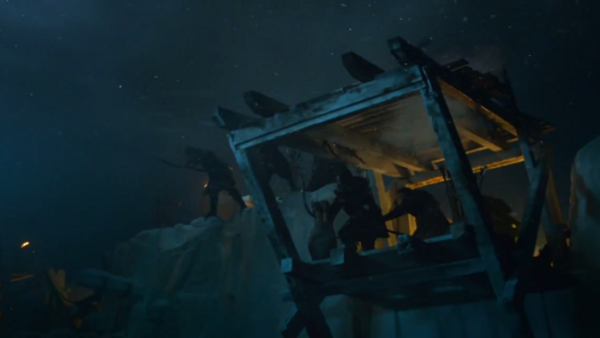
Having access to lots of extras, choreography, and training, as well as a boatload of CGI and plenty of cash, means the battles on Game of Thrones were some of the best committed to TV, giving Hollywood a run for its money.
The battles and fights that Martin describes are all pretty exciting in and of themselves, but reading about fights isn't quite as exciting as watching them.
Taking everything that's been learned from Lord of the Rings onwards, then cranking it up to eleven, beats a few pages worth of descriptions.
Having an adult rating also helped to create much more gritty and realistic fight scenes that left viewers wondering who would be left standing.
This show has set a new standard.
3. Joffrey's Death

Once again by simply fleshing out more of the characters, their fates have a far deeper and more emotional impact. Unusually for GoT, the emotion we felt this time was joy.
Joffrey is far from a saint in the books, but like so many he doesn't appear as often as he does in the show. You hear about his worst deeds but don't see them, so his behaviour is somewhat diluted.
He still has innocents killed and torments Sansa, so he totally deserves what he gets, but it's not quite as personal.
However, in the show, Joffrey's a little more petulant, and is heavily based on Calligula, so watching this horrific little sadist be poisoned and choke to death is way more satisfying.
2. Ned's Last Great Deed

This needs a mention because Martin has said how much he likes it, and it's another a simple change too. Just one word, in fact.
As Ned is being dragged through the square for his public admission of guilt before his beheading, he spots Arya standing on the statue of Baelor.
As Yoren of the Night's Watch approaches, Ned simply says "Baelor" and with that Yoren spots Arya and is able to rescue her and smuggle her away to safety. It's Ned's last act to save his daughter and thwart the Lannisters. In the book Yoren meets Arya by coincidence, and Ned doesn't realise she's in the crowd.
People might argue against the change for diminishing some of the tragedy, but the scene is tragic enough and helps eliminate the coincidental element.
It also shows more of Ned's character, putting his children's safety first, and leaves things on a bittersweet note, knowing that he was able to save at least one daughter before he dies.
1. The Red Wedding

Yes, the most infamous scene in TV history, let alone the entire series, easily surpasses the books.
To be clear, Martin's vision is very shocking, devastating, and comes out of the blue, but here, well, just watch the videos of people's reactions.
Part of that success comes from the fleshing out of Robb Stark and his war against the Lannisters. If you hadn't read the books you naturally would assume that Robb would be the show's hero. That he would get revenge for his father, Ned, win the throne and end Joffrey's tyranny, but he doesn't. He loses his wife and child and the War of the Five Kings; the good guys lose.
Not to mention that Catelyn Stark is also killed off and, unlike in the books, she isn't resurrected. Not including Lady Stoneheart (zombie Catelyn) makes her death all the more tragic and doesn't diminish Jon Snow's resurrection later on in the show. Death continues to feel like a definitive ending.