Game Of Thrones: 6 Reasons Why Valyrian Steel And The Night's King Matter

Westeros has chills, they're multiplying.
Game of Thrones ramped things up to a whole other level this week, so much so you can imagine the internet being filled with Ron Burgundy-inspired memes. While the first-half was dedicated to following and expanding upon the stories that have been established throughout the season - Tyrion and Daenerys, Sansa and Theon, Arya€™s training etc - it was the second-half of the episode that drew all of the attention. As Jon Snow and Tormund Giantsbane reached the titular Hardhome, the slow-burning, scheming, political nature of the show gave way to become an all out action-packed epic. It managed to exceed even its own high standards, with action that outdid what we saw in Blackwater and Watchers on the Wall. Amid all the zombie-like wights, wildlings, giants and so on, were two key points that are likely to have major implications on the future of the series and these characters. The first is when Jon€™s sword defeats a White Walker, to his surprise as much as anyone else€™s. The second is at the very end, as the surviving Night€™s Watch and wildlings sail away, and the apparent leader of the Others raises the dead. They were both great moments, and within the context of the show both served as examples from one character to the other - Jon to the Others€™ leader and vice versa - as a display of power. Here, then, is a closer look at Valyrian steel, from which Jon€™s sword is forged, and the leader of the White Walkers the Night€™s King, and why they€™re likely to matter later down the line€

6. What Is Valyrian Steel?

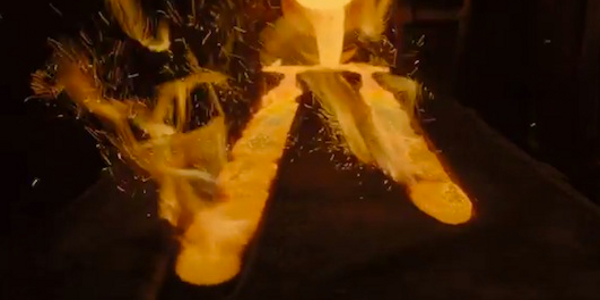
Valyrian steel is a type of metal that was formed back in the days of the Valyrian Freehold, a territory that encompassed most of Essos, as well as Dragonstone in Westeros, and was the main cultural and military power in the world before the Doom of Valyria, an unspecified cataclysmic event that brought about its downfall (roughly around 400 years before the events of the show). It is believed that dragonfire and magic was used in the forging of Valyrian steel, and blades made from it are lighter, stronger and sharper than those that can be made anywhere else, while they€™ll never lose their edge and require no maintenance, and have ripple effects that come from being folded over numerous times. The secrets of forging it were lost after the Doom, meaning that there is no one in the world now capable of creating a new Valyrian steel blade, although there are certain smiths capable of reworking it (as seen with Ned Stark€™s Ice), but even this is an extremely difficult process, and a rare one given the relative scarcity of it€

5. Who Possesses It?

It is not known exactly how much Valyrian steel is left in the world, although what has survived and been passed down through the generations of houses have been cherished as extremely valuable heirlooms. In A Storm of Swords, Tyrion says:
€œValyrian steel blades were scarce and costly, yet thousands remained in the world, perhaps two hundred in the Seven Kingdoms alone.€
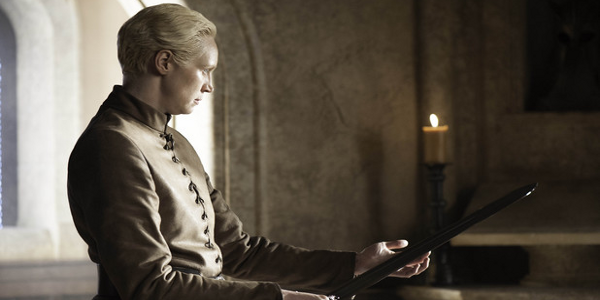
In the show, we have seen the great longsword Ice, which was then melted down to create two smaller blades of Valyrian steel: one for Jaime Lannister, and one for King Joffrey. Jaime gave his sword to Brienne, which she named Oathkeeper, while after his death Joffrey€™s Widow€™s Wail presumably passed to Tommen, who probably couldn't use a butter knife much less a huge sword. Jon Snow€™s Longclaw is forged of Valyrian steel, as witnessed in this week€™s episode, while there was also the dagger with which Bran was almost murdered back in season 1, possibly still in the possession of Petyr Baelish. There are other blades known to exist, such as Lady Forlorn, of House Corbray; Nightfall, of House Harlaw; and Red Rain, which was stolen from House Drumm. However, the sword most likely to appear in the show is Heartsbane, belonging to House Tarly and currently wielded by Sam€™s father Randyll. It is all but confirmed that he€™ll be appearing in the show next year, and with it he€™ll be bringing yet more Valyrian steel into the TV world.

4. Why It Matters

As an extremely powerful metal, anyone who wields a sword made from it is likely to be a fairly expert fighter, while there€™s also a lot of history and nobility connected with it. Why it really matters, though, is because of the events in Hardhome. As we see Jon Snow raise his sword in what he believes is a desperate, futile attempt to block the White Walker€™s assault, there€™s surprise from both sides as it actually works, and he is then able to use the blade to vanquish the Walker. Up until that point, the only known weapon that could be used against them was dragonglass, which the Night€™s Watch did have a big bag full of, but then forgot about and ended up having to leave it behind. Although there is reportedly an abundance of obsidian at Dragonstone just waiting to be mined, it€™s obviously important to know that there is another way of defeating them, even if there isn€™t that much Valyrian steel around at present. In terms of the larger story, there€™s also quite a clear connection between the two objects that can defeat White Walkers, and dragons. While we saw in this episode they are resistant to fire, there€™s a good chance that won€™t be the case for dragonfire, which will presumably come into play more in the series endgame. It also served as a marker to the White Walkers, a sign that they can be beaten - as clearly they did not know about their weakness to Valyrian steel - and one that leads to a sort of respect from the leader, and a show of force on his part€

3. Who Was The Night€™s King?

The White Walkers arrived in Westeros during a time known as the Age of Heroes, approximately 8,000 years before the timeline of the show starts. This was when the Long Night started, signalling the longest and coldest winter seen in Westeros - and heralding the arrival of the Others from the Land of Always Winter. They marched down on Westeros, killing those in their path and raising armies of the dead. The First Men (the first humans to settle in Westeros) and the Children of the Forest (who appear in Bran€™s storyline) united, armed with dragonglass, to push the Others back, thus leading to the building of The Wall and the establishment of the Night€™s Watch. The 13th Lord Commander of the Night€™s Watch is said to have found and fallen in love with a woman beyond The Wall, who had €œskin as white as the moon and eyes like blue stars.€ He took her back to the Nightfort (a castle on The Wall, akin to what Castle Black is now), and declared himself the Night€™s King and her the Queen, and this unholy union conducted a reign of terror over the Watch for 13 years (one of the atrocities they€™re believed to have committed is the sacrifice of children to the Others). It took a combination of The King-Beyond-The-Wall and The King of the North to defeat him and restore order to the Night€™s Watch.

2. What We€™ve Seen

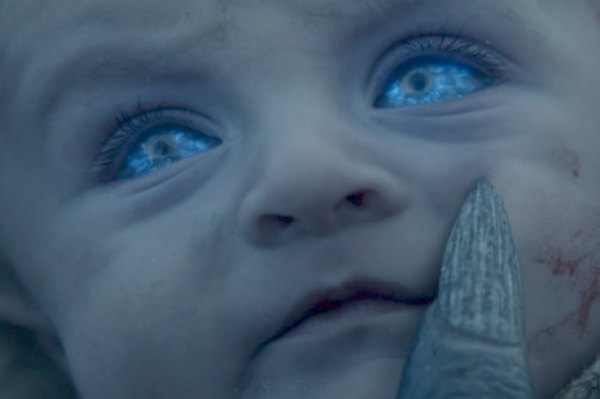
The Night€™s King, much like the White Walkers themselves, is believed to be a myth by most of Westeros, the stuff of legend told to scare kids. While the threat of White Walkers was established fairly early in the series, it wasn€™t until season 4 that we got a look at the Night€™s King (and even then his exact identity rather slipped under the radar). We first see him through a vision of Bran€™s, which is realised later in the show: the last of Craster€™s sons is taken by a White Walker to an icy altar of sorts, where we see a group of 13 Others - one strides forward, wearing an icy crown, picks the baby up and touches his cheek, after which his eyes turn icy blue. The crown-wearing Walker has now appeared in the latest episode, Hardhome, giving a rather literal icy stare to Jon Snow right at the very end of the episode, before raising the dead...

1. Why He Matters

Well, there€™s that whole raising the dead business first of all. Not just the human dead, but pretty much any sort of creature they want - they ride wight-horses, for example. This means that they are capable, again as seen in the latest episode, of rising a pretty vast army of the undead to unleash on Westeros, with a constant supply of bodies to keep topping it up. Then we come to the small matter of turning babies into White Walkers. It isn€™t entirely clear if this is only something that the Night€™s King can do, but if he is supposed to be significantly different from the other Others then it€™d make sense if this were the case. There€™s still a lot unknown about this - aside from that question, there€™s also the matter of whether it€™s only babies he can turn, if there€™s some sort of limit on how many Walkers he can create at any one time, and how many Kings there have seen since that first one (or is it still the same person)? What we do know is that he€™s extremely powerful and going to be damn hard to kill, and that while the rest of Westeros are concerned with their own little struggles within the Game, they€™re going to be nothing compared to when the Walkers finally descend on them. Oh, and there€™s the question of if he€™s the King, where€™s his Queen?

Contributor
Contributor

NCTJ-qualified journalist. Most definitely not a racing driver. Drink too much tea; eat too much peanut butter; watch too much TV. Sadly only the latter paying off so far. A mix of wise-old man in a young man's body with a child-like wonder about him and a great otherworldly sensibility.