Game Of Thrones: The Meaning Behind Every Episode Title (Season 3)

Part 3 of our ongoing series.
As can be expected from the title, this is a continuation of the previous two articles, explaining the meaning behind the episode titles for each season of Game Of Thrones, this time for season 3. If you haven't read both of the previous articles, and would like to, you can find the articles for Season One here, and Season Two here. The episode titles in Game Of Thrones are not as literal as you'd expect, and in some cases are not even in a real language, so the meaning behind them can be fairly difficult to discern. However, not to worry, now you don't need to learn High Valyrian in order to unlock the meaning of these titles, as this article explains (and translates, where necessary) the titles and their overall relevance to the show as a whole for you. As with the last two articles, there are no spoilers for anything further ahead than the page you are reading, so if you have not seen all of the third season feel free to read right up to the latest episode you have watched.

Episode 1 - Valar Dohaeris

€œValar Dohaeris€, is a phrase commonly spoken in Essos, the land mass to the East of Westeros. The phrase is High Valyrian for €œAll men must serve€, and is spoken as a response to the phrase €œValar Morghulis€, meaning €œAll men must die€. It is used in this context in a fairly meta way, with the previous episode (the season 2 finale) being called €œValar Morghulis€, and therefore this episode being titled as the response. Servitude is also prominent in the episode, as a number of characters are shown promising to serve their respective leaders: Jon Snow swearing allegiance to the Wildlings; Ser Davos returning to Stannis to be imprisoned; members of The Nights Watch pledging to return to the wall; and Ser Barristan Selmy pledging loyalty to Daenerys.

Episode 2 - Dark Wings, Dark Words

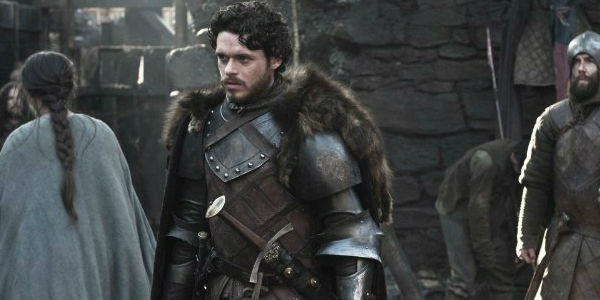
This is a common phrase in Westeros, referring to messenger-ravens, which are used in the Game Of Thrones universe to send messages, in much the same way as carrier pigeons were used in the past. The phrase is used as a warning of the bad news (Dark Words) that can arrive by raven (Dark Wings). In this case the "Dark Words" are sent to Robb Stark; a first raven arriving with a note that his grandfather (Catelyn's father) has died, and a second raven sent from Ramsey Snow at Winterfell, which states that Winterfell has been torched by Theon and his men, and all the inhabitants have been killed.

Episode 3 - Walk Of Punishment

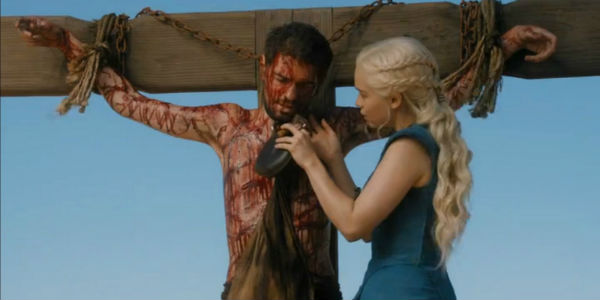
Whilst searching for an army in the city of Astapor, Daenerys Targaryen discovers a line of crucifixes stretching out along the battlements on the shoreline, occupied by slaves who have failed to follow their masters orders. This is used as a warning to all other slaves in Astapor of refusing to obey orders, and seems to weigh heavily on Dany, who tries to give water to a slave, but is told he would rather die, as there are no masters in the afterlife. In the books this area is known as the Plaza of Punishment, but due to filming constraints (the filming location had cannons built into the wall, which do not exist in the Game Of Thrones universe, so had to be covered), was changed to a Walk of Punishment for the tv series.

Episode 4 - And Now His Watch Is Ended

Lord Commander Mormont Death "And Now His Watch Is Ended" is a phrase traditionally spoken at the funeral of members of the Night's Watch, highlighting that their allegiance and loyalty to the night's watch must last until death. It is spoken in the episode by the Lord Commander of the Night's Watch, Jeor Mormont, as the closing of the eulogy at the funeral of Bannen, a member of the the Night's Watch who died as a result of the attack by the White Walkers. However, the reason for its use in the title is more likely due to the events succeeding this, when Jeor Mormont himself is killed by Rast, and the deaths of other members of the Night's Watch that follow due to the fight that breaks out from this split.

Episode 5 - Kissed By Fire
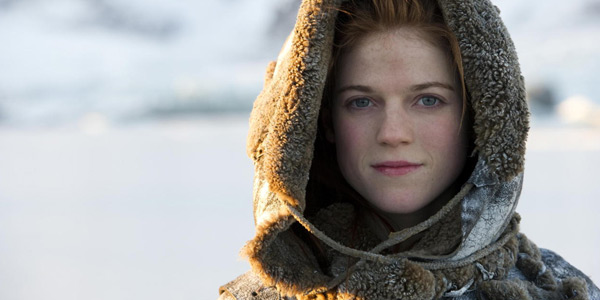
This title is a phrase used by the population of Wildlings North of the Wall to describe people with red hair. It is believed that red hair is a sign of good luck, since it is uncommon in the North, and rarer still in the south. In the case of this episode, the red-haired person of the title refers to Ygritte, who has become Jon Snows lover, which may be another meaning behind the title "Kissed by Fire". Fire also implies an element of danger, as Jon is meant to be spying on the Wildlings on behalf of the Night's Watch, so getting too close to them may cause him to have doubts about his role and put everyone at risk.

Episode 6 - The Climb

Surprisingly this episode actually refers to the song of the same name by Miley Cyrus, which Jon Snow states is massively underrated. No, not really... The title is in reference to the wildlings and Jon Snows moderately successful attempt to scale the Wall, in order to attack Castle Black. Although believed by most to have been constructed to keep out Wildlings, the Wall was actually built in order to ward off the White Walkers, the Wildlings were just the population of people who were unfortunate enough to have been on the North of the Wall when it was completed. Another Climb is also brought up by Littlefinger, while talking with Varys, who states that chaos is a pit, to which Littlefinger responds that it is in fact a ladder and that climbing the ladder is what brings you power; something that he has been trying to do since the beginning of the series.

Episode 7 - The Bear And The Maiden Fair
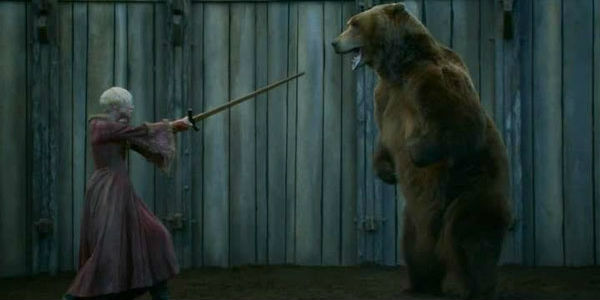
"The Bear and the Maiden Fair" is a song sang throughout Westeros, which tells the story of a maiden being 'rescued' by a hairy bear while waiting for a knight. In the episode, these events are reversed, as Brienne (the maiden) is forced into fighting a bear, although she is saved from the bear at the last minute by Jaime Lannister (the knight). The song is also sung by Locke and his men, while Brienne is fighting the bear, in order to add insult to injury. The song and lyrics appear in the books, and it has also appeared earlier in the series, with a version being performed by the band The Hold Steady, appearing over the credits of episode 3 of this season.

Episode 8 - Second Sons

The Second Sons are a group of sellswords who show no allegiance to anyone, but fight for the highest bidder. They are named for the fact that the eldest son in a family inherits all titles and wealth from their father's, however the second son has to work to make a name for himself. The Second Sons first appearance occurs in this episode, as Daenerys tries to hire them as her army, although they are currently under employment of the Yunkish. After a meeting with the captains of the second sons, Daenerys is startled by Daario, who tells her he has been sent to kill her, although he reveals he instead beheaded his captains and pledges allegiance, along with all of his men, to her instead. The marriage of Sansa Stark and Tyrion Lannister, second son of Tywin Lannister, also occurs in this episode, as ordered by Tywin.

Episode 9 - The Rains Of Castamere

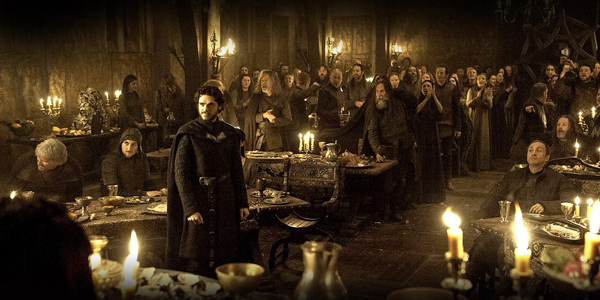
Episode nine does not fail to live up to the hype this season, containing the most shocking moment in the whole show up to this point, the infamous The Red Wedding. It is this scene that the title subtly refers to; "The Rains Of Castamere" being a song written about the Lannisters defeat of a rebellion against them by the House Reyne of Castamere; in order to quash the rebellion and to send a message of their brutality, Tywin Lannister had every member of House Reyne executed. This song is played by the band (who are actually hired assassins) at Edmure's Wedding, signalling the Houses of Bolton and Frey to turn on the Starks, causing the deaths of all of the North's men attending the wedding, including Robb, his wife and unborn child, and his mother. This act is carried out under the orders of Tywin Lannister, highlighting the similarities between how he treated the rebellion of House Reyne and House Stark.

Episode 10 - Mhysa

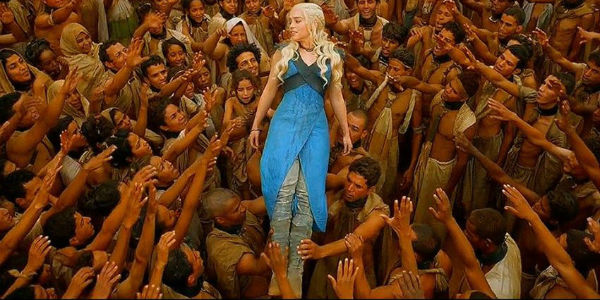
Yet another season finale containing a fairly big development in Daenerys Targaryen's rise to power. As with the last season finale, and the opening of this season, this episode title is Valyrian, although this time Low Valyrian, as opposed to the High Valyrian of the other episodes. "Mhysa", meaning "Mother", is chanted by the slaves of Yunkai, after Daenerys has gained them their freedom, as a way of showing their loyalty and thanks to Dany for freeing them. It is also chanted in reference to her title as The Mother of Dragons.

Contributor
Contributor

Callum Buchanan hasn't written a bio just yet, but if they had... it would appear here.