How Amazon Should Make A Lord Of The Rings TV Show
They're taking the Hobbits to Amazon.

They're taking the Hobbits to Amazon (-zon, -zon, -zon, -zon).
As has just been officially confirmed by the streaming service, a mammoth deal has been agreed to create a new TV show (and a potential spin-off to boot) set in J.R.R. Tolkien's Middle-earth prior to the events of The Fellowship of the Ring.
It's unclear whether that means a more direct prequel, set in the 60 or so years between the end of The Hobbit and the start of Fellowship, or if it means the thousands of years that pre-date the story of Frodo and the War of the Ring. Either way there's a hell of a lot of material for Amazon to work with, since Tolkien's world is so incredibly vast, and they're counting on this to be their big smash (they reportedly paid somewhere between $200-250m purely for the rights, which is insane).
The show comes with a built-in audience from both the books and the movies, albeit the latter worn down through the Hobbit trilogy, but there's a lot more it must do in order to become the massive, Game of Thrones-esque success Amazon are clearly hoping for.
9. Give It The Budget It Needs

This one almost goes without saying, but it's essential Amazon give this the money it needs. That should happen, since they've paid so much just for the rights, but they have little experience so far in working with the kind of budget this show would require.
Peter Jackson's three Lord of the Rings movies each had a budget just shy of $100m, while that's roughly around the same budget allocated for a season of Game of Thrones (and Netflix shows like The Crown and The Get Down are, by some reports, even more expensive).
A big budget doesn't guarantee quality, but if you're wanting to do justice to Middle-earth then you need absolutely lavish production design, lots of extras, some big action sequences, and probably a decent amount of CGI as well. The Man in the High Castle is the biggest show they've done so far, and Lord of the Rings needs to go much bigger than that - and it'll be interesting to see how Amazon handles the challenge.
8. Don't Overly Prequelise It

One of the few things we know about the show at this early stage is that it'll be set before the events of Fellowship of the Ring, and with that will surely be a temptation - and perhaps an inevitability - that the new series directly connects itself to the main story of the Lord of the Rings trilogy.
It's easy to see how that would happen, and is why Amazon must ensure it doesn't. The show needs to stand on its own two feet and tell a distinct story, rather than simply serving to setup those events or relying heavily on a number of name-drops and *nudge nudge, wink wink* references and appearances of familiar characters.
Include some known characters if necessary, although ideally the onus would be on new ones, but don't have the point of their arcs and appearances being how they fit into the story to come, instead showing how they work in the current story they're in.
7. Explore More Of Middle-Earth

From Rivendell to Mordor, Peter Jackson's movies did a great job if bringing Middle-earth to life, but the world created by Tolkien is a vast landscape that's ripe for further exploration.
Through six movies (or, if you prefer, the four main books) we've seen a number of locations and their inhabitants, and yet there's plenty of Middle-earth that's hardly been covered. The politics of Gondor and Rohan were touched upon, for example, but could be given a deeper analysis in the show, as could somewhere like Mirkwood, and lands to the far north and south have hardly been given any time.
It could even go beyond Middle-earth for some storylines, exploring more of Arda such as The Undying Lands. There's a lot of mythology to tap into within these worlds, creating evocative, indelible imagery anew and delving into different species - we've seen The Shire countless times, and the focus should now be on highlighting other areas and cultures.
6. Utilise Different Characters

Like with the areas of Middle-earth we've seen, there are also a number of characters we've become familiar with. Great they may be, but do we really need another story around Bilbo or Frodo Baggins, or one where Legolas pops up to remind us how awesome he is? Probably not.
While some established characters have interesting backgrounds - such as Aragorn's time serving in various battles under the name Thorongil - the show would do well to put the focus on characters who haven't been so fleshed out on screen, whether that's entirely new creations (and a chance for greater diversity) or many of the inhabitants mentioned in the thousands of pages of Tolkien's work.
5. Include Tom Bombadil
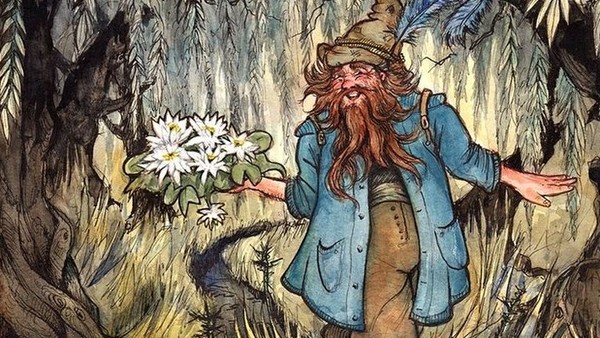
If there's any one character fans bemoan the lack of in the movies, it's ol' Tom Bombadil, a mysterious character who helps the Hobbits fairly early on in their journey.
You can see why Peter Jackson omitted him, because the spry, whimsical being might've been a little too jarring against the tone of his movies, but he's such an enigmatic (and potentially entertaining) presence that it'd be remiss for the TV show not to include him.
Not only would he add some comic relief to the proceedings, but he's one of the most ancient creatures known to live in Middle-earth, meaning he could exist in almost any timeline the show chooses to explore. He's believed to be supremely powerful too and, while not concerned with any Ring business, does represent the crucial morality themes of the story in his own unique way.
4. Don't Just Try And Do Amazon's Game Of Thrones

There's one big reason Amazon are betting so big on this TV series, and it goes by the name Game of Thrones. Yes, George R.R. Martin's work might be highly indebted to that of Tolkien, right down to those middle initials, but it's working in reverse on TV. Thrones is the biggest show in the world, and Amazon boss Jeff Bezos wants a slice of that hot pie.
However, chasing the next Game of Thrones is folly, and not something Amazon should be attempting with Lord of the Rings, for a couple of different reasons. Firstly, lessons from TV history suggest that the next big thing will largely be different to its predecessor, rather than a copycat: The Sopranos gave way to Lost which gave way to Mad Men and so on.
Secondly, LOTR and A Song of Ice and Fire/Game of Thrones may have some basic similarities, but they're intrinsically different. Martin's work intends to subvert most typical fantasy tropes, and even then it's more a historical and political tale within some fantasy trappings, whereas Tolkien's is much more of a morality tale and a more overt kind of fantasy. That's what it should continue aiming for, rather than being Game of Thrones.
There's also a fact that most TV shows of the Peak TV era have taken the wrong lessons from that show - a reliance on shocking deaths and plot twists, for example, which are key to that narrative but elsewhere done to provoke reaction, while it's also worth remembering just how many years Thrones spent in development at HBO before they got it right - and again, a Lord of the Rings show needs to distance itself from that and be its own thing. The first great LOTR show, not the next Game of Thrones.
3. Embrace The Fantasy

Continuing on from how it should differentiate itself from Game of Thrones, that's a show with strong fantasy elements it's more often than not shied away from (for better and worse). It's more a tale about the realistic struggles of people within that world, and it's only as it approaches the end that dragons and White Walkers are coming to the fore.
It's true of Lord of the Rings, too, that there is much more beyond just fantasy, which doesn't work without good character to go with it, and yet it's a crucial element of the story that should be wholly embraced on the small screen.
Jackson did, of course, utilise these, but even then amidst a slightly darker, more action-packed backdrop. A TV series could not only give us all those fantasy elements, from goblins to Elves to Orcs and so on, but explore the magic of Middle-earth and the powers of the beings, and to do what all good fantasy should do: offer escapism, hope, and a sense of wonder, in a world that allows reflection on real issues and the hidden meanings behind the tragedies.
Game of Thrones is one of the greatest fantasy TV shows ever made, and it resists those elements as often as it utilises them. It'd be a joy to have a big series that fully leaned into them, and Lord of the Rings is a perfect vessel for that.
2. Have Free Reign Over The Mythology

Peter Jackson's movies (LOTR, not The Hobbit) are about as beloved as book adaptations can be, but even then there's plenty he changed, added, and left out when taking Tolkien's work from the page to the screen.
Some may denounce such changes as blasphemy, but they're often necessary for taking something from one medium to another. More recently, we've seen how the Shadow of Mordor (and its sequel Shadow of War) have taken the mythology in new directions and, while not respecting canon, created exciting new stories within the world of Middle-earth.
A TV show need not go quite that far, but it shouldn't be overly beholden to either the texts or the movies they inspired, and instead given free reign to explore this world, craft new characters, and become its own unique thing that stays true to the spirit and tone of the books.
1. An Anthology Series

While it seems unlikely this is the direction Amazon's show will go in, since they're already talking about a multi-season series, there's something particularly attractive about the prospect of an anthology series within Tolkien's world. There are a number of stories that could be told in a single season of TV, and it'd be a way of doing that and exploring different aspects of the mythology without bloating things over multiple years.
Peter Jackson's trilogy, an excellent (if not perfect) adaptation of the Lord of the Rings series, runs to around the same length as a 10-episode season of TV would, and there's something to be said for not going beyond that.
The Silmarillion, as an example, is full of great stories, but it'd take something truly special to pull it into a coherent long-running series. You could quite easily, however, adapt various stories within for individual seasons, and have some more overarching thematic links (or one or two recurring characters - both things Fargo has done brilliantly).
The story of Beren and Lúthien, The Children of Hurin, The Fall of Gondolin, The War of the Last Alliance, a season on Númenor and so on - there are numerous possibilities for a LOTR anthology that would deliver everything fans love about the series and be different enough from what's already been put on screen.
What do you want to see from a Lord of the Rings TV show? Share your thoughts down in the comments.