How Jeffrey Dahmer Almost Got Away With Murder
Journey with us into the mind of a maniac, doomed to be a killer since he was born.

Do you remember when you were a young child and the most frightening thing that your encephalon could anticipate was the idea of monsters living under your bed, inside your closet, or even inside your most cherished toys? Of course you do. It's likely you remember the subsequent reassurance from your parents, too, when they informed you that there are no such things as monsters.
As we know when we get older, our parents are only people, and people are prone to error. The reality is that monsters most definitely exist, and unlike us, see no error in their ways, especially not with today's monster of interest: Jeffrey Dahmer.
The name alone is enough to give some people chills, especially those unlucky enough to be affected by Dahmer.
For those that need a tune-up on their serial killer profiles, Jeffrey Dahmer was a prolifically malevolent being disguised as a human. The Milwaukee cannibal, as he's colloquially known, kept the city at a standstill during his spree of terror - which lasted from 1978 to 1991 - until his untimely murder three years later.
The cannibalistic, mass murdering, necrophiliac rapist frivolously killed, tortured and eviscerated 17 boys and men throughout his heinous reign of sadistic trepidation; that was, until the night he goaded fate just a little too much, and tied-up would-be victim Tracy Edwards struck him over the head - which led to his imminent arrest.
But why did it take so long?
6. The Making Of A Maniac

They say that proclivities become embedded into a person through adverse iniquities that arise in their childhood. Maybe their parents were abusive, maybe they didn't perceive their child to be something worth taking care of, or maybe they just cradled them until suffocation set in.
Whatever the case, one thing is for certain. When adulthood hits, these raw, unfiltered emotions of a damaged psyche are catalytically channelled in the most explicit of ways.
Dahmer's father was always away on long work-based excursions, his mother was severely mentally ill - suffering from manic depression and suicidal tendencies - and the relationships he built during his time at school were less than stellar.
When his father was around, being an analytical chemist, he and his son bonded over this mutual love. The only problematic symptom of this elation was that this boy's mind was already infected with vitriolic hate. Hate that would soon evolve into an insatiable, homicidal fetish.
Jeffrey found his own therapeutic method for relieving that rage, as he developed a penchant for picking up gay men at clubs, killing them, then having the time of his life with their lifeless bodies.
5. Nobody Suspected Him Because Nobody Knew Him

The photo itself proves just how much of an outcast Dahmer was in his adolescence. He was so unpopular that even the school faculty were wiping his face from existence; not just because his behaviours grew more and more irrational as the clock turned - turning up to school heavily inebriated at a young age - but because he was actively trying to fit in by jumping into the photograph.
Ironically, almost as if mirroring the tragic reality of Dahmer's life from incubation to culmination, he simply just didn't fit into the frame - no matter where he went, no matter what he tried, and no matter who he tried to be.
The fact that there was not so much as even a slither of Dahmer recorded photographically or historically within the context of what should have been the happiest years of his life, speaks volumes of just how indistinctively unwanted he was. Neither his parents nor the school wanted to be associated with the young Dahmer. If we were talking about a nicer human being, he may even be worth feeling sorry for.
Former classmate and proprietor of the photograph, Mike Krukal, had this to say on Discovery's Jeffrey Dahmer: Mind of a Monster:
"It's one of the first things I thought about when I heard he was arrested for some reason. I just remembered this strange photograph that is so haunting today to look at and know that this person, right dead centre in the middle, is Jeffrey Dahmer."
4. It Took Years To See The Kill Trophies He Kept In Plain Sight

Apartment 213 - a place with darker secrets than Josef Fritzl's basement, the Stanley Hotel and Area 51 combined - is the exact location where the lude, ludicrous and despicably macabre acts of murder and mayhem ensued.
Dahmer's apartment - which still stands today - serves as a reminder of the horrific acts that took place in the small town suburbia of Milwaukee. It was the epicentre for some of the criminal's most unsettling souvenirs, and, despite them hiding in plain sight, it took years for anyone outside of the poor unfortunate souls that ended up here to observe the evidence.
One of Dahmer's favourite things to do with the leftover body parts of the aforementioned victims - when not inseminating or utilising an acidic method to dispose of them - would be to cleanse them, giving them a more pristine demeanour and sticking them in either the freezer, fridge or simply just on his kitchen side.
Dahmer's method was simple, but incredulously effective. He would bring the boy or man back to his apartment, drug them, beat them, and then lobotomise them before filling the newly drilled hole with an unpleasant helping of muriatic acid.
Only after Dahmer was inevitably arrested would subsequent checks reveal a head in the refrigerator, three more in the freezer, and a mausoleum of 'guess what belongs to who?', which included preserved skulls, jars containing a variety of genitals and an extensive gallery of gratuitous Polaroids of his many victims.
3. The US Police Didn't Care Because The Victims Were Ethnic Homosexual Men

To put it lightly, the US police department - even to this day - is notorious for overlooking a multitude of crimes when the victim is of a different ethnic origin or sexual persuasion than the average Caucasian American. During the 1970s to the 1990s, this horrendous oversight was incredibly prevalent within the country itself.
As the country was very well-known for its intolerance throughout the '70s to '90s, and with two of the most culturally significant groups primarily being Dahmer's targeted demographics, the uncouth nature of the country's then-impudent conjecture dejected any notion of imminent danger against these groups.
The casual racism, homophobia and even sexism is something that was embedded into the country's DNA for a long time, and the reactions from officers in the face of these problems reflected that. Dahmer would repeatedly get away with these crimes because the police would simply not care enough to look for any of these missing African-American homosexual males. If their minds were previously as open as their ears, then maybe the body count of 17 would've been mostly institute, rather than grossly destitute.
It was only by sheer luck the police found a competent or caring enough officer to listen to Tracy Edwards when, after escaping from Dahmer, informed them of a "weirdo" that had drugged and tied him up.
2. Police Ignored The Calls Of A Teenager Reporting Him In 1991

In the same year Dahmer was caught, the police missed out on the most opportune moment to capture one of the most notorious executioners in global history - just before he chopped up a 14-year-old boy and preserved his head in his freezer.
After the young boy - mentioned prior - materialised before her, gushing with blood and covered in more cuts and bruises than Victor Zsasz, a young girl distressfully called the police to report an ongoing crime in January 1991, and the person she soon suspected to be guilty of something (Dahmer) promptly arrived on the scene.
Dahmer exclaimed that the boy - whose actual age was 14 - was 19 and named Jim (he was actually called Konerak Sinthasomphone) and just simply drunk (he was unsuspectedly drugged).
Jeffrey changed his story every time the girl questioned the origin of their relationship and the reason he was covered in blood. After the call, officers quickly arrived at Dahmer's flat, had a brisk look and declared it to be a normal environment. But just like a badly written soap opera, the police, in the utmost, callous perversion of justice, physically returned the boy to his soon-to-be murderer.
The police failed to take it even remotely seriously, instantly highlighting their incompetence through their childish mockery over the dispatch call. This proved to be an egregious mistake, as if taken seriously, it would've also prevented four more murders in the state of Wisconsin that year.
1. Convicted After A Few Murders, But Charged For Child Pornography
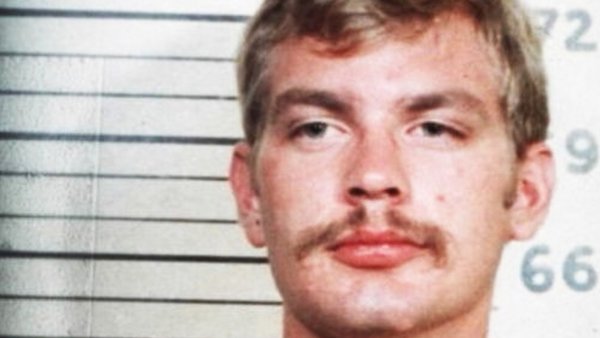
In August 1982, Jeffrey Dahmer was fined $50 for indecent exposure at a Wisconsin State Fair Park. Exactly four years later, he would once again be arrested for masturbating in front of two young boys.
In September 1989, Dahmer breached the law similarly, with the exception that no body (no pun intended) was mutilated, eaten or ambiguously stored as a predator-esque trophy.
The biggest dissimilarity - outside of the lack of dismemberment - is that he was actually convicted for a brief period, after soliciting the 13-year-old brother of the aforementioned Konerak for an extremely inappropriate photoshoot. As Dahmer awaited his verdict, he was released until that time, and in that time he grotesquely took pleasure in luring, drugging, strangling, sodomising, photographing, dismembering and, last but not least heinous, disposing of Anthony Sears, an up-and-coming model.
Despite butchering another person in the meantime, when Dahmer arrived at the trial in May later that year, he was the model of contrition, arguing eloquently in his own defence about how he had understood the malevolent nature of his crime, vowing to change exponentially.
This lead the judge to grant Jeffrey an early release after serving only ten months of his sentence, which is rather shocking when you consider that his most extensive period of mass murder would come shortly after his release.
How Much Do You Know About America's Worst Serial Killers?
