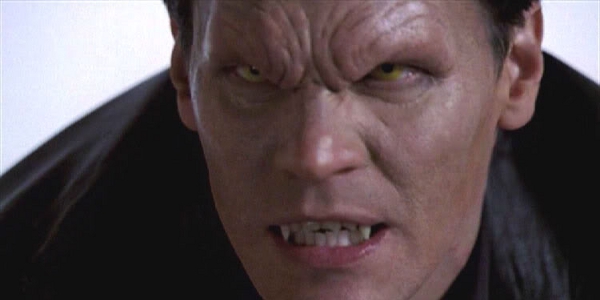
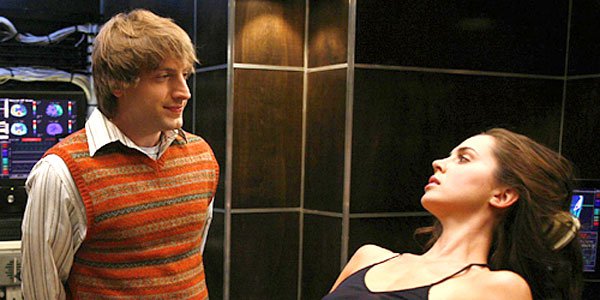
Joss Whedon: His TV Shows Ranked From Worst To Best

He rarely totally misfires but something's gotta go at the bottom.
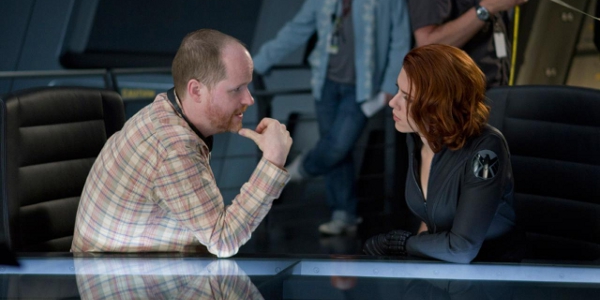
Joss Whedon's phenomenally successful adaptation of The Avengers had that big budget sheen and a suitably intergalactic plot, but beneath its dazzling exterior it proved that the writer-director hasn't forgotten his television roots. The one-liners, the clever banter, the death of a beloved character: all are hallmarks of famous Whedon TV shows of the past and present. While the internet whips itself into a frenzy with every titbit from Whedon's future project, that little matter of The Avengers 2, we thought we'd take a moment to look back at his past. Of course, it's not that simple, as we'll also be ranking Whedon's television series from worst to best. He rarely totally misfires, so it's the competition for the top spot which is particularly fierce. Note that only his live-action shows are eligible for the article, so the few animated projects in which he's had a hand (such as the ill-fated Buffy cartoon) won't be included. Spoilers follow, so Whedonites, be prepared to relive those character deaths all over again.

Honourable Mention: Dr Horrible's Sing-Along Blog
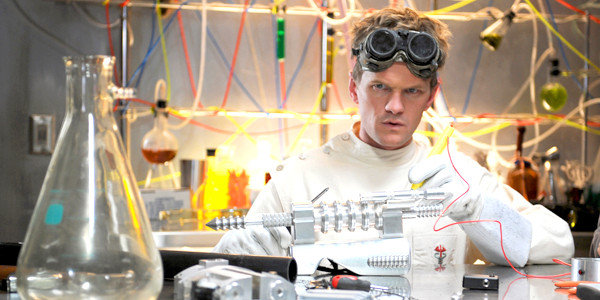
Hulu Dr Horrible's Sing-Along Blog can't really be considered a television show, since it's roughly forty-five minutes in its entirety and was intentionally released as a webseries, but this hasn't stopped IMDB listing it as a TV miniseries. It would be sad to pass up the opportunity to discuss it, so Dr Horrible has landed an honourable mention. The series is ostensibly a compilation of the video diaries of supervillain Dr Horrible, who's too tongue-tied to admit he's in love with girl-next-door Penny and can't stomach the evildoing which might win him a place in the League of Evil. It balances these diaries with the more familiar TV drama format, except that it's also a musical. Throw in the fact that the central trio of Dr Horrible, Penny and arrogant superhero Captain Hammer are played by Neil Patrick Harris, Felicia Day and Nathan Fillion respectively and you have a recipe for a kitschy success story. For such a bizarre premise, Dr Horrible is emotionally draining, due in equal parts to the excellent performance of Neil Patrick Harris and the fantastic music. In the space of those forty-five minutes, the series jumps from zany and exaggerated to dark and somewhat uncomfortable, but neither Harris nor the frequent bursting into song ever feel out of place. Complete your Dr Horrible experience with the 'Making Of' featurette, which confirms that the series was both a lot of fun for everyone involved and incredibly well thought out.

5. Agents Of S.H.I.E.L.D.
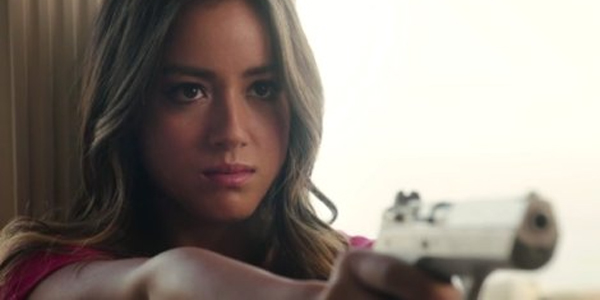
Did anyone expect this to be higher? Let's be fair to Agents of S.H.I.E.L.D.: it's a fledgling series which has corporate obligations and minimal involvement from Whedon himself, whose name seems to have been slapped onto the series as a marketing gimmick. It's also improved recently, against all odds, and while it's still a long way from moving up this list, that's at least a step in the right direction. It has time to make amends. The series still needs to develop a few of its wooden characters and perhaps re-examine its core team members, but the appearance of Sif in a recent episode suggests that it's finally beginning to embrace the potential of the expanded Marvel universe. We've been a little spoilt by Arrow, which has blazed a trail with its treatment of the Suicide Squad and the League of Assassins on a far smaller budget. For now it seems that if Marvel has claimed cinemagoers, DC has won the fight for the small screen.

4. Angel

Angel was so much more than a Buffy spin-off by the time it ended its run, but it remains more difficult to sell than its parent show, in part because it so drastically changed during its time on air. It was once a fairly middle-of-the-road procedural with supernatural elements, and then it metamorphosed into a serialised fantasy show with its own mythology and rich characters. Those who enjoy Buffy's earlier seasons don't necessarily warm to early Angel, but those who do might find themselves alienated as the series twists itself into something else. When Angel was on form it produced some fantastic arcs, of which the most famous is Wesley's transformation from awkward comic relief to dark anti-hero. It also continued Cordelia's rehabilitation from ditsy bimbo to a competent and self-assured woman who supported Angel with genuine compassion, and paired ensouled Spike with Angel for some excellent comedic scenes in the final season. The stellar episodes which expanded upon Angel's relationship with Faith laid the groundwork for the comic Angel & Faith, easily the best of the Buffyverse comics. While teen drama was never quite expunged from Buffy, Angel threw off the shackles of its palatable initial premise as quickly as it could and asked viewers to trust the writers or be left behind. The series rewards investment in both its characters and its storylines, but the price is a loss of accessibility for those who might want to jump in.

3. Dollhouse

Dollhouse had an atrocious start and landed itself with an unconvincing protagonist in Echo, which led a number of critics at the time to label Dollhouse as Whedon's first real miss. Since it was cancelled after its second season, opinions have softened towards it, and those who re-watch it now may be surprised at the depth of its characters and themes. The idea of mindless human shells implanted with the memories of other people is disturbing, but Dollhouse initially seemed oblivious and chose to be Alias with more obvious science-fiction influences. It gradually realised just how creepy it could be and began to play with its premise, establishing that failed operatives are 'sent to the Attic', which is a neat euphemism for locking them inside their own heads, and later that the doll technology could be used to remotely control human beings in a post-apocalyptic world where nobody is themselves. It's paranoia at its best. The stable of characters also seemed clichéd in the beginning; icy boss Adelle DeWitt, kindly Boyd, tech whizz Topher, and medic Dr. Saunders. Topher in particular was grating rather than witty, but his obvious loneliness and later guilt over his part in the Dollhouse endears him to you anyway. There's also the former doll turned serial killer Alpha, to whom we are unknowingly introduced while he poses as a mild-mannered engineer; Alan Tudyk then ensures that he will haunt our nightmares. Dollhouse's flaws exceed those of any other entry in this article, but its scope is unrivalled, even by the next show on the list.

2. Firefly

It's an unwritten rule of the internet that no discussion of cancelled TV shows can end without mention of Firefly, because it remains the most famous one season wonder of all time. For a series from 2002 with only fourteen episodes, some of which aired out of order, it still has a huge following, in part because of the talent involved and in part because it somehow still feels audacious today. Firefly is most simply described as a space western in which the swashbuckling Captain Mal Reynolds (played with overwhelming charisma by Nathan Fillion) leads his team on some fairly shady jobs in pursuit of cash, but of course there's a lot more to it. Like the best of Whedon's output, Firefly's tone can flip from witty to heartfelt in a single scene without stalling. It also rivals Dollhouse for flat-out disturbing ideas, particularly in its exploration of life under an authoritarian regime. Despite having so little time to develop its characters and its world, Firefly undoubtedly has the strongest ensemble right off the bat, and it's consistent. In War Stories, the uncompromising Zoe interrupts the villain's monologue about choosing her captain or her husband and gestures to Wash: "Him. I'm sorry. You were going to ask me to choose, right? Do you wanna finish?" A lesser show would have milked that moment for melodrama, and many still do, which is why Firefly remains refreshing and endearing to new Browncoats as the years go by.

1. Buffy The Vampire Slayer

Buffy the Vampire Slayer is the Friends of genre television. It has inspired countless descendants, some of which are lesser copycats and others which stand on their own two feet, but nothing compares to the original series. Established fans will be familiar with the moment when you happen upon a Buffy episode in syndication and smile a little nostalgically, only to find yourself gripped all over again. That is dependent on the episode, because Buffy ran for seven seasons and has notable dips in quality, but it hits multi-episode streaks in seasons two, three, five and even six, and every other season has standout episodes somewhere in there. It's also sometimes a little heavy-handed with the metaphors, like Willow's addiction to magic in the sixth season and that bizarre episode in which beer causes everyone to behave like cavemen. Then there are episodes like Passion, Graduation Day, The Body and Once More with Feeling, and you know you're in safe hands. The only people likely to be disappointed by Buffy are those who've heard of its unparalleled reputation from a fan and therefore come to it expecting a grandiose work of art, then catch a scene with one-liners and stakes and suspect exaggeration. Buffy's brilliance is that its emotional depth, snappy dialogue, technical creativity and nuanced performances just seem effortless, which is why it's still Whedon's best television series. In short, we're not exaggerating.

Contributor

Grace Murray hasn't written a bio just yet, but if they had... it would appear here.