Marvel's Cloak & Dagger Premiere Review: 8 Ups And 2 Downs
Shadows and light.

The people at Marvel Television have certainly been busy over the past year.
In the previous ten months alone, The Defenders, The Punisher, Runaways, Inhumans, season five of Agents of S.H.I.E.L.D., and season two of Jessica Jones have all been added to the Marvel Cinematic Universe (in addition to their non-MCU projects like The Gifted and season two of Legion).
They have now added yet another show to their MCU roster and a rather intriguing one at that: Cloak & Dagger.
Based on the Marvel comic book duo of the same name, Cloak & Dagger revolves around Tyrone Johnson and Tandy Bowen, two teenagers from drastically different walks of life who, through their own personal family tragedies, find themselves with bizarre superpowers that link them together.
In addition to its fascinating premise, it's clear that Marvel was looking to start Cloak & Dagger off with a bang, as the show debuted on Freeform with a two-hour premiere event that treated viewers to the entirety of the series' first two episodes.
These episodes, First Light and Suicide Sprints, paint a pretty clear picture as to what we can expect from the series going forward. So, let's take a look at Cloak & Dagger's many strengths (as well as its minor weaknesses).
10. Downs - The Texts

Admittedly, this is a bit of a nitpick, but it's such a frustrating aspect of the Cloak & Dagger premiere that it bears mentioning.
At certain points throughout the episode Suicide Sprints, Tyrone takes out his cell phone to read the text messages he's been sent. These texts are supposed to provide insight as to what's going on in Tyrone's life and what he's going to do next.
Unfortunately, however, it's near impossible to read all of the text messages unless you're constantly pausing the episode (which can be a bit difficult if you're watching the show on live on TV).
Despite the texts being in focus, which implies that the audience is meant to be reading them, they're also off-center and go by way too fast, with walls of text disappearing just as quickly as they appeared.
It's fairly easy to fill in the gaps as you keep watching, but this was still some noticeably baffling direction.
9. The Overuse Of Cross-Cutting Can Be Jarring

Something that will be discussed later is the great dynamic and disparity between Cloak & Dagger's two leads. However, one of the ways the show goes about getting their dynamic across gets a bit tiresome after about halfway through the first episode.
Cloak & Dagger utilizes the cross-cutting technique to show what each lead is doing at a given point in time and how it contrasts against what the other is up to.
At certain points, the cross-cutting works fantastically. For instance, the scene where Tyrone is playing in a school basketball game while Tandy robs a house is excellent.
After that, however, the cross-cutting not only becomes a bit superfluous, but also hinders certain scenes. The cuts just become too many and too close together for certain action sequences to really work.
This problem is most apparent in the first episode and while they did tone things down in the second, it was still present. Hopefully, the show will continue to phase the excessive cross-cutting out.
8. Ups - Marvel Continues To Deviate From The Superhero Formula

While Marvel is often criticized for their films being too formulaic as far as superhero stories go, they've proven through their small-screen projects that they can still take necessary risks and do something genuinely different with their heroes. Cloak & Dagger is no exception.
For instance, Tandy is not a conventional superhero in any sense of the word and, in fact, is on the wrong side of the law (and not in a lighthearted Ant-Man sort of way.) Tyrone is a bit easier to root for in a traditional sense, but he too has his fair share of baggage and guilt.
What's more is that the protagonists' linked superpowers are unlike anything we've seen from Marvel TV before and lend themselves to the show's unique dual narrative.
Finally, while the show does have "villains", its true antagonists are the respective inner demons of Tyrone and Tandy. And how they choose to face themselves is just as compelling as any hero throwing punches at a bad guy.
7. The Use Of Music

Choosing music to accompany scenes from a television show can always be rather tricky, especially when it comes to selecting licensed tracks, as opposed to using an original score. When done right, however, it really works. And the music choices in Cloak & Dagger are absolutely superb.
Each chosen song perfectly captures, as well as amplifies the tone of the scene it accompanies. This helps make the emotional resonance of dramatic scenes and the bite of action sequences that much more impactful.
For example, the song that plays during the aforementioned sequence involving Tyrone's basketball game (which devolves into a knock-down-drag-out fight) running parallel to Tandy's burglary is catchy and energetic with somber undertones, providing insight as to what is happening in the characters' heads as these events unfold.
In addition to the songs adding subtle, but meaningful layers to Cloak & Daggers narrative, the genres and styles used also further develop the show's unique tone and identity.
6. Excellent Cinematography

While specific aspects of Cloak & Dagger's editing and direction can be questionable, the camerawork is handled with absolute grace and dexterity. Most of the key shots are well-thought out and perfectly executed, as well as further add to the show's unique feel.
A prime example of Cloak & Dagger's top-notch cinematography comes at the beginning of the first episode, which shows respective family tragedies of Tyrone and Tandy. Not only is this one of the few instances in which the cross-cutting flows incredibly well, but both sequences are filmed flawlessly.
The chase scene in which Tyrone and his older brother are evading police is totally fluid, with the camera following the action in what feels like one, continuous shot. And the car crash that sent Tandy's father to a watery grave is as seamlessly shot as it is uncomfortable to watch.
In the end, Cloak & Dagger continues to prove that Marvel's television shows can be just as cinematic as their movies.
5. Clever Motifs And MCU Connections
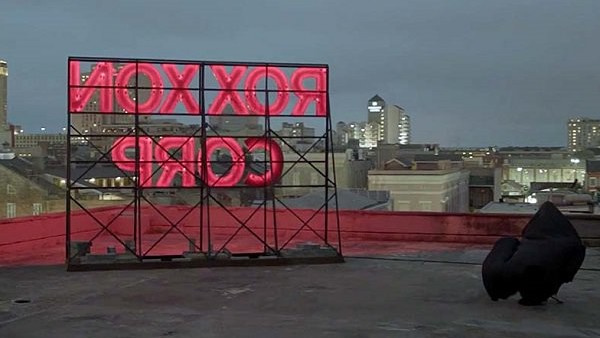
While it features a mostly self-contained story with its own unique quirks and motifs (i.e. the various "cloaks" Tyrone has donned over the years), Cloak & Dagger also draws several connections to the rest of the MCU, which helps solidify its place in the continuity.
For starters, the Roxxon Corporation is a major player in Tandy's backstory, as well as how Tandy and Tyrone got their powers in the first place. This connection feels organic, as the company is known to be far-reaching, having made appearances in all three Iron Man films, as well as in Agents of S.H.I.E.L.D., Agent Carter, and Daredevil.
Speaking of Daredevil, Tyrone's conversation with the priest at his Catholic high school about the darkness brewing inside of him directly parallels the conversations and confession sessions between Matt Murdock and Father Lantom throughout Daredevil's first season.
Cloak & Dagger's partial high school setting is also tonally similar to what we've seen in Runaways on Hulu, which feels very intentional, given the connection the respective hero outfits have in the comics.
Finally, in spite of all these connections, Cloak & Dagger manages to put its own unique spin on things, making it truly feel like a part of the universe without it coming off as retreading old ground.
4. The Social Commentary
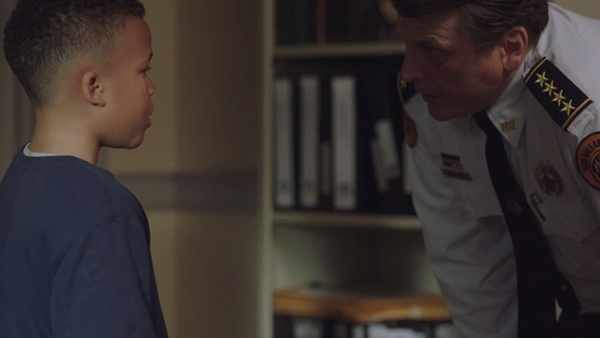
One of the biggest reasons why Cloak & Dagger is such an important addition to the TV MCU is the sheer amount of social commentary it presents for viewers to unpack.
For starters, the show deals with the issue of sexual harassment/assault and Olivia Holt, who plays Tandy, has equated her character's superpowers giving her a means to fight back to the Me Too movement giving women the courage to stand up to their abusers.
In addition, Tyrone's backstory provides commentary on the pitfalls that inner-city kids face while growing up, racism, bias among police, and contains shades of the Black Lives Matter movement.
These aspects, of course, put Cloak & Dagger in the same vein as other Marvel series like Jessica Jones and Luke Cage, which deal with similar issues. However, what makes Cloak & Dagger different is that it looks at these issues from much younger characters' perspectives.
What's more is that this show also provides commentary on several other relevant social topics, such as broken households, drug abuse/addiction, and the toxic aspects of locker-room culture that authority figures often turn a blind eye to.
3. The Mature Tone (And Characters)

More and more comic book shows (and movies) are adding a darker edge these days. For this to really work, however, the dark, mature tone has to lend itself to the show's subject matter.
Fortunately, this is very much the case with Cloak & Dagger.
Given the characters' troubled pasts, their arguably more-troubled current lives, and the seedy world around them that seems to be getting worse by the minute, Cloak & Dagger makes fantastic use of its grim tone, using it to help further the story.
In fact, in terms of its tone and aforementioned subject matter, it's arguably the darkest show Marvel has released outside of Netflix. And in addition to this, the show's characters (main or otherwise) are also very mature, realistic, and down-to-Earth.
This is a welcome surprise, given Freeform's track record. Whereas most other shows on the network (which are aimed at the early-twenties demographic) provide characters who are lowest common denominator "millennial" stereotypes, Cloak & Dagger actually respects its characters, the world they inhabit, as well as the audience's intelligence.
2. The Cloak & Dagger Dynamic

Easily one of the strongest points of Cloak & Dagger is the dynamic and disparity between the two main leads.
What makes the relationship between Tyrone and Tandy so interesting is how far back it goes, how it connects to their superpowers, as well as how ingrained in them it is, despite the fact that they don't even know it at first.
The two ended up washed up on the beach together the night Tandy's father died and Tyrone's brother was killed and from that point on, they practically swapped social statuses.
Tandy started live as a privileged child before the accident caused everything to fall apart at the seams. Meanwhile, Tyrone was brought up around crime, before his mother managed to rise above it all following her son's death and build a better life for her family.
The concept of two people essentially being destined to be polar opposites while also having to form a bond and learn to control their newfound abilities is absolutely fascinating and makes for one of the single most compelling character dynamics on television today (Marvel or otherwise).
1. The Story Is Complex And Enthralling

Cloak & Dagger's narrative has a lot of players and moving parts, but it already appears that those behind the scenes are handling it all wonderfully.
On the whole, everything flows in a way that feels fluid and natural, there's lots of drama at play and mysteries to be solved, the chemistry between the characters works very well, and, as stated before, Tyrone and Tandy themselves are incredibly complex co-protagonists who hold everything together.
Whether it's the story of Tyrone trying to solve his brother's murder (which was covered up by police), Tandy's conflict with her mother (who is arguably even further down the self-destruction rabbit hole than Tandy herself), the detective trailing Tandy, or Tyrone and Tandy learning how to control and use their abilities through dangerous trial and error, there is plenty here to keep viewers invested and it's all connected harmoniously.
If Marvel Television has proven anything over the past half-decade, it's that they know how to tell a good story. And while we're only two episodes in, it seems as though Cloak & Dagger is shaping up to be one of their best tales to date.
What did you think of Cloak & Dagger? Let us know down in the comments.